










The exhibition “Meydan-ը,” featuring the works of seven contemporary Armenian artists, opened on Mar 3 at Depo İstanbul.
The exhibition brings together Anet Sandra Açıkgöz, Arek Qadrra, İmelda Kuyumcu, Larissa Araz, Sesil Beatris Kalaycıyan, Şirag Şeşetyan, and Yeraz Kortun, and is curated by Kirkor Dabanyan and Lara Suluoğlu.
Addressing Western Armenian as a living and evolving space, the exhibition is held as part of the Hantibum Festival and will be on view at Depo until Mar 28.
Curator Kirkor Dabanyan explained the meaning of the exhibition’s title:
The exhibition comes together around the theme of the meydan (square), and its title includes an Armenian letter equivalent to the Turkish ‘ı’ sound, which points to a specific square. In fact, this refers to the squares where we meet and encounter each other.
Through the Hantibum Festival, we are creating a space of encounter. This square concerns itself with the coming together of different languages, portraits, and memories. The festival will last for a month. And throughout the month, the city will be enriched through workshops focused on Western Armenian, concerts, and collaborations with schools and independent institutions.
Artists and their works
Dabanyan described the participating artists and their works:
“Anet Sandra Açıkgöz’s work consists of prints on glass surfaces. She places portraits of people who never existed onto fragile and translucent glass surfaces.
"While looking at the portraits, the viewer also sees their own reflection in the glass—like the strangers we encounter in a square. In this way, the viewer confronts both themselves and those fragile images that would shatter upon touch.
"Arek Qadrra works with sound and video collages. In his practice, he deconstructs dominating religious structures and reassembles them, questioning whether it is possible to generate new meanings.
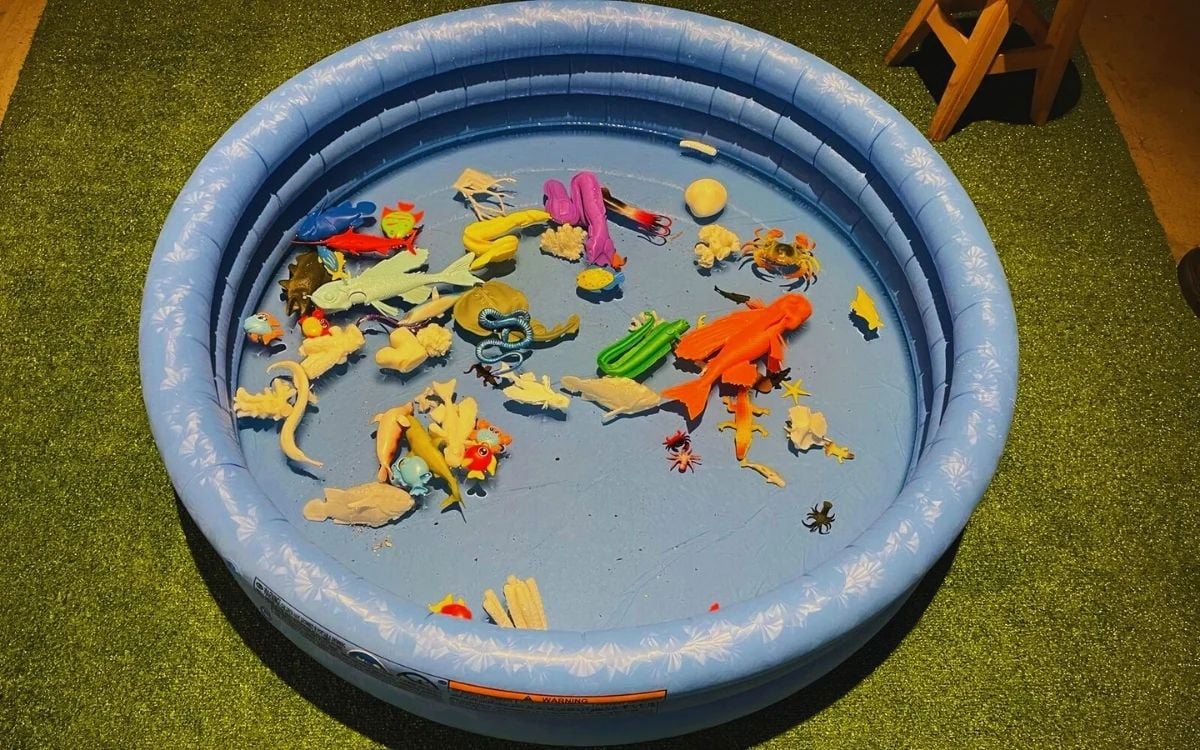
"İmelda Kuyumcu bases her work on an archival project carried out by her grandfather in the early 1900s while he was the director of the İstanbul Kayıkhane and working for the Ministry of the Straits. She reconstructs endangered or extinct fish species from that archive inside a colorful plastic children’s pool. This ‘pool of knowledge,’ formed with the aesthetic of toys, questions today’s artificial approach to nature and species.
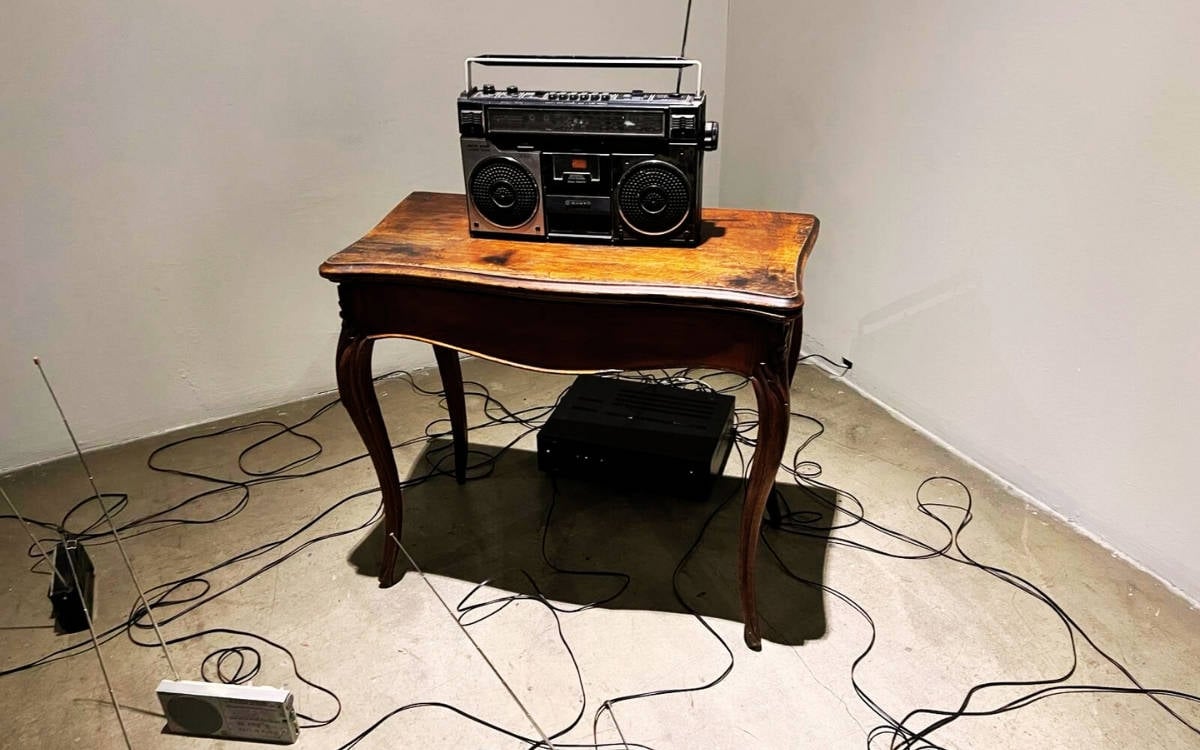
"Larissa Araz’s work focuses on Yerevan Radio, which broadcast between 1935 and the 1980s. She creates a sound installation through radios placed in the exhibition space. With its broadcasts from Soviet Armenia, Yerevan Radio was an important means of access to language, culture, and world news for Kurdish-speaking communities in Turkey. It is said that during radio broadcast hours, the streets would empty. A banned language circulating from another place opens up a powerful space of memory here.
"Sesil Beatris Kalaycıyan creates an installation based on molds of her mother’s and her own shoes. Her mother kept her own shoes, and her grandmother kept her mother’s… The artist reproduces these shoes in half-mold forms and places sprouting flowers on them. The work references intergenerational loss, fragile bonds built through language and culture, and the effort to reconnect.
"Yeraz Kortun starts from a feeling of not being able to say goodbye to the house that was demolished during her student years. In her work, built through installation and text, she asks the question, ‘How would I demolish a house?’ In the text, she says, ‘I would start from the upper floors and slowly work my way down; that way, I’d have time to say goodbye.’ If she cannot find the courage, she says she would prefer a third person, not involved in the story, to do the demolition. This approach constructs a powerful narrative about both loss and the desire for control.
"Şirag Şeşetyan’s work carries traces of producing between Lyon and İstanbul. In the space, there is a bench resembling an architectural plan, extending in two directions. This sculptural structure with an orange base and metal frame creates a cold and distant effect; meanwhile, the accompanying text and sound work presents a highly personal and subjective narrative. Texts in Western Armenian, English, and Turkish appear together. It points to the paradox between the cold sculpture and the warm narrative.”
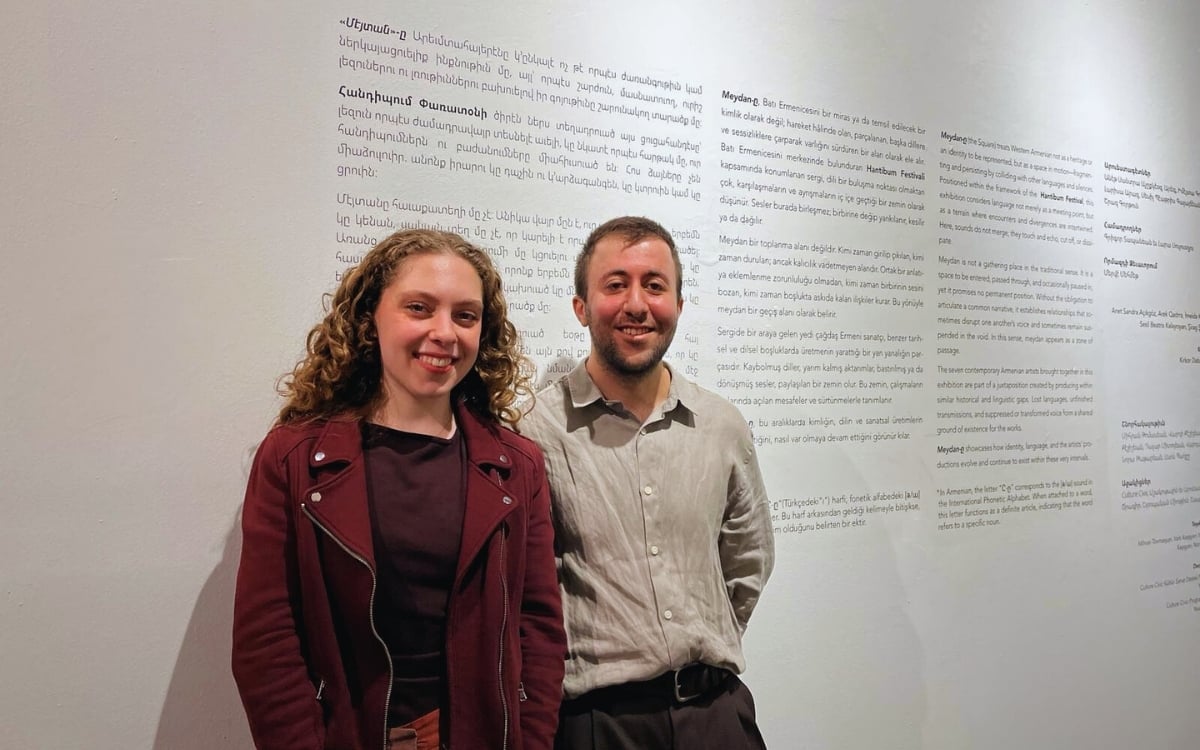
'Depo is a point of intersection'
Dabanyan described what curating the exhibition meant to him:
“Curating this exhibition is very meaningful for me. In an exhibition that starts out with an emphasis on contemporary Armenian artists, the idea of ‘encounter’ is very valuable. The artists are visible figures who continue producing; however, some of them are coming together for the first time. This coming together creates a moment of encounter for the artists, the viewers, and for us.
“I would also like to express special thanks to Depo for this opportunity. Opening such a space is very valuable to us. The festival takes place in different centers of the city—Feriköy, Galata, Kurtuluş, Yeşilköy, and so on.
"Depo, meanwhile, is a point of intersection: across from it is Getronagan High School, and as you go uphill, there are institutions like Aras Publishing and the Yesayan Association… The space Depo has opened up creates an important meeting ground not only for us but also for different audiences.” (TY)