









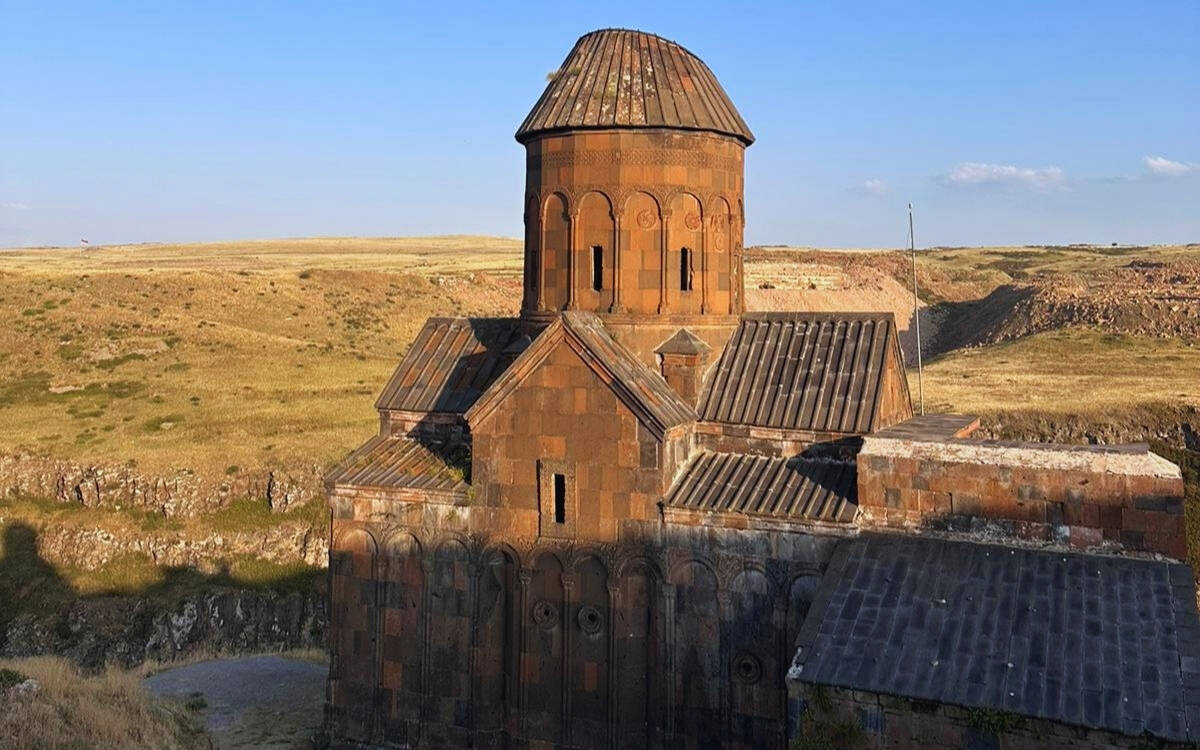



Excavations at the Ani archaeological site in the eastern province of Kars have uncovered the remains of a Seljuk-era tomb structure known as a kümbet. Ani, a former Armenian capital and a UNESCO World Heritage site, is one of the oldest Armenian settlements in the region.
The excavations are being carried out in collaboration with the Culture and Tourism Ministry and Kafkas University. A team of 130 people, including art historians, archaeologists, architects, and restoration experts, are working to bring buried structures and artifacts to light.
The Seljuk period saw widespread construction of this type of monumental tomb, typically featuring a cylindrical or polygonal body topped with a conical or pyramidal roof. These tombs were especially common in Central Asia and Anatolia between the 11th and 13th centuries.
Dr. Muhammet Arslan, head of the Ani excavation team, told Anadolu Agency (AA) that the Seljuk cemetery is one of the most significant areas currently being explored. “We are currently excavating five different areas, and perhaps the most important among them is the Seljuk cemetery,” he said.
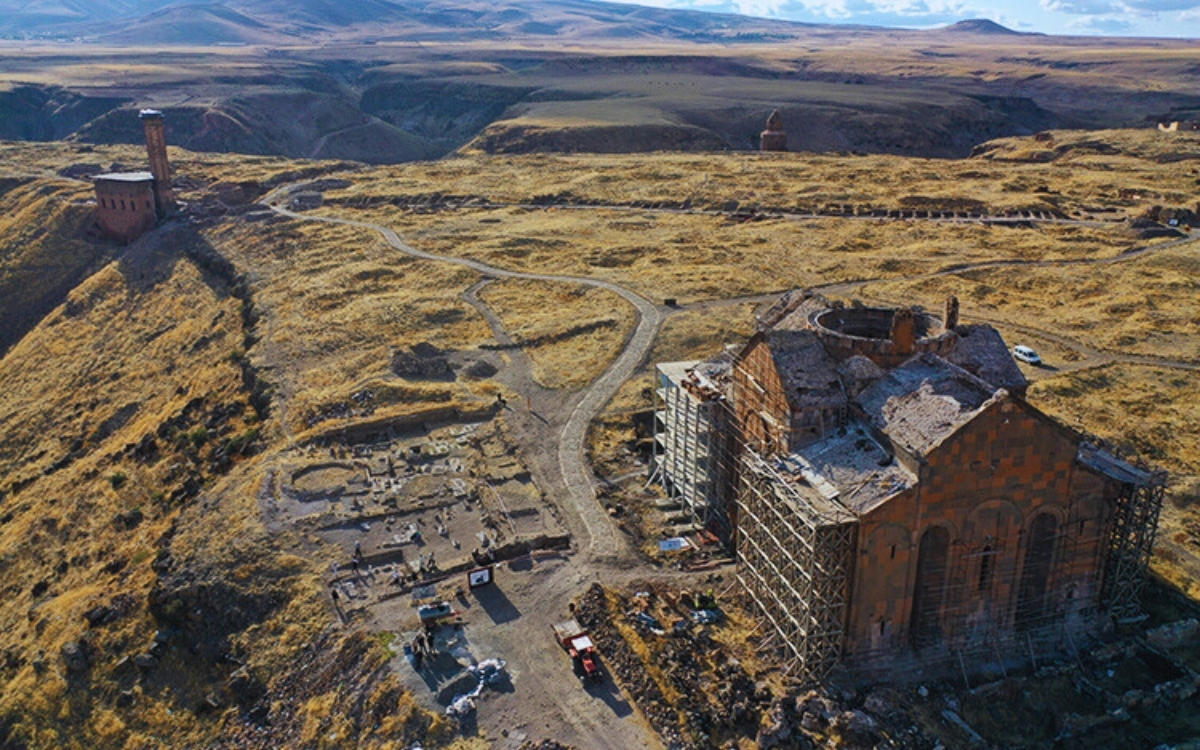
Noting that that the site was first opened during the 2021 excavation season, Arslan added, “Based on surface finds and early data, we suspected this might be a cemetery, and our excavations confirmed it.”
“In earlier seasons,” Arslan said, “we uncovered a Seljuk kümbet with an octagonal body on a square base, as well as sarcophagus-style tombstones and akıt-type burial chambers, forms we often see in Central Asia and consider to be the Islamized versions in Anatolia.”
More recently, the team discovered traces of another kümbet with a brick body. Arslan suggested this may be one of the earliest examples of this architectural form in Anatolia, saying that “it could very well be the first."
Journey through Anatolia's medieval history: New app offers virtual exploration of Ani
About Ani
Ani is a historic site in Turkey’s northeastern Kars province, known for its multicultural and strategic importance throughout history. It served as the capital of the Armenian Kingdom during the Middle Ages and earned the title “City of 1001 Churches.”
Ani flourished in the 10th and 11th centuries as a major center of trade and culture. The city saw the construction of numerous churches, palaces, and public buildings. However, Seljuk invasions in the 11th century, followed by Mongol pressures in the 12th and 13th centuries, along with natural disasters, led to the city's decline.
The site contains a diverse array of architectural structures, including churches, cathedrals, fortifications, kümbets, and civic buildings. Notable for their stonework and detailed ornamentation, many of these structures have drawn attention to the long-standing challenges of preserving the ancient city.
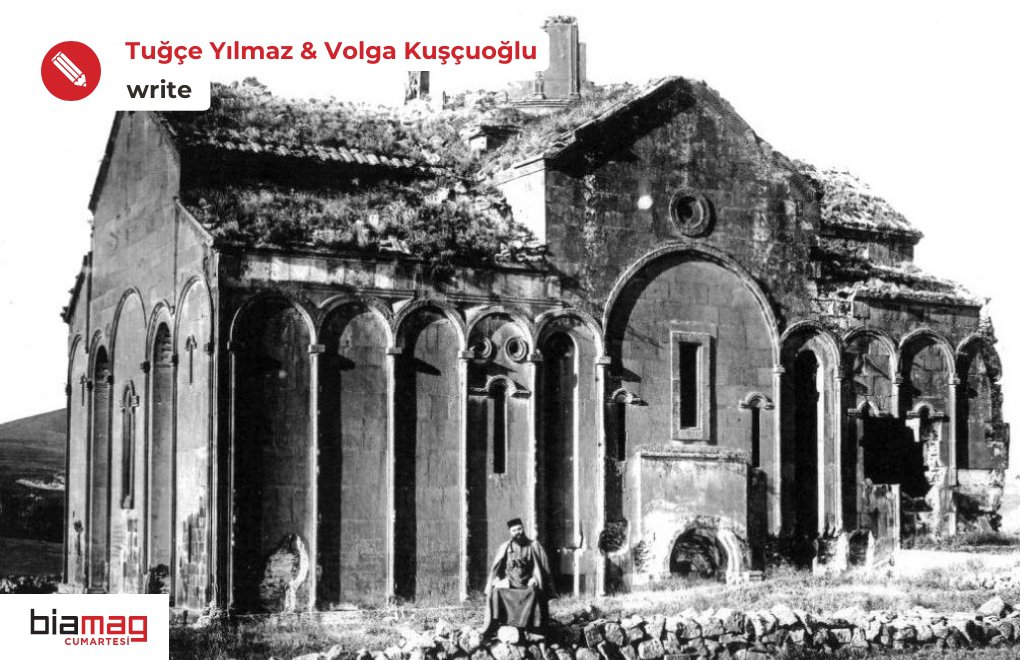
On Jul 3, 2025, the state-run AA referred to Ani’s Surp Asdvadzadzin (Holy Mother of God) Cathedral only as “Fethiye Mosque” in a published report. While the article framed the building’s conversion into a mosque within the context of “Turkish conquest tradition,” it omitted reference to the cathedral’s historical and cultural significance for the Armenian people or its relevance in the context of Armenian-Turkish relations.
(TY/VK)

