




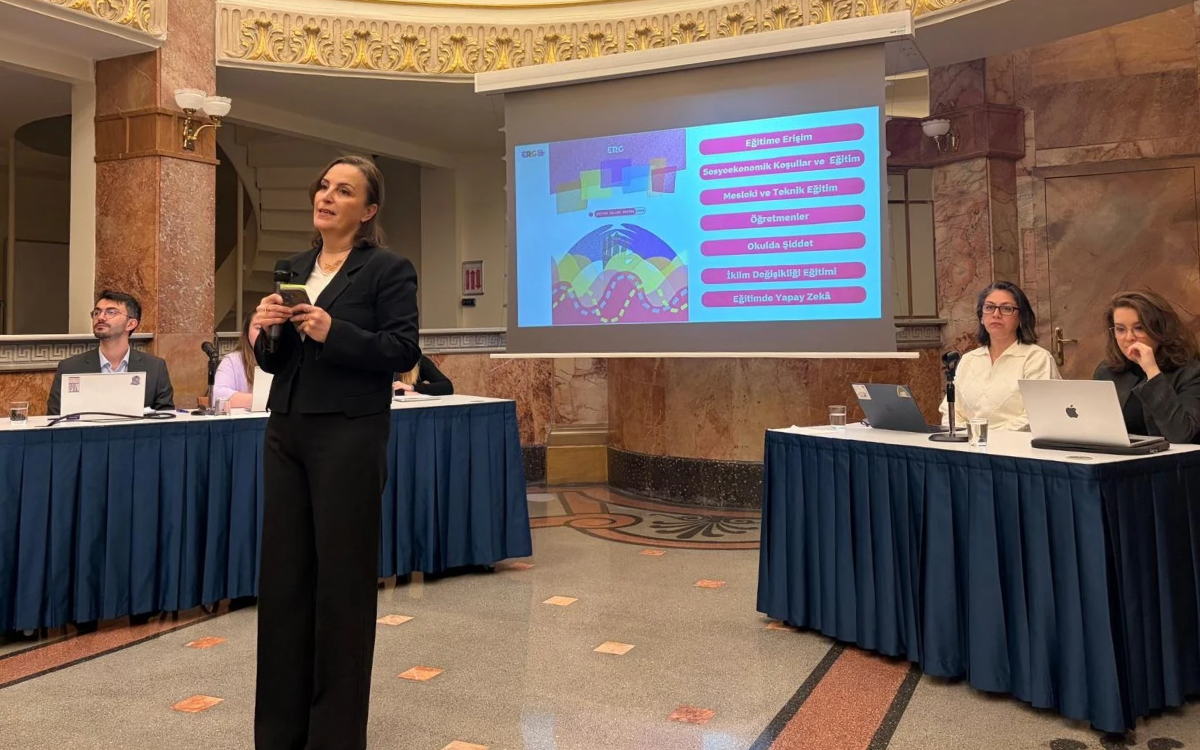



Turkey’s wealthiest households spend 81 times as much on education as the poorest, according to the Education Reform Initiative’s (ERG) 2026 Education Monitoring Report, which highlights deep socioeconomic inequalities in access to education.
The highest-income 20% of households account for 72.2% of household education spending, compared with just 0.9% for the lowest-income 20%. Meanwhile, nearly 580,000 children of compulsory school age were outside the education system in the 2025-26 academic year.
The report, presented at an event at Minerva Han in İstanbul’s Karaköy neighborhood, examined developments affecting the right to education, including school attendance, socioeconomic inequalities, school violence, teachers’ working conditions and the climate crisis.
Declining enrollment in formal education
The number of students aged 18 and under enrolled in open education high schools reached 320,897. The number of students transferred to distance learning after losing their eligibility to attend regular high schools increased by 34% in one year to 57,357.
Students who repeat a grade twice are directed to either open education or vocational training centers (MESEMs).
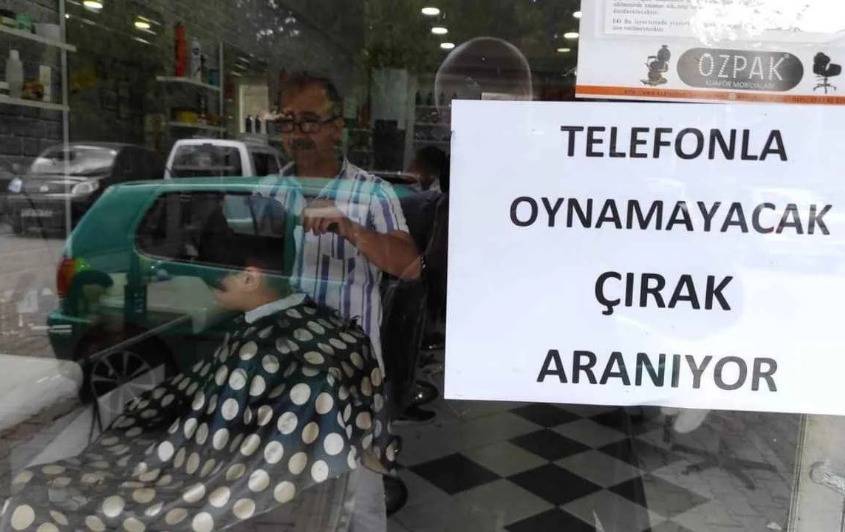
Vocational student: ‘I work until 10.30 pm and haven’t been paid for two months’
Enrollment in formal upper secondary education, excluding open education, declined by approximately 9% over two years. Meanwhile, enrollment in vocational training centers increased by around 72,000 in a single year.
Boys accounted for 82.5% of students enrolled in public vocational training centers, while girls made up 17.5%.
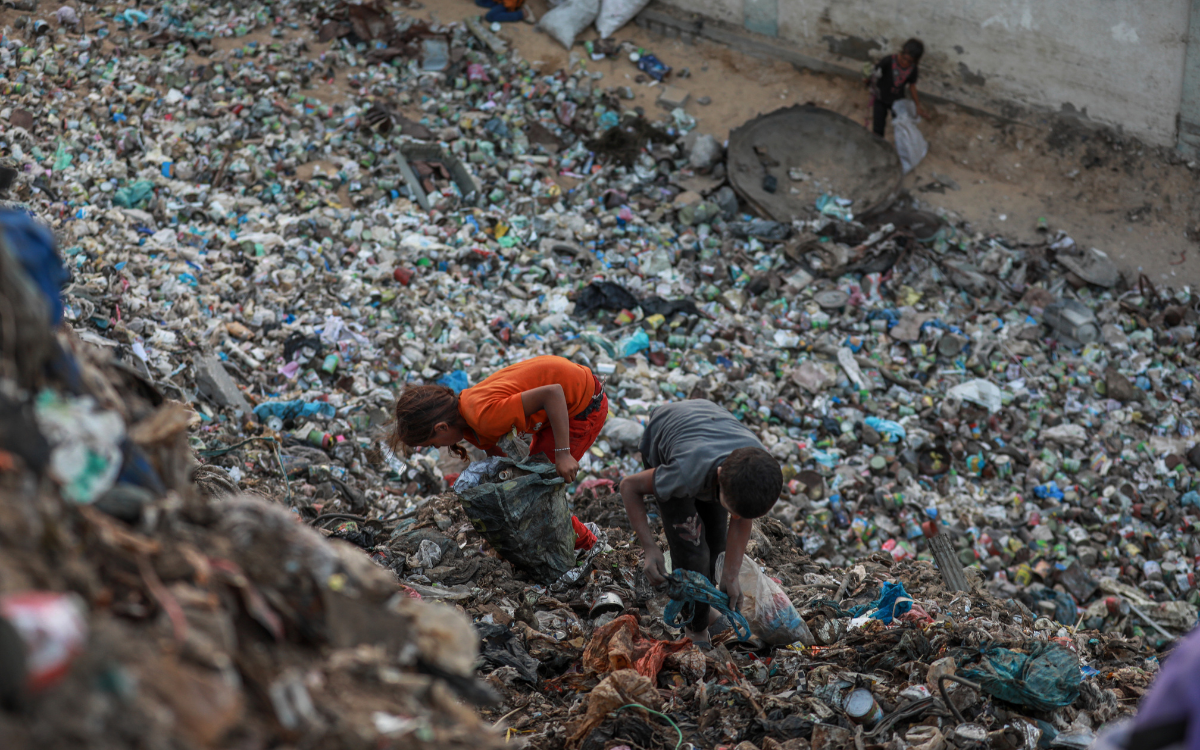
Turkey sees rise in school dropouts, union warns
Rising absenteeism and grade repetition
The proportion of students in vocational and technical high schools who missed 20 or more days of school rose from 40.6% in 2024 to 49.8% in 2025. The ninth-grade repetition rate also increased from 28.5% to 38.4%.
The absenteeism figures do not include students enrolled in vocational training centers.
According to the 2025 Programme for International Student Assessment (PISA), 52.6% of students in Turkey reported missing at least one full day of school in the preceding two weeks, compared with an OECD average of 22%.
ERG noted that absenteeism and grade repetition disconnect children from education and the protective environment that schools provide.
Turkey’s NEET rate more than twice OECD average, report reveals
One in four children aged 15 to 17 in the labor force
The labor force participation rate among children aged 15 to 17 rose to 25.5% in 2025.
According to figures from the Research Center of the Confederation of Progressive Trade Unions of Turkey (DİSK-AR), the proportion of workers covered by compulsory insurance who experienced workplace accidents was 25.8% among those aged 14 to 17, compared with 4.4% among adults.
Data from the Health and Safety Labor Watch (İSİG) showed that at least 75 children died while working in the first 10 months of 2026.
Wealthiest households account for 72% of education spending
The highest-income 20% of households accounted for 72.2% of household education expenditure, while the lowest-income 20% accounted for just 0.9%.
ERG noted that the wealthiest households spent 81 times as much on education as the poorest households.
PISA 2025 data also showed that 32% of students in Turkey fell into the most disadvantaged quarter of the international socioeconomic distribution, compared with an OECD average of 6.3%.

Report reveals sharp rise in education privatization in İstanbul
Disparities were also evident in access to higher education. Among final-year high school students who applied for the 2026 university entrance examination (YKS), 25.8% secured a place in higher education.
The rate was just 16.5% among students attending vocational and technical Anatolian high schools. Of those admitted, 86.6% entered associate degree programs.
The figures exclude open education programs and supplementary placements but include admissions without an entrance examination.

‘Ghost classes’ undermine Turkey’s education system, giving the wealthy an unfair edge
Girls’ school enrollment remains low in 11 provinces
The adjusted net enrollment rate for girls in upper secondary education stood at 80% or below in 11 provinces: Ağrı, Batman, Bitlis, Diyarbakır, Hakkari, Mardin, Muş, Siirt, Şırnak, Urfa and Van.
The rate was 60% in Urfa and 64.4% in Muş.
ERG highlighted the importance of monitoring this indicator in assessing the risk of child, early and forced marriages.
Two in five women aged 18 to 24 were neither in education nor employment. The proportion reached 58.1% in Central Eastern Anatolia, 55.4% in Northeastern Anatolia and 53.8% in Southeastern Anatolia.
Regional disparities in access to education
The net preschool enrollment rate among children aged three to five stood at 49.8%, with considerable differences across provinces.
While the enrollment rate reached 73.7% in Dersim, it stood at 37% in Urfa. The gap between the two provinces widened to 36.7 percentage points.
Girls accounted for only 37.3% of the 623,058 students receiving special education services.
Access to education in rural areas also emerged as a concern. Enrollment in village schools declined by 5.4% to 500,654, while the number of students benefiting from school transportation programs fell by 9.5% to 765,728.
The number of regional boarding schools decreased from 224 to 200.

Children 'exploited, killed' under the guise of vocational training in Turkey
Lack of comprehensive data on school violence
ERG said it could not access a national dataset that would allow for systematic monitoring of violence in schools.
According to PISA 2025, 21.4% of students in Turkey reported experiencing bullying several times a month or more, compared with an OECD average of 19.6%.
The report called for monitoring whether records kept through the early warning system restrict students’ educational opportunities or result in lasting stigmatization.
Meanwhile, figures from the Turkish Psychological Counseling and Guidance Association indicated that 84,647 school counselors were needed, compared with the existing workforce of 47,500.
Only one in five teachers satisfied with their salary
According to the 2024 Teaching and Learning International Survey (TALIS), approximately 20% of middle school teachers in Turkey were satisfied with their salaries, while 50% were satisfied with employment conditions other than pay.
The corresponding OECD averages were approximately 39% and 68%, respectively.
Only 22.3% of teachers in Turkey believed that society valued their profession.
The total number of teachers declined by 1.4% in one year to 1,170,320, while the number of teachers working in private schools fell by 18.7%.
Climate crisis and artificial intelligence
As part of its climate justice project, ERG documented at least one decision to suspend classes in 69 provinces.
According to UNICEF’s 2025 data, climate-related events disrupted the education of 2,534,680 students in Turkey.
Regarding the use of artificial intelligence in education, ERG recommended protecting personal data, ensuring children’s participation in decision-making, maintaining human oversight and providing accessible mechanisms for seeking redress. (NÖ/VK)