












A new report by NewsLab Turkey titled "From Improvisation to Strategy: The Future of Independent Media" says that independent journalism in Turkey is no longer centered on profitability or growth but on survival amid political pressure, economic instability, and algorithmic uncertainty.
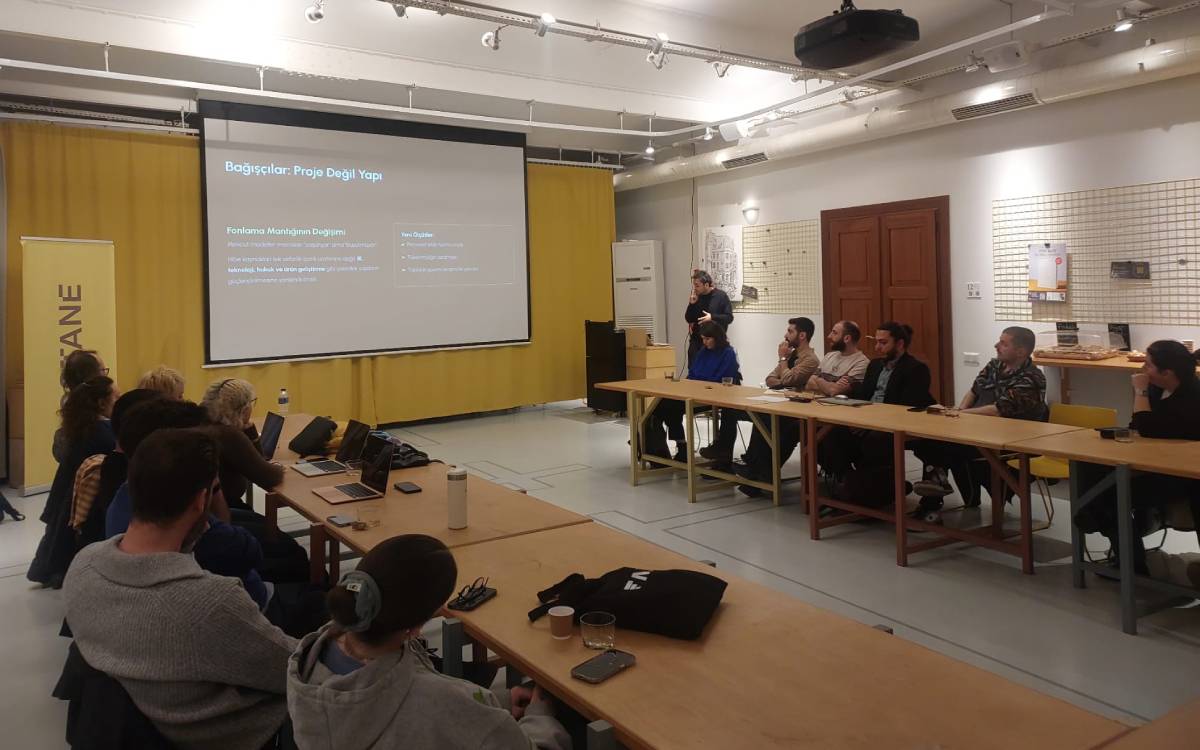
The report's co-authors, Dr. Sarphan Uzunoğlu, a faculty member at İzmir University of Economics’ Department of New Media and Communication, and research assistant Saba Çevik, explained the findings of their study in a Jan 27 event in İstanbul.
The report's central finding that ndependent journalism in Turkey has become less of a business model and more of a continuous act of survival.
‘This report seeks to understand resilience, not profit’
According to the report, traditional metrics of media sustainability fall short in countries like Turkey, where uncertainty and pressure are constants. Dr. Uzunoğlu explained that rather than evaluating independent media through ideal or universal frameworks, the report aims to understand how journalists endure under real-world conditions.
‘OUR MEDIA’ CONFERENCE
Trapped in the algorithm: Rethinking media’s role in a 'rigged' digital world
“For independent media in Turkey, the challenge is no longer building a good business model,” Uzunoğlu said. “It’s about preserving editorial integrity and organizational continuity amid political pressure, economic fragility, and platform dependency.
"That’s why the report treats sustainability not just as a matter of financial performance, but also of ethical coherence, institutional learning, and the quality of the relationship with readers.”
He added that this approach allows independent journalism to be seen not as a story of success or failure, but as a fragile yet creative space of resistance.
Unpredictability of censorship
The report underlines that independent media in Turkey do not operate under straightforward censorship alone. Rather, unpredictability in legal frameworks, opaque regulatory processes, and occasional administrative sanctions shape the working conditions of media outlets.
Institutions like the Radio and Television Supreme Council (RTÜK) and the Information and Communication Technologies Authority (BTK) may not always impose direct sanctions, yet their interventions create an atmosphere of uncertainty that pushes newsrooms to act more cautiously, the report says. This, in turn, can make legal investigations a source of ongoing stress and risk for journalists.

BIA Media Monitoring Reports
Within this landscape, independent outlets try to strike a delicate balance between public visibility and organizational sustainability.
The report refers to this policy as “managed uncertainty,” where a pluralistic media environment is largely preserved on the surface while the conditions necessary to ensure its long-term vitality remain elusive.
Economic fragility and algorithmic dependency
The study finds that independent media’s economic precarity in Turkey is deeply intertwined with political and structural factors. Advertising revenue is heavily concentrated among pro-government media groups, and public advertisements are distributed through mechanisms that discourage critical reporting.
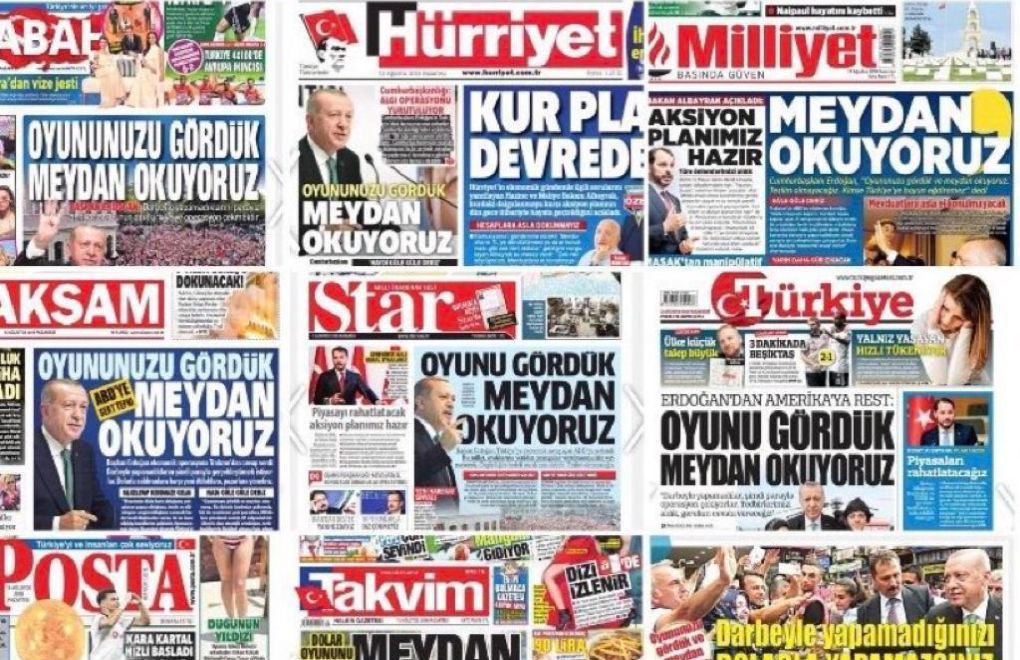
Report: Pro-government newspapers received 78 percent of all public ad payments in 2020
Digitalization, rather than easing this pressure, has introduced new dependencies.
A prominent focus of the report is the impact of Google's algorithm updates in 2024 and 2025. These changes led to a 30 to 80 percent drop in visibility for several independent news sites, leaving many newsrooms grappling with an “algorithmic shock” they could not fully understand. The loss in traffic translated directly into declining revenue, which in turn affected editorial and institutional stability.

Turkey's independent media protest Google over ‘algorithmic censorship'
Three examples
To illustrate structural challenges, the study presents case analyses of three independent media organizations: Medyascope, Fayn, and Gazete Duvar, which ceased operations last year.
Medyascope stands out as a relatively resilient example, with a diversified funding model that includes donations, reader revenue, and platform-based income. Developed through trial and error, this model has evolved into a coherent institutional strategy.
Fayn, by contrast, emphasizes community building over scaling. Subscriptions and engaged reader relationships provide some insulation from algorithmic shifts. However, the report notes this model has its own limitations in terms of scalability and workload.
The closure of Gazete Duvar marks a critical juncture, emphasizing that high reach and visibility do not guarantee sustainability. According to the report, the outlet’s heavy reliance on algorithms and investor support created a fragile foundation that ultimately contributed to its downfall.
Independent news outlet Gazete Duvar shutting down due to financial difficulties
Redefining sustainability
The report argues that conventional global indicators for media sustainability fall short in contexts of intense pressure and uncertainty like Turkey. It contends that “viability” cannot be measured by financial metrics alone. Editorial independence, ethical consistency, institutional learning, and reader trust are equally vital.
In Turkey, independent outlets are often forced to renegotiate their priorities and work structures simply to survive. This process is described in the report as “improvisation”—creative, though often temporary, responses to crises.
From improvization to strategy
Despite outlining a bleak landscape, the study also offers recommendations. It suggests that independent media must move beyond ad-hoc revenue models toward strategic diversification.
For local NGOs and media support organizations, the report highlights the importance of shared infrastructures in areas such as legal support, technology, data analysis, and business development. These collective mechanisms can help distribute burdens that individual newsrooms cannot bear alone.
From the perspective of international donors and funders, the report warns against short-term, output-focused project support. (HA/VK)

