



The environmental impact assessment (EIA) process for a planned Quartz Sand Operation Project in Çorlu, an industrial district of Tekirdağ in northwestern Turkey, has been terminated. The decision was made due to the serious risks the project posed to the region's drinking water sources, agricultural lands, and livestock farming activities.
The Tekirdağ Water and Sewerage Administration (TESKİ) General Directorate stated that the project was deemed unsuitable for its proposed location. It highlighted that a large portion of the project site and license area falls within the long-distance protection zone of the Türkmenli Pond.
TESKİ also noted that the transmission line for the drinking water well supplying the Seymen neighborhood passes through the project area and that the local Livestock Watering Pond would be directly affected by the activities. The directorate stated that all these conditions would have a "serious impact on the public's environmental living conditions, agriculture, and livestock farming."
The State Hydraulic Works (DSİ) 11th Regional Directorate warned that the operation threatened water resources. DSİ explained that the Taşlık Stream and its continuation, the Kum Stream, which pass through the project route, carry water directly to the Türkmenli Pond, which meets the drinking water needs of Marmaraereğlisi and Yeniceköy.
DSİ further stated that the activity could harm soil and groundwater, cause pollution in surface waters, and degrade precipitation areas. Given that the Türkmenli Pond has a 93.1 $\text{km}^2$ catchment area and the project was in a critical zone for the pond, DSİ concluded that the activity should not proceed.
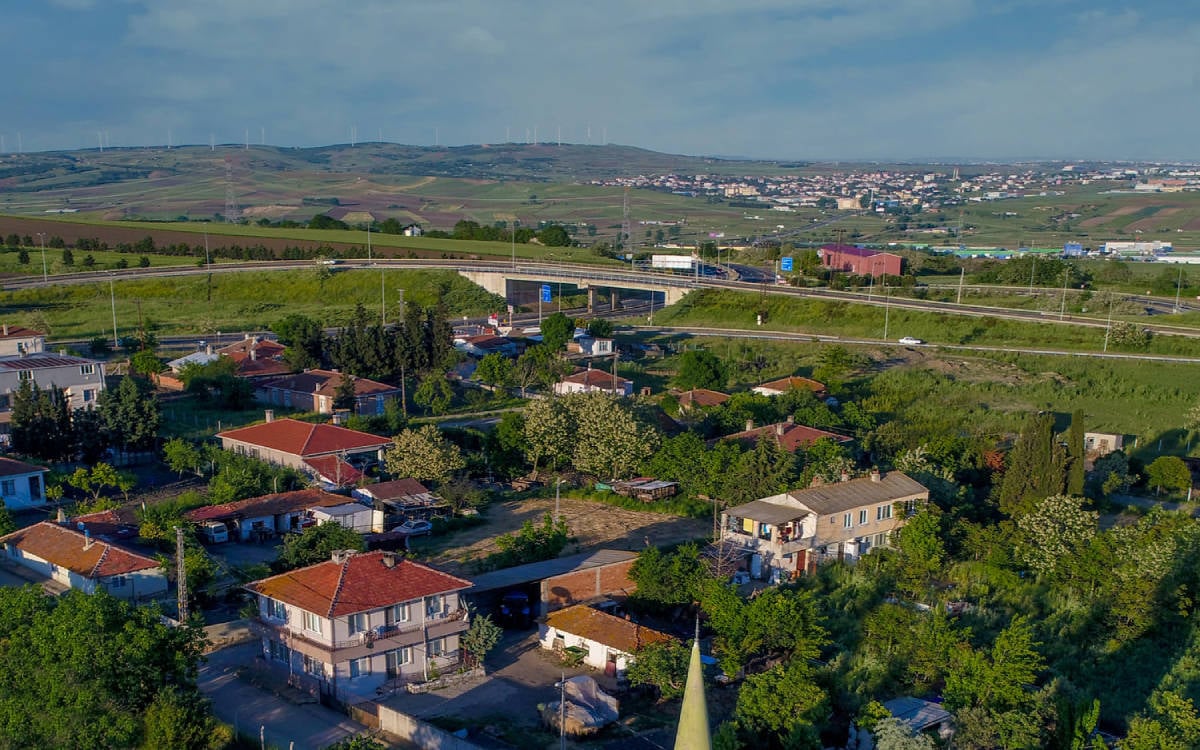
A high-density livestock area
The Provincial Agriculture and Forestry Directorate issued a negative opinion on the project site for the following reasons:
The area is surrounded by pastures and agricultural lands.
Intensive livestock farming activities are ongoing in the region.
The site is located within a rural development area.
There is no non-agricultural use permit for the land.
Obtaining such a permit would require separate evaluations by the Provincial Soil Board and the Ministry.
The Provincial Agriculture and Forestry Directorate concluded that, due to these conditions, the project in its current form would harm agricultural and livestock farming activities.
EIA process halted
Following the negative evaluations from the three institutions, the EIA process for the Quartz Sand Operation Project was officially terminated because its implementation was found to be inconsistent with the legislation, in accordance with Article 5 of the EIA Regulation.
A significant detail is that most of the contested pasture area was established when villagers previously donated their own lands to the village legal entity before Tekirdağ became a metropolitan municipality, which transferred control of village properties to the municipality.
This situation has led to debates that a serious loss of rights regarding the use of the pasture has occurred.
The pasture in question has previously been on the public agenda with attempts to establish an industrial site, open a quarry, and transfer 936 decares to the Turkish Jockey Club (TJK). Additionally, a portion of the land was transferred to the National Defense Ministry in recent years, and a 49.7-hectare section was allocated as an additional area for the İstanbul Special Industrial Zone to be used by Baykar Makine Sanayi ve Ticaret A.Ş. for its UAV R&D, testing, training, maintenance, and production work.
Local residents, who stated that the pasture areas have long been at risk due to various projects, stressed that they would not accept initiatives that could lead to the loss of fertile soil and pastures.
Citizens expressed their satisfaction with the institutions' negative opinions on the quartz sand operation application, stating that the decision was important for the protection of the region.
Pasture land declines
Cemal Polat, a board member of the Turkish Union of Engineers and Architects' Chambers (TMMOB) Tekirdağ Provincial Coordination Board, commented on the significance of pasture areas and the decision. He noted that it is mandatory to protect pastures, which are vital for livestock farming.
Polat stated that Turkey's pasture assets, which amounted to 42 million hectares in the 1960s, have decreased to 11.8 million hectares today. He emphasized that livestock farming is becoming more difficult each day due to rising input costs and continued meat imports, making the strengthening and protection of pastures a necessity.
Polat added that the specific pasture area holds a special value due to both its high productivity and its creation through the donation of property by villagers. He congratulated the three institutions that issued negative decisions regarding the quartz sand operation project.
He also stated that the declaration of a part of the region as a Special Industrial Zone in 2023 was not a correct decision.
Polat drew attention to the fact that using pasture areas for different purposes would harm livestock farming and the ecological balance in the region. "Short-term gains may result in long-term losses," he said, adding that "it is of great importance for institutions to act with sensitivity toward the pastures. If laws are followed and decisions that violate laws and regulations are not taken, pasture areas and fertile soils will continue to be protected."
Stating that pastures are indispensable for the continuity of rural life, biodiversity, and natural balance, Polat expressed that policies for the protection of these areas and the enforcement of laws should be developed to ensure the sustainability of production and food security. (SC/HA/VK)