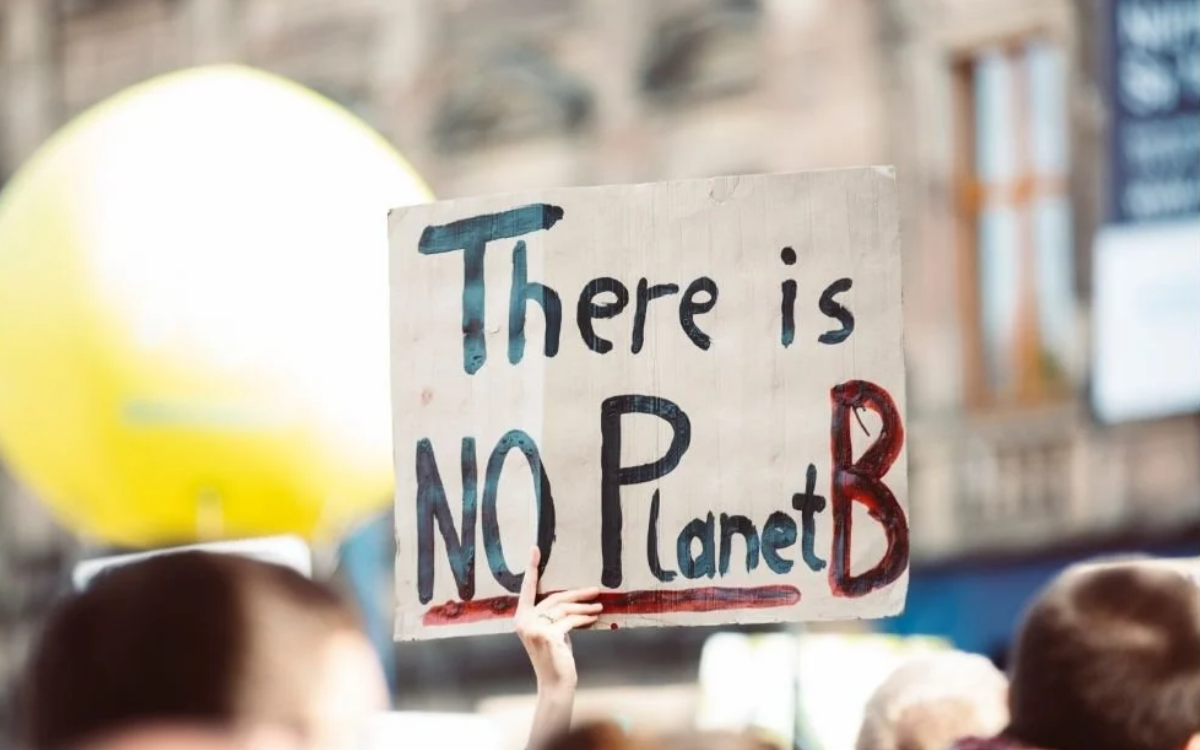

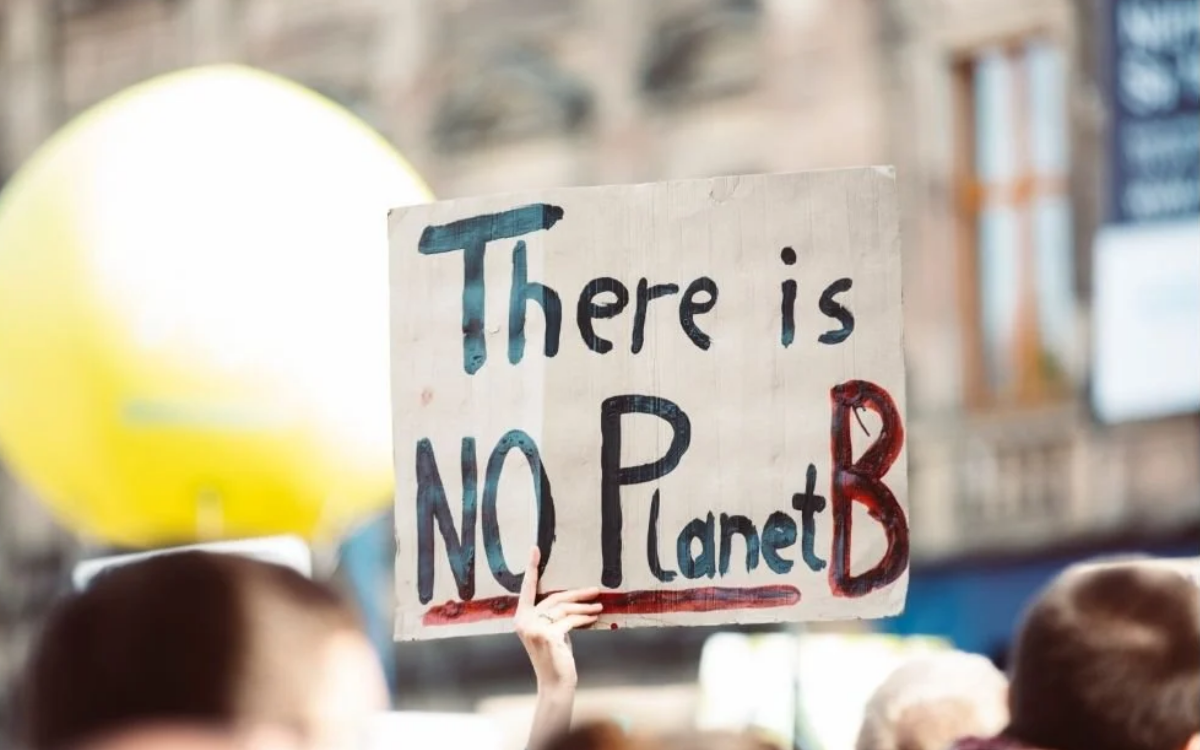



The climate crisis is a deepening humanitarian crisis with devastating consequences each passing year. In this context, the irreversible erosion created in nature results in clear human rights violations. Chief among these rights are the rights to life, health, housing, and property, many of which are directly or indirectly under threat.
Global reports reveal that climate change causes the premature death of hundreds of thousands of people every year and forces millions to relocate as climate refugees.
The failure to raise sufficient awareness about climate change and, more importantly, the lack of concrete steps to protect the climate and ensure climate justice accelerates a process in which humanity digs its own grave with its own hands.
According to Amnesty International's 2024 report:
- States have completely failed to fulfill their obligations to protect human rights both within their borders and beyond in the face of accelerating climate change.
- Climate change has made unnatural disasters more severe and likely, leading to increased deaths, famine, forced displacement, and other harms to human rights.
There are also binding international legal declarations that define the climate crisis as a human rights issue. In this regard, various activist groups established with this purpose are persistent in seeking access to climate justice. At the same time, they monitor the implementation of decisions by international human rights mechanisms.
What does the law say?
- In the legal frameworks of many countries, including Turkey, there are regulations recognizing the right to live in a healthy environment as a human right.
- Article 56 of the Constitution states: “Everyone has the right to live in a healthy and balanced environment. It is the duty of the State and citizens to improve the environment, protect environmental health, and prevent environmental pollution.”
- With a decision adopted by the United Nations (UN) General Assembly on Jul 28, 2022, access to a clean, healthy, and sustainable environment was recognized as a universal human right.
- The Paris Climate Agreement is a treaty directly aimed at combating climate change. Turkey, as a party to this agreement, submitted a declaration to the UN in 2023.
Historic decision from the UN
Most recently, the UN’s judicial body, the International Court of Justice (ICJ), issued a landmark advisory opinion on the obligations of states in the face of the climate emergency. Announced on Jul 23, 2025, this advisory opinion was recorded as the largest climate case in the ICJ's history. As part of the decision, 96 countries and 11 international organizations were heard, and 91 states submitted written opinions.
Although the decision is not binding, it confirmed the argument of many legal experts and activists that states may bear legal responsibility for climate inaction. It also created a strong legal basis for domestic legal systems and courts.
'Climate justice' becomes concrete
The opinion issued by the ICJ expands the legal framework for combating the climate crisis. Countries not only need to set climate targets for themselves, but now also bear rights-based legal responsibilities to meet these targets.
With this decision, climate justice ceases to be an abstract concept; the historical, current, and future responsibilities of states become concrete obligations under international law.
What is the ECtHR's position?
In climate lawsuits aimed at forcing states to combat climate change and exposing flawed climate policies, rulings in favor of the plaintiffs are also being issued. In this context, three decisions by the European Court of Human Rights (ECtHR) are critical.
- The first case involved the former mayor and a former resident of the city of Grande-Synthe in France, who filed a complaint claiming that the country's measures to prevent global warming were inadequate. The ECtHR found the application inadmissible on the grounds that the applicant no longer lived there and therefore did not have victim status. The decision highlighted the importance of directly proving "personal victimization" in individual applications. The court focused on procedure, not content.
- The first case involved the former mayor and a former resident of the city of Grande-Synthe in France, who filed a complaint claiming that the country's measures to prevent global warming were inadequate. The ECtHR found the application inadmissible on the grounds that the applicant no longer lived there and therefore did not have victim status. The decision highlighted the importance of directly proving "personal victimization" in individual applications. The court focused on procedure, not content.
- The first case involved the former mayor and a former resident of the city of Grande-Synthe in France, who filed a complaint claiming that the country's measures to prevent global warming were inadequate. The ECtHR found the application inadmissible on the grounds that the applicant no longer lived there and therefore did not have victim status. The decision highlighted the importance of directly proving "personal victimization" in individual applications. The court focused on procedure, not content.
The Switzerland decision became the first major ECtHR ruling to legally affirm the direct link between the climate crisis and human rights. All three rulings show that legal responsibilities in the fight against the climate crisis are starting to become clearer, though they remain limited for now.
Turkey's first climate lawsuit
In Turkey, it was young people who brought the climate crisis before the high court.
Climate Action Tracker (CAT), an independent organization that monitors government actions in line with international agreements, assessed Turkey’s general climate policies and targets as "critically insufficient" to reach the Paris Agreement’s goal of limiting temperature rise to 1.5 degrees.
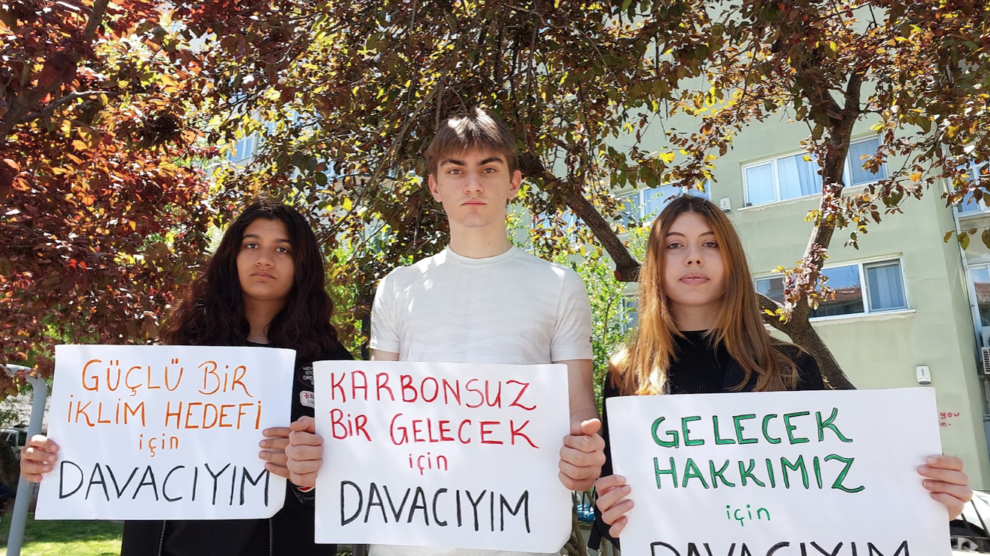
Young climate activists Atlas Sarrafoğlu, Seren Anaçoğlu, and Ela Naz Birdal, who have been fighting against the government's inadequate climate policies, took their case to the Constitutional Court (AYM) after their lawsuit against the Presidency was rejected by the Council of State. All three are part of Youth for Climate, a global climate movement formed by young people who came together to raise awareness of the climate crisis and make their demands heard.
'Our goal is to take the case to the ECtHR'
Atlas Sarrafoğlu and Seren Anaçoğlu, who began their legal journey in 2024, shared the progress of their struggle with bianet.
Seren Anaçoğlu, a 22-year-old climate activist and lawyer, stated that their primary goal is to bring the case to the ECtHR:
"In the case we filed at the Constitutional Court, the file is currently at the commission review stage. However, the proceedings at the Constitutional Court take a bit longer, and this affects the steps we can take. What we actually want is to build a fully legal case, to internationalize it, and to show, through the outcome of the case, how Turkey's climate policies are progressing."
Anaçoğlu criticized the case not being concluded before the Climate Law was passed in Parliament, saying, "We prepared a report based on scientific data. We actually presented this data as evidence. That’s why the Climate Law was very important to us. We wanted to contribute to the law with the ruling from the case. But the law was enacted before the ruling. And the law emerged completely unaware of human rights, disconnected from climate and justice, as if it were a Commercial Code," she said in reaction.
'Not just an environmental issue'
Young climate activist Atlas Sarrafoğlu stated that their aim is not only to make their voices heard but also "to change something," and continued:
"Legal struggle requires patience and determination. The most fundamental reason we embarked on this journey was that the climate crisis is an injustice creating irreversible impacts, threatening every aspect of our lives. Our generation is the one that will experience the consequences of this crisis most severely.
"Therefore, we must take action not just to make our voices heard but to truly change something. Because the crisis we are living through is not just an environmental issue; it is also a rights issue, a matter of justice. This case is not only ours; it belongs to all young people in this country and the world, to the future, and to the planet. We are determined to follow this process to the end and to continue our struggle on every platform."
'We are demanding accountability not just for the past, but for the future too'
Noting that the public generally keeps a distance from such lawsuits, Sarrafoğlu emphasized the importance of public support:
"Law can create real transformation not only in courtrooms but also when it acts together with social conscience. With this case, we are demanding accountability not just for the past, but for the future as well. That’s why every bit of support given means not just morale, but also concrete impact. What is at stake here is not a story of courage, but a very concrete reality: the climate crisis is now being felt with all its destructiveness all around the world, and those most responsible in this context are governments and decision-makers who have failed for years to take necessary measures. In such a situation, how can demanding accountability be considered risky? This is a demand for rights. It is a defense of the constitutionally guaranteed right to life and the right to live in a healthy and balanced environment.
"When we filed this lawsuit, our reasons and our belief in change were at a high level, and they still are. Because the basis of our demands is not merely emotional or ideological; it is grounded in very concrete, scientific, and constitutional realities. The effects of the climate crisis are now too clear and destructive to ignore. Therefore, I don’t even want to imagine that the Constitutional Court will disregard this data or dismiss the rights to life, to a healthy environment, and the rights of future generations. Looking at the scientific data, the legal framework, and universal human rights, we believe there is no other possibility than for the ruling to be in favor of our demands."
'This planet belongs to all of us'
Sarrafoğlu explained who should bear which responsibilities to prevent the deepening of the climate crisis and ensure climate justice:
"Everyone has the right to live in a healthy and balanced environment, and this is not just a right, but also a responsibility we all share. States must enact laws to protect nature, take real steps against the climate crisis, and inform the public. Companies must not destroy nature for profit, they must be transparent about the harm they cause and produce solutions. As individuals, we must question our consumption habits, raise our voices, and become part of the change. Meanwhile, the media and schools must raise awareness on these issues and transform us from passive observers into active individuals. Because this planet belongs to all of us, and we will build its future together."
'We must develop coherent policies'
Cem Altıparmak, a lawyer from the Foundation for Law, Nature, and Society (HUDOTO), whom we consulted for his opinion on the matter, emphasized the close link between biodiversity, disaster risk reduction, and climate change, stating:
"Climate change both causes biodiversity loss and is affected by the consequences of biodiversity loss. At the point where all these crises lead us, disasters emerge. If we want to reduce disaster risks, we must mitigate the effects of climate change, and where we cannot mitigate these effects, we must develop policies that are compatible with these changes."
Highlighting that the fight against climate change is a matter of paradigm shift, Altıparmak said:
"You cannot combat climate change by merely ‘taming’ your policies while continuing with the economic, social, and political policies that are bringing the planet and living beings to the brink of extinction. To see that this is not an effective method, one only needs to look at the recent wildfires."
Criticism of the Climate Law
In this regard, Altıparmak described the Climate Law passed by Parliament as more accurately "an Emissions Trading Law" rather than a true Climate Law, and listed his criticisms as follows:
- There is no independent Scientific Advisory Board to ensure oversight and transparency in the law’s implementation.
- There are no concrete targets for reducing greenhouse gas emissions that cause climate change.
- It does not present a plan to end the use of fossil fuels, particularly coal.
- Although the law came to Parliament with the claim of ensuring climate justice, it lacks concrete steps to realize it.
- It includes no fair transition mechanism to protect workers and local communities in sectors undergoing technological and economic transformation.
- It includes no fair transition mechanism to protect workers and local communities in sectors undergoing technological and economic transformation.
- There are no provisions to protect vulnerable groups from the loss and damage caused by the climate crisis.
- The law does not adopt the standards set by the European Court of Human Rights regarding states’ obligations to protect human rights in the face of the climate crisis.
'Just greenwashing projects'
Önder Algedik, an energy and climate expert and policy critic, said that "states that do not take human rights seriously also do not take climate change seriously," and pointed out that climate agreements have actually accelerated climate change rather than preventing it:
"I examined the pace at which states changed the climate before and after the emergence of climate agreements. The results were alarming. As climate agreements came into effect and were implemented, states changed the climate even more rapidly, not just increasing but multiplying the pace. This is a disastrous situation. There are only a few agreements in place, and even those cannot be made visible amid greenwashing projects disguised as awareness efforts. To develop climate-friendly policies, the system must be questioned by us, and accountability must be demanded from politics. Polarized politics does not allow this, but we also do not resist enough."
(AB/TY/VK)