






How have public support for the peace process and confidence in its success evolved since it began more than two years ago? How has the absence of armed conflict affected people's daily lives? What role can society play in building peace at a time when political negotiations are moving slowly?
Drawing on recent field research, Yüksel Genç, general coordinator of the Socio-Political Field Research Center (SAMER), spoke to bianet about the relationship between peace and democratization and the obstacles to building broader public engagement in the peace process.
Genç said public support for peace remained intact, but people had become more cautious, skeptical, and conditional in their assessment of the process's prospects for success:
"Building peace across society is not about people supporting the negotiations from the outside. It is about society becoming an active force in shaping peace through its own demands."
'Prolonged uncertainty undermines the process'
In a regional survey conducted by SAMER in Nov 2026, 35.8% of respondents considered the peace process successful, while 25.1% considered it unsuccessful and 39.2% were undecided.
Genç cautioned against interpreting the proportion of undecided respondents as opposition to the process.
"It would be wrong to categorize undecided respondents as opponents of the process. They also represent a segment of society whose position could change depending on concrete developments."
Among those who felt the process was not progressing successfully, the main reasons cited were:
Lack of concrete steps: 35.4%
Doubts about the sincerity and credibility of the process: 19.9%
Slow progress: 17.3%
INTERVIEW WITH TÜLAY HATİMOĞULLARI
'Peace process must be made irreversible to succeed'
Genç said public dissatisfaction stemmed not only from the slow pace of negotiations but also from doubts about political will, sincerity, and the ability to deliver results.
Comparing SAMER's previous surveys with the Nov 2026 findings, Genç noted that the initial hopes for peace and cautious optimism had gradually given way to concerns over trust and implementation. The latest survey revealed a combination of continued expectations, uncertainty, and a desire for greater reassurance:
"In peace processes, public expectations can be sustained for a certain period through rhetoric and declarations of intent. But when these expectations are not backed by concrete developments, they can give way to fatigue, distrust, and growing uncertainty. Prolonged uncertainty also undermines the process."
Demands for peace beyond the absence of conflict
Genç said the most significant and immediate consequence of the absence of armed conflict was that the loss of life had stopped. Although the atmosphere of social withdrawal, repression, fear, and distrust that had intensified over the past decade had not entirely disappeared, people had experienced some relief in their daily lives:
"But we cannot yet say that this relief has translated into greater social well-being or a strong sense of security about the future. The fact that the economic crisis, unemployment, and poverty emerged as the most pressing public concerns in our latest survey is directly related to this."
Genç said detention operations perceived as politically motivated, particularly in western provinces, and measures targeting the YENİ Party and municipalities run by the Republican People's Party (CHP), the main opposition party, continued to fuel a sense that legal protections were lacking.
When comparing expectations for peace in predominantly Kurdish provinces and western Turkey, Genç cautioned against drawing a rigid geographical distinction. Western Turkey is not socially homogeneous, she noted, and a substantial proportion of the Kurdish population now lives in western provinces:
"For the Turkish majority living in the west, the peace process is largely viewed in terms of negative peace, such as ending armed conflict, completing disarmament, and ensuring a permanent end to the loss of life."
Genç added that expectations of economic prosperity, stability, democratization, and the rule of law were also prominent in western Turkey:
"In the Kurdish provinces, alongside expectations of economic prosperity, legal protections, and democratization, there are more specific, longstanding demands. Chief among these are education in one's mother tongue, recognition of language rights, constitutional and legal protections for Kurdish identity, equal citizenship, and stronger local democracy."
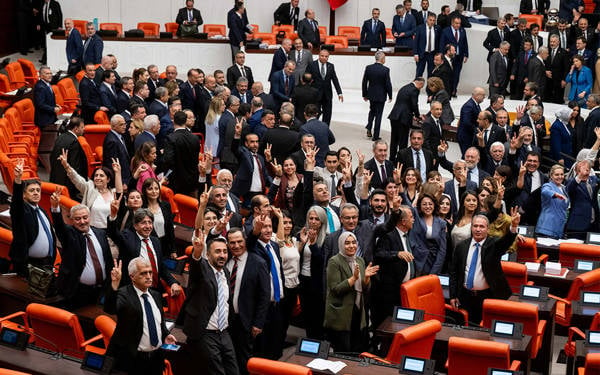
A stop on the road to peace: The Framework Law
Genç said two-thirds of respondents in the regional survey assessed the success of the peace process in terms of the recognition of language and identity rights.
She argued that strengthening common ground for peace depended on addressing different demands within a shared vision of equal citizenship and a democratic future, rather than treating them as competing interests:
"True peace means building a society where people not only live without fear of being killed but can also live freely, earn a living, plan their futures with confidence, and have their identity rights protected."
'Neither peace nor democracy can be achieved without a struggle'
Criticizing the tendency to portray peace and democracy as competing priorities, Genç described the relationship between the two:
"Peace is a necessary but insufficient condition for democratization. Turning peace into a genuine democratic achievement requires building on the opportunities it creates and strengthening democratic institutions, rights, and mechanisms. Democracy is impossible without peace, and lasting peace is impossible without democracy."
Genç acknowledged that aspects of the current approach to conflict resolution had restricted political space and weakened legal protections. However, she opposed using these shortcomings to justify either rejecting the peace process altogether or postponing demands for democratization.
She said debates surrounding Selahattin Demirtaş's statement and political parties' participation in the commission should also be viewed in this context:
"In the system we live in, neither peace nor democracy can be achieved without a struggle. Moreover, neither can be built without organized public demands and active public engagement."
Responsibilities of the government, the opposition, and the DEM Party
Genç said the government had largely chosen to conduct the peace process behind closed doors from the outset. Although it had increasingly embraced pro-peace rhetoric over the past year, its democratic and legal reforms had not kept pace with that rhetoric:
"In a sense, the process is becoming increasingly detached from society rather than involving it, generating distrust rather than confidence, and stripping the process of its political dimension rather than opening it up to political engagement.
"The government's primary responsibility goes beyond explaining to its own voters why peace is necessary. It must pave the way for the democratic transformation that peace requires and demonstrate its commitment through concrete action."
Addressing opposition criticism of the lack of transparency in negotiations, weakening legal protections, and shrinking democratic space, Genç said these concerns should not become grounds for disengagement:
"Using these problems to justify staying out of the process altogether or failing to develop effective social and political initiatives does nothing to broaden public participation in peacebuilding."
Genç said political parties needed to confront prejudices and fears among their own voters, take concrete steps toward democratization and stronger legal protections, and make addressing everyday problems such as the economic crisis and inequality part of their vision for peace:
"Ultimately, the responsibility for making peace a shared societal endeavor cannot be left solely to the Kurdish political movement or those segments of society directly demanding peace."
Genç described the pro-Kurdish Peoples' Equality and Democracy (DEM) Party as one of the actors that had assumed the greatest responsibility in the process. She noted that the party had organized hundreds of public meetings and played an important role in sharing the limited information available about negotiations and maintaining the process's public legitimacy:
"Building peace across society is not simply about informing the public about the process and calling on people to support it. It also means organizing public demands, enabling different segments of society to participate, and bringing those demands into political negotiations."
However, Genç said the DEM Party had not taken sufficient initiative given its responsibilities and its capacity to mobilize society:
"The party has fallen somewhat short in turning support among its own base into broader public mobilization, building lasting alliances with different segments of society in western Turkey, and making peace a common cause across society."
Genç stressed the need for a vision of social transformation in which peace extends beyond resolving the Kurdish issue and makes a tangible difference in everyone's daily life. She said the DEM Party had struggled to translate its rhetoric on this issue into concrete policies.
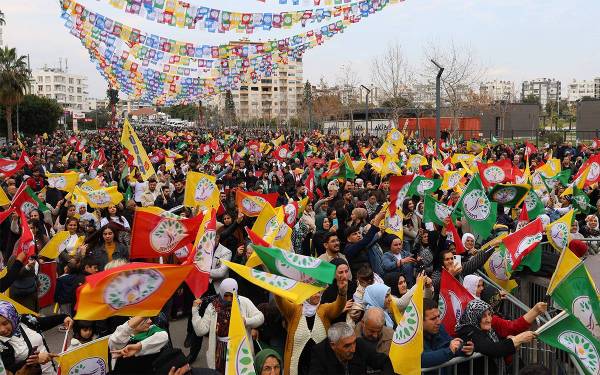
Between negotiations and opposition: DEM Party’s strategic test
An independent agenda for civil society
Genç said broad public participation in peacebuilding was both a prerequisite for political progress and an important safeguard for the process. She emphasized that civil society's role became particularly important when negotiations were moving slowly:
"Dialogue among local initiatives, civil society organizations, the women's movement, labor organizations, professional associations, academia, and different segments of society can create opportunities that the political process has failed to provide. It can rebuild public trust and generate public pressure on political actors to pursue democratization."
However, Genç also emphasized that political actors must fulfill their responsibilities, saying, "Civil society efforts cannot substitute for political will and legal action."
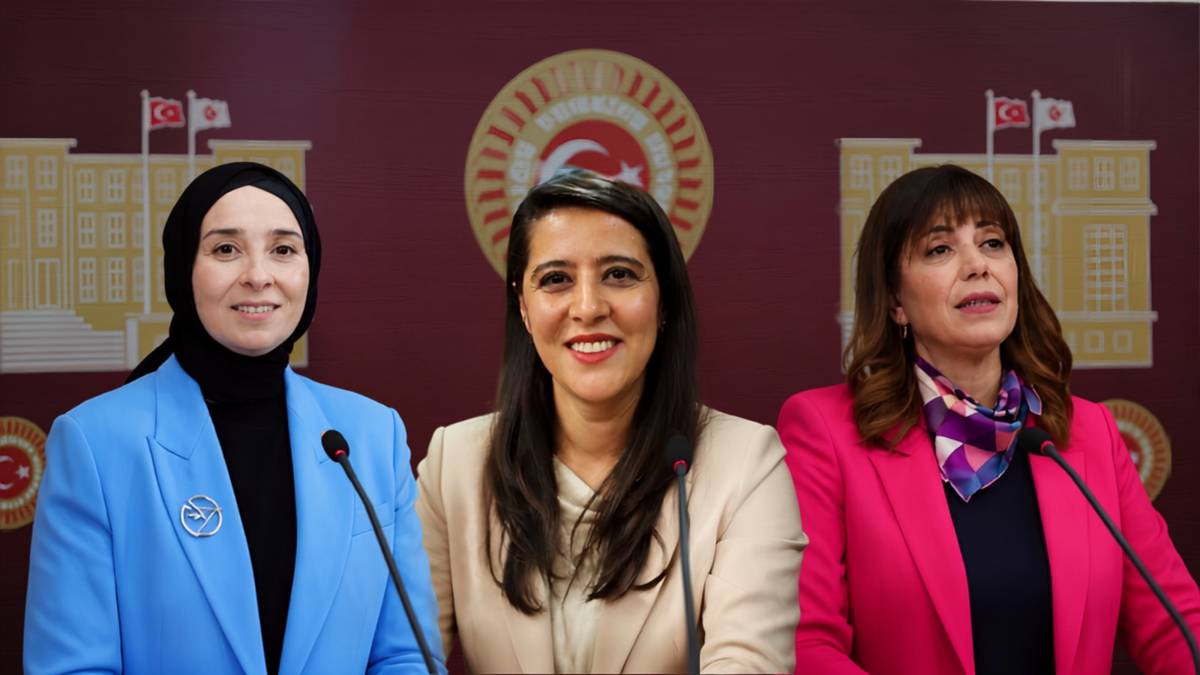
'Women politicians’ role in peace process cannot be reduced to a ‘softening voice’'
Compared with previous peace initiatives, civil society's ability to take the initiative is now considerably more limited, Genç said. She attributed this to the shrinking space for organizing over the past decade, growing fears of repression and criminalization, and the closed-door approach to the current negotiations.
Genç noted that much of civil society in the Kurdish provinces had been left dependent on political developments and the positions taken by political actors. In western Turkey, meanwhile, sustained collective organizing capable of bringing demands for peace to broader segments of society had yet to sufficiently develop.
A strong, shared peace agenda bringing together civil society in both parts of the country has yet to emerge, she said.
"What we need today, in my view, is not a civil society that leaves the peace process in the hands of political actors, but one that can influence its direction through its own agenda, demands, and collective organizing power."
(NÖ/VK)