








Efforts toward a lasting Kurdish-Turkish solution remain at a critical stage, with calls for concrete steps to ensure peace, democratic integration, and the rule of law. Observers stress that sustainable stability in Turkey requires ending hostilities, securing legal recognition for minority rights, and fostering societal inclusion, paving the way for a more peaceful and conflict-free future.
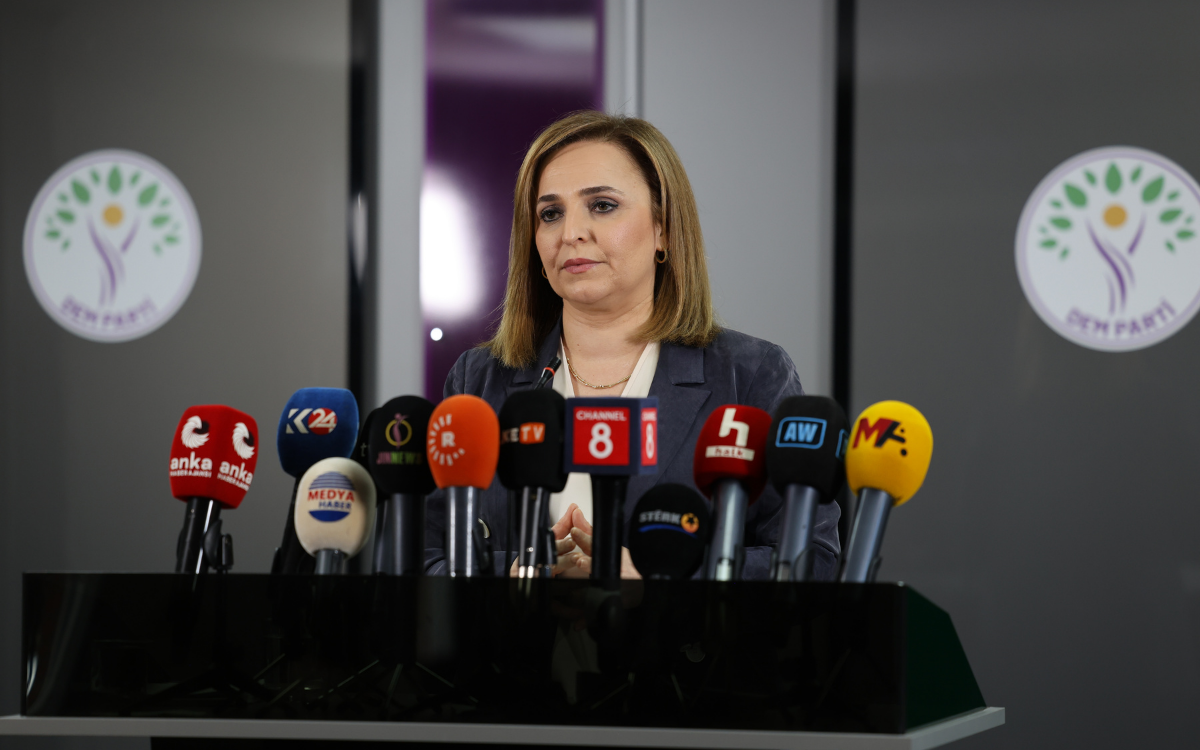
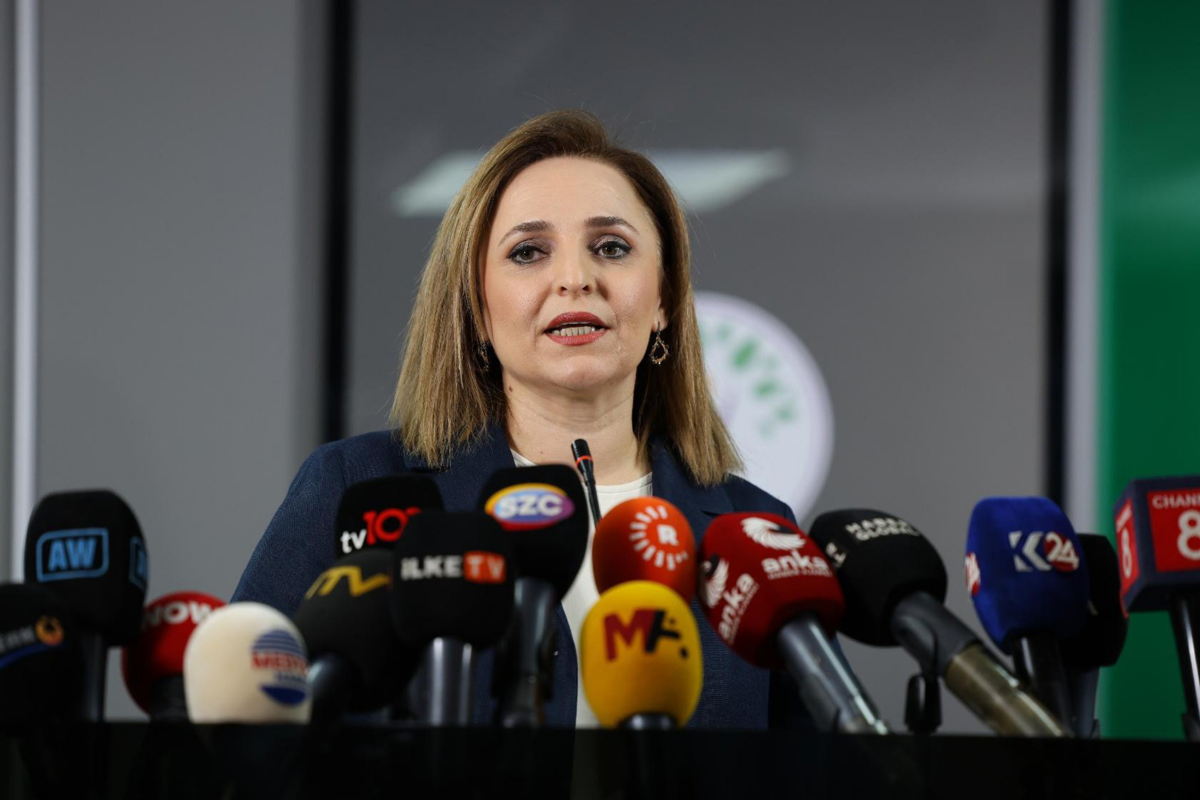
Ayşegül Doğan, spokesperson for the pro-Kurdish Peoples’ Equality and Democracy Party (DEM Party), spoke at a press conference following her party’s Central Executive Committee (MYK) meeting yesterday, addressing recent developments.
Doğan said, “The process is at a critical stage,” and regarding the government’s response to the calls from the Syrian Democratic Forces (SDF), she added: “There was a specific reference to this in Mr. Öcalan’s call, but we do not evaluate it as directly connected. These are two separate processes, two separate procedures, in two different countries, under different conditions.”
In her remarks, Doğan drew attention to the situation in Gaza, called on the international community to take action, and expressed her support for the recent ceasefire agreement reached between Israel and Hamas.
Doğan also spoke about the anniversary of Abdullah Öcalan’s expulsion from Syria on October 9, 1998, saying:
“What was attempted on October 9, 1998, was clearly to ignite a Turkish-Kurdish war. It did not succeed—and fortunately, it did not. However, preventing it from succeeding required a very great struggle and came at a heavy cost. In terms of its regional impact, the stage we have reached in Turkey is extremely critical—a very important and historic threshold. Our insistence on saying this is not a coincidence. Its critical and historic nature is evident even when looking solely at the developments in Turkey and the broader Middle East over the past 30 years.”
DEM Party Spokesperson Ayşegül Doğan made detailed remarks on the current political process, stressing the need for concrete steps:
Doğan said that action is necessary, noting:
“President Erdoğan once said, ‘Every positive step will pave the way for the next.’ Similarly, MHP leader Mr. Bahçeli said, ‘First the weapons must be silenced, then everything can be discussed.’ Now we say: ending the fighting is important, but it is necessary to make the cessation of hostilities permanent. Certain steps must be taken to ensure that. The weapons are silent, so now the laws, justice, and democracy must be visible. The weapons are silent, so now recognition and acceptance must be secured legally. Yet, no progress has been made. Important words are being spoken, valuable statements are made, rhetoric is being challenged—we are aware of this. But words alone are not enough. Repeating them is a waste of time.”
“No concrete steps are being taken”
On the transitional period, Doğan said:
“To understand that we are in a transition, certain new developments must occur both socially and politically. On one hand, everything points to the requirements for entering a new era. On the other hand, no concrete steps are being taken. In the new period, it must be clear that the rule of law is upheld and justice is established. For example, we must see that isolation has ended. The question ‘Why should they speak?’ should not even be asked. It must be explained why speaking is essential, and this should not be left to the DEM Party alone. This is not only DEM Party’s issue; it is Turkey’s issue, society’s issue, politics’ issue. The responsibility we face is a collective responsibility. Therefore, efforts must be made to take steps on this matter together.”
“The process is at a critical stage”
Doğan added:
“The process is at a critical stage. You can see for yourselves how this critical stage might be overcome. In the field, we frequently encounter these questions and are asked them at every meeting. Some are following developments in Syria and trying to make connections. Others are asking through the commission work in Turkey. Still others ask, ‘How will it happen? How will Mr. Öcalan’s views reach there? How will this be ensured?’ All of this shows us that no steps have been taken. It should also be noted that the responsibility for the process has largely been left to Mr. Öcalan, as we have observed. His care, sensitivity, and the impressions we have gained from the meetings conveyed to us are very important and valuable. But a response is needed, and it must not be delayed.”
“Two separate processes, different conditions”
Regarding the government’s response to the SDF’s calls, Doğan emphasized that the Syrian process is separate, saying:
“In Syria, the SDF says the interim government has left these dialogue calls unanswered and that they place the integration of the YPG above all other issues. Integration should not be understood as one side submitting to the other; it must be recognized as a mutual process of change and transformation. From this perspective, yes, there is a part that concerns Turkey because we are also talking about democratic integration here—about inclusion and re-establishing that inclusion. In Mr. Öcalan’s February 27 call, there was a specific reference to this, but we do not evaluate it as directly connected. These are two separate processes, two separate procedures, in two different countries, under different conditions.” (AB/MH)