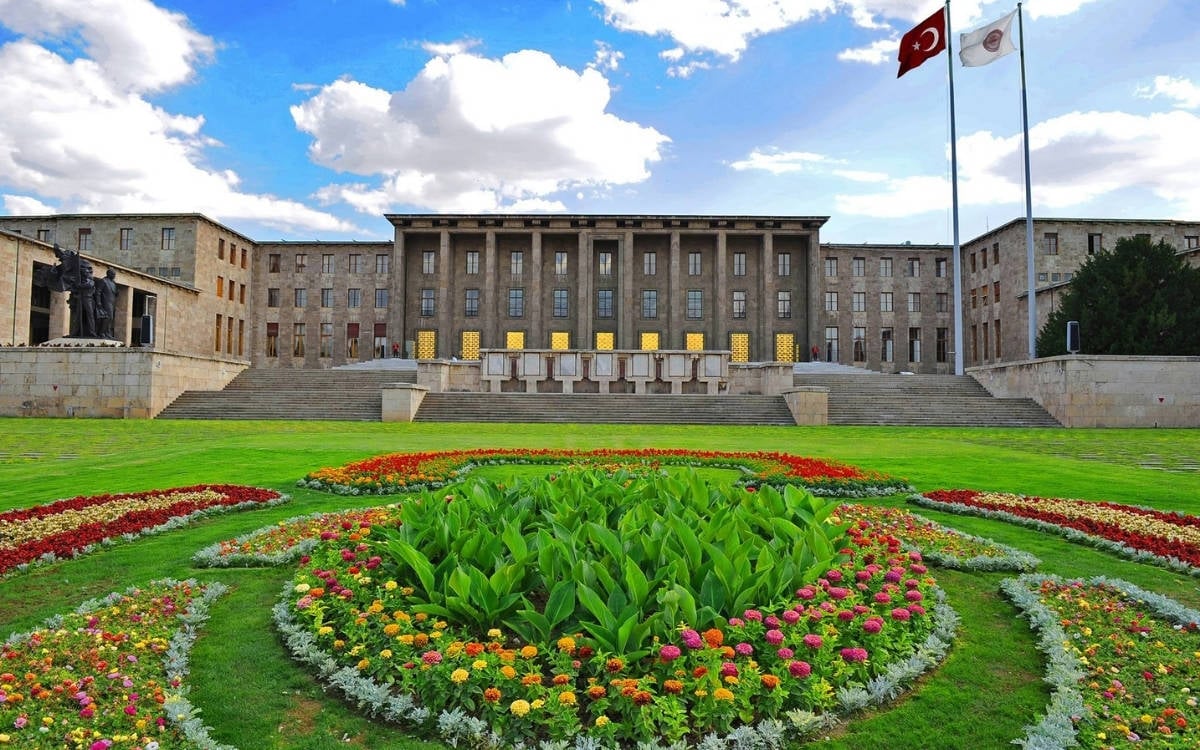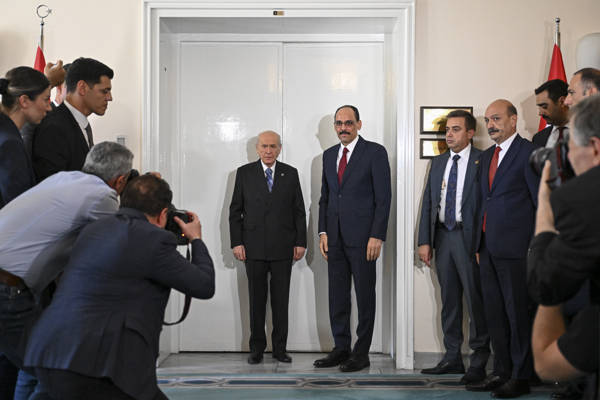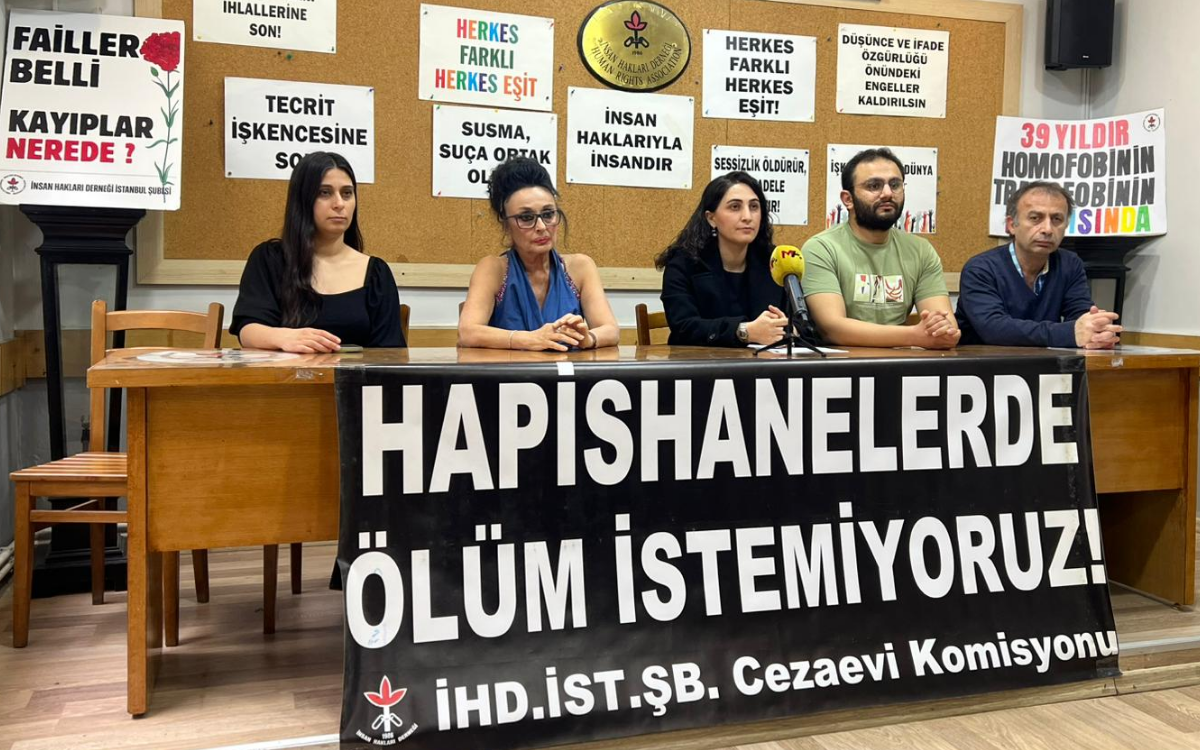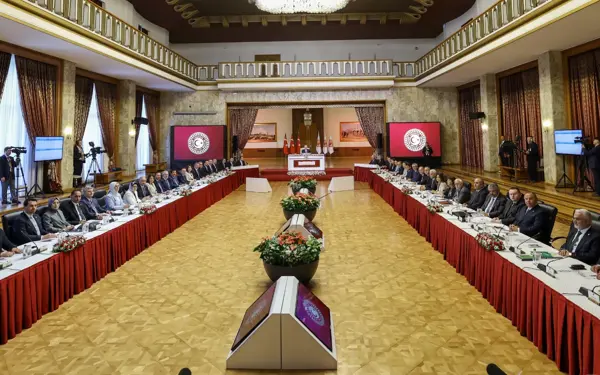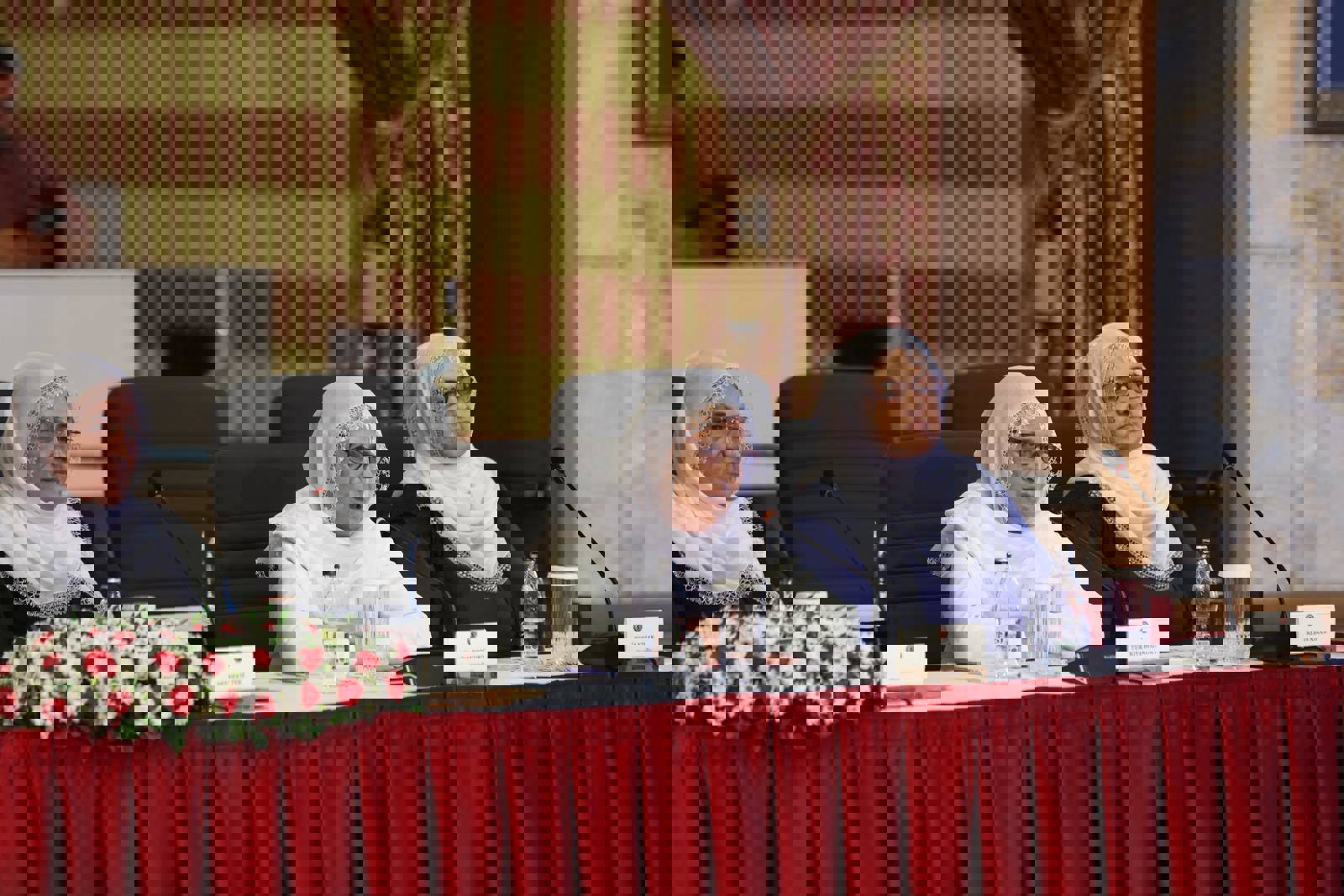

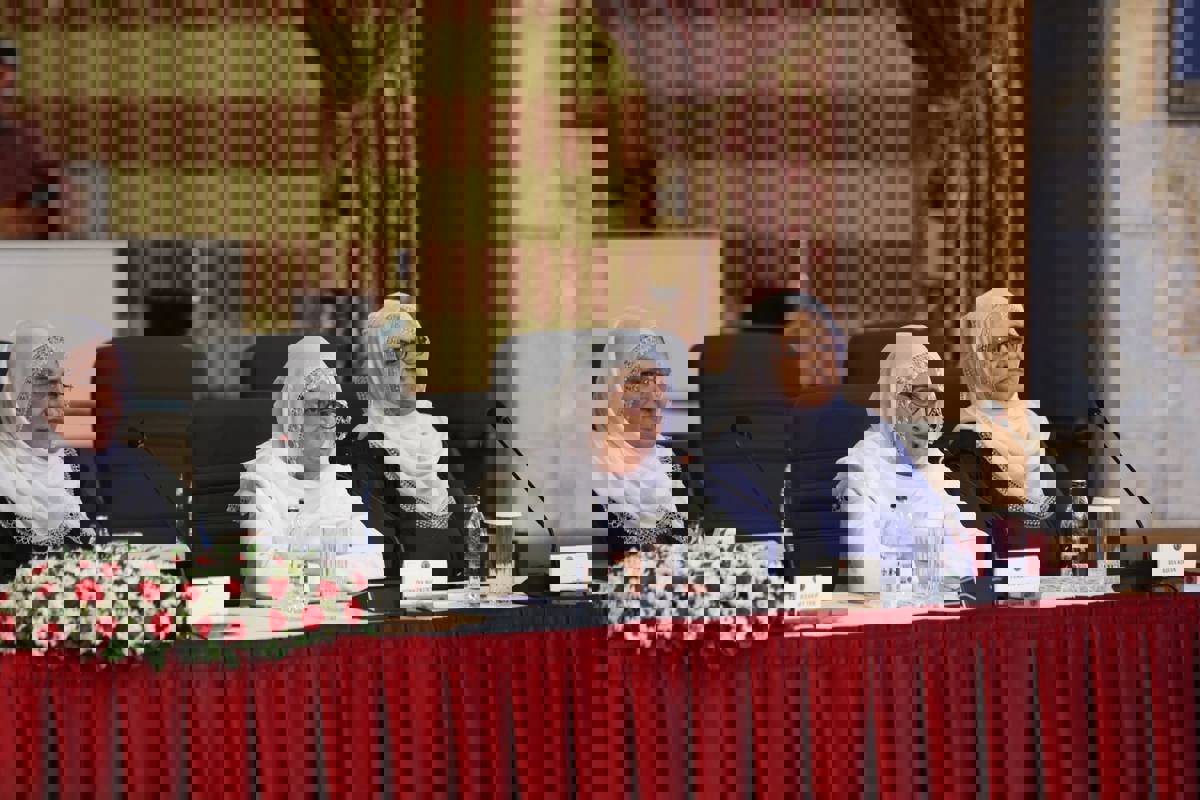



A group of Peace Mothers invited to address a parliamentary committee on the Kurdish peace process yesterday were not allowed to speak in Kurdish.
At the meeting, Kurdish speeches were recorded in the official minutes with the phrase “At this point, the speaker used a word in a language other than Turkish.”
One of the mothers, Nezahat Teke, who described herself as “a Kurdish woman born to a Kurdish mother, raised with Kurdish lullabies, suffering in Kurdish, crying in Kurdish,” had asked to make her statement in her native language.
After her request was denied, pro-Kurdish Peoples’ Equality and Democracy (DEM) Party lawmaker Meral Danış Beştaş and main opposition Republican People’s Party (CHP) deputy Sezgin Tanrıkulu proposed translating the statements into Turkish, but parliament speaker Numan Kurtulmuş rejected the offer, citing parliamentary rules.
Unable to speak in Kurdish, Teke said, “If I had spoken Kurdish, I could have expressed myself better. But since I wasn’t given that opportunity, I will try to speak in Turkish as much as I can. Maybe not all my words will be understood because I neither read nor write.”
At the end of her remarks, she said the greatest injustice was being done to her.
Kurtulmuş responded by telling her, “Please don’t think any injustice was done to you. Look, there are 51 politicians here, and their main duty is to speak. You speak better than anyone else; your Turkish is excellent.”
The exchange drew criticism, as the development of the Kurdish language was listed among the committee’s core agenda items. Rights organizations pointed out that addressing language-related issues is precisely the responsibility of the body. The committee is expected to hear from language associations and linguists in the upcoming meetings.
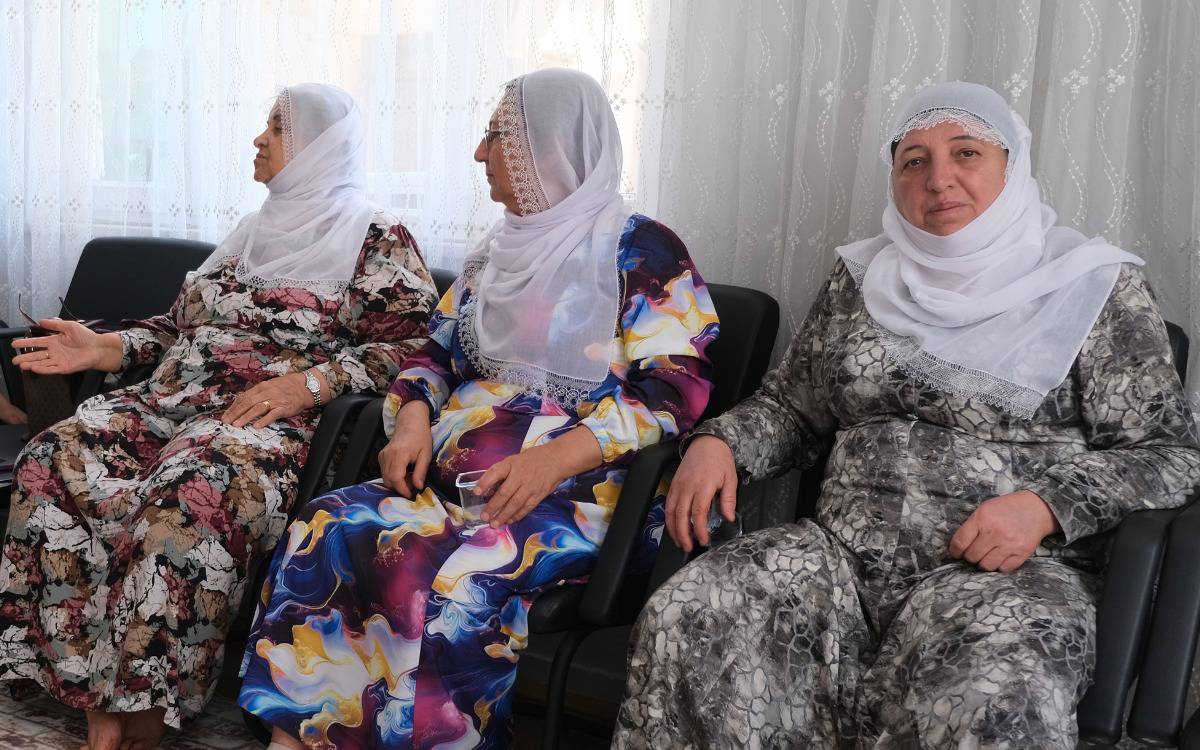
'All mothers’ tears are the same color': Peace Mothers reflect on PKK weapon-burning ceremony
‘This is the essence of the Kurdish issue’
Kurdish linguist Zana Farqînî criticized the restriction, saying that “this is the essence of the Kurdish issue.”
“Parliament is the place where the people’s will manifests and where political solutions are found," he told bianet. "If parliament acts with old prejudices, how can it contribute to a solution? If peace, fraternity, and democratization are being discussed, it should begin here. Allowing such flexibility would have been a sign of sincerity.”
Barring Kurdish at a committee formed to find solutions to the conflict undermines the credibility of the process, he added.
Remziye Alparslan, co-chair of the Kurdish Studies Association, also called the denial of Kurdish speech one of Turkey’s fundamental issues. “Parliament must truly represent the people,” she told bianet, recalling that until 2008, Kurdish statements were recorded as being in an “unknown language,” and afterward as “a language other than Turkish.”
She added that the continuation of this practice harms the process.
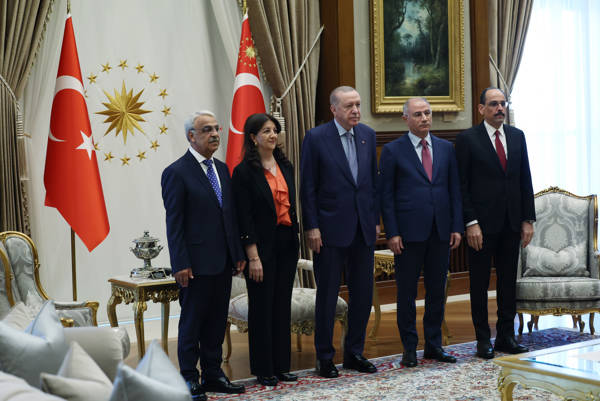
DEM official outlines expectations for legislative steps after PKK lays down arms
“Kurdish people, with their language and culture, must be present there so that representation is genuine,” Alparslan said, adding that appointing interpreters and language experts in parliament could easily solve the problem.
“What is needed is to amend parliamentary bylaws in a pluralistic and inclusive way, lifting barriers to speaking, debating, and submitting proposals in languages other than Turkish,” she said. “True representation would then be possible, and parliament would reflect the diversity of languages in society. The disgrace of labeling Kurdish as an ‘unknown language’ should be left in the past.”
Alparslan also outlined broader demands: Kurdish should be recognized as an official language and taught from preschool to university. She called for changes to Article 42 of the Constitution, which bans the teaching of any language other than Turkish as a mother tongue. “No one has the right to impose a mother tongue on us,” she said. “This is against human rights. While we speak of Kurdish here, the same applies to all other languages and cultures in this region.”
The peace process
Turkey launched a new Kurdish peace process in October last year, following a call by Nationalist Movement Party (MHP) leader Devlet Bahçeli, a key ally of President Recep Tayyip Erdoğan. Bahçeli said imprisoned Kurdistan Workers’ Party (PKK) leader Abdullah Öcalan could become eligible for the right to hope, a legal concept that could potentitally lead his release from prison if he called for the group’s dissolution.
After several meetings with DEM Party delegations, Öcalan on Feb 27 urged the PKK to lay down arms and disband, ending its 40-year insurgency. The PKK held a congress from May 5–7, where it announced its decision to comply. On Jul 11, the group staged a symbolic ceremony marking the beginning of disarmament.
To oversee the process, parliament established the Committee on National Solidarity, Fraternity and Democracy, which held its first meeting on Aug 5. The committee has since convened five times and will continue hearing from rights groups, civil society, academics, and bar associations involved in the process.
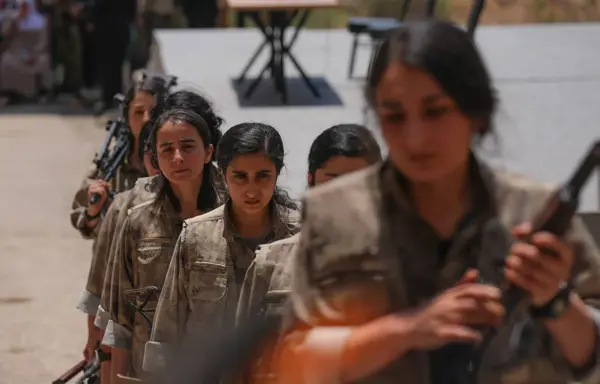
PKK’s ‘farewell to arms’: What is ending, and what is beginning?
(AB/VK)