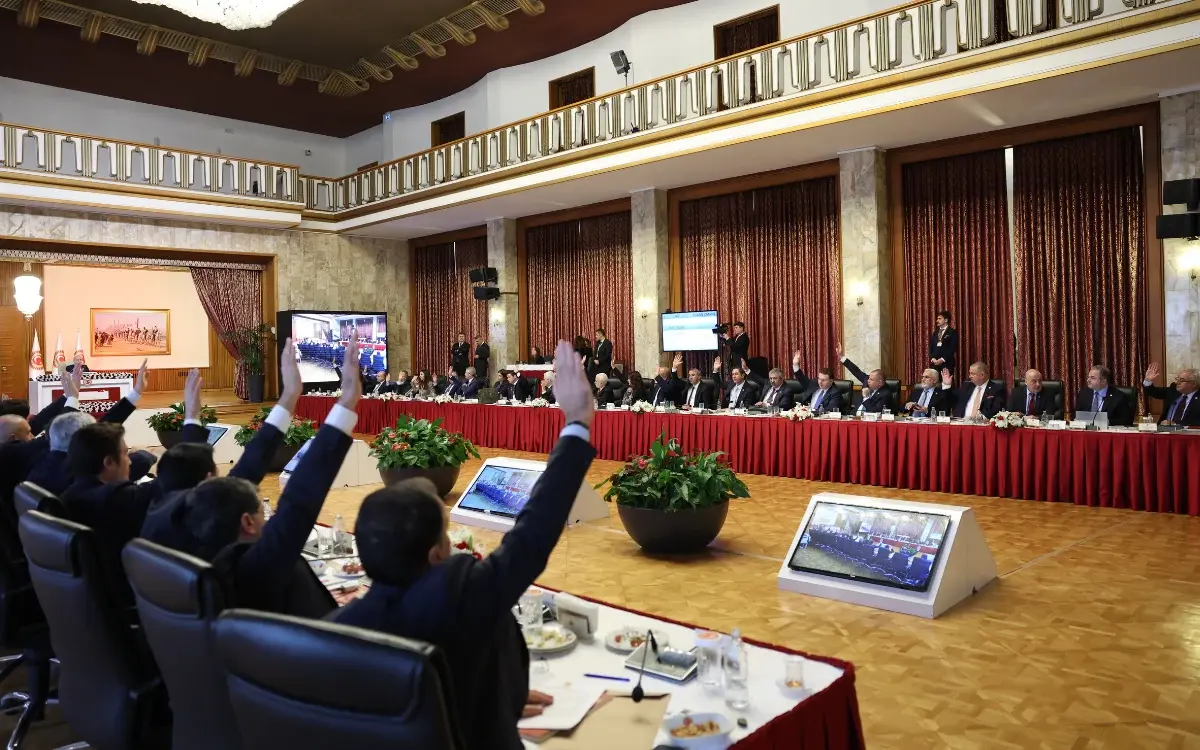



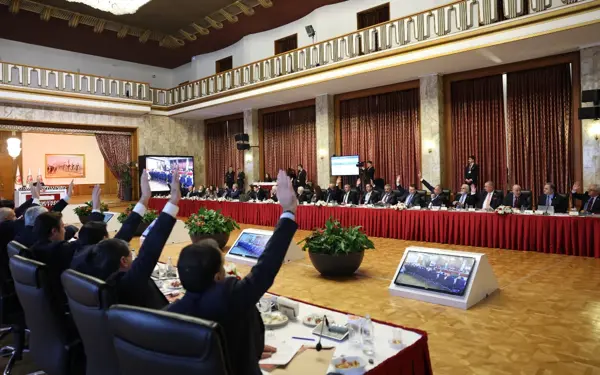
The parliamentary committee overseeing the Kurdish peace process, officially known as the Committee on National Solidarity, Fraternity and Democracy, adopted its final report today with 47 votes in favor, 2 against, and 1 abstention.
The document proposes legal frameworks for the social integration of former militants and the expansion of political rights.
The report begins by detailing the economic impact of the four-decade conflict, estimating annual losses between 140 and 240 billion US dollars. This money could have been directed toward education, health, and defense, it notes.
It frames the objective of a "terror-free Turkey" as a formal state policy and acknowledges the "unforgettable" suffering of families of soldiers and civilians.
The committee began its mandate on Aug 5, in response to the Kurdistan Workers' Party's (PKK) decision to dissolve itself as part of a new peace process initiated by Turkey's ruling alliance in Oct 2024. It comprised 51 members from six political parties and was chaired by Parliament Speaker Numan Kurtulmuş.
Throughout the six-month process, the committee heard from 137 individuals and institutions. These included the Interior Ministry, the Defense Ministry, legal experts, and civil society groups such as the Saturday Mothers and Diyarbakır Mothers.
Parliament committee discusses redefinition of Turkish citizenship, ‘right to hope’ for Öcalan
Legal proposals
• A specific and temporary "integration" law to manage the social transition of former militants who reject violence.
• Full compliance with European Court of Human Rights (ECtHR) and Constitutional Court (AYM) rulings.
• Reform of prison laws, specifically regarding the release of sick and elderly prisoners.
• Amendments to the Law on Meetings and Demonstrations to expand freedoms.
• Redefining terror crimes to exclude non-violent acts and protect freedom of expression.
• A new Political Parties Law and a Political Ethics Law.
No mention of 'right to hope'
The report does not directly mention the right to hope, a key talking point since the peace process began which could lead to the potential release of Abdullah Öcalan, the imprisoned leader of the Kurdistan Workers' Party (PKK).
The report also emphasizes Turkey’s territorial unity and frames the peace process as essential for regional stability in the face of external threats and proxy wars. It references historical figures such as Saladin Ayyubi and Sultan Alparslan to underline the historical relationship between Turks and Kurds.
Council of Europe urges Turkey to ensure ‘right to hope’ for life-sentenced prisoners
Party positions
The final report was approved with the support of all parties on the committee except the Workers’ Party of Turkey (TİP) and the Labor Party (EMEP), which are represented by one MP in the committee each, bboth voted against the report. Main opposition Republican People’s Party (CHP) MP Türkan Elçi abstained.
Group leaders from the ruling Justice and Development Party (AKP), their ally Nationalist Movement Party (MHP), the pro-Kurdsh Peoples' Equality and Democracy (DEM) Party, and the CHP had declared their support before the vote.
While supporting the report, the DEM Party submitted a formal annotation expressing objections to the use of terms such as “terror-free Turkey,” “terror organization,” and “terror threat.”
Postmodern peace
DEM Party MP Cengiz Çiçek, who read the annotation, stated, “The Kurdish issue cannot be referred to using the term ‘terror.’ This is not a terrorism problem, but a matter of rights and freedoms.” He added, “To define past suffering unilaterally, without acknowledging the pain experienced by the Kurdish people, is unacceptable.”
The party also criticized the report for referring to Öcalan and his role in the process in connection with the term “terror.” According to the annotation, “Öcalan and his struggle should not be defined alongside such terminology.”
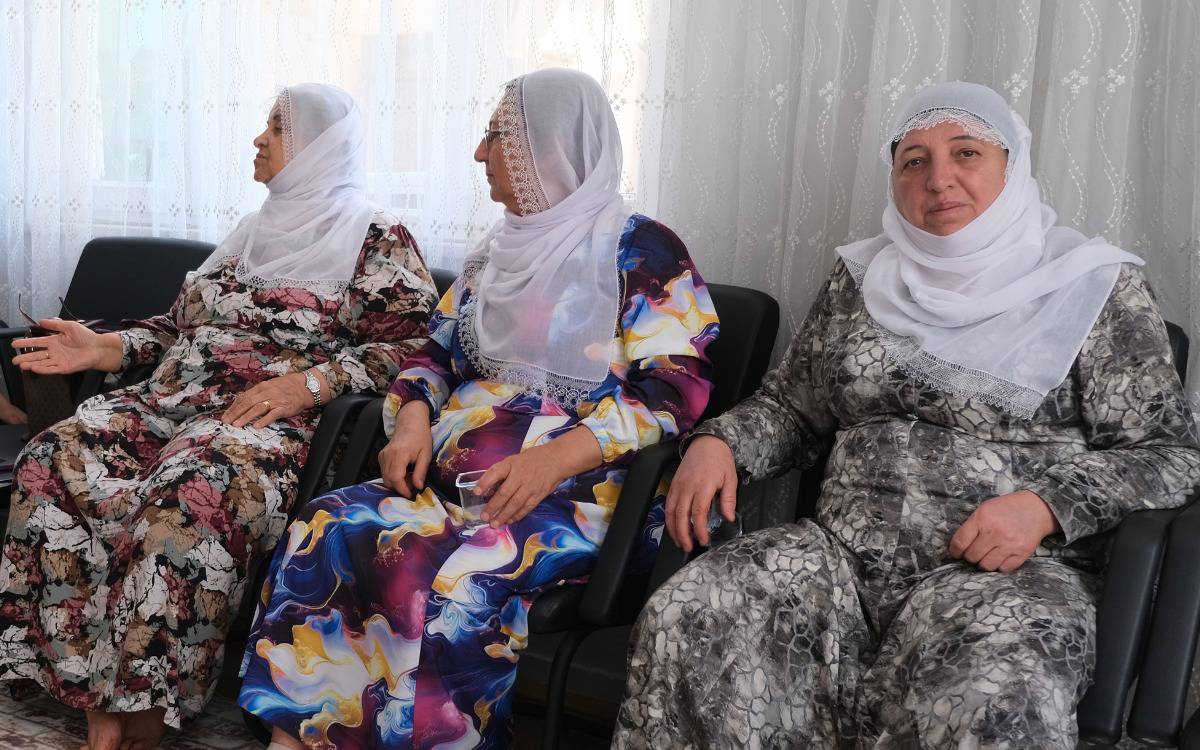
'All mothers’ tears are the same color': Peace Mothers reflect on PKK weapon-burning ceremony
Öcalan's message
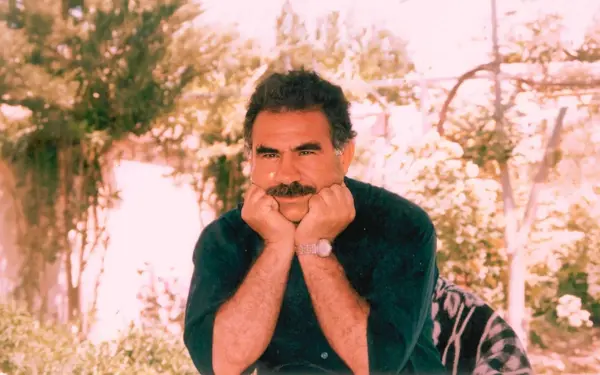
Following the report’s adoption, DEM Party conveyed a message from Öcalan in which he declared, “Weapons and violence have been abandoned. We will now engage in democratic politics. Our society needs this as much as it needs bread and water. We will become a political community: a democratic political community.”
He also proposed a framework of “democratic unity” for Kurdish reconciliation, stating that this model “is not a separate state but a principle of comprehensive democratic governance.”
Democratic nation: an antidote to the poison of the nation-state
Objections from opposition
CHP Group Deputy Chair Murat Emir expressed partial support for the report, saying, “With the exception of the language used in the first five sections, this is a valuable document.”
However, he criticized the ongoing imprisonment of figures such as Tayfun Kahraman and Selahattin Demirtaş despite Constitutional Court rulings, and called for the report’s recommendations to be implemented through legislation and political reform. “This report must not remain on paper or on a shelf,” he said.
CHP MP Türkan Elçi said she could not vote in favor of the report due to its omission of a section on unsolved political killings. “There are positive aspects, but without recognition of this issue, I cannot approve the report,” she said.
Parliamentary committee passes final report on Kurdish peace process
TİP MP Ahmet Şık and EMEP MP İskender Bayhan both voted against the report. Şık criticized the framing of the Kurdish issue within a terrorism discourse and said the document “is not a solution program, but a statement of political avoidance.”
Bayhan said the report lacked references to core issues such as mother-tongue rights and unsolved crimes. “The name of the problem is missing. There is no root cause analysis,” he said.
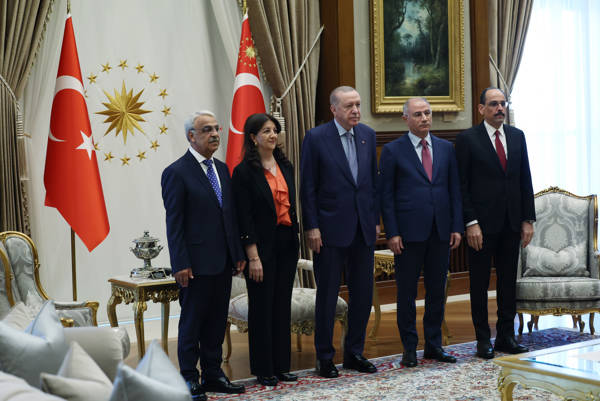
DEM official outlines expectations for legislative steps after PKK lays down arms
Reactions from ruling alliance
MHP Deputy Chair Feti Yıldız emphasized national unity and legal equality, calling for reforms to the sentence execution law and underlining that compliance with ECtHR and AYM rulings had broad support.
Yıldız stated on social media that the most critical milestone was “the state’s confirmation that the PKK has disbanded and surrendered its weapons.” He called for this verification process to be “objective, measurable, transparent, and subject to oversight.”
AKP Deputy Chair Hüseyin Yayman described the outcome as a “Turkey alliance” and stated, “Turkish democracy has passed a major test of its ability to solve problems.”
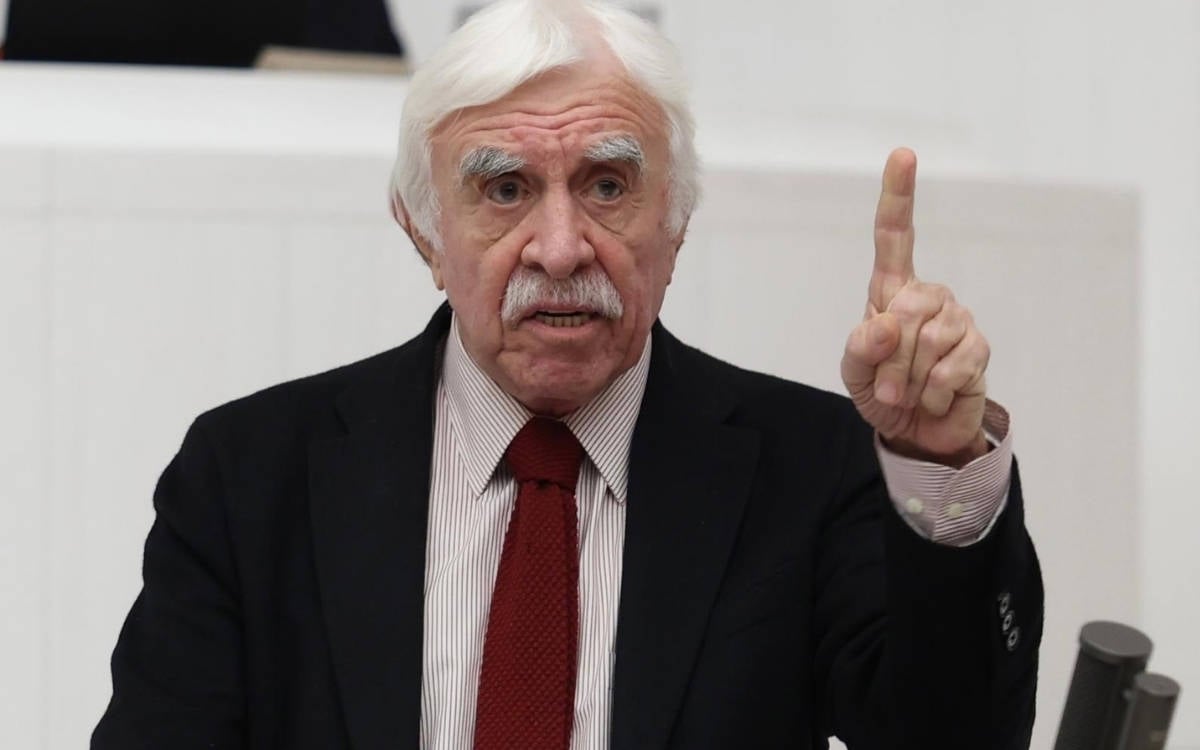
INTERVIEW WITH MP CENGİZ ÇANDAR
'Turkey's peace process will gain momentum after Damascus-SDF agreement'
Background
The current peace process began in Oct 2024, when MHP leader Devlet Bahçeli publicly addressed Öcalan and suggested that he could benefit from the “right to hope” and be released if the PKK disarmed. Öcalan responded in Feb 2025 by calling for the group to dissolve. The PKK held a congress in May and announced its dissolution, followed by a symbolic weapon-burning ceremony in Jul 2025.
In recent months, the focus shifted to northern Syria, where the Kurdish-led Syrian Democratic Forces (SDF) had controlled nearly a third of the territory. Turkey demanded the disarmament of the SDF, which it considers an extension of the PKK. After SDF’s Arab partners shifted allegiance, the Damascus government took control of Arab-majority provinces in Jan 2026. Later that month, an agreement was reached to integrate the SDF into the Syrian army.
Turkey previously attempted a peace process in the early 2010s, which collapsed following urban clashes between the Turkish military and PKK-affiliated groups. The breakdown was followed by a widespread judicial crackdown on the Kurdish political movement. Thousands of people, including mayors, MPs, party officials, activists, and rights defenders, were imprisoned or prosecuted. Many municipalities were placed under state-appointed trustees.
(VK)