








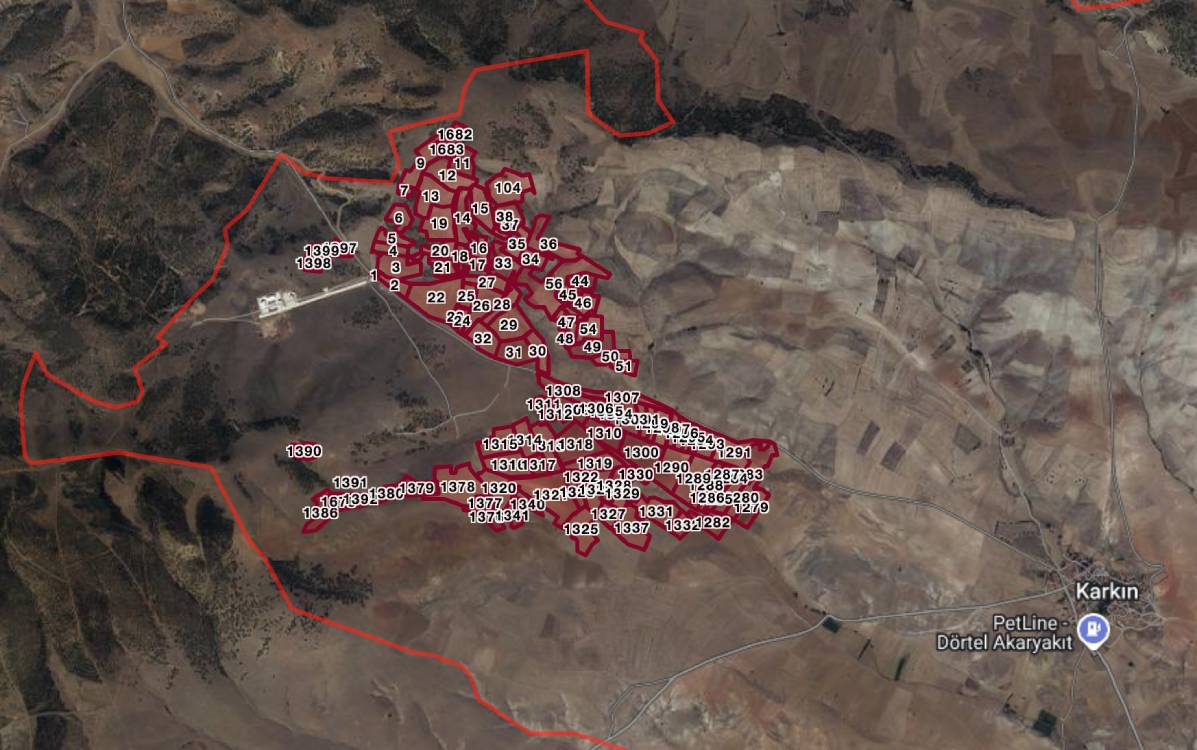



Over two million square meters of land, including 258 immovable properties, will be urgently expropriated in Eskişehir’s Sivrihisar and Beylikova districts in the search for rare earth elements (REE).
The Presidency announced the decision in the Official Gazette yesterday. The announcement also said that the state-owned mining company Eti Maden will manage the operation area, which will be expropriated for group 4 minerals, which include thorium, barite, fluorite, and REEs.
The vast majority of the 258 expropriated properties are arable fields, but also include some fruit orchards and livestock enclosures. The total title deed area of the lands exceeds 2 million 947 thousand square meters and approximately 90% of that total deed area will be urgently expropriated. On these sites open-pit mines, waste dams, and waste-rock dumping sites will be built.
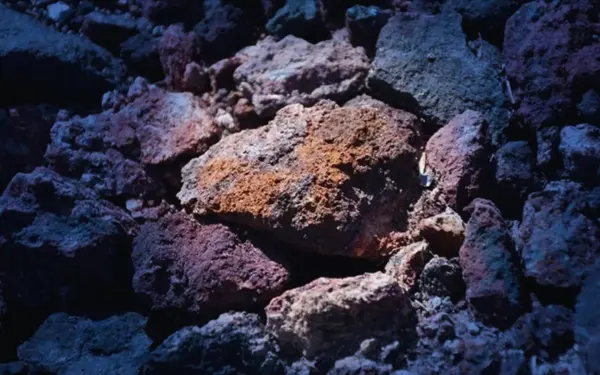
Turkey’s test on rare earth elements
What are rare earth elements?
Rare earth elements, of which 17 are known to exist on Earth, are often referred to as small but vital “vitamins” of modern technology. They impart important magnetic, optical, and electrical properties on the materials they are used in, even in small amounts, and play an indispensable role in energy systems, magnets, and advanced technological applications — making them especially important in the weapons and energy sectors. Without REEs, modern defense technologies cannot function and clean energy infrastructure cannot be built.
In the defense industry, REEs are used in radar, sonar, communication systems, missile and jet engines, night vision devices, lasers and precision sensors. They are also used as additives in industrial processes when producing catalysts, glass, ceramics, polymers and alloy. REE’s are also vital in the production of SmCo and NdFeB magnets, which are placed in electric motors and wind turbines.
REEs are divided into light and heavy categories. While light REEs are relatively more abundant, heavy REEs are rarer and of higher strategic importance.
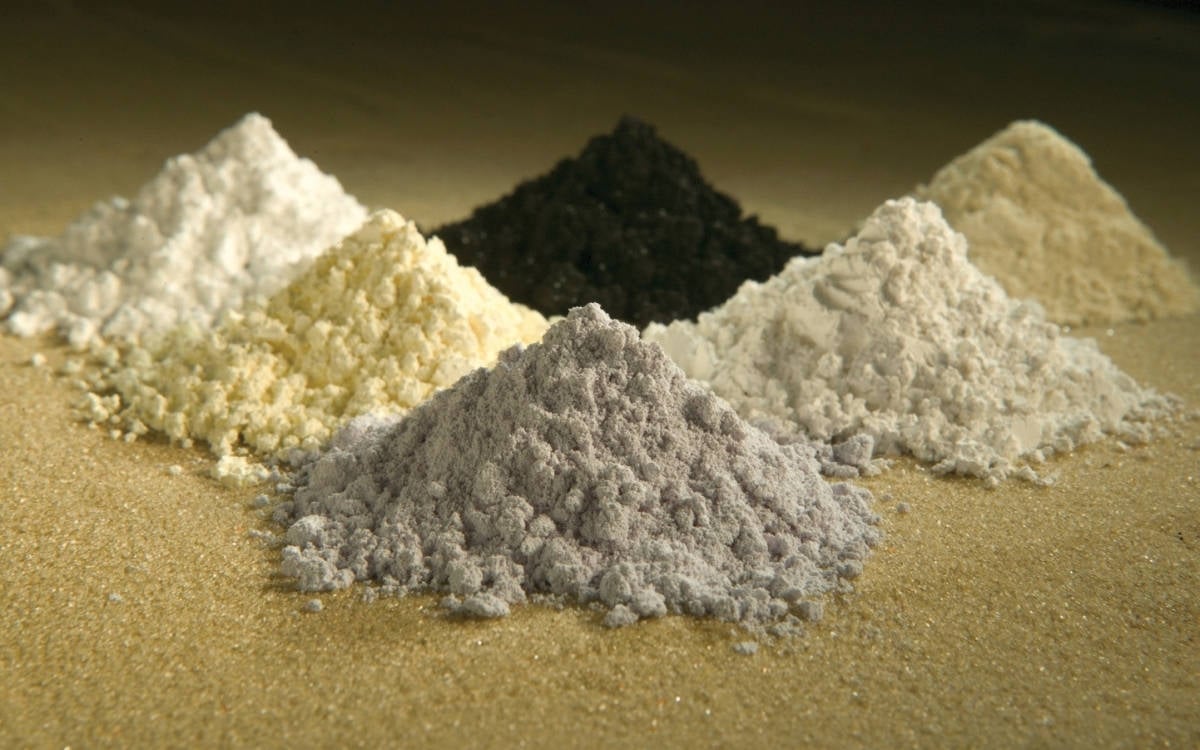
Rare earth element reserves in Turkey: What is known and what remains unknown
In 2023, the Ministry of Energy and Natural Resources announced that the Beylikova region holds the second-largest REE reserves in the world after China, with 694 million tons in the Eskişehir province. However, Turkey is still in the process of finalizing international certification on this number, which is why Turkey’s supply is not listed in international catalogs.
According to the language of the Presidential decision, the expropriation is aimed to "to implement the project and investment processes of mining activities, industrial facilities, and infrastructures directed at bringing underground riches of strategic importance into the economy" of the region.
Hoping to counter Chinese influence, the United States has shown deep interest in Turkey’s REE supply. China currently supplies 60 to 70% of REEs. US President Donald Trump has argued that China’s monopoly over global REE production and processing capacity could be used to exert potential pressure on the US. Turkey has emerged as a potential alternative in this regard.
The mining projects to be carried out in the Sivrihisar and Beylikova districts include: open-pit project areas, stripping/overburden waste dump areas, access roads, run-of-mine ore, low-grade ore stockpile areas, tailings dam / waste dam, Industrial production facilities, other auxiliary facilities, infrastructure facilities and administrative building settlement areas.
In a May 2025 analysis, the National Intelligence Academy noted that REEs are no longer merely an economic commodity but have become “a geopolitical lever and strategic weapon.”
(CS/İK)

