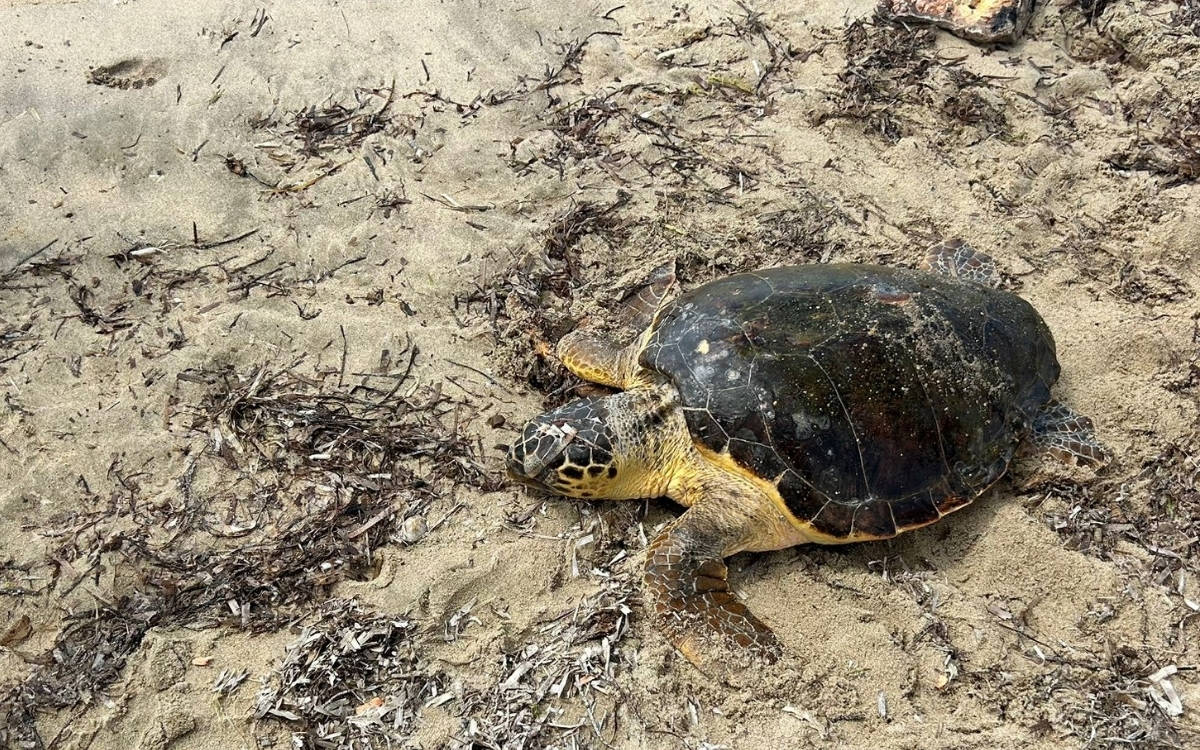



More than 1,500 loggerhead turtle nests have been recorded this season in Antalya, southern Turkey, one of Europe’s most vital nesting habitats for the endangered species.
The nests were located on the Belek and Kızılot beaches along the Mediterranean coast, as part of the ongoing “Sea Turtle Monitoring and Conservation Project” led by Dr. Ali Fuat Canbolat, a faculty member at Hacettepe University and head of the Ecological Research Association (EKAD).
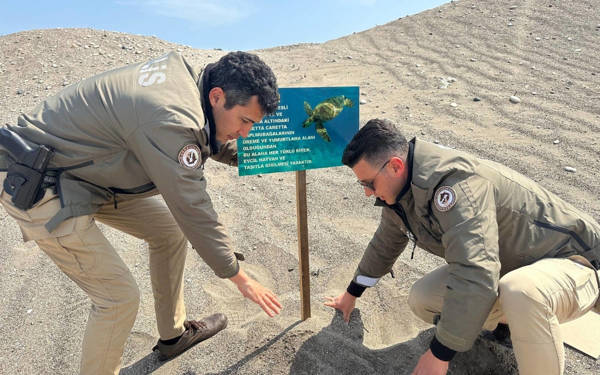
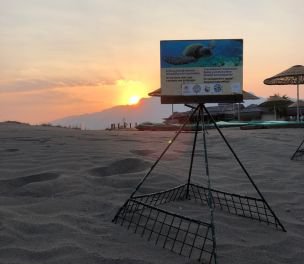
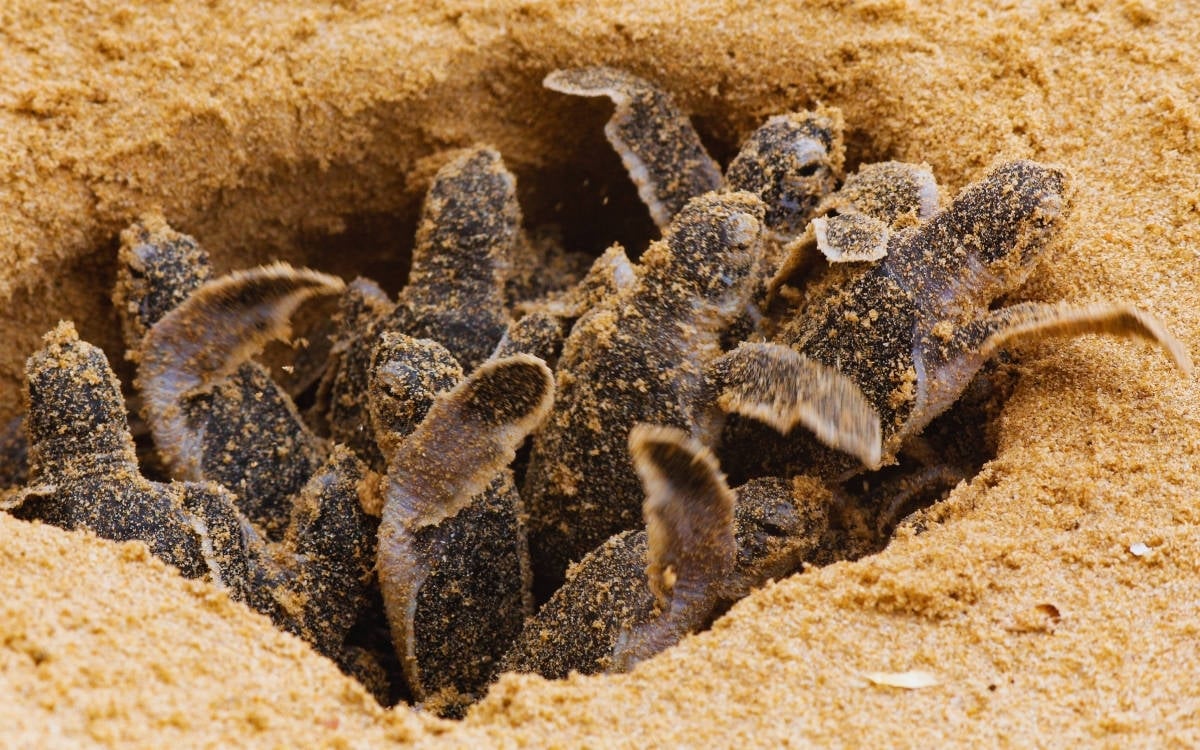
Spanning 30 kilometers in Belek and 26 kilometers in Kızılot, the project enlists volunteers who patrol the beaches and guard nesting sites. The nests are marked with GPS and labeled with relevant data. The first hatchlings are expected to emerge in mid-July.
Canbolat told Anadolu Agency (AA) that nesting began in June this year due to cooler spring temperatures.
"We have identified 1,500 nests so far. As the weather continues to warm, we expect this number to rise," he said. "Last year, we recorded 6,000 nests, but this year we estimate around 4,000."
Raising awareness
He emphasized the importance of awareness campaigns, saying, “We conduct educational programs in schools and hotels, set up information booths, and carry out fieldwork.
"These efforts demand dedication, but we’re seeing results. There's growing awareness about loggerhead turtles in the region.”
Canbolat noted a significant shift in local attitudes, particularly among tourism operators. “Hotels that once resisted our presence now call us to report nests. Some say, ‘We have a nest, can you check it?’ We’ve achieved a major transformation. With the right awareness, turtle nesting sites can be integrated into tourism. Tourists are highly interested.”
Fatih Polat, EKAD’s project coordinator in the Kızılot area, stressed the critical nature of the work. “Out of 1,000 hatchlings that reach the sea, only one or two will survive to adulthood,” he said.
He also pointed to the risks posed by climate change, saying, “We continue to protect the nests with the same discipline to shield this endangered species from the adverse effects of the climate crisis.” (TY/VK)