









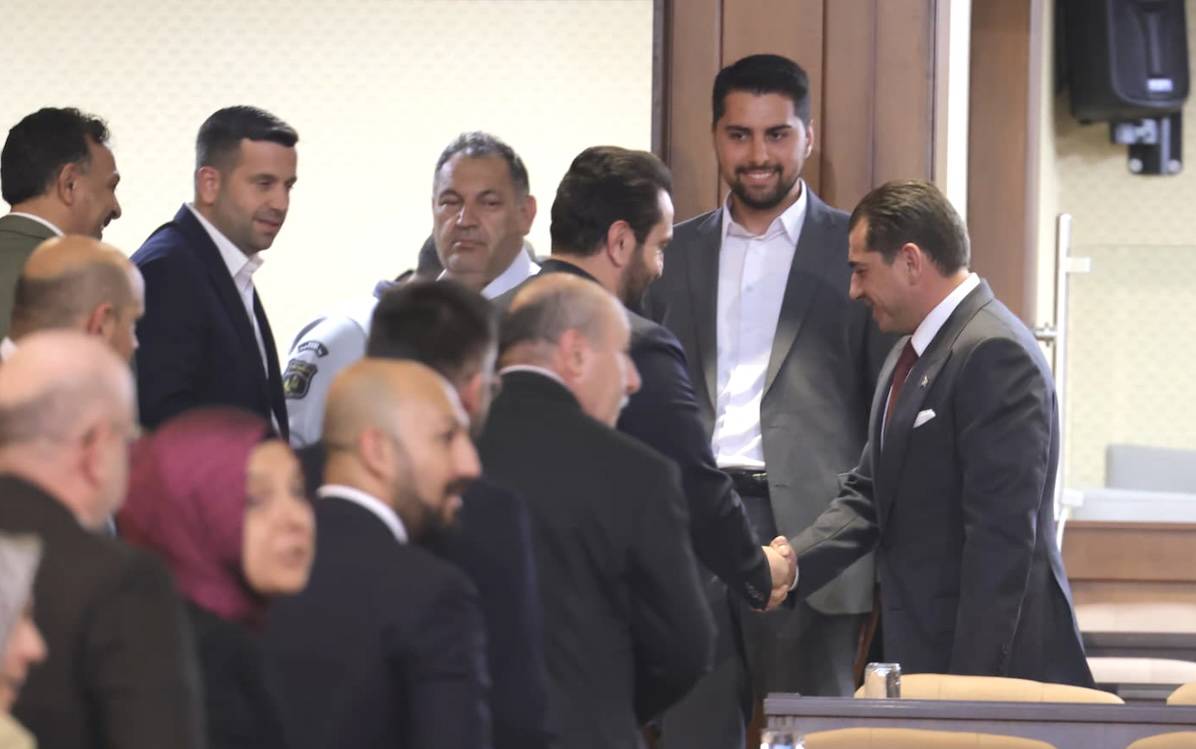



An opposition member of the İstanbul Metropolitan Municipality Council has resigned from the Republican People’s Party (CHP), raising concerns that the opposition could lose its council majority in a repeat of what happened in the city’s Üsküdar district.
Ekrem Eray Arda announced his resignation during a council meeting yesterday. Describing himself as “a representative of an understanding firmly committed to the republic and shaped by a statist and nationalist tradition,” he criticized the opposition’s record on issues ranging from urban transformation to foreign policy and the “fight against terrorism.”
The resignation has heightened opposition concerns that changes in council membership could shift control of municipalities to the ruling Justice and Development Party (AKP).
How Üsküdar changed hands
Those concerns emerged after the conservative İstanbul district of Üsküdar changed hands on Sep 8 following a shift in the balance of its municipal council. Some opposition council members had been detained, while others resigned from the CHP and joined the AKP, causing the opposition to lose majority.
Sinem Dedetaş, who was elected Üsküdar mayor for the CHP in the 2024 local elections, had been detained in July as part of a corruption investigation, prompting the municipal council to elect an acting mayor.
Dedetaş's detention was part of a widespread crackdown that has targeted opposition-controlled municipalities since March last year. More than 35 mayors, including those of major cities such as İstanbul, Antalya, Adana and Bursa, were detained in corruption investigations.
Thirty-one opposition mayors removed from office since 2024 elections
CHP candidate Sibel Tan Çetinkaya won an Aug 5 vote for acting mayor by 22 votes to 18. The election was later annulled following an AKP objection.
During the rerun process, some municipal council members were detained and others switched parties, after which the acting mayoralty passed to the AKP.
Officials from the New (Yeni) Party, a splinter group from the CHP, alleged that the change was achieved through pressure, threats and party transfers and filed a criminal complaint over the claims. Ayhan Aydın, one of the council members who joined the AKP, denied allegations that he had been subjected to pressure.
Gökhan Günaydın, deputy chair of the New Party's parliamentary group pointed to the İstanbul Metropolitan Municipality Council after the loss of Üsküdar, saying his party still held a significant numerical advantage there but alleging that the AKP was seeking to narrow it “through transfers and arrests.”
New Party leader Özgür Özel also described the developments in Üsküdar in terms of alleged “blackmail, pressure and threats,” arguing that there was an effort to alter his party’s majorities in municipal councils.
Despite the detentions, the opposition retained control of most of those municipalities because acting mayors are selected through votes in municipal councils when elected mayors are removed from office and opposition parties held majorities in many of those councils. Some mayors resigned from the CHP and joined the AKP though.
A brief history of politician transfers in Turkey
Developments in Üsküdar showed that even through mayors don't change sides, the ruling party can take over municipalities after council majorities change through through detentions and defections of council members.
The New Party was established after a court annulled the CHP’s 2023 congress, at which Özel had been elected party leader, over allegations of vote-buying irregularities and reinstated former leader Kemal Kılıçdaroğlu.
Of the CHP’s 135 lawmakers, 91 joined the New Party under Özel’s leadership, along with more than 230 CHP mayors. Municipal council members, however, remained formally affiliated with the CHP while acting together with the New Party.
Turkey’s main opposition party officially splits as Özel declares New Party
(AEK/VK)

