
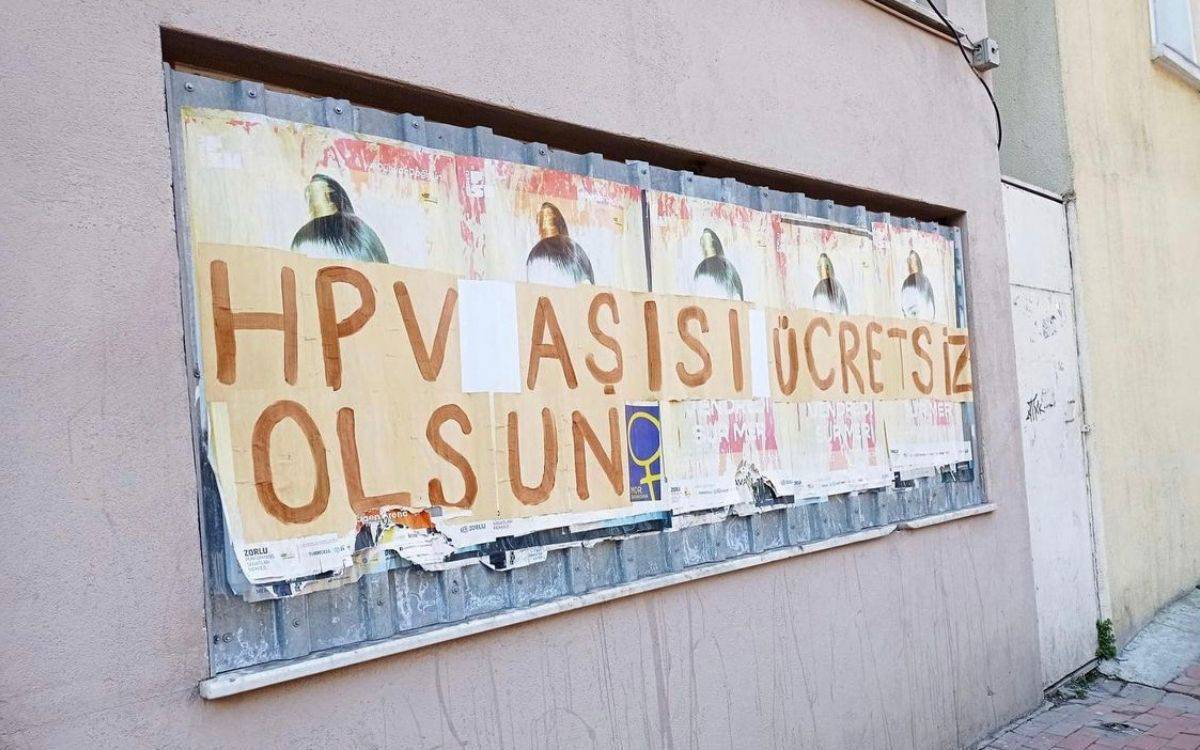



Health Minister Kemal Memişoğlu announced in June that the HPV vaccine, which protects against cervical cancer, would be added to Turkey’s national immunization program by the end of the year. However, no concrete steps have been taken since the announcement.
Globally, the HPV vaccine is part of routine immunization programs in 149 countries, with 54 of them offering it free of charge to both girls and boys. In Turkey, the vaccine still has not been included in the national schedule, despite two changes in health ministry leadership.
According to the World Health Organization (WHO), widespread use of the HPV vaccine could prevent 60 million cases of cervical cancer and 45 million deaths over the next century. The Global HPV Prevention Policy Atlas reports that primary prevention efforts for cervical cancer in Turkey stand at just 3.12%.
The HPV vaccine was introduced to the Turkish market in 2007 and initially sold for 248 liras in 2008. As of 2025, the pharmacy price of the nine-valent vaccine ranges from 5,000 to 9,000 liras. Prices are even higher at private health facilities. Inflation has made the vaccine increasingly inaccessible for many.
In a precedent ruling, court orders Social Security Institution to reimburse for HPV vaccine
Municipal vaccination efforts halted
In the absence of national progress, several major municipalities, including İstanbul and Ankara, launched free HPV vaccination campaigns. The initiative, which began in March 2024 under the leadership of Ankara Metropolitan Municipality, was later joined by municipalities in Çanakkale, Denizli, and Muğla.
However, these efforts were suspended after the Health Ministry announced plans to offer the vaccine for free. There are currently no HPV vaccination plans scheduled for 2026, and the campaign application pages on municipal websites have been taken down.
‘Vaccination is the state’s responsibility’
Pharmacist Cem Kılıç, who previously launched a free vaccination campaign, said they had to end it due to authorities' inaction.
"I started a vaccine donation campaign as a pharmacist. We administered 1,000 doses in a year and a half, but it wasn’t enough," he said. However, he added, "Since our campaign was perceived as something like ‘pay-it-forward vaccines,’ it seemed to ease the authorities’ burden. That’s why we ended it. My goal was to remind the state of its responsibility.”
Kılıç noted that roughly 1,250 women die from cervical cancer each year in Turkey and since the ministry’s 2025 announcement, nearly 5,000 women have died from the disease. "That’s three to four times the number of women killed annually in femicides," he said.
‘Not seen as preventive care’
Dr. İncilay Erdoğan from the Turkish Medical Association (TTB) pointed to a deeper issue behind the vaccine’s exclusion from the national program: “The state does not view the HPV vaccine as a preventive health service but as a treatment expense. That’s why it’s not included in the immunization schedule.”
She added that municipalities have attempted to fill this gap in recent years. “Municipalities are being forced to take on a duty that rightfully belongs to the state.”
Legal battle for coverage
In 2020, the associations Boyun Eğmeyen Kadınlar and Öncü Çocuklar Derneği launched legal proceedings to have the HPV vaccine covered under Turkey’s national health insurance.
According to the organizations, initial applications to the Social Security Institution (SGK) led to reimbursements for the first two years, but the practice was later discontinued. Currently, similar lawsuits are being dismissed, and applicants are being charged attorney’s fees.
‘Vaccination is more affordable than treatment’
Dr. Erdoğan highlighted the cost-effectiveness of the vaccine:
“Just three weeks of cancer drug treatment can cost 60,000 to 70,000 liras. The HPV vaccine can prevent cancer at a much lower cost.”
She also addressed the misconception that HPV vaccination only protects women. The virus is primarily transmitted by men and can spread even during first-time sexual contact:
“Women pay the price. If this were a virus that killed men, the vaccine would already be free.”
The associations emphasized that if SGK fails to respond within 60 days of a written application, individuals have the right to file a lawsuit. They stressed that this legal struggle is not just personal but vital to public health.
Earlier promises
In November 2022, then-Health Minister Fahrettin Koca also promised that the HPV vaccine would be provided free of charge. However, the program was never implemented, and prices for the vaccine increased. Minister Memişoğlu reiterated on Jun 13 that the vaccine would be offered for free by the end of 2025.
About HPV
Human Papillomavirus (HPV) is a virus that can cause cervical cancer and genital warts. It is the most common sexually transmitted infection worldwide.
There are over 200 types of HPV. These are categorized as high-risk or low-risk depending on their cancer-causing potential.
Common high-risk types include HPV 16, 18, 31, 33, 45, 52, and 58. Low-risk types, such as HPV 6 and 11, typically cause genital warts. Persistent infections with high-risk types can lead to cancers, including those of the cervix, vulva, vagina, anus, penis, mouth, throat, vocal cords, and lungs.
HPV can be transmitted through sexual contact and close physical contact, even without full intercourse. It is more commonly found in individuals who are sexually active.
HPV vaccines protect against the types of HPV that cause most genital warts and cervical cancer. They are primarily recommended for girls and young women aged 9 to 26 before the onset of sexual activity. While there is no upper age limit, vaccination is advised into the 40s to maintain health protection.
(EB/EMK/VK)