
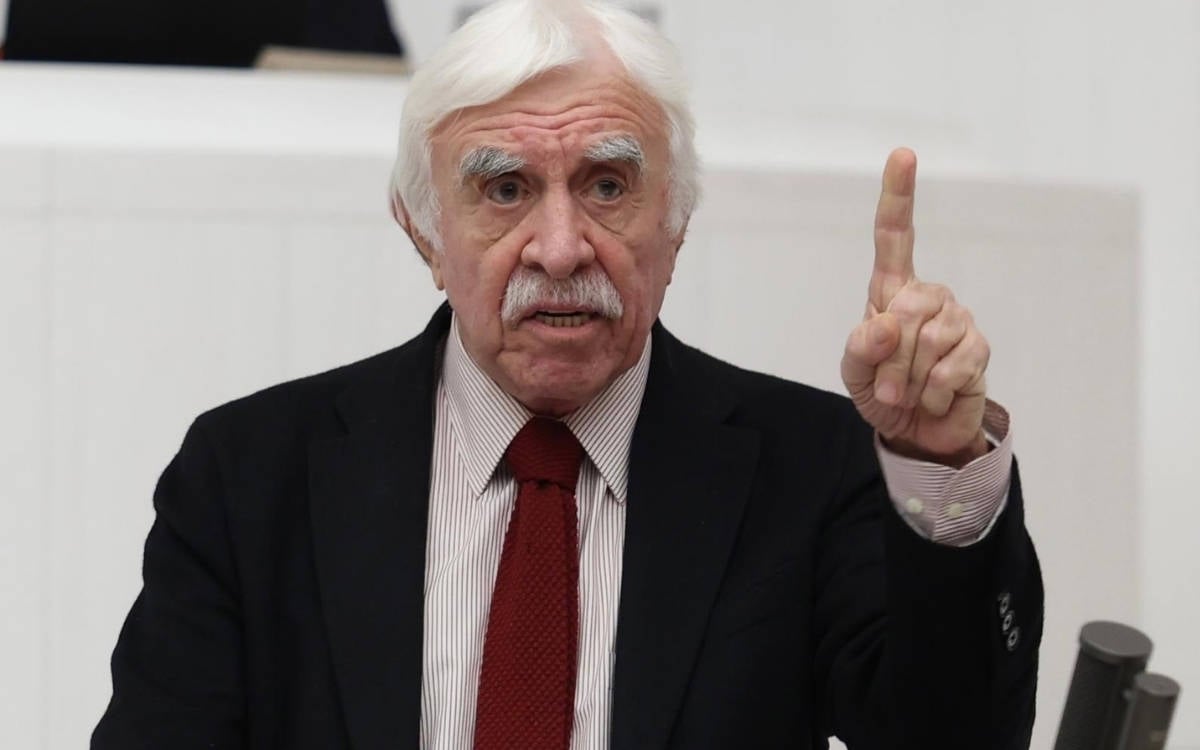



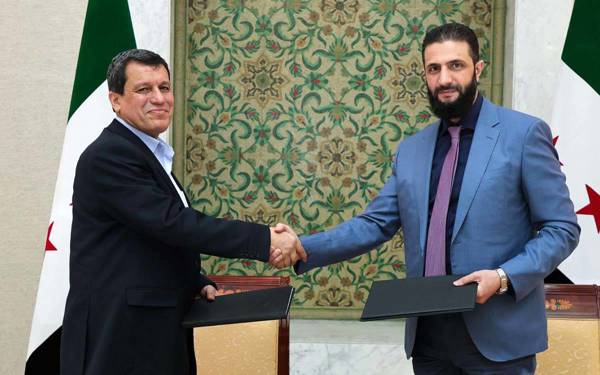
Peoples' Equality and Democracy Party (DEM) Diyarbakır MP Cengiz Çandar said that the agreement reached in Syria between the Damascus administration and Kurdish-led forces would help accelerate the Kurdish peace process in Turkey.
Speaking to bianet, Çandar offered assessments regarding the practical implications of the Jan 30 agreement, the shift in US policy on Syria and the region, the position of the Kurds in Washington’s eyes, and the new power balances centered on Damascus.
Çandar also addressed a range of topics including the role of Kurdistan Regional Government (KRG) leaders in the process, whether conflict and resolution dynamics on the Turkey-Syria axis can be separated, and international diplomacy criticisms directed at the DEM Party.
'This issue is far from settled'
The agreement reached between HTS and the SDF on Jan 30 was presented to the public as a “smoothly functioning” process following the conflict. However, we see that serious difficulties are emerging in the implementation phase on the ground. Will the guarantor countries truly take responsibility this time to overcome these problems? Is this agreement truly final?
Syria is in a state of formation and, in a sense, “reconstruction.” At this stage, no agreement regarding Syria can be described as “final.” This issue is far from settled. We can only determine whether it is final after a certain amount of time has passed.
Nevertheless, the agreement signed on Jan 30, in terms of what has taken place in Aleppo between the Damascus regime and the SDF—or more accurately, the YPG—and the regime forces crossing to the east of the Euphrates, and the resulting new balance of power after the Arabs who had been cooperating with the SDF for years abandoned it, indicates a more realistic situation compared to previously reached or presumed agreements. There is no guarantor country to take responsibility. The agreement reached is largely something imposed by the US, and the US has already shifted its weight in favor of the Damascus regime and redirected its alliance priorities in Syria from the Kurds to Ahmad al-Shara.
DEM CO-LEADER'S IMPRESSIONS FROM ROJAVA
Journey to life: Rojava at the intersection of emotional solidarity and emotional rupture
Until the agreement, the SDF had lost about 40 percent of its de facto control areas in Syria, and we saw the US openly withdraw its support along with statements from Barrack. In a climate where cost-benefit analysis takes precedence in foreign policy, do you think the Kurds are still a strategic partner for Washington, or are they forces that can easily be abandoned?
The Kurdish component of the SDF lost not 40 but 80 percent of its de facto control areas in Syria. While they once controlled around 27-30 percent of Syrian territory, this has now dropped to 5-10 percent. Even if they have not been entirely discarded by the US, they are not strategic partners. They never were. Claims and arguments suggesting they were strategic partners were nothing more than an illusion. Furthermore, the control they obtained over Syrian territory under the American umbrella was not sustainable. It could have been a bargaining chip, but that important card is no longer in their hands.
One other point that should not be overlooked is that, demographically and in terms of settlement, Syrian Kurds are in a different position than the Kurds of Iraq and Turkey. Including Afrin and Serekaniye, the areas they currently hold are realistic. Provided that those who fled Afrin and Serê Kaniyê can return, and that they can maintain control of areas where they are the majority in Hasakah province, including Kobanî and Qamishli.
From applause to accusation: the Kurds and the shifting direction of emotions
'Abdi and Ahmed may visit Turkey'
How do you interpret US' preference?
The US preference reflects a redesign of the Middle East according to Trump’s vision. A design in which Iran and non-state actors from Hamas to Hezbollah would be sidelined, and the US would prioritize working with states—particularly Israel, but also Saudi Arabia, Turkey, and to some extent Qatar, the UAE, and Jordan. Within this framework, the US prioritizes engaging with, creating, and strengthening a Syrian state with its capital in Damascus, one in which the south is implicitly considered within Israel’s sphere of influence, and the north within Turkey’s.
After the summit you attended in Duhok, you said, “It may not be surprising to see Mazlum Abdi and İlham Ahmed in Turkey in the near future.” Do you still maintain this prediction, or has the picture changed fundamentally?
After seeing Mazlum Abdi and İlham Ahmed in the second half of Nov 2025 in Duhok, my statement that “it may not be surprising to see them in Turkey soon” was based on certain information and signs. Since then, major developments have occurred. Especially following the agreement reached between the Syrian regime and Israel under US supervision on Jan 6, and the subsequent developments on the ground, the possibility of seeing Mazlum Abdi and İlham Ahmed in Turkey in the near future no longer seems very likely.
Just look: the government in Turkey, instead of opening the Mürşitpınar border gate to send humanitarian aid to Kobanî, is choosing to do this through the Damascus regime that has besieged Kobanî, aiming to reinforce the regime’s legitimacy. A stage in the integration of the Kurds into the Damascus regime that satisfies Ankara—if it happens—could make the titles Mazlum Abdi and İlham Ahmed will acquire within that framework formally pave the way for them to come to Turkey.
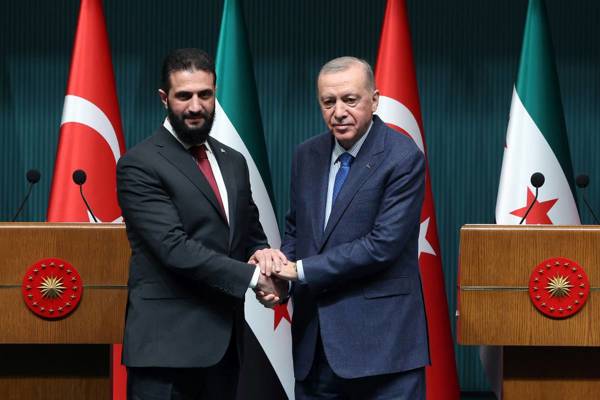
Is Turkey winning in Damascus but losing in Diyarbakır?
Did Öcalan play a role in Syria agreement?
We saw that leaders of the KRG also played an active role in the SDF-Damascus agreement. When considered alongside the Kurds' pursuit of unity across different regions, how do you evaluate the role of the KRG leaders in the process in terms of the Kurdish political movement? How might this unity affect the autonomous political line in North and East Syria?
The developments brought with them the emergence of Mesut Barzani above all, and also Nechirvan Barzani, Masrour Barzani, and even Bafel Talabani, as national Kurdish figures. The prominence of Barzani may give Kurdish organizations and individuals gathered under the Kurdish National Council (ENKS) in Rojava a greater role than they have had up until now. They were already known to have a presence in Qamishli.
In fact, an ENKS delegation recently went to Damascus. The relationship between ENKS and the PYD and YPG may take on a new character compared to the past. We need time to see how all this will affect the “autonomous political line” in North and East Syria. Making predictions on this would be misleading.
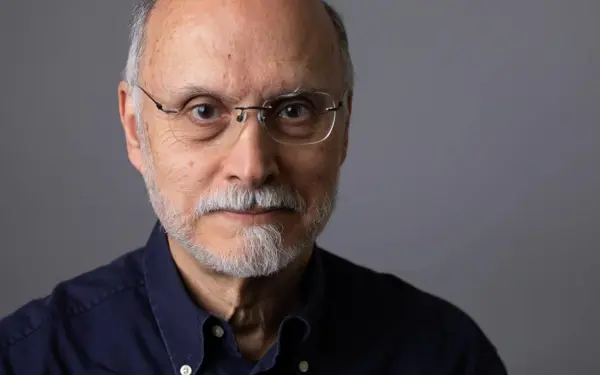
Gilbert Achcar: Israel refrained from intervening in Syria to avoid irritating Trump
In this critical period, Abdullah Öcalan’s role has been reflected in the public domain in a rather limited way. One of his latest assessments, conveyed through the İmralı Delegation, was on the Golan Heights-Suwayda axis. In your opinion, has Öcalan’s intellectual and political influence in this process been deliberately reduced? For instance, has he not been consulted during this process?
I have no knowledge of whether Öcalan played a direct role in this “process,” or if he did, what that role was and how it was carried out. What has come to light so far is not sufficient to provide me with a reliable answer on the matter.
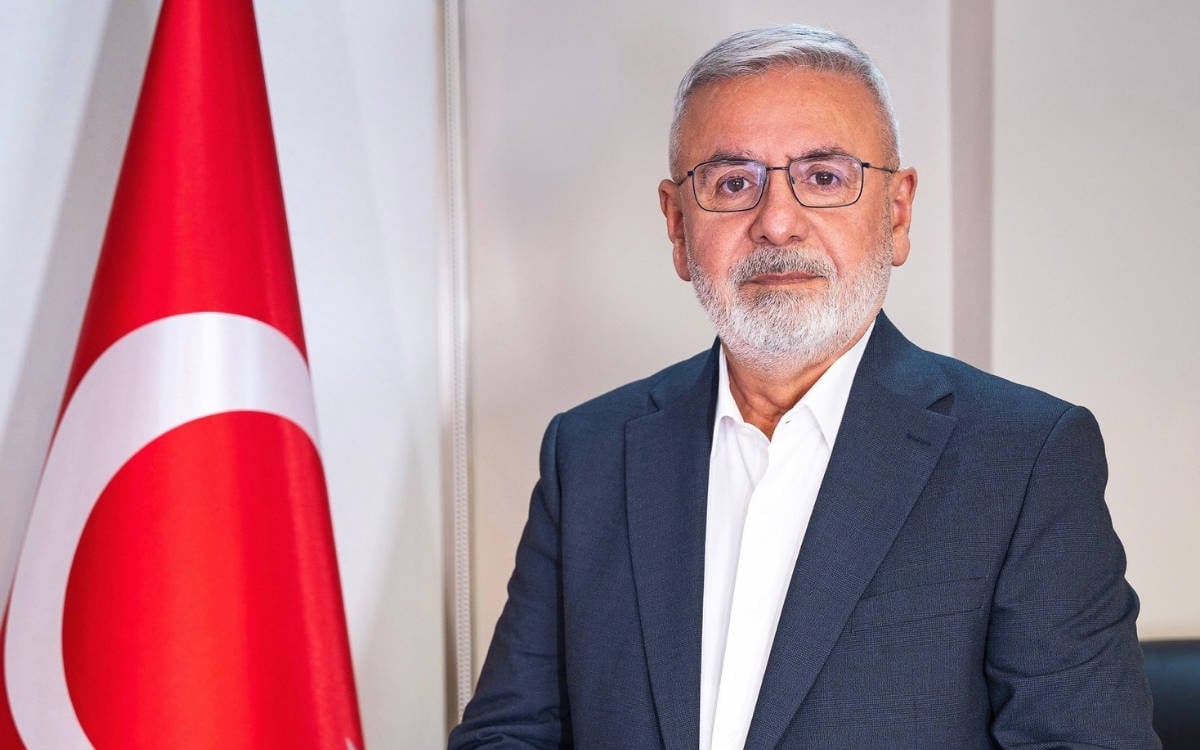
Interview: AKP’s Mehmet Metiner rejects war rhetoric, says ‘neither Kurds nor Syria should lose’
Criticism toward DEM Party
One of the criticisms directed at the DEM Party during this process was that it failed to be sufficiently effective in the field of international diplomacy. As one of the party's most well-known figures on the international stage, how do you respond to this criticism? At a time when not only the US but also Europe remained nearly silent in the face of attacks against the Kurds, what diplomatic moves did the DEM Party fall short on?
There is no justifiable basis for such criticism of the DEM Party. What diplomatic move was expected of the DEM Party that it failed to make? During the Kobanî siege and the threats against Hasakah, DEM Party members—some of them MPs—were at the forefront of people taking to the streets everywhere in Turkey, from Van to Diyarbakır, from Mardin to Batman, and even İstanbul.
In an environment where Mazlum Abdi and İlham Ahmed, representing Syrian Kurds, personally met with Tom Barrack, French President Emmanuel Macron, and the president and prime minister of the Kurdistan Regional Government of Iraq, it would be unfair to speak of an international diplomatic move the DEM Party failed to carry out. Furthermore, DEM Party MPs who were present at the Council of Europe Parliamentary Assembly meeting brought the issue to the agenda in Strasbourg.
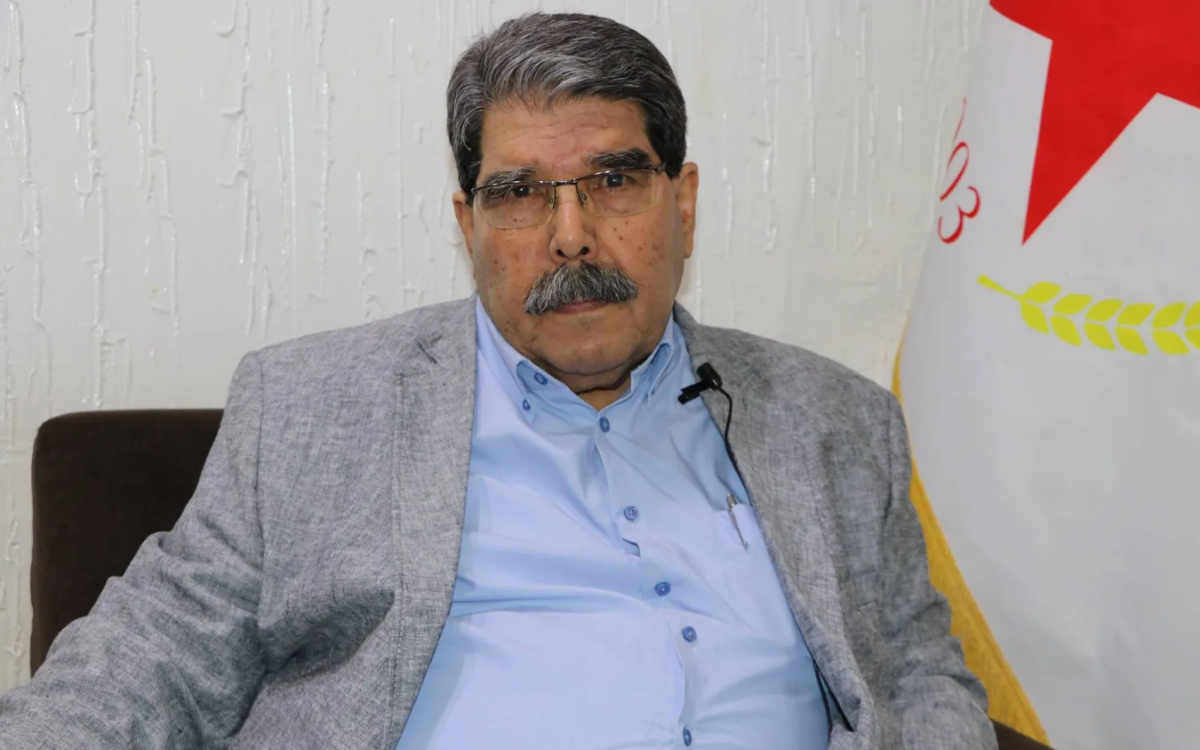
Q&A WITH SALIH MUSLIM
'Turkey should keep its hands off Syria to succeed in peace process'
One of the debates that emerged after the attacks was that conflict and resolution processes in Syria and Turkey should now be considered separately. In your view, is such a distinction possible, both politically and ethically?
I have always argued that developments in Turkey and Syria should be considered separately with regard to the "process" in Turkey. Of course, I was aware of the connection, but I believed that making the process in Turkey dependent on developments in Syria would have very negative consequences.
I held the view that the outcomes achieved in the process in Turkey would have a positive reflection on Syria. I still hold this view, but events have not unfolded according to my perspective. The ruling circles in Turkey have preferred to determine the rhythm, pace, and even the content of the process by looking at Syria. Whether we like it or not, developments in Turkey and Syria have become interconnected. At the point we have now reached, we can predict that the process in Turkey will gain more momentum compared to previous weeks. Without abandoning the always necessary “cautious optimism” regarding Turkey, I say let us wait and see.
In the middle of a big shakeout
A 'sui generis' process
You are one of the rare figures who have followed the Kurdish issue as a long-term political and intellectual matter. Considering the turning points you have witnessed over the years, where do you place the current point in this historical trajectory? Compared to the moments of “hope” and “collapse” experienced in different periods of the Kurdish issue, what does the current process suggest to you?
The “process” we are currently in, whether in terms of examples of international conflict resolution or the history and experience of solution-seeking in Turkey, carries unique characteristics that do not include many lessons applicable here—a sui generis process with its own distinct nature. If you notice, I never labeled it a “peace process.” Because it is not. I refer to it with the vague term “Process.”
To me, Abdullah Öcalan’s truly historic “Peace and Democratic Society” call on Feb 27, 2025, signified the end of the longest, deepest, and most extensive Kurdish rebellion in the history of the Republic. The PKK, the organization that carried this rebellion, complied with the call at its 12th Congress held between May 5–8, 2025, and dissolved itself.
With the symbolic and striking disarmament act on Jul 11, it announced that it was ending its armed struggle against the Turkish state. All of this reflects the steps related to “ending the Kurdish rebellion,” which I have emphasized from the beginning. The establishment of a commission in the Grand National Assembly of Turkey is also part of this—though the commission has not yet fulfilled its essential duties. None of this means that the Kurdish issue has been solved; it means that the roads leading to the solution of the Kurdish issue are being paved.
This includes legal regulations and practices that range from equal citizenship and the right to education in one's mother tongue to the acquisition of status for the Kurds—so that they will truly see and feel the Republic of Turkey as their own state, leaving no room for alternative pursuits. We cannot yet say that we are on the verge of solving the Kurdish issue. We are trying to move in that direction.
About Osman Cengiz Çandar
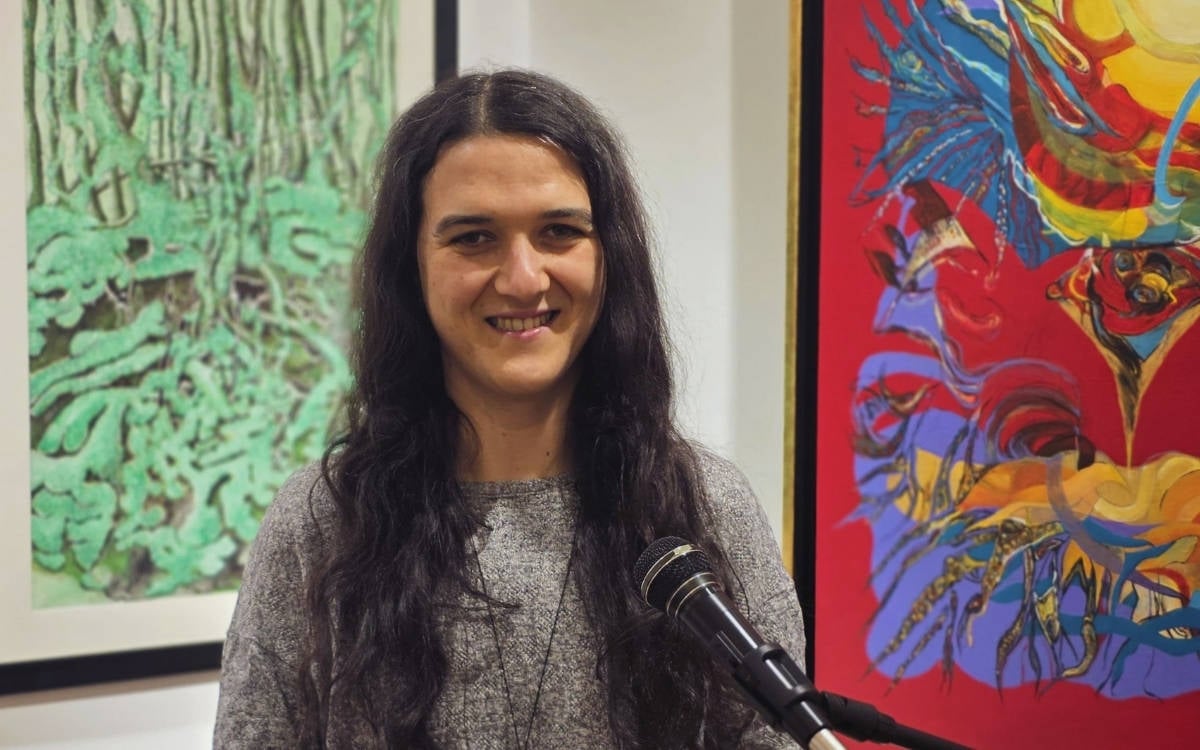
Cengiz Çandar is a member of parliament for Diyarbakır from the Peoples' Equality and Democracy Party (DEM).
He graduated from the Department of International Relations at Ankara University’s Faculty of Political Science. Between 1970 and 1971, he served as a teaching assistant in international relations at the Faculty of Administrative Sciences at Middle East Technical University (METU).
From 1971 to 1973, he lived in Syria and Lebanon and joined the Palestinian liberation movement. He began his journalism career in 1976 and worked in the field for 40 years. Between 1999 and 2000, he served as a fellow at think tanks in Washington. He lectured on Modern Middle Eastern History and Middle East Politics at İstanbul Bilgi University and İstanbul Kültür University.
From 1991 to 1993, Çandar served as an advisor to Turkey’s 8th president, Turgut Özal. He was among the founding members of the political party known as the New Democracy Movement. He has authored numerous books in both Turkish and English, the first of which was published in 1976. In 2016, he worked as a researcher at the Institute for Turkish Studies at Stockholm University in Sweden, and since 2018 he has been a senior fellow at the Swedish Institute of International Affairs.
He is a member of the Turkey-EU Joint Parliamentary Committee and the Asian Parliamentary Assembly, as well as a substitute member of the Parliamentary Assembly of the Council of Europe.
Çandar speaks fluent English, Arabic, and French, and has taken Kurdish language courses. He is married and has one child.
(TY/VK)