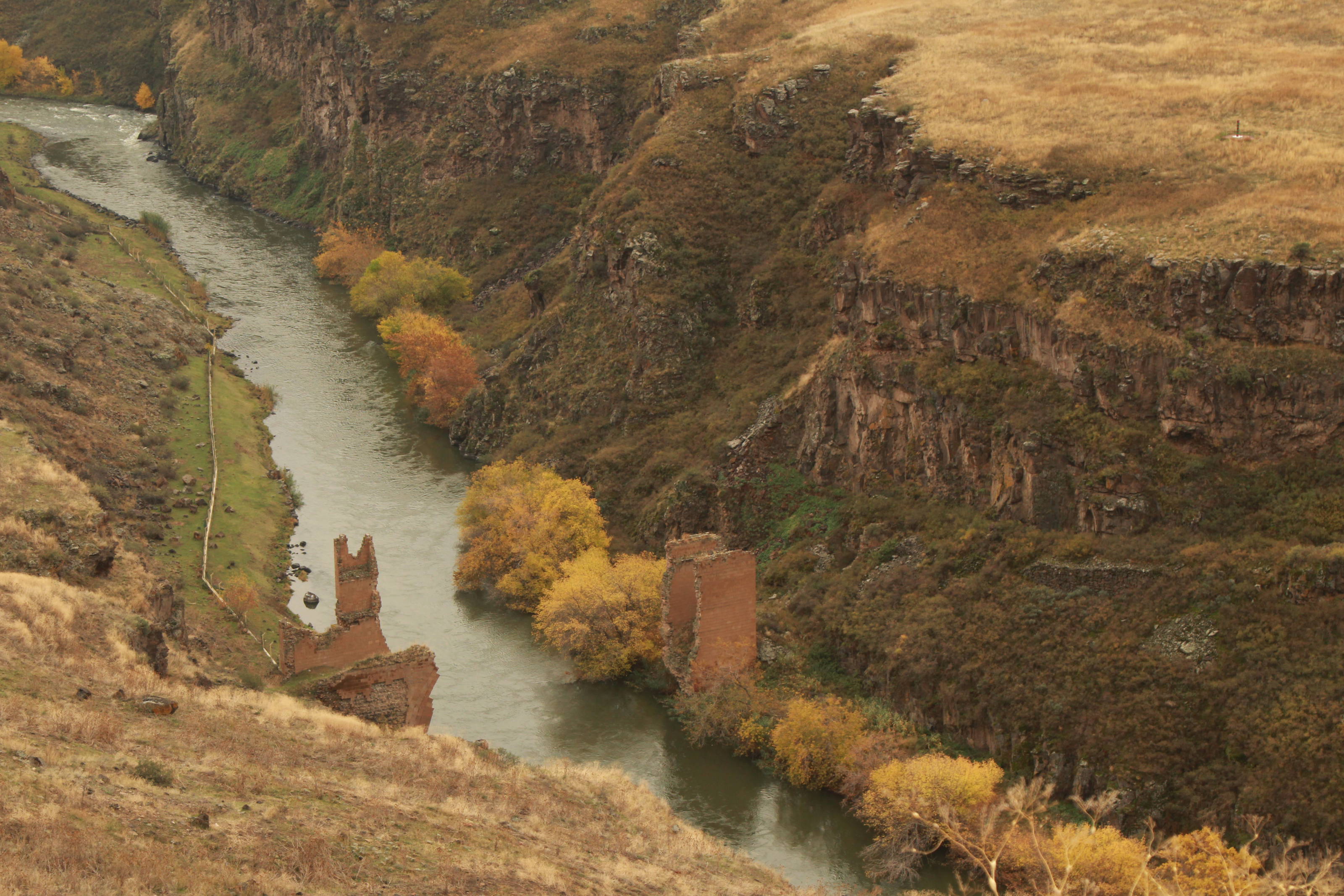




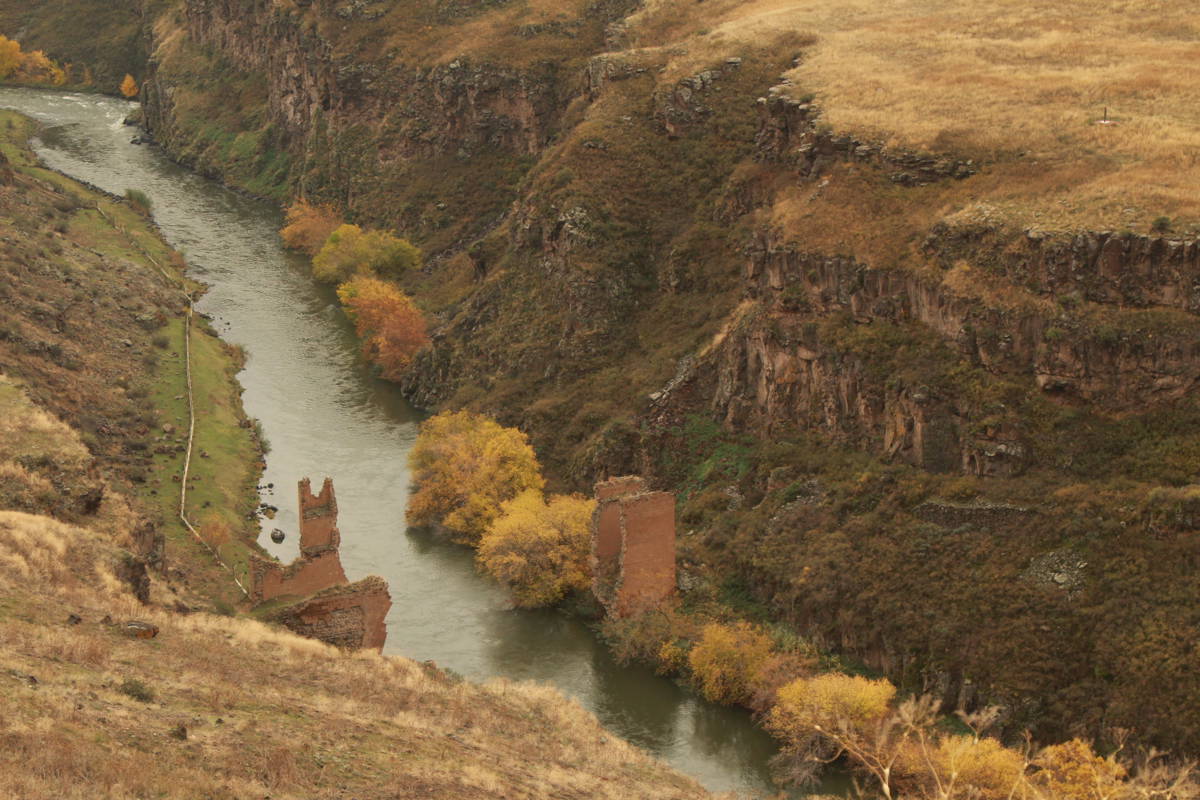


In the historic Ani archeological site in Kars, Turkey, the ruins of an ancient Armenian civilization serve as a reminder of the shared history between the two nations despite the now 33-year border closure.
Downhill from Ani’s Menucihr mosque, built by the Seljuk Turks, lie the remains of the Ani bridge, where two large slabs of volcanic rock sit across from each other on each side of the Arpaçay River bank, surrounded by miles of rolling hills. On one side of the river lies Turkey, on the other Armenia. Despite this, those who wish to simply wade across the border cannot and instead have to endure the long, ill paved road through Georgia. Turkey closed the land border in 1993 during the first Nagorno-Karabakh war in support of Azerbaijan and the border has remained closed to this day.
Now after three decades, the border opening looms closer than ever. Officials confirm that it could happen any day now.
As one traverses the cities of eastern Turkey and western Armenia, the memories of this shared history remain among older folks on each side of the border. Elders spoke of joint memories, business leaders of commercial opportunities and locals about much needed economic growth for cities like Kars, Van and Diyarbakir in Turkey, and Gyrumri in Armenia.
'Open roads are better in any case'
Artyon Mkrtchy, a 64-year-old potato farmer in Gyumri on the Armenian side of the border remembers life prior to the closure. His home is only a short walk from the historic Kars-Gyumri railway, now out of service. He didn’t interact with Turks, although his distant ancestors descend from Diyarbakir, but he remembers goods flowing between the two countries, specifically wheat, animals, agricultural machines and cement.
“In any case closed roads are not good, open roads are good, even if we don’t make our own business we will give workers to train stations, to the custom service — it will create jobs in any case,” Mkrtchy said.
Mkrtchy sells potatoes to Kazakhstan and Georgia by truck. If the border opens he said he will sell to Turkey as well.
He’s not the only one who shares these memories. One Armenian worker at a textile and hosiery factory in Gyumri said that although she is too young to remember meeting any Turks, her parents used to work in a factory with Turkish coworkers. They would sometimes sit and enjoy tea or coffee together.
These shared memories lie on the Turkish side of the border too. Born-and-raised Kars resident and journalist Olcay Okan Avşar remembers that, when he was a child, a bazaar selling Armenian products shipped via the Kars-Gyumri railway would come to town twice a week. He even still owns an organ mini piano he bought from an Armenian seller to this day.
Avşar was young in the days before the border closure, but he described it as a loss of the “color from our lives,” referring to a rich former diversity.
“The cities on the west side of Kars are not actually aware … but for regional cities closer to the border, we used to have this interaction with Armenian people both person-to-person and trade, that’s why we remember this and why we remember the culture — which is why for us it’s important,” Avşar said.
He said that the normalization process especially makes sense for people in eastern cities like Kars as they would be the ones who see the most benefit. He also noted many cultural similarities and memories with Armenians.
“Ordinary people [in Kars and Armenia] already have so much in common, music, dances and food, they’re not strangers to each other, they used to live together so they’re not very different,” Avşar said.
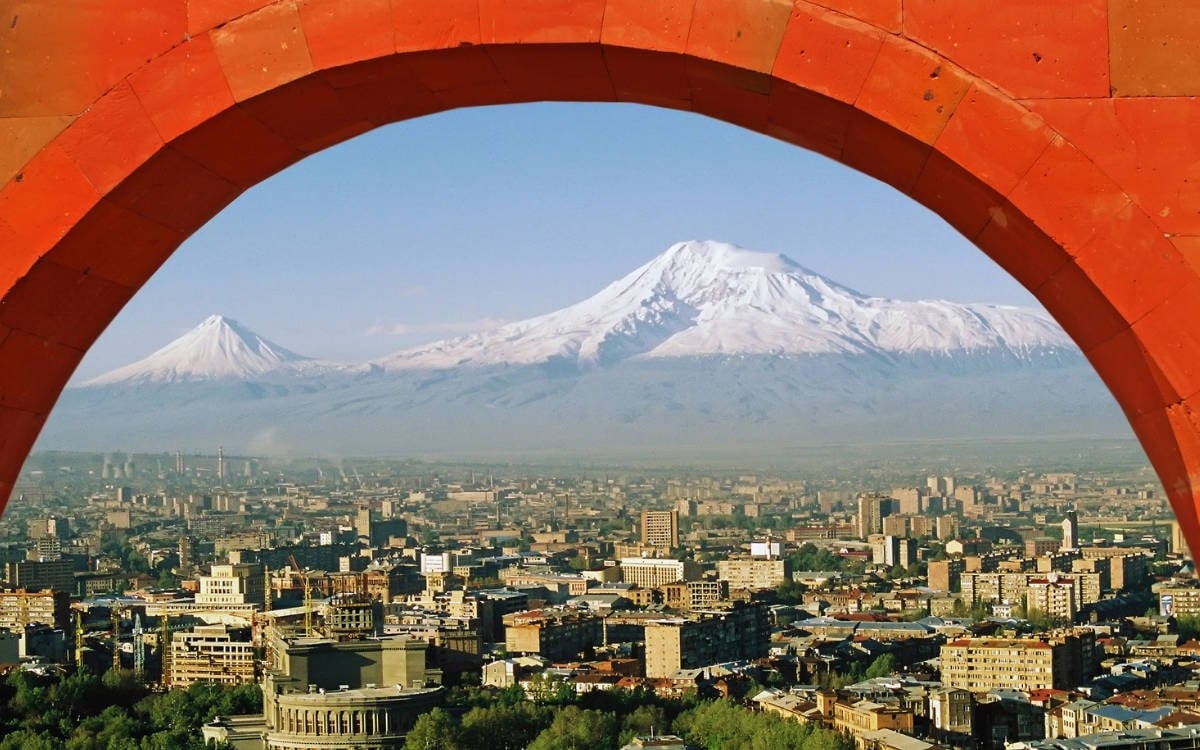
MASİS KÜRKÇÜGİL ON TURKEY-ARMENIA RAPPROACHMENT
'Armenia is looking for ways to breathe'
Turkey has faced major economic crises and inflation over the years. The issue is even more pronounced in many of Turkey’s eastern cities. Locals hope that the opening will provide much needed economic relief.
In a press meeting with Turkish and Armenian journalists, including bianet, President of the Diyarbakir Chamber of Commerce Mehmet Kaya said that Armenian tourism could pose a special opportunity for Diyarbakir given the shared history between the two peoples. Additionally, easier travel will improve trade and business prospects.
“Given the strength of Turkey’s business community, if such a crossing were kept open and good neighborly relations were developed, we could quite easily reach an annual trade volume of up to $10 billion,” said Kaya. “That is why there should be no border between us.”
According to Kaya, Armenian tourists do visit Diyarbakir to see historical Armenian sites, such as the Church of St. Giragos. However, the Chamber does not have any specific statistics on the number of visitors from Armenia. Kaya said that most tourists must travel by plane due to the closed land border, and thus are concentrated in Ankara or Istanbul.
“I can say that we have considerable potential for tourism in both directions, and we need to work on it,” said Kaya. “Such cooperation would not only develop tourism; it would also contribute to social peace.
“It could help our countries recognize the benefits of cooperation and encourage them to adopt more peaceful policies; that is why we are promoting tourism,” he added.
Some Armenians have expressed concern about the ability of domestic businesses to compete with the larger Turkish market. Several Armenian business leaders brushed off this risk though, noting significant cost savings on logistics.
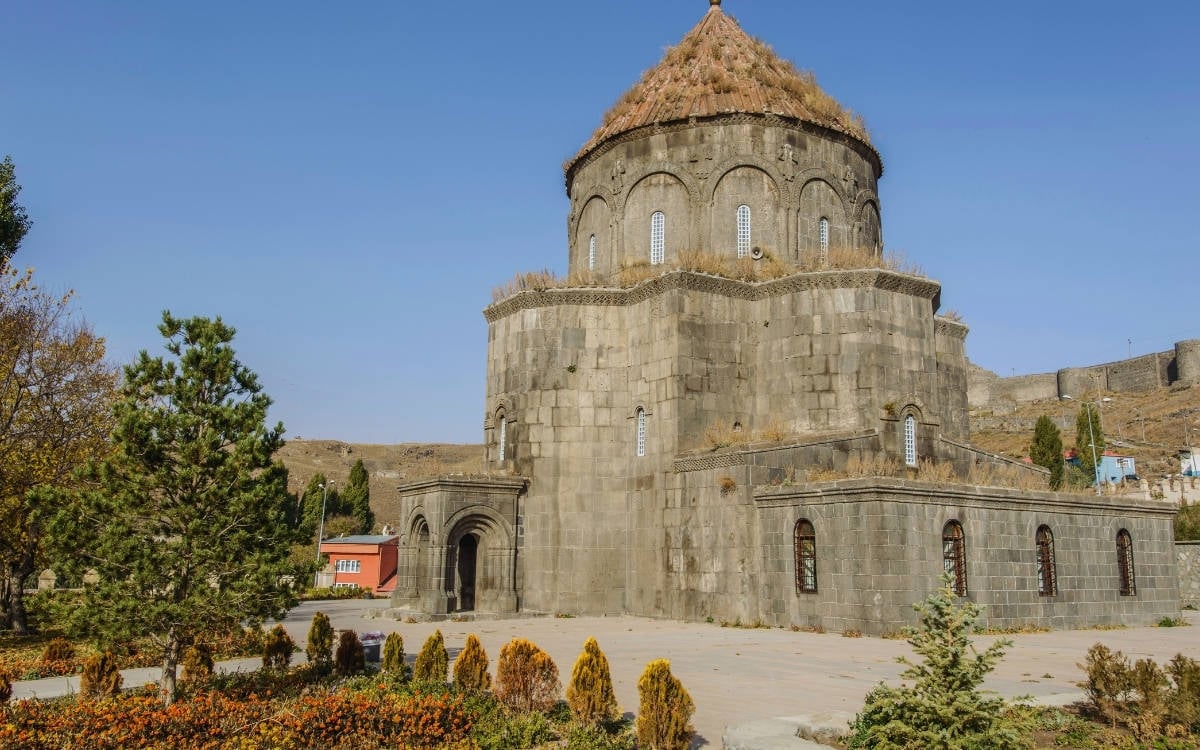
Turkey, Armenia set to resume direct trade
Vachagan Karapetyan, General Director of Artashat Cannery, a preserved food company based in Armenia, said that the majority of Armenian business people are in support of opening the border.
According to Karapetyan, one Turkish truck through Georgia costs about $4,000. He estimates that costs could be reduced by about 30 to 40 percent if the border were open. An open border would also grant the business direct access to the Mersin port and thus the Mediterranean. For now, shipments must go from Poti, Georgia, to Istanbul in order to access the Mediterranean.
Karapetyan said that Turkish companies could also benefit from partnerships with Armenian companies like his, as they could help better access Russian markets.
M. Hakan Mestandoğan, the export manager of Seramiksan, a Turkish ceramic business based in İzmir, has already been shipping to Armenia for over 15 years despite the closed border, but always through Georgia. Mestandoğan believes that Seramiksan may be the first Turkish company to export directly to Armenia, but this only refers to the tax code, rather than the actual path the goods cross. Prior to May 2026, there was no way for Turkish business to list Armenia as the final destination on tax codes.
Ultimately though, the roundabout system through Georgia proves needlessly expensive for both Turkish and Armenian exporters, with Armenians having to navigate the additional barrier of accessing the Mediterranean as a landlocked country.
'We could see the headline "Armenia-Turkey border has opened" tomorrow'
According to Dr. Stepan Grigoryan, political analyst and Chairman of the Board of the Analytical Centre on Globalization and Regional Cooperation (ACGRC), Turkey’s relationship with Azerbaijan has long posed a significant obstacle in the normalization process.
Turkey has historically operated off of what some call an “Azerbaijan first” policy where Ankara consults Baku in its negotiations with Yerevan. However, Grigoryan believes that the original justifications for the border closure are now moot.
Turkey closed the border due to Azerbaijan and Armenia’s dispute over the Nagorno-Karabakh territory. However, an Azerbaijan military victory in 2024 led to the dissolution of the majority-Armenian unrecognized Republic of Artsakh (Nagorno-Karabakh) and the mass exodus of Armenians from the region. Some international human rights groups have called the exodus an ethnic cleansing.
Grigoryan said that now that Armenia has recognized Nagorno-Karabakh as part of Azerbaijan following its defeat, the issue of the Turkish border should be put to rest.
“Now the Karabakh issue is resolved, our leaders reached an agreement so the conflict is resolved, even no single Armenian stayed in Karabakh, so I cannot understand what is the reason to keep the border closed in this case,” Grigoryan said.
He added that the current rift between Turkey and Azerbaijan over the hijab bans in Azerbaijani schools could also influence Turkey to move ahead in the normalization process without Azerbaijani consultation.
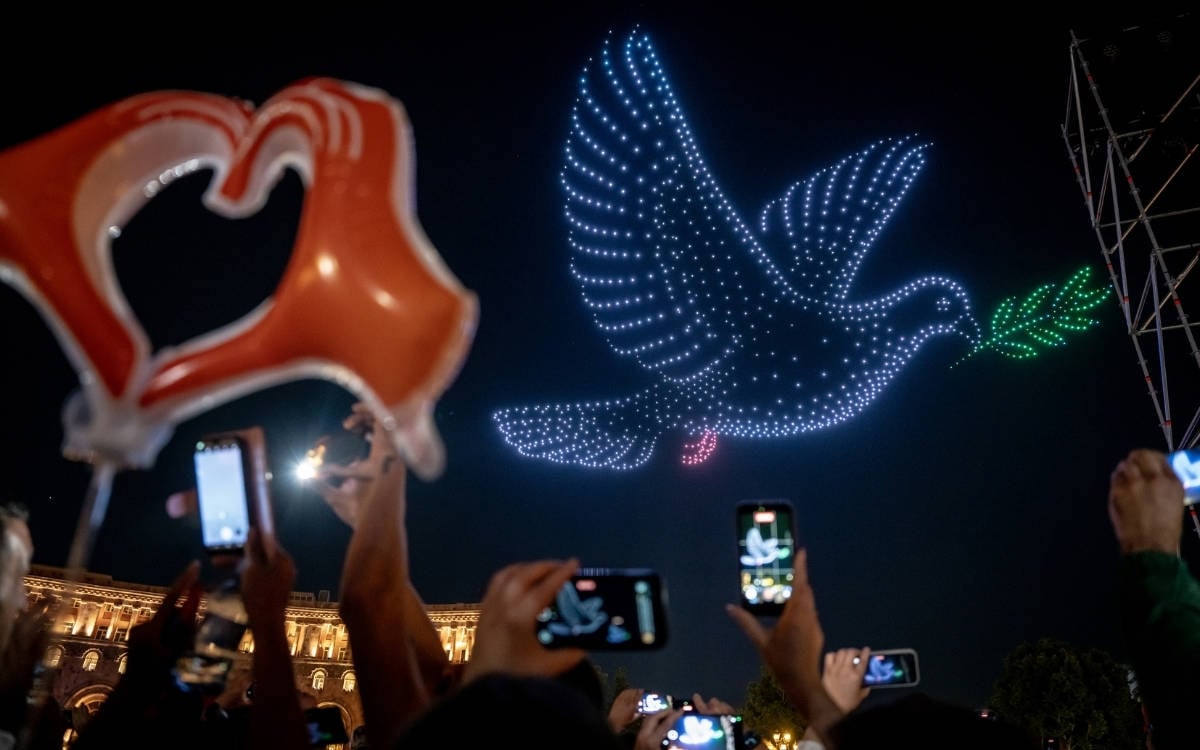
'Pashinyan's election win shows Armenian voters want peace with Turkey'
Armenian Prime Minister Nikol Pashinyan has expressed a desire to expand relationships with the European Union and Turkey to move beyond Russian dependence. His re-election in June despite the lost Nagorno-Karabakh war could be viewed as a referendum on the normalization process.
Armenian officials have also hinted at the nearing of normal relations. In an Oct. 13 Warsaw Security Forum panel, Armenian Minister of Foreign Affairs and International Trade Ararat Mirzoyan spoke optimistically about the border.
“The border is still closed, but I think the process has now matured considerably,” said Mirzoyan. "So much so that it is entirely possible that we could wake up tomorrow morning and see the headline ‘Armenia-Turkey border has opened’ in the news,”
In a meeting with journalists from Turkey and Armenia, including bianet, The European Union ambassador to Armenia Vassilis Maragos called a normalization of relations between Armenia and Turkey a “win-win.”
“I think that there is a dimension of economic cooperation, but there is also a dimension which is more human,” said Maragos. “It's about people to people contacts, people want to get to know each other, they want to get to know better their neighbors, and they feel actually this, that this is also an investment in their security.”
In the latest update on normalization this past weekend, the Turkish Transport and Infrastructure Minister Abdulkadir Uraloğlu announced the completion of the tender process for the restoration of the Ani bridge — a joint project between Turkey and Armenia. This joint restoration could mark a symbolic next step in relations between the two countries.
Years ago Hrant Dink, the Turkish-Armenian journalist and Editor-in-Chief of the Turkish-Armenian bilingual weekly Agos, wrote his only book titled “Two Close People, Two Distant Neighbors" about Turkey-Armenia relations. Now, a decade later it looks like those two distant neighbors could become much closer very soon. (İK/VK)