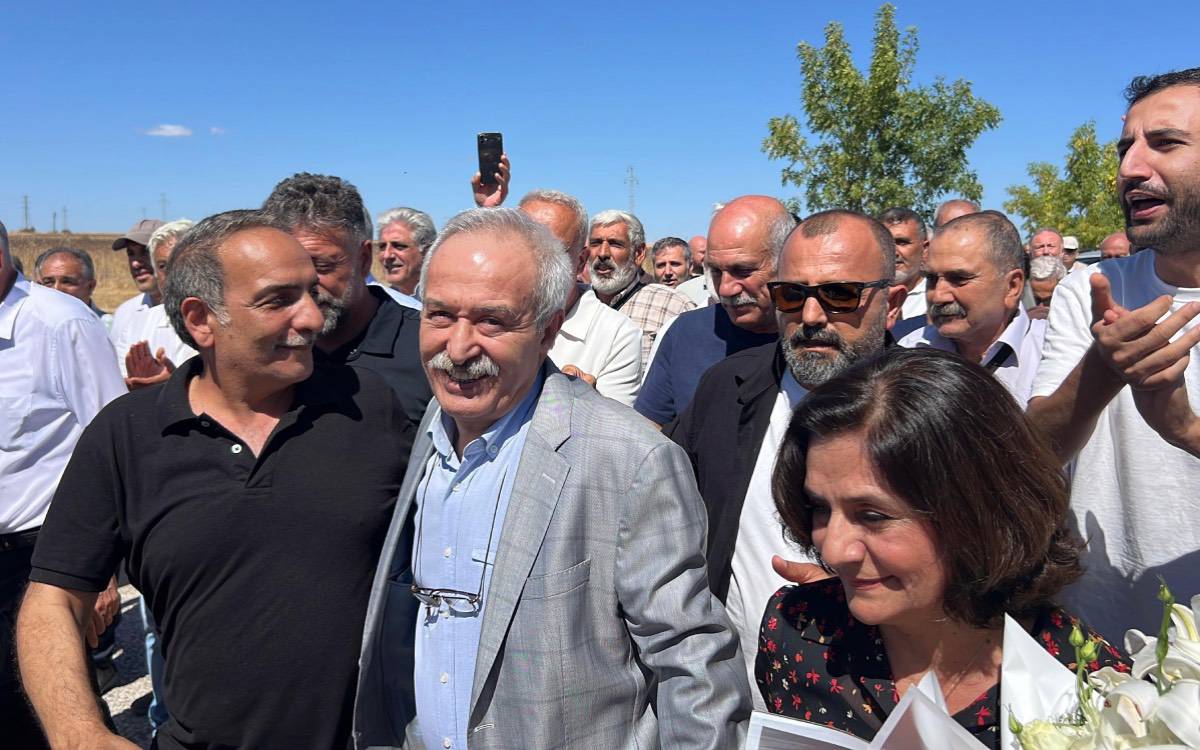






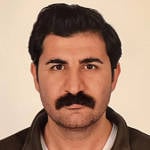

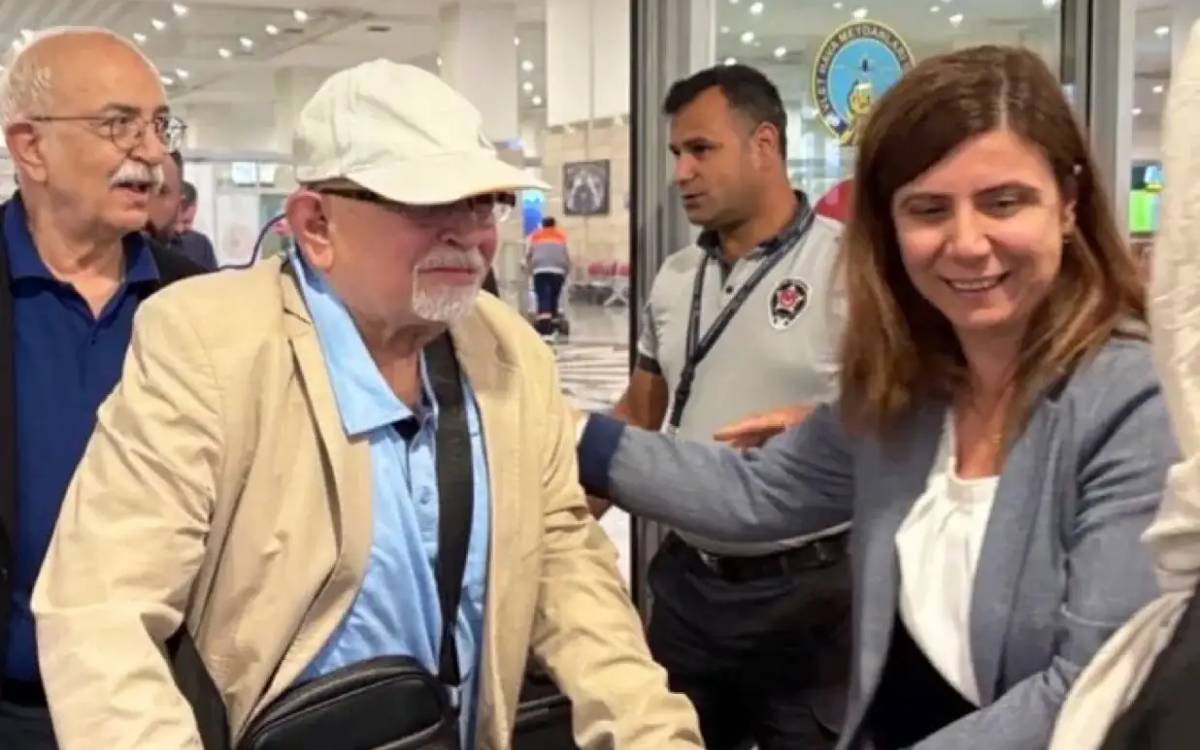



Kurdish politician and lawyer Serhat Bucak returned to Diyarbakır on Oct 3 after nearly 10 years in Europe, saying he had come back before a new legal framework took effect because he rejected being associated with terrorism.
Bucak, 81, had previously spent 22 years in exile before returning to Turkey in 2014 during a peace process, before leacing again in 2016 after the process failed and a crackdown was initiated on the Kurdish political movement. He has since lived in Germany.
His daughter, Diyarbakır Co-Mayor Serra Bucak, welcomed him at Diyarbakır Airport.
'The Kurds haven’t cowered'
Speaking to bianet about his first impressions of the city, Bucak said he observed significant change in the outlook of Diyarbakır while the Kurdish political engagement remained strong:
“The city has changed. Huge buildings have been constructed. The old Diyarbakır is gone.
"There’s a sense of movement in the community. The excitement at the Diyarbakır Book Fair, the interest shown by 18-year-olds in Selahattin Demirtaş’s books… There’s no retreat among the Kurds.
"Ten years ago, society was dynamic. Then came the June 7 elections. From HEP all the way to the HDP, the Kurds crossed the electoral threshold for the first time. There was such a major development back then as well, but the Kurds came under pressure. Severe pressure was applied. I had thought the Kurds would cower in the face of these operations, that they might have already cowered. But I was wrong. The Kurds haven’t cowered; they’re standing tall. They’re watching the process unfold. They view the process positively.”
'This is different from the 2013 process'
Regarding the ongoing Kurdish peace process, Bucak noted that "the elite segment, especially intellectuals and the left" views the process negatively:
“There are major differences between the 2013 process and this one. The Kurds’ participation had not been legally recognized. In fact, Mr. Öcalan had specifically stated that a law needed to be drafted and passed by Parliament.
"Now there is a law. Although this law is aimed at dismantling the PKK, the fact that the existence of the Kurdish side has been recognized by Parliament for the first time is a positive development. This is a long process.”
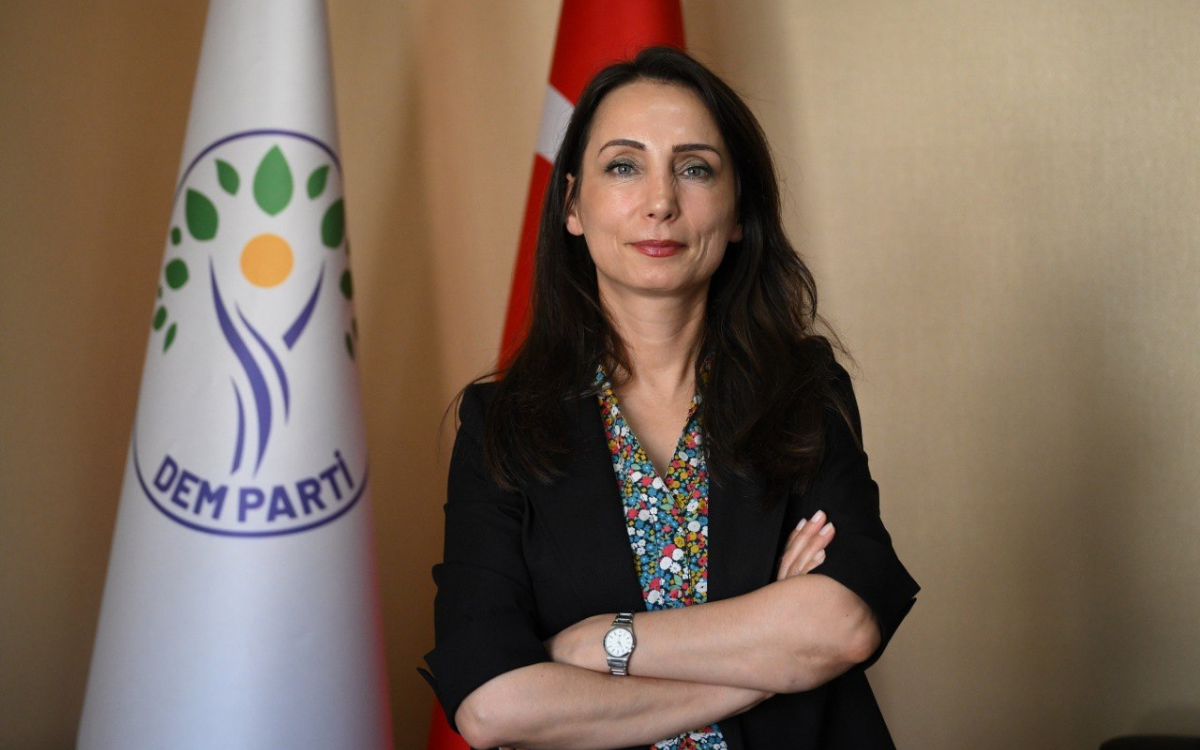
INTERVIEW WITH TÜLAY HATİMOĞULLARI
'Peace process must be made irreversible to succeed'
'I'm a politician, not a terrorist'
Despite his positive view of the peace process, Bucak criticized the terminology in the peace process law passed in August, saying he returned before it took effect because he did not identify with the language used in it.
“There are certain terms in the law: ‘terrorism,’ ‘terrorist,’ ‘the elimination of terrorism... I have never seen myself as a terrorist. I am not a terrorist. I am a lawyer. I am a Kurdish intellectual. I am a Kurdish politician.
“That is why I came early. I did not wait for the law to enter into force. People are uncomfortable because the law is framed within the context of terrorism.”
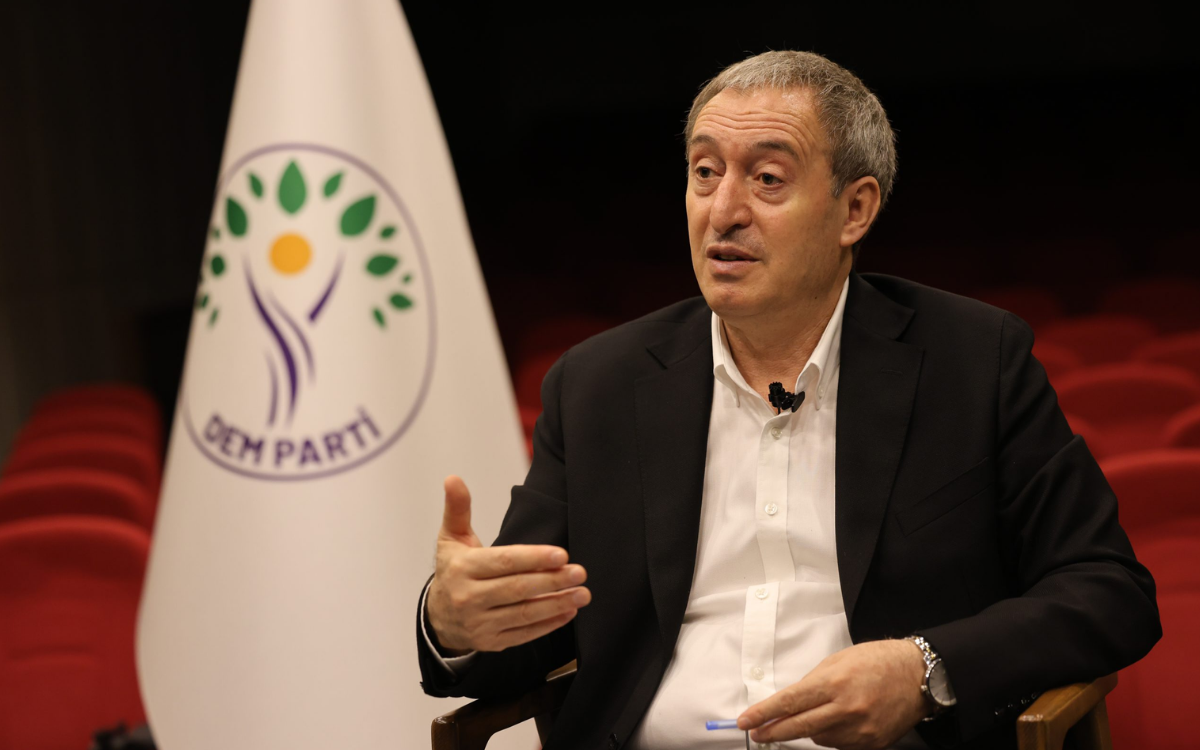
Nearly 4,000 prisoners could be released under Turkey’s Kurdish peace law
'I wish they could all return'
Bucak said many Kurdish politicians living in Europe were waiting for the law to take effect before deciding whether to return:
“Politicians in Europe are waiting for the law to take effect. Some of them are facing court cases. There is a final, binding verdict against İdris Baluken, a former member of the İmralı delegation.
"Sixty-five percent of the politicians in Europe will return. I wish they could all return. They should spend the rest of their lives engaged in democratic politics in Turkey. If the Constitutional Court’s rulings were implemented, many more people would return. Dozens of politicians would be released from prison.
"I am hopeful that I will see Selahattin Demirtaş in the near future. In Turkey, especially over the past one and a half to two years, no funerals have been coming from the mountains or the plains. Neither Turkish mothers nor Kurdish mothers are weeping. This makes me happy. Inshallah, this process will continue in this way. I am grateful to everyone who has worked hard and sweated during this process.”
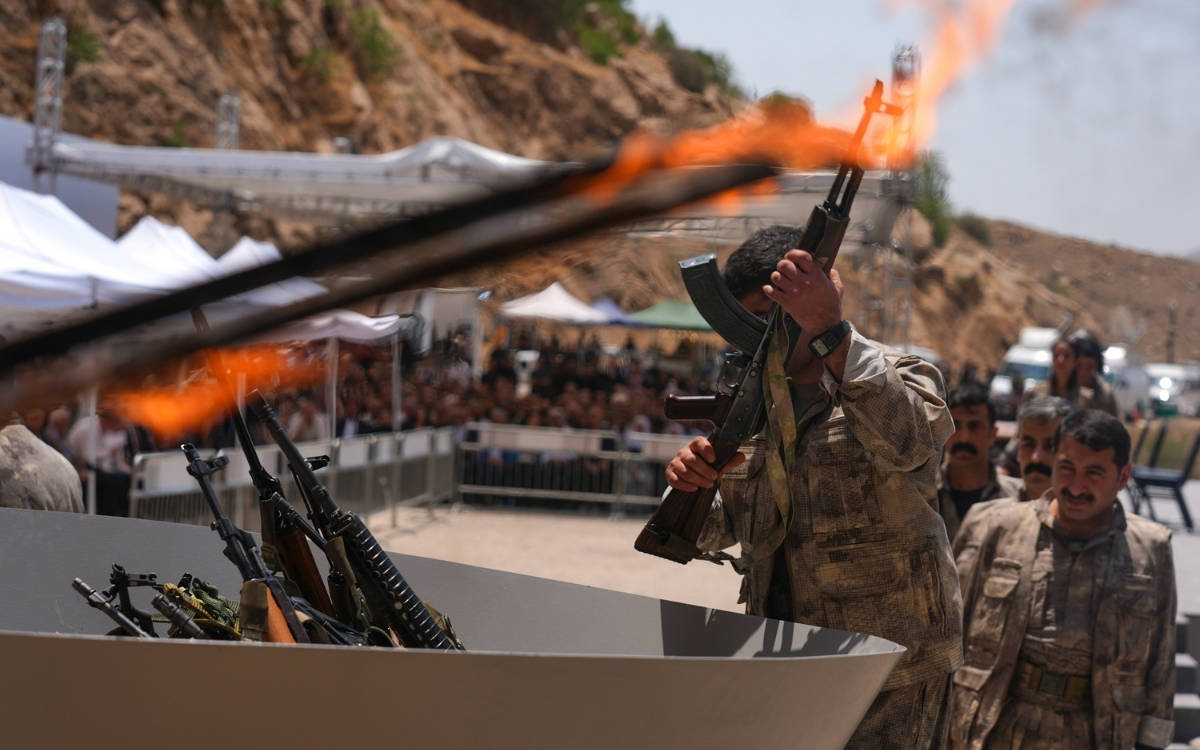
The right not to be killed
'I'm proud of my daughter'
Bucak also spoke about his daughter’s election as Diyarbakır co-mayor:
"When my daughter was elected co-mayor, she said, ‘My father won’t be able to come and congratulate me—unfortunately, he’s in exile.’ I’ll be making up for that belated celebration soon. I’ll visit her at city hall. I’ll have some tea or coffee with her. I’ll visit her at city hall. She’s working hard and doing her best. She wants to make a difference. The people are happy with her. I can see that.
"She got to where she is today through her own efforts and hard work. It’s a good feeling. When I left Turkey, my daughter was the first council member at the Diyarbakır Metropolitan Municipality and an advisor to Gültan Kışanak. After that, the process of appointing a trustee began, and it took a long time. From 2016 to 2026—that’s 10 years.
"On my second visit, my daughter was now the Co-Mayor of the Diyarbakır Metropolitan Municipality. It was a source of pride for me. God willing, she’ll rise to even greater heights. She’ll serve the people of Diyarbakır even more. Especially, she’ll carry out the projects she’s promised.”
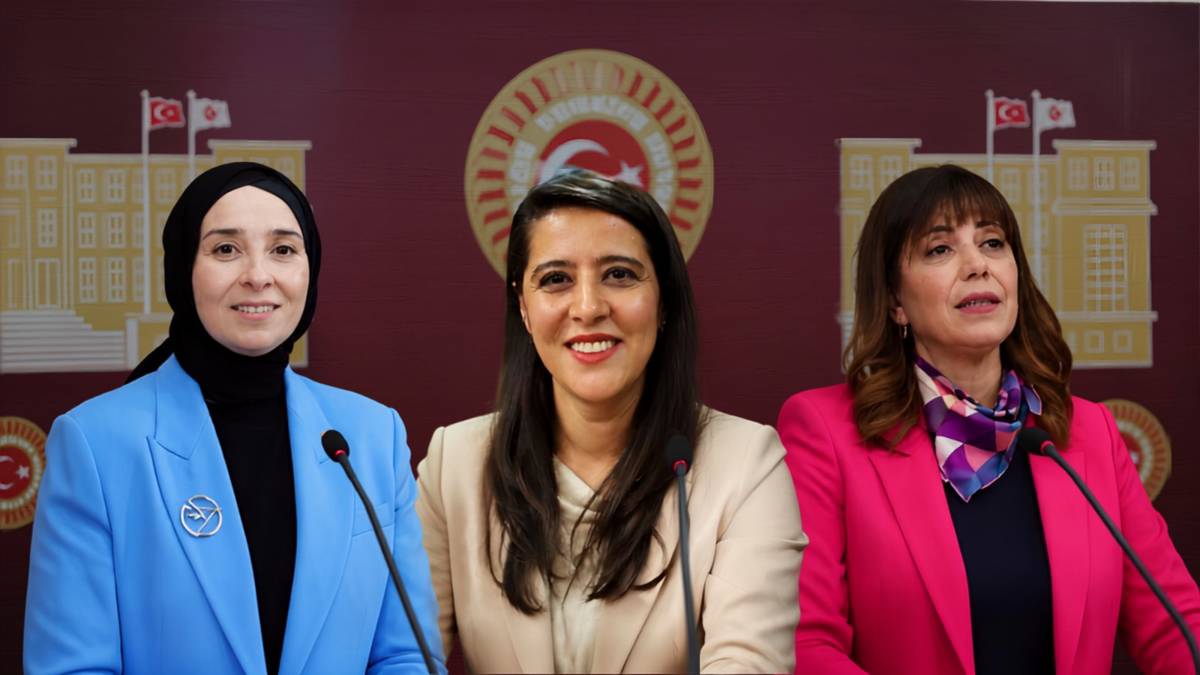
'Women politicians’ role in peace process cannot be reduced to a ‘softening voice’'
About Serhat Bucak
Yusuf Serhat Bucak was born on Oct 17, 1945, in Hadro village in Siverek, Şanlıurfa. He graduated from law school in 1970 and worked as a lawyer for about 20 years, spending 8.5 years in Siverek and 13 years in İstanbul. One of the defining moments of Bucak’s life was the killing of his father, Faik Bucak, a judge, in 1966.
Faik Bucak was a lawyer, former judge and one of the prominent figures in Kurdish politics. He was the founder and chair of the Kurdistan Democratic Party of Turkey (TKDP/KDP-T).
On July 4, 1966, the vehicle he was traveling in was attacked by gunmen while he was on his way to a court hearing in Siverek. His sons, Serhat and Sertaç Bucak, were also in the vehicle. Serhat Bucak, then 20, was wounded in the attack. Faik Bucak died in the hospital the following day. The circumstances surrounding the attack and his death remain a subject of debate.
In 2026, Serhat Bucak joined by phone a commemoration held in Siverek to mark the 60th anniversary of Faik Bucak’s death.
In addition to his work as a lawyer, Serhat Bucak was also active in Kurdish politics. He was among the founders of HEP and later DEP. In 1989, he was among the lawyers representing Musa Anter, one of the prominent Kurdish intellectuals of the period. He also represented sociologist İsmail Beşikçi.
Years in exile and a brief return
He left Turkey in the early 1990s because of a case filed against him over activities linked to the Kurdish Parliament in Exile and the Kurdistan National Congress (KNK). Bucak was tried alongside 31 others in connection with the case.
According to Bucak, the Kurdish Parliament in Exile was established in The Hague in 1995, and he joined it as an independent Kurdish figure before resigning on May 14, 1999. He denied the charges against him.
Bucak returned to Turkey in April 2014 after 22 years abroad. The Ankara 11th Heavy Penal Court lifted an arrest warrant against him and gave assurances that he would not be detained if he returned to Turkey within three months. Bucak then returned and testified before the Ankara 8th Heavy Penal Court. He was subsequently released.
In a statement that day, he described his return as bittersweet. He said he had lost his mother and many friends during his years in exile. He also said he wanted to contribute to the peace process, adding, “Good things will happen in Turkey, there will be peace in Turkey.”
After returning to Turkey, Bucak continued his political activities. Ahead of the 2015 general election, he applied to become a parliamentary candidate for Urfa from the Peoples’ Democratic Party (HDP). However, following the July 15, 2016 coup attempt, he returned to Europe. He lived in Germany for about 10 years. In 2024, his daughter, Diyarbakır Metropolitan Municipality Co-Mayor Serra Bucak, said her father was unable to return to Turkey for political reasons and was living in Germany.
The Urfa 2nd Heavy Penal Court issued an arrest warrant for Serhat Bucak over some of his social media statements. The court later lifted the warrant in exchange for a 100,000-lira guarantee.
Bucak subsequently returned to Diyarbakır on Oct 3, 2026, after nearly 10 years in Europe. His daughter, Serra Bucak, welcomed him at Diyarbakır Airport. His return marked his first time back in Turkey in about a decade after leaving again in 2016.
One of Serhat Bucak’s notable works is “Kürt Hâkim: Faik Bucak’ın Yaşamı,” a book about the life of his father, Faik Bucak.
Published by Avesta in 2021, the book covers Faik Bucak’s years as a judge, his exile after the May 27 period, the “55s” case, his activities in the Kurdish political movement and his life up to his death in 1966. It also includes Faik Bucak’s poems in Kurdish and writings by family members.
(FY/VK)