










Salih Muslim, one of the founding members and the first co-chair of the Democratic Union Party (PYD), a pioneering force among the Kurds in Syria, passed away late yesterday at a hospital in Erbil where he had been receiving treatment for kidney failure. The news of his death was announced by his son, Amed Muslim.
Muslim will be remembered as one of the most prominent figures in Kurdish politics in Syria over the past half-century.
Born in 1951 near Kobanê, Muslim pursued higher education in Turkey during his youth and was one of the Rojava Kurdish politicians who spoke fluent Turkish. After earning his engineering degree, he returned to Syria and became involved in the struggle for Kurdish political rights for decades. During the period when the Baath regime imposed severe repression on Kurdish politics, he was active in various Kurdish political circles.
He was among the founding members of the Democratic Union Party (PYD), established in 2003, and quickly became one of its most visible representatives. With the onset of the Syrian civil war, Muslim emerged as a key spokesperson on the international stage for the Kurdish self-rule experiment in northern Syria. During his tenure as PYD co-chair, he stood out as a political advocate for the local governance model established in Rojava.
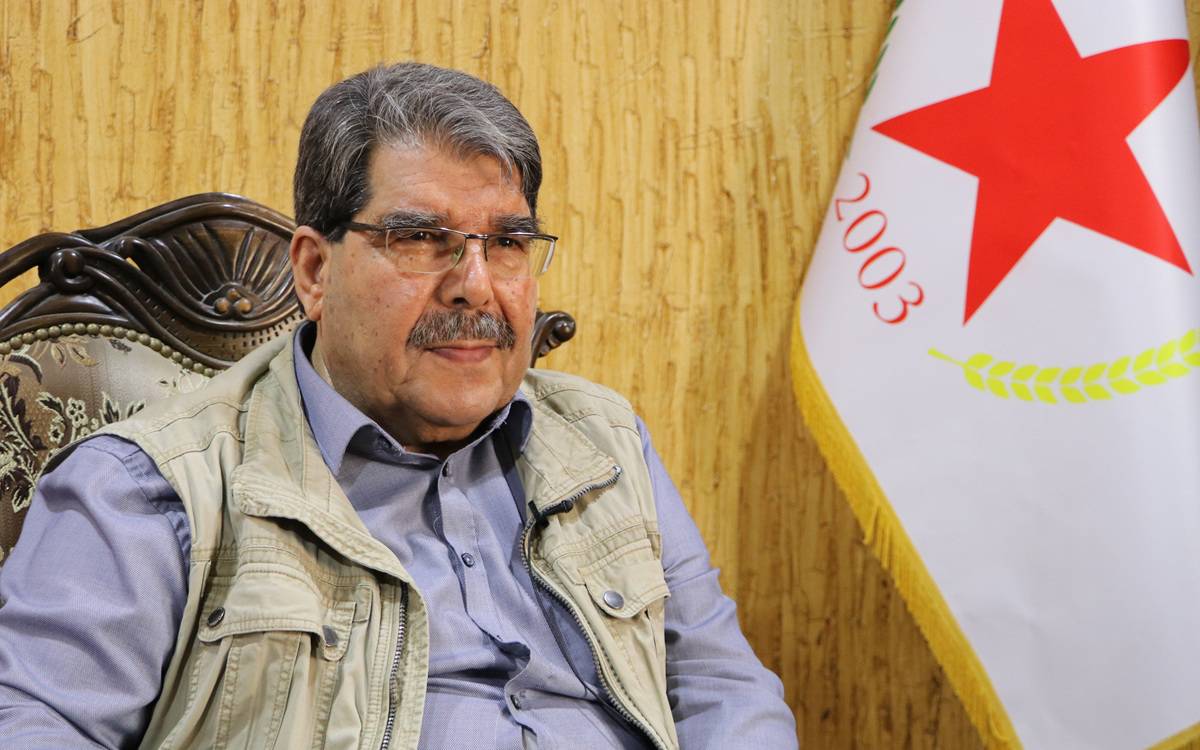
Q&A with Salih Muslim on Syrian Kurds' deal with Damascus: 'We'll not give up our gains'
Between 2013 and 2015, during the peace process conducted in Turkey, Salih Muslim was one of the Kurdish politicians who engaged in contact with Ankara. In the fall of 2014, when Kobanê was besieged by ISIS, he traveled to Ankara and met with then-Prime Minister Ahmet Davutoğlu and National Intelligence Organization (MİT) Undersecretary Hakan Fidan. These meetings addressed the transfer of arms and peshmerga forces from South Kurdistan (KRG) through Turkey to support Kobanê. The subsequent arrival of peshmerga units affiliated with the Kurdistan Regional Government in Iraq through Turkish territory to reach Kobanê became one of the notable developments of the time.
Salih Muslim played a significant role in raising international awareness of the Kobanê resistance and in promoting the political experiment in Rojava at the diplomatic level. He was known as a representative of a political line that championed democratic self-governance, local councils, and women’s political representation. Although he was involved in a contentious and turbulent regional political landscape, his political stance, personal demeanor, and ability to approach difficult issues with a calm tone ensured that he would be remembered as a politician who contributed to the international legitimacy of the Rojava Kurdish movement. (AEK/VK)

