







Two senior editors at Sözcü newspaper's web portal were detained overnight in İstanbul over a report that incorrectly described two university students as high school students, in an investigation involving allegations of "publicly spreading misleading information."
Editor-in-chief Ercüment İşleyen and managing editor Tuğba Nur Çelik were taken to the İstanbul Security Directorate and released later in the night after giving statements.
The report concerns the detention of two students over a banner protesting the education minister. The university students had hung the banner at an İstanbul high school ahead of the scheduled visit from Minister Yusuf Tekin. On Oct 25, they were jailed pending trial for "threatening" him.
In its initial reporting of the incident, Sözcü misendified the studetns as high schoolers. This was the reason for the journalists' detention, according to the outlet.
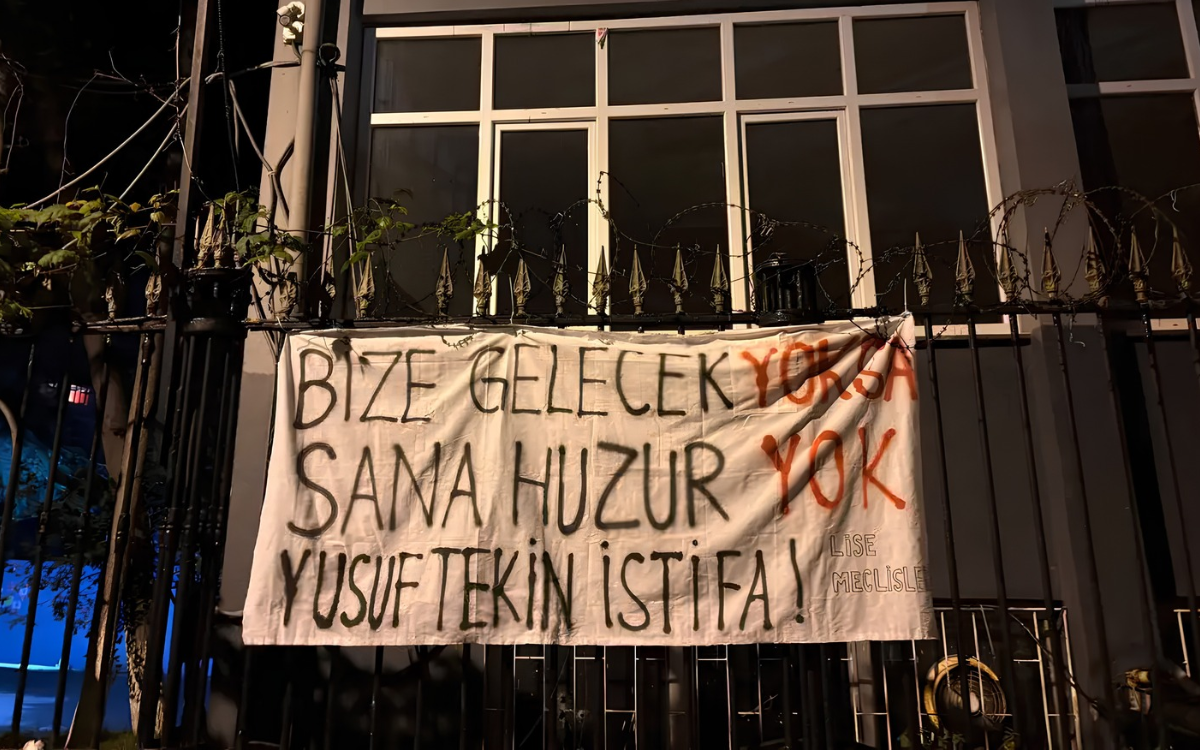
Two students jailed over banner calling on education minister to resign
Use of disinformation charges against journalists
Article 217/A of the Turkish Penal Code, introduced under legislation widely known as the "disinformation law," took effect in Oct 2022.
The provision carries a prison sentence of one to three years for anyone who "publicly disseminates false information concerning the country's internal or external security, public order or public health, solely with the intention of creating anxiety, fear or panic among the public, in a manner capable of disturbing public peace."
An allegation that information is false or inaccurate is not sufficient on its own to constitute an offense. All the elements specified in the law must be present.
The information must be false, and the person disseminating it must know it is false. It must concern the country's internal or external security, public order or public health, be disseminated publicly and be capable of disturbing public peace. The person must also act solely with the intention of creating anxiety, fear or panic among the public.
The requirement that the information be "capable of disturbing public peace" must also be established through concrete evidence or facts.
In the face of widespread criticism from journalism groups and political opposition, government officials at the time maintained that the law would not be used against journalists.
Then-Justice Minister Bekir Bozdağ assured in Jan 2023 that the offense was subject to "very strict conditions."
Bozdağ said the mere act of writing an article did not mean that a person had disturbed public peace. He also said he did not expect the provision to lead to a large number of investigations.
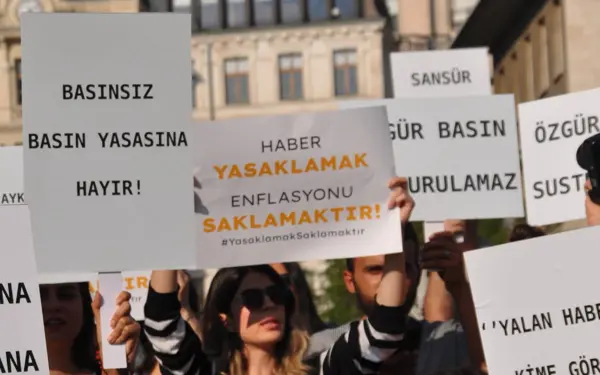
'Disinformation law' used against 83 journalists since 2022
However, at least 113 investigations were launched against 88 journalists between Oct 2022, when the law took effect, and Apr 1, according to figures documented by the Journalists' Union of Turkey (TGS).
During that period, 29 journalists were detained by police and six were jailed pending trial. Another journalist was placed under house arrest as a judicial supervision measure.
The union also reported that no convictions under Article 217/A had become final by Apr 1.
However, journalists continued to face pretrial detention under the same provision after the report's cutoff date.
Yelis Ayaz, publisher of Aydınpost, was arrested on May 15, followed by Evrensel reporter Doğa Baskan on Jun 25, journalist Ali Çağatay on Jun 26, Cem Küçük on Jul 31 and journalist Ali Tarakcı on Sep 26.
Most recently, journalists Şaban Sevinç and Mustafa Balcı were arrested on Oct 9 under the same provision.

BIA Media Monitoring Reports
(HA/VK)

