.jpg)

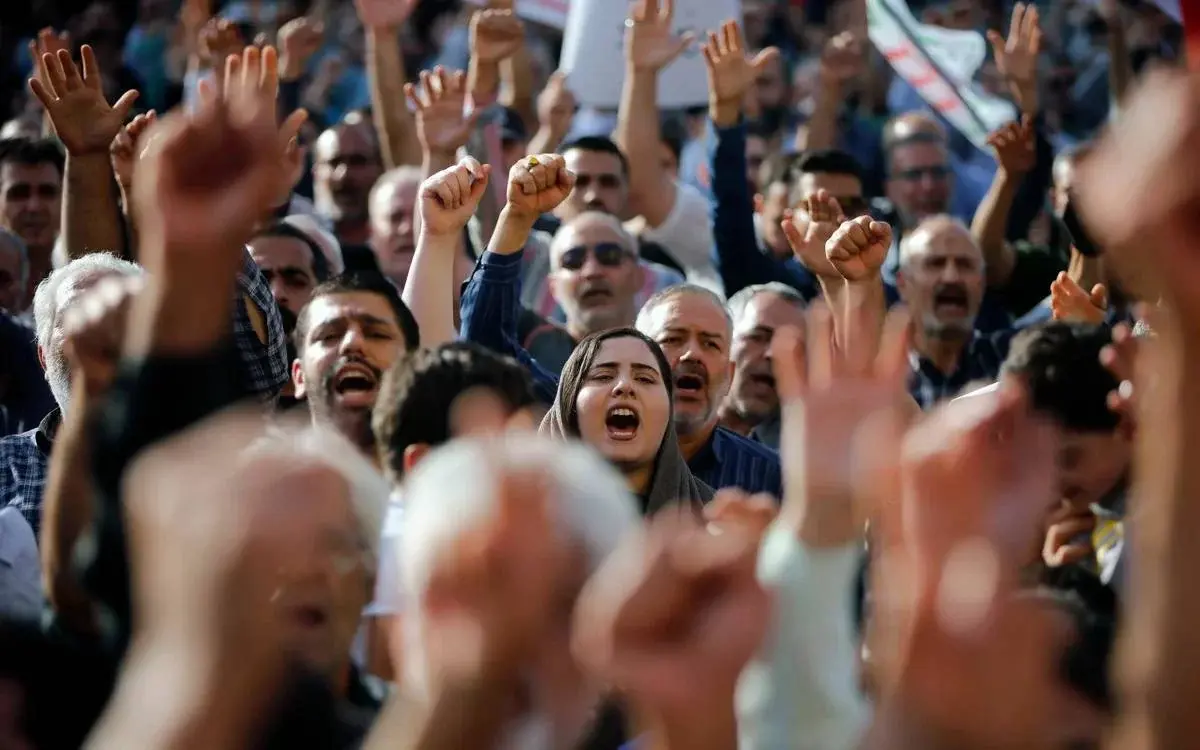



Sara Kermanian, a political scientist and lecturer in international relations at the University of Sussex, says Iranians hold a wide range of views on the ongoing war with Israel. Yet when it comes to the country's future, she notes that “the three top-down transformation scenarios previously outlined remain relevant, and regime change is becoming increasingly likely.”
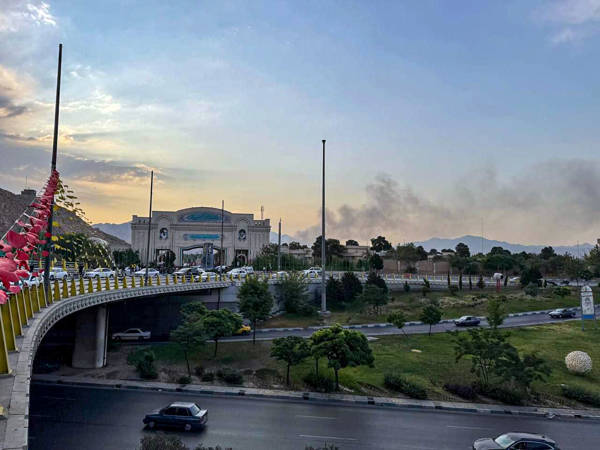
Israel’s “Operation Rising Lion,” launched on Jun 13 purpotedly to target Iran’s nuclear program, alongside Iran’s retaliatory strikes on Israel under the name “True Promise-3,” fears are mounting that the conflict could spiral into a broader regional war.
After the US joined Israel to bomb three of Iran’s nuclear facilities, Tehran yesterday responded with an attack on a US air base in Qatar.
Although US President Donald Trump announced a ceasefire between the two countries today, the situaton is seen as fragile.
So far, over 500 people have been killed in Iran and 24 in Israel as a result of the reciprocal attacks, according to authorities in the respective countries.
In an interview with bianet conducted before Trump’s ceasefire announcement, Kermanian analyzed the latest developments, the trajectory of the war, and the state of opposition and leftist movements in Iran. She broke down Israel’s assault on Iran into three phases and identified four main power blocs within the country.
'Federalization scenario might gain traction if the war is prolonged'
The world is now witnessing a new phase of regional escalation-one that began with the October 7, 2023 attacks by Hamas militants on Israel, continued with the downfall of the Baath regime in Syria, and has most recently intensified with Israel’s direct strikes on Iran, pushing both countries toward a state of war. Looking at the justifications presented by Israel for its assault, what are the visible and hidden motivations behind this military action?
I believe the motivations of Israel (and the US) in attacking Iran can be categorised on three levels.
First, Israel’s (and the US’s) most visible objective is to weaken the Islamic Republic of Iran’s (IRI) strategic capabilities and threat potential. After targeting and weakening its proxy networks, the current focus has shifted to Iran’s nuclear infrastructure, missile projects, and the political apparatus as a whole. It is crucial to note, however, that it has been precisely the enmity between Israel and the IRI that has long justified their respective militarisations-militarisations which have now culminated in open conflict. In this sense, the war is not simply reactive but emerges from the mutually constitutive identities and strategies of the two states. For the US, it is equally critical to ensure that Iran cannot threaten its interests in inter-imperial rivalries by aligning with powers such as Russia or China. This weakening of the state is deemed necessary regardless of whether the IRI is overthrown, as the mere existence of strategic tools for regional hegemonic expansion poses a threat to both Israel and the US.
Second, beyond strategic aims, the military action carries a strong symbolic and discursive dimension. The idea of reordering the Middle East has long circulated among regional and global powers. Today, the US and Israel aim to position themselves as the winners of this competition and as central agents of such a reorder-aligned with the Abraham Accords and emboldened by the decline of Iran’s regional proxies and the axis of resistance. Victory here is meant to project power both domestically and internationally. Following the damage done to Israel’s deterrence narrative after October 7, this strike seeks to restore its aura of dominance. The US, too, has repeatedly used military action to stage imperial authority. Under Trump’s “Make America Great Again” slogan, an aggressive, exhibitionist tone was adopted to demonstrate imperial power-looking for arenas to prove American greatness and Trump’s superiority to his predecessors. His plans to assert sovereignty over Canada and Greenland, end the war in Ukraine, and impose global tariffs has either failed so far or backfired. In this context, a swift victory over Iran and the destruction of its nuclear infrastructure would serve as a powerful signal-to both domestic voters and uncooperative states-that the US can and will achieve what it wants.
In my view, these two motivations have been central for both the US and Israel-particularly for the US-and achieving them is likely the main reason Trump is now trying to impose a ceasefire.
Third is the potential for a top-down transformation of the IRI aligned with the interests of both Israel and the US. I believe both the US and Israel have so far used the prospect of regime change primarily as a means to pressure Iran and expose its vulnerabilities, at least for the time being, hoping that, once Iran is sufficiently weakened, it will be forced to accept the US’s terms. However, this outcome may not fully satisfy Israel, and Iran may once again reject Trump’s conditions, potentially leading to the collapse of the ceasefire and a renewed return to war. For that reason, it remains essential to consider the regime change scenarios that both the US and Israel may still be preparing for. Several scenarios are being discussed in this regard: an elite shift within the IRI, a monarchical restoration, or federalisation along the Iraqi model. I believe the US prefers the first. The second has its benefits for Israel but Israel too could benefit from a weakened IRI or even a mutated form of it, functioning as a militant organisation that justifies continued militarism and repression of Palestinians. The federalisation scenario might gain more traction if the war is prolonged and minority groups become more actively involved. Each of these scenarios carries potential advantages and risks for Israel and the US. What is crucial, however, is that all three, in addition to leaving a weakened IRI intact, entail engineered, top-down interventions that would marginalise democratic movements inside Iran. It is not only that foreign powers may use Iranians’ popular discontent or even hatred toward the IRI-expressed in recent uprisings-as a pretext for regime change; they may also seek to neutralise the most democratic and progressive voices within those movements, fearing they may not serve their interests. I believe this too-marginalising radical democratic aspirations and preventing regional solidarity of democratic movements-is among Israel’s motivations for supporting state transformation in Iran.
Potential for a wider regional conflict
Taking this conflict as a starting point, what kind of future scenario is emerging for Iran and its surrounding region? To what extent might [US and] Israel continue its offensives, and if these attacks persist, what possible actions could Iran take in response?
The US likely benefits from a quick, decisive victory-one that aligns with Trump’s rhetoric and signals strength to American voters. Yet the same dynamic that undermined past negotiations persists: neither the IRI nor the US has shown flexibility over core red lines. That deadlock made direct confrontation between Iran and Israel inevitable, and the IRI’s continued refusal to capitulate has made US involvement equally unavoidable. So long as neither side concedes, the promise of diplomacy remains hollow-then, as now.
At this stage too, the war could still come to an end-at least temporarily-if the IRI fully surrenders to US demands. But as long as IRI does refuses these terms, they will – particularly Israel will – continue the war. Their aim is to weaken the IRI not just militarily but structurally-before the regime has a chance to reconstruct itself or consolidate. The decision not to target Khamenei may serve as justification to prolong the campaign, enabling continued destruction of both the IRI’s state apparatus and its infrastructure for future recovery, while still leaving space for the potential surrender Trump is aiming to secure.
US involvement in the conflict hypothetically rises the likelihood of Iranian attacks on American bases in Arab states, potentially drawing other regional powers into the war. Indeed, Iran launched an attack today on US bases in Qatar and was warned by Qatari authorities that they reserve the right to retaliate directly. However, the attack was reportedly conducted with prior US notice and caused no American casualties. It apparently did not even reach the Al Udeid base. The IRI appears caught in a strategic dilemma: while it has the most to gain from prolonging the war by raising its cost to Israel and the US, doing so risks foreclosing even the limited possibility of an elite-led internal transformation that might preserve the regime in altered form.
Regarding Iran’s future, the three top-down transformation scenarios outlined earlier remain relevant, with regime change becoming increasingly likely. If the IRI survives-eitherintact, which could at least temporarily happen if it accepts the US’s terms during a Trump-engineered ceasefire-, or through elite adjustment-it will almost certainly intensify repression, particularly against activists, religious minorities, and national or ethnic communities. The securitisation of minority geographies is likely to deepen, especially in marginalised regions, heightening the risk of localised oppression. A federal structure may prove more sustainable, but it is far less likely at the moment, unless it emerges through genuine empowerment of local populations-rather than patriarchal elite-level agreements-it too may trigger civil unrest and weaken democratic movements.
If a different but equally centralised regime-such as a monarchist government-is installed through foreign backing, similar dynamics may follow in the short or long term. Moreover, if a transformed IRI is excluded from the new state, it may survive in a diminished form-like Assad’s Syria-or as a militant force awaiting return.
I would like to imagine a final, more hopeful scenario: a democratic transition rooted in an inclusive vision that at least acknowledges Iran’s national and ethnic diversity, rejects patriarchal and authoritarian norms, and embraces egalitarian principles. But such a future would require grassroots empowerment and self-organisation-conditions that the current war makes exceedingly difficult. For now, democratic futures remain the least structurally supported, though they are the most urgently needed.
Minorities and the potential for autonomy
Even prior to this war, there was widespread public anger in Iran toward the regime-most vividly seen in the protests following the death of Jina Amini. In light of the current hostilities between Israel and the Iranian government, how are different segments of the Iranian population-particularly ethnic and religious communities-perceiving and reacting to the conflict?
Iranian views on the war are highly diverse. From my position in the diaspora-and it’s important to note that internet shutdowns in Iran have frequently disrupted direct communication-a segment of Iranians, both inside the country and abroad, see opportunity in the war. Many of these are Royalists who favour a top-down power transition. Others, disillusioned by years of repression, see in the war’s destruction a possible opening for democratic transformation-though, as I’ve argued, this scenario is both unlikely and deeply problematic. While these groups exist, they do not represent the full spectrum of Iranian society. A significant portion of the population, including many grassroots activists, recognise the war’s devastating impact on people, democratic movements and oppose both the Israeli invasion and the IRI. They hold both states responsible for the current catastrophe.
Among ethnic and religious communities, reactions are similarly varied. In the Kurdish region, which I am more familiar with, the broader national tendencies are present, but two additional perspectives are particularly notable. Some see the conflict as a potential path not only for regime change but for federalisation or regional autonomy mostly hopping to reach an agreement with the future state through the process of its top-down installation. Others condemn both the IRI and the Israeli state, as well as the US-Israeli military campaign, but focus on how to strategically respond in ways that advance democratic demands and community empowerment-both in surviving the war and in preventing the rise of yet another authoritarian regime afterward. Many also fear the likely post-war securitisation of minority regions, should either the IRI or another centralist power attempt to consolidate rule through security-based narratives.
This last orientation may be strongest in Kurdistan, given its history of organised resistance. Four decades of authoritarian rule have eroded Iran’s political infrastructure, dismantling party systems and violently suppressing independent organising-except for a few Islamic parties largely aligned with the state. In this context, hopes for grassroots mobilisation during wartime are understandably limited, especially in regions where organised resistance has been historically absent or recently disrupted. Kurdistan, by contrast, with its longstanding traditions of political organisation, may carry both heightened vulnerability and a greater potential for agency in shaping post-war futures.
Stance of the opposition powers
What is the current balance of power within Iran? Both inside the regime and across the opposition spectrum, what kinds of power centers or influential factions are shaping the political landscape?
While the IRI is a relatively opaque and centralised state, we can infer internal power struggles and factions, particularly during high-stakes moments like the nuclear negotiations-where divisions between hardliners and more moderate elements, especially over relations with the US, became visible. It is also widely believed that Israel has cultivated both spies and potential allies within Iran’s political establishment. It would be implausible to assume these individuals are all low-level figures. In the days leading up to the current war, voices were even heard supporting Khamenei’s son as a preferable successor, suggesting internal contestation. Combined with the fact that the regime’s survival may depend on some level of reform and Western engagement, these developments point to the presence of factions within the state that are either open to, or already negotiating, a transition of power.
As for the opposition, its diversity largely reflects the range of public stances I outlined earlier. In terms of visibility and influence, those groups whose positions align with the narratives promoted by the US and Israel tend to be more prominent. Access to media platforms and symbolic recognition often corresponds with political alignment to foreign agendas. Royalists sit at the top of this hierarchy, receiving disproportionate coverage and external support.
Other opposition forces-liberals, leftists, and grassroots organisers-were unable to form a cohesive political bloc during the “woman, life, freedom” movement – or the Jina uprising-, due to a range of factors, not least the decades-long suppression of political parties and independent organising under the Islamic Republic. In Kurdistan, as noted earlier, the situation differs somewhat. The historical presence of political parties and traditions of organised resistance give the region a distinct political dynamic and a degree of agency.
'Jina uprising was not merely a political revolt against the regime'
There are circles-both inside and outside Iran-that view the current turmoil as a potential opportunity for regime change. Are the necessary political and social conditions in place for such a transformation to realistically occur?
As I’ve tried to convey, those who view the current turmoil as an opportunity for regime change do not all share the same vision. Some advocate a top-down transition, others hope for a more popular transformation-and among the latter, there’s a broad range of expectations: from those seeking a democratic centralised state to others who envision a decentralised or pluralist political structure. The first group places its hope, and has long placed its hope, in the possibility of foreign military intervention. If they stand a chance, it is likely through such a conflict and their demand better aligns with the interests of Israel and the US. Royalists currently appear to be the most advantaged, but other centralist factions also exist.
However, when it comes to the possibility of a grassroots democratic transition, one must consider the profoundly damaging effects of war and imperial intervention on such prospects. As noted earlier, political parties have been dismantled across most of Iran, and grassroots movements have not led to durable structures of organised resistance. While rhizomatic forms of resistance have emerged and carried significant social impact, their capacity to guide a full political transformation remains limited.
The Jina uprising - that began in Kurdistan and spread across the country- was not merely a political revolt against the regime-it was, at its core, a social movement. Despite its internal diversity, it fundamentally aimed at challenging patriarchal norms and reimagining coexistence among Iran’s many nations and ethnicities. However, the war actively threatens such fundamental transformations and these democratic movements. It provides the IRI with new justifications to intensify repression-particularly by branding activists as foreign agents or spies. State media now openly threatens dissidents. It also directly endangers activists. Today, Israel bombed Evin Prison in Tehran, breaking its entrance wall. While some interpreted this as a symbolic act meant to empower imprisoned protesters, the reality is far grimmer. Anyone leaving that prison would likely be shot. People are trapped, wounded, and left without medical care. Such gestures don’t empower movements-they endanger them. Meanwhile, and more broadly, the daily struggle for survival and the anxieties of war leave little room for mobilisation and self-organisation.
In some areas such as Kurdistan, as I’ve said, the situation is somewhat different. In certain areas, people may still be able to organise, protect themselves, and think strategically about political transition. But if foreign-backed plans for top-down regime change continue to promote centralist models or elevate dogmatic factions among minorities, democratic voices may once again be marginalised.
So overall, if we're speaking of a top-down regime change, questions of political or social readiness-especially among minorities, women, or the working class-are largely irrelevant. But if we're speaking of democratic transformation, then the current conditions are not only inadequate but actively worsening. What’s needed is the empowerment of people and local communities-not foreign powers deciding on behalf of Iranians, based on media narratives that often reflect their own agendas.
'The left must take a clear stance against fascistic forces'
Within segments of the Turkish left, there has long been a tendency to characterize the Iranian regime as anti-imperialist. Is there any group within the Iranian left today that still defends this view or aligns itself with that characterization?
Yes, such groups still exist-and may even be finding renewed, albeit indirect, support and resonance due to the war. A similar current runs through the global left more broadly, where anti-imperialism is equated almost entirely with opposition to the US or NATO. This perspective is also common among postcolonial thinkers. In my research, I describe this as being shaped by a dualist imaginary, where the West–Rest binary is treated as the only meaningful structure of domination and systemically significant difference. Other forms of oppression-patriarchy, nationalism, sectarianism, or class domination by non-Western states-are either ignored or reduced to side effects of Western imperialism. This dualist imaginary erases non-Western agency and absolves local regimes of political and ethical responsibility for domestic repression. It casts non-Western states as either heroic resistors of imperialism or passive victims of Western indoctrination, denying the complexity and autonomy of their power structures.
In the case of Iran, this logic has often taken its most exaggerated form. The Islamic Republic is still portrayed by some as the vanguard of anti-imperialism and, until recently, a beacon of hope for the Palestinian cause. Unfortunately, even some prominent global Marxist figures have adopted this position. Many ignored the Woman, Life, Freedom uprising last year, viewing it as a threat to the so-called “axis of resistance.” When they do acknowledge that Iran’s support for Palestine is largely strategic, rather than principled, they tend to pivot away from Iran altogether-dismissing the suffering and resistance of Iranian people. Some even suggest that the war in Iran diverts attention from Gaza, as though solidarity is a zero-sum game.
This narrative remains strong among a faction of the Iranian left whose politics, despite the label, mirror those of neoliberal state socialists. The problem is not only the continued existence of these groups, but the possibility that the war may mobilise nationalist sentiments among Iranians, aligning them with such existing discourses. Even those critical of the regime may find themselves drawn toward the broader narrative of the axis of resistance even implicitly.
This makes it more urgent than ever for the left-both in Iran and globally-to take a clear stance against all authoritarian, fascistic, and dogmatic forces involved in this conflict. Without such clarity, the war will continue to erode democratic movements and deepen the entrenchment of oppressive power on all sides.
Other than this, within the Iranian left, how are the current attacks and the broader position of the regime being interpreted? On what key issues do different factions within the left diverge in their analysis?
The Iranian left is heterogeneous, but if I were to oversimplify, four broad factions can currently be mapped-each with internal strands.
The first is the axis of resistance camp, which I discussed earlier.
The second, often referred to as the centre’s left, includes those with strong centralist views. This group tends to downplay other forms of oppression-such as ethnic, national, and even gender-based-treating them as secondary to class struggle, or as issues that can be resolved later within a nation-wide socialist framework.
The third faction is more open to recognising national and gender-based oppression and often supports some form of federalism. This perspective is especially prevalent among intellectuals from minority regions-such as Rojhelat (Eastern Kurdistan)-and has gained broader traction in the form of federal republicanism, particularly after the Woman, Life, Freedom movement. While more responsive to women’s rights, their approach to gender often differs from feminist critiques rooted in structural analyses of patriarchy.
The fourth group fundamentally opposes the patriarchal structure of the state and calls for deep decentralisation-beyond federalism or federal republicanism. Kurdish supporters of democratic confederalism are prominent in this camp, but similar positions can be found among feminist activists both in Iran and the diaspora.
These groupings reflect a central fault line in the Iranian left: how other forms of oppression-ethnic, national, gender-relate to class and imperial domination. One can find self-described Leninists across the first three groups. I'm not interested here in settling debates over interpretations of Lenin, but rather in emphasising that ideological labels are not especially helpful in understanding these divides. What matters more is how different factions remain embedded in or challenge the dualist imaginary I described earlier and nationalist imagination it reproduces.
In terms of their stance on the current war: the first group views the attacks on Iran as an assault on an anti-imperialist state and is willing to mobilise in defence of the IRI. The other three broadly oppose and condemn all forces involved-Iran, Israel, and US imperialism-and many have denounced the attacks for endangering civilians and undermining social movements. However, their responses diverge in key ways. The second group, though critical of the IRI, tends to reproduce nationalist narratives about security, often echoing regime discourses without formally endorsing them. The third and fourth groups are more focused on what can be done within the circumstances: how to preserve and advance democratic demands if the war results in a power vacuum. As I argued earlier, such a vacuum is more likely to be filled through a top-down process, if not through a simple reinstalling of IRI or an elite transition within it. For these groups, the central concern is how to assert emancipatory politics amid-and in spite of-that trajectory.
About Sara Kermanian
Sara Kermanian is a lecturer in the Department of International Relations at the University of Sussex. Her research interests lie at the intersection of political theory and international relations, focusing on theories of time, [geo]political imagination, alternative imagination, sovereignty and subjectivity, power and resistance. Geographically, she focuses on Middle Eastern [geo]politics, particularly issues related to Kurdistan, Turkey, and Iran.
Her doctoral thesis challenges the methodological foundations of both mainstream and postcolonial perceptions of the international order based on the West-Others dichotomy, offering a framework for understanding the intertwined structure of social and international imaginaries. This research examines the emergence of opposing yet interrelated concepts such as democratic confederalism and neo-Ottomanism within this context.
(AY/VK)



.jpg)