









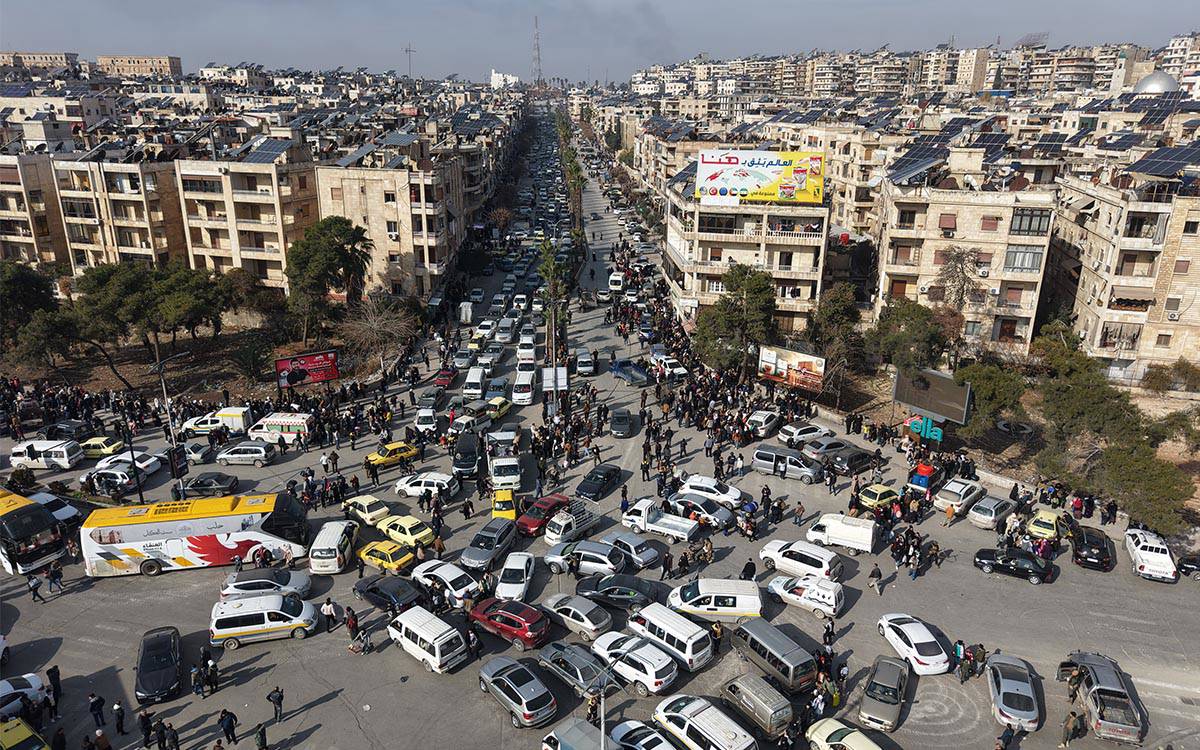
Clashes in the Kurdish neighborhoods of Sheikh Maqsoud and Ashrafiye in the north of Aleppo, Syria’s second largest city, continue into their fourth day.
Forces affiliated with the interim Damascus administration captured large parts of the Ashrafiye and Beni Zayd neighborhoods following intense overnight clashes. The Syrian Defense Ministry announced that a temporary ceasefire was declared in the area after these advances.
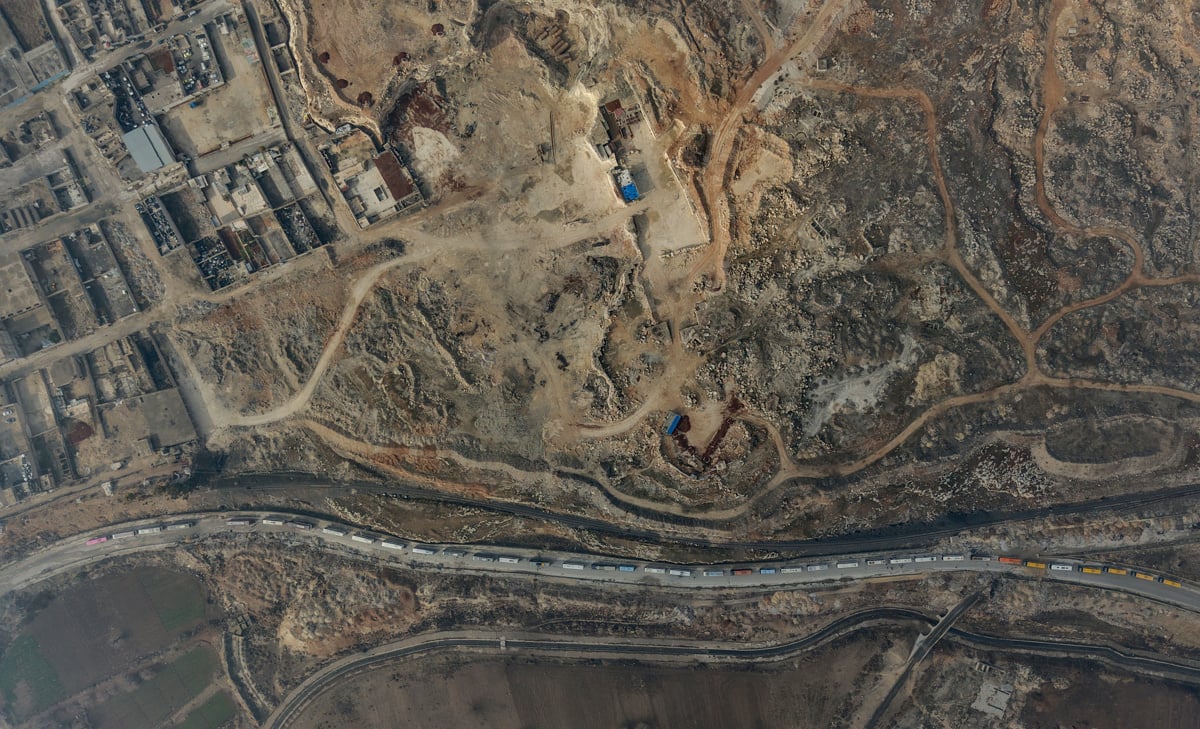
While the Aleppo Information Directorate announced that Kurdish forces would be transferred to northeastern regions of Syria along with their light weapons, the General Assembly of Sheikh Maqsoud and Ashrafiye declared a state of "mobilization."
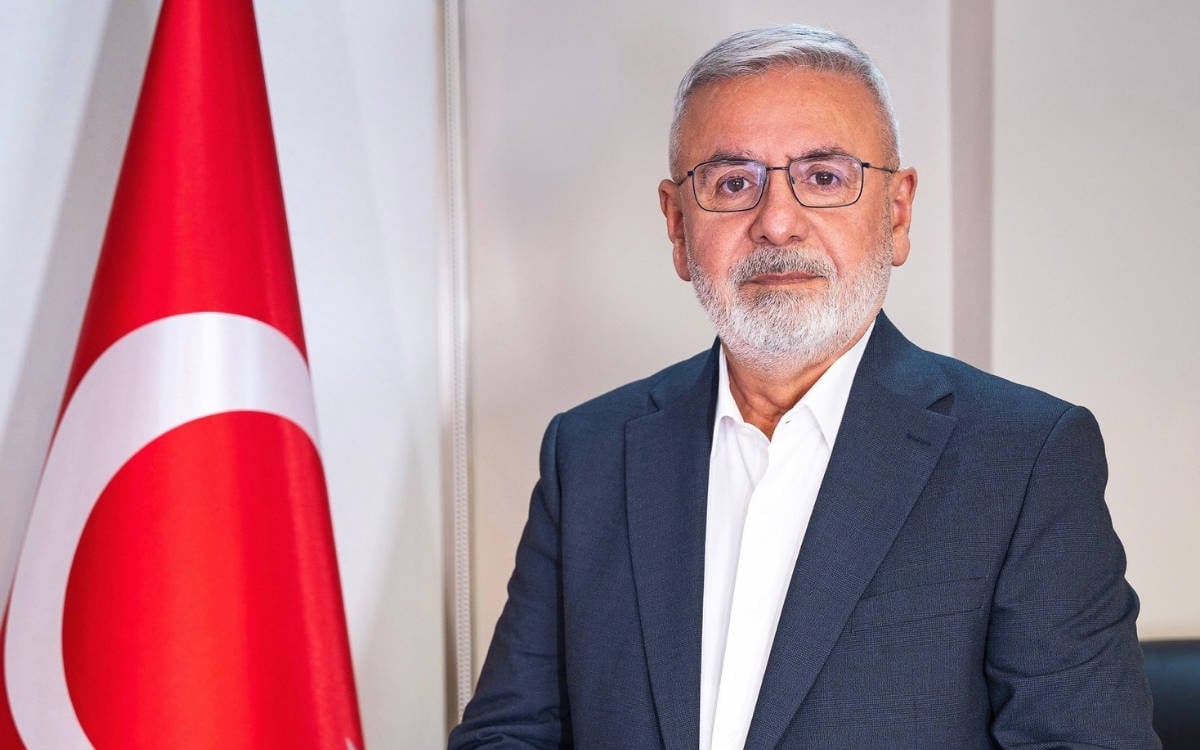
Responding to our questions about the clashes in Syria, former AKP MP and President of the Democracy and Unity Association/Foundation Mehmet Metiner stated, “The process in Turkey is ongoing. The clashes that began today may end tomorrow or the next day. The parties may return to the negotiating table. Therefore, I believe everyone should avoid using a language that demonizes the parties and deepens the civil war.”
As for the possible impact of the clashes on the peace process in Turkey, Metiner said, “If the SDF insists on a mistake that will disrupt the process in Turkey despite Öcalan’s instructions, then it means Öcalan no longer holds any authority. Because this is a process that is being conducted through Öcalan. If the organization does not listen to its founding leader, who they say has every authority and power to solve the issue and build peace, then its credibility will also be lost. The process ends there.”
'Bloody attempts to sabotage the process'
How do you evaluate the recent developments in Aleppo as negotiations continue between Damascus and the Syrian Democratic Forces?
It seems that there are those who do not want an agreement between the Damascus administration and the SDF, or the SDF and the Damascus administration, within the framework of the March 10 Agreement. It appears that these unwilling actors are influential on both sides. Those who do not want the process we have launched and are continuing with determination at home to successfully conclude, are once again carrying out bloody attempts in the Syrian arena to sabotage the process.
They want a civil war to break out, for the process to collapse. They want Syria to be weak and fragmented, easily governed and dominated, and for Turkey not to become a powerful actor capable of setting the agenda by solving its own internal problems. Whatever powers have an interest in this, know that they are also the perpetrators of this conflict. Anyone with sense will not fall for their game. They know that a civil war scenario will ultimately bring losses to everyone.
'Israel does not want a Syria that poses a threat to itself'
How do you assess the role of the US and Israel in the escalation of the clashes?
Those who seek the agents of influence of these powers only within one side are mistaken. History has shown us that the powers that want to derive strength by making parties fight each other are also the best at infiltrating both sides. Israel does not want a Syria that poses a threat to itself. Most importantly, it definitely does not want a strong Syria that is under Turkey’s control or in cooperation with Turkey. It does not want Turkey to resolve its bloody internal problem and become a regional and global power by establishing a Turkish-Kurdish alliance and strengthening its domestic front in every sense and area. The US will not abandon Israel. It does not want Syria to grow strong enough to become a threat to Israel. It wants Syria to be dependent and under its control. It wants to hold all the strings in Syria as the country that ends a civil war that breaks out there.
Turkey signals military support to Syria against Kurdish forces amid Aleppo clashes
That is why, even if it turns a blind eye to the start of clashes for a while, it wants to be the one to end the clashes with its own intervention, so that everyone knows it is the main founding actor in Syria. It wants to instill the belief that, above all, the administration and the other parties cannot stand on their own feet under any circumstances without relying on its power. The US does not want Turkey to gain power despite itself, especially not to become a dominant actor in Syria at a level that threatens Israel. It knows that a strong Turkey that has solved its own internal problems will in no way submit to its policies. It does not want to lose Turkey, nor does it want Turkey to become stronger. For the US and Israel, the SDF is just a player that can be used when necessary in this game plan. The Shara team is also a player in the eyes of those powers. As long as they are useful, they bring one closer to the other or make them fight.
Right now, they are trying the latter. First they instigate war, then they want to turn all of them into instruments that unconditionally submit to them. This game can only be broken by successfully carrying the process forward. For that, it is essential that the SDF acts in accordance with the messages sent from İmralı and closes its ears to those power centers. It is also essential for Shara to fulfill the commitments it signed under the March 10 Agreement. The SDF must believe in Turkey’s problem-solving and mutually beneficial power. The SDF must address Turkey’s security concerns, and Shara must take steps that will gain the trust of all other components. The declaration that the new Syria will be built on this democratic foundation of trust with a new constitution holds critical importance.
'If the clashes turn into an all-out war, the process will be disrupted'
How do you assess the potential impact of the clashes on the process in Turkey?
If the clashes that began in Aleppo turn into an all-out war, the process will of course be disrupted. External actors may not want the process to collapse for their own regional interests, but they want it to conclude in a way that suits them. In the US's regional security architecture, Israel holds a central importance. After ensuring Israel-Syria cooperation, it also wants to guarantee Israel-Turkey cooperation in the Syrian arena step by step. In this respect, the SDF is a key asset it cannot afford to give up.
If it does give up on the SDF, the US believes that the SDF might be used by Russia and Iran in a way that poses a threat to its own security architecture. The US follows a policy of managing all sides and making all sides dependent on itself. That is why it pursues a policy of first stirring up the Syrian arena, then stabilizing it on its own terms. It wants both Turkey and Syria to be under its control. But it does this under the guise of a strong friendship and solidarity.
'No obstacle to the solution in Turkey, but Syria...'
What are your thoughts on comments made in some outlets and on social media in this regard?
We have initiated a process. As our President puts it, a process that we have brought to its final stage. My thesis from the very beginning has been this: If this process succeeds as envisioned in line with Öcalan’s February 27 declaration, then the PKK will no longer be a threat to Turkey. Moreover, and more importantly, once the process of integration with the state and society is completed and the democratization moves necessary for building the Century of Turkey are implemented, the PKK and its components will become a part of Turkey’s strength. The mechanism we call the Turkish-Kurdish alliance will form at a regional level. In this context, just as talks are being held with Öcalan, I see no harm in also holding talks with Mazloum Abdi in order to successfully complete this democratic integration process. As long as a result in line with the spirit and goal of the process can be achieved.
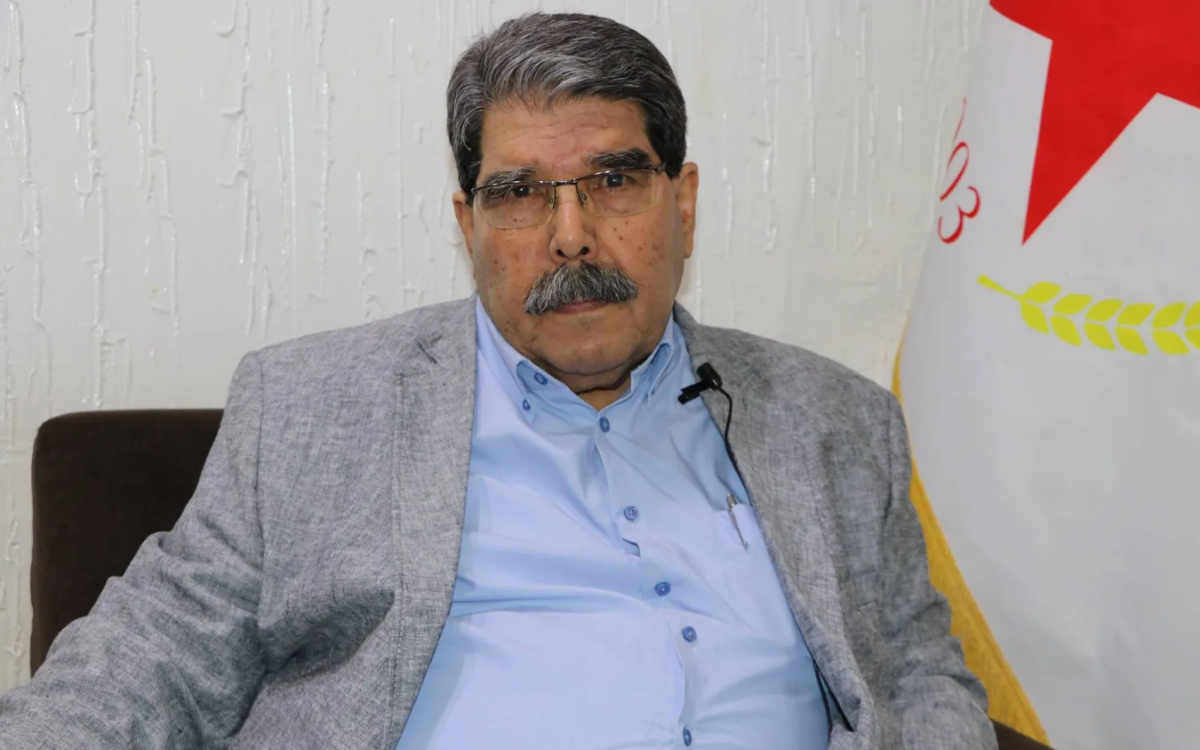
Q&A WITH SALIH MUSLIM
'Turkey should keep its hands off Syria to succeed in peace process'
There is no obstacle to a solution in Turkey. But the solution in Syria is very different. There, it is a matter of integrating armed forces into the army system. This is not the case for Turkey. For Turkey, the solution involves the unconditional laying down of arms and the integration of those who disarm into the state and society. For this, a legal, judicial, and administrative foundation needs to be created. For Syria, it concerns how the existing SDF structure will be integrated into the system both militarily and administratively, as outlined in the March 10 Agreement. There is an agreement reached in general terms. Both sides have commitments. The point of disagreement stems from how general principles are interpreted. Paradoxically, both sides are accusing each other of not complying with the Agreement.
‘"All or nothing"’ radicalism is contrary to Öcalan’s solution paradigm'
As far as I can see, in addition to the issue of how and in what form the SDF will be integrated administratively and militarily, there are also disagreements regarding the structuring of the new Syria on the basis of decentralization. These are not unsolvable issues. But the mistrust carried over from the past hinders the resolution of these problems. The SDF does not trust the Shara administration, and the Shara administration does not trust the SDF. Yet both sides first need to agree and compromise on what is realistically possible. The “all or nothing” radicalism is contrary to Öcalan’s solution paradigm. Therefore, the SDF, with its current policies, stands far from addressing Turkey’s security concerns. This is the main point where the deadlock in the resolution lies.
The process in Turkey is ongoing. The clashes that began today may end tomorrow or the next day. The parties may return to the negotiating table. That is why I believe everyone should avoid using a language that demonizes the parties and deepens the civil war. If this antagonistic language turns into an insurmountable wall, then when a peace agreement is achieved in the desired direction tomorrow, it will come back like a boomerang.
'Conjunctural fluctuations should not lead us to abandon our stance'
We must avoid creating, this time in the Syrian arena, a new platform that empowers malicious saboteurs of the process who say, “What did you say about the PKK and Öcalan yesterday, and what are you saying now?” Therefore, I believe the understanding consistent with the process, which argues that war benefits no one and that a just peace will benefit everyone, must be insistently upheld. Conjunctural fluctuations and ruptures should not cause us to abandon our principled stance.
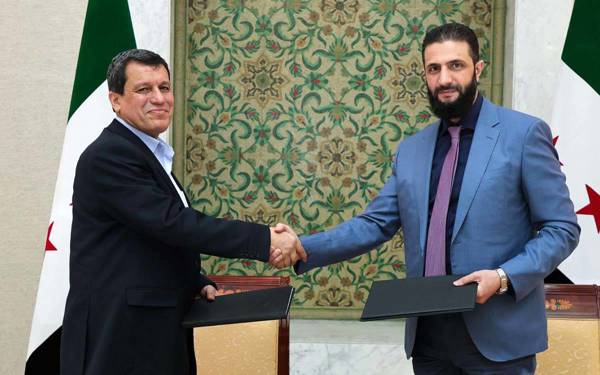
In the middle of a big shakeout
If the SDF insists on a mistake that will disrupt the process in Turkey despite Öcalan’s instructions, then it means Öcalan no longer holds any authority. Because this is a process that is being conducted through Öcalan. If the organization does not listen to its founding leader, who they say has every authority and power to solve the issue and build peace, then its credibility will also be lost. The process ends there. In that case, Turkey would definitely not tolerate a terrorist structure on its doorstep, under Israel’s influence and not even listening to its own founding leader, and would take necessary military action. I hope and wish that this situation does not arise. I believe that the SDF will not act against Öcalan. The SDF must return to the table with an understanding that aligns with the March 10 Agreement and the process paradigm. If Damascus transforms itself into a democratic and pluralistic administrative system open to the participation and representation of all, and takes the lead by announcing a constitution that guarantees everyone’s fundamental rights and freedoms, it will also disrupt the game plan of those known powers trying to drag it into a civil war environment.
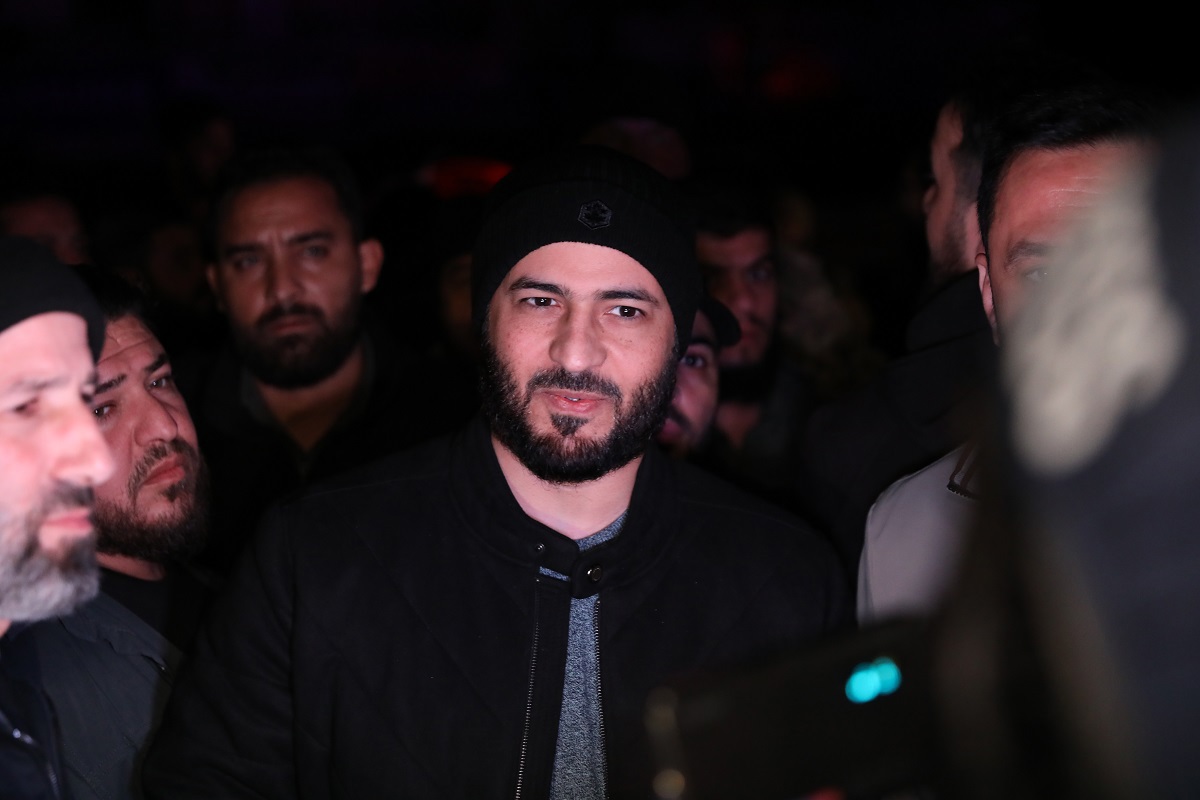
'Turkey’s role: Disrupting Israel’s game over Syria'
In previous articles, you wrote statements such as, “Our perspective on northern Syria must change. A viewpoint that sees Mazloum Abdi as an enemy leads to losses.” At this point, do you think this perspective might change? What is Turkey’s role here?
Turkey’s role in the process is clear. To disrupt Israel’s game over Syria. To ensure the successful completion of the process it has initiated. For this, it wants a strong and unified Syria. Because it knows that Israel also wants to undermine Turkey from within through Syria. As it is aware that the process is particularly being sabotaged by Israel, Turkey expects the SDF to adopt a clearer stance against Israel. Turkey is not in favor of a continuation of the old Baath-style regime in Syria. It wants the new Syria to be everyone’s Syria, that is, a democratic and pluralistic Syria. It believes the fundamental rights and freedoms of all elements in Syria must be constitutionally guaranteed. Turkey finds the SDF’s demand for decentralization, grounded in an ethnic basis, and the existence of the SDF’s armed forces as a bloc during this critical phase to be insecure. Otherwise, Turkey is not disturbed by the Kurds’ status or gains. It does not see a Kurdish structure allied with itself as a threat. Our President has expressed this many times. The issue does not stem from the constitutional status of the Kurds or from a Kurdish structure. The problem lies in the fact that the PKK has not yet ceased to be a threat, meaning the internal process in Turkey has not yet been concluded as envisioned. This makes the current existence of the SDF-YPG unacceptable. There is both an unresolved lack of trust and a security issue.
But I believe this problem can be overcome. If democratic dialogue and negotiations are carried out in line with the main objective outlined in the February 27 declaration, based on that paradigm, mutual concerns can be resolved.
'The clashes must stop immediately'
Therefore, the ongoing clashes must be stopped immediately. Both the SDF and the Damascus administration must show a strong will that will disrupt the plans of those trying to sabotage the process. Rather than overturning the table and resorting to arms over disputed areas in the March 10 Agreement, they must focus on making agreements in the areas where consensus exists. This is essential for trust. Turkey’s role in this will be to facilitate agreement and reconciliation. Because Turkey adheres to a principled approach that believes war will cause losses for all, and that peace will bring gains to all.
I believe these clashes will first be brought to a ceasefire and then evolve into peace through negotiations in a way that aligns with the spirit and aim of the process in Turkey. I wholeheartedly wish for this to happen. That is my hope.
We certainly would not consent to the Shara administration causing Syria to lose, nor to the SDF-YPG causing losses for the Kurds and for Syria. That is why inciting war, fueling the flames, and sowing seeds of hostility and hatred is wrong. One must insist on using the language that will bring about peace. We hope for a single, strong Syria that preserves its territorial integrity, where everyone can live together in peace while preserving their differences. A Syria for all.
While such a Syria can be built together, dragging Syria into a new civil war and causing indescribable pain and destruction would be an unforgivable crime against humanity. External actors feed on instability, do not want Turkey to grow stronger, and instrumentalize actors on the ground when necessary. The SDF must disrupt the game of those external actors who seek to instrumentalize it, and a proper language and policy must be built to integrate the SDF into the system with a mindset of mutual gain. Coming together around a policy based on the idea of “winning together” is of vital importance.
Together, we will succeed this time. (TY)