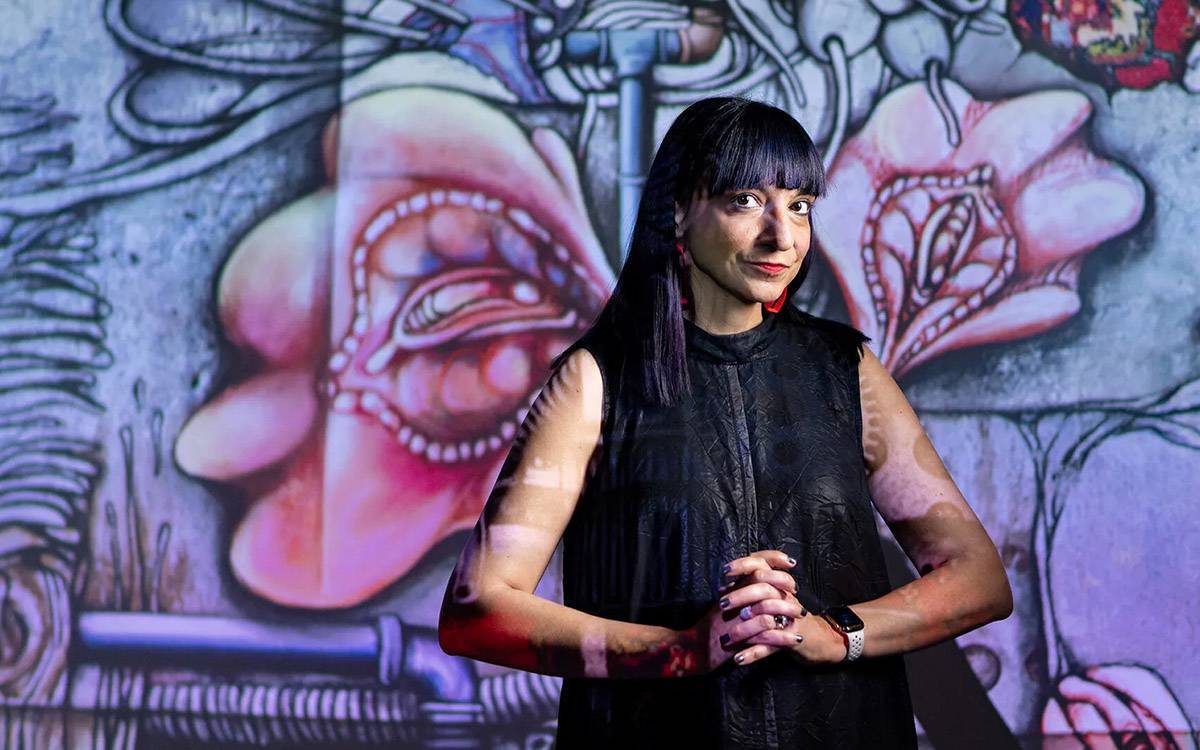







In this episode of our series “The Political Construction of Artificial Intelligence,” our guest is Neda Atanasoski, a scholar of feminist science and technology studies. Atanasoski, who chairs the Harriet Tubman Department of Women, Gender, and Sexuality Studies at the University of Maryland, studies technology together with the histories of racial capitalism, imperialism, and war. In Surrogate Humanity, co-authored with Kalindi Vora, she examines the promise that robots and AI will free humans from drudgery through the history of racialized, gendered, and colonized labor, and calls this promise technoliberalism. More recently, she has been discussing AI models that are moving into the fields of care and emotional support through the concept of “artificial feminist intelligence.” We spoke with Atanasoski about the domestic and care labor rendered invisible behind AI, the care robots sold to nursing homes while nurses are being laid off, the justification of wars through the language of humanitarian intervention and democracy, and how struggles against AI might come together.
Our series approaches AI, following Matteo Pasquinelli, as the intelligence of labor and social relations, and argues that the knowledge embedded in the machine is the knowledge of the collective worker. In this history of labor, domestic, care, and affective labor often remain invisible. How would you assess this reading from a feminist perspective?
I agree completely. As a scholar of feminist science and technology studies, over the years my writing has analyzed genealogies of AI, technological design, and different conceptions of "intelligence" by framing the Industrial Revolution and its specific model of the worker as just one historical node in the development and unrolling of automated systems. To fully understand our present technological landscape, including AI, we must also grapple with the histories of labor rooted in colonialism, slavery, and land expropriation that inform commonsense understandings of what kinds of technologies we desire and why they are worthy of investment.
One question I have written extensively about is: What shifts occur in our understanding of today’s AI models, including generative AI, when we reframe their lineage through these histories of racial capitalism, slavery, and reproductive labor? In our 2019 book, Surrogate Humanity: Race, Robots, and the Politics of Technological Futures, Kalindi Vora and I take up this question, arguing that “the surrogate effect of technology” happens when we believe a technology can perform tasks on its own that would normally require human manual or intellectual skills - as if by magic. In fact, most technologies are far from being autonomous. In our research, we found that the tasks most people most want to see automated are those that have been culturally understood as dull, repetitive, uncreative and therefore undesirable. These include cleaning, chauffeuring, eldercare or customer service. The idea is that this will free up time for more worthy pursuits.

Having more free time, of course, is quite desirable. But upon closer examination, a lot of the tasks that are imagined to be easily replaceable are not at all simple to perform. They are, in fact, often imbued with care and creativity - think of the creativity needed for cooking or childcare! Robots also have a really tough time with physical tasks that are relatively easy for humans, like loading dishes. Service and care work is generally considered low value not because it is actually unskilled, but because women, Global South workers and people of color have historically performed it. The work that is deemed so low skill as to be automatable is also the work that is often framed as unworthy of pay (like the work of the housewife). Yet the unpaid work of the housewife is just one sliver of the story. As Angela Davis wrote in 1981, while white women have complained about the unpaid nature of housework or the housewife position, Black women in the US have rarely been in this predicament. They have performed housework and childcare, but, after emancipation in the US, often for pay and as domestic servants. This has been in addition to working in their own homes. Even today, somewhere between 50-60% of paid domestic work in the US is done by Latinx, Asian/Pacific Islander, Black and immigrant women workers.
Right now, for many people in the North American context, the AI augmented smart home (with interconnected gadgets like AI voice assistants and smart thermostats) inherits the architectures, so to speak, that invisibilize the racialized and gendered work of service, support, and social reproduction. This ideal of on-demand invisibilized service is built into the design of older estates, with spaces meant to be seen by the public, like living rooms, and hidden passageways from which servants appear as needed. We can think of servants and slave quarters being located in attics, basements, or separate buildings. Always at hand to serve, servants are also meant to be invisible. In their modern manifestation, such on demand expectations can be seen in phone interfaces, where we can summon a ride (and someone to drive us) at the tap of an onscreen app! The exploitative structures that render on-demand service possible are hidden for users.
'We are in a political moment increasingly marked by fascism'
AI companies today are automating intellectual and creative labor such as writing, coding, and image production, while repetitive tasks like data labeling and content moderation are largely left to workers in the Global South. You argue that the labor machines are presumed to take over has historically belonged to racialized, gendered, and colonized workers, and you call this fantasy technoliberalism. Now that Silicon Valley has abandoned its liberal discourse and become openly intertwined with the state apparatus and the military, how do you assess the relevance of this concept?
Kalindi and I initially developed our theory of technoliberalism in 2017, after the first election of Donald Trump had just taken place in the US. While emergent illiberal trends in US politics were evident at that time, there was much less fear that so-called white-collar jobs were going to be automated than there is now. Many opinion pieces were published by leaders in the tech industry in opposition to Trump’s threat of building a border wall to prevent immigrants from taking the jobs of “hard working Americans” - especially manufacturing or mining jobs. The technoliberal argument, including, believe it or not, by Elon Musk, who at the time opposed Trump, was the following: it is not immigrants taking American jobs, but rather, robots.
The technoliberal worldview pretends that humanity is undifferentiated in relation to a fully automated and AI augmented future, in which all human labor is equally endangered. It does not account for historically sedimented racialized and gendered differential vulnerabilities, not to mention how these vulnerabilities are distributed globally. I think this is still true today. Thus, technoliberal proposals about robot taxes and universal basic income to address mass unemployment risk supporting capitalist technological accelerationism as inevitable, and may preclude discussions about differential risk, stratification, or exploitation. For instance, as your question points out, the seeming automation of intellectual and creative work still depends on onerous and often horrendous tasks for those who perform them, like outsourced data scrubbing that includes violent or racist content.
Certainly, the US political landscape feels quite different today, in alarming ways, than it did in 2017. We are in a political moment increasingly marked by fascism, open attacks on migrants, democratic institutions, and the prior promises, however hollow, of universal inclusion. As you indicate, Silicon Valley seems to be merging with the US state apparatus (with Musk’s DOGE power grab as one of the clearest examples). However, it is important to remember that fascist formations in the US draw upon contradictions already sedimented within liberal institutions - contradictions that emerge at the interstices of the promise of rights and racialized property regimes, and formal equality and material dispossession. Additionally, there is a long history of state-corporate entanglement in the US, from the British private corporations that financed colonial settlement and genocide in North America to the railroad monopolies of the 19th century that themselves received government subsidies. So, it is critical not to exceptionalize our present moment, but ask what historical foundations we see recursively reemerging in the present.
'Home itself has always been a technology for reproducing social norms'
Today, the messages and emotional expressions of billions of people are being harvested as training data, while in Nigeria and India people record themselves doing housework in order to send data to robotics companies. This year, thinkers such as Leopoldina Fortunati have been asking why AI has seized the sphere of social reproduction. How would you answer this question?
That is a vital and complicated question. There is a seemingly new frontier of automated enclosure and profit in the sphere of social reproduction, as people increasingly use AI for everything from friendship and “wearable moms” to personal assistants and AI agents that can plan outfits, meals, and book vacations. At the same time, as my co-author Nassim Parvin and I argued in our 2025 book Technocreep and the Politics of Things Not Seen, AI capital doesn’t just automate the sphere of social reproduction due to rising expectations and demands for productivity across the board, although this is part of the problem. Even more crucially, the reaffirmation of normative capitalist ideals about the domestic space, private sphere, intimacy, and desire are also at play. From the outset, we should be suspicious of uncritical moves to protect what has been framed as the innocence, purity, or realness of intimate spaces like the home, or romantic relationships.

For instance, in our chapter on “Smart Homes,” Nassim and I look at numerous technologies that automate the function of the home, from feminized digital home assistants like Alexa and Siri to automated security systems. And while many people find these smart gadgets useful, when they impinge on our intimate space through surveillance, these technologies start to feel creepy. There is the well-known example of Roomba vacuum cleaners taking unauthorized recordings, with photos of activities including people using the bathroom ending up on social media (posted there by outsourced data workers who are paid to label audio and video data for the purpose of training artificial intelligence). This is quite disturbing. Still, Nassim and I argue in our book that the knee-jerk response, which is a call for a right to privacy in the face of technological surveillance, is politically limited. A politics of privacy carries forward the ideals of racialized and gendered property relations that are enshrined in US law. Along these lines, we recall that privacy has historically been selectively possessed in the US. Historically, Black, Indigenous, and immigrant populations have never had a right to privacy and have always been subject to extensive surveillance and policing. Plantation economies relied on surveillance of the enslaved by overseers, and in the present day, increased policing in Black and Brown neighborhoods persists through surveillance technologies in the name of safety.
As a politics, privacy is not only bound with whiteness, but also to the idea that the home is a unit whose inner boundaries need to be strictly policed against the threats and dangers that lurk outside. This is an anti-communal and anti-coalitional politics. After all, the “home” itself has also always been a technology for reproducing social norms.
'Artificial feminist intelligence is not about labor rights'
AI companies have turned to the fields of care and reproductive health at a time when public care infrastructures are collapsing. While nurses are being laid off on the grounds of AI, care robots are being sold to nursing homes with the promise of empathy. What relationship do you see between the feminist movement’s demand for public care and capital’s discovery of care as a field of accumulation?
In July 2026, 12 nurses in New York with decades of experience were laid off because, supposedly, what they do could be replaced by AI. Meanwhile, the Oncology Nursing Society reports that almost half of all Americans lack access to quality healthcare or find it unaffordable, with low-income, Latinx, and Black households facing the greatest impacts to the healthcare crisis. As US laws are changing, Roe v. Wade having been overturned, women are losing access to reproductive choice and healthcare and are turning to chatbots for help. Under researched areas, like menopause, are also seeing care gaps being filled by AI. AI is everywhere in the sphere of care.
Recently, I've been grappling with this development in “caring” AI by drawing attention to what I call Artificial Feminist Intelligence. For many years, “intelligence” in Artificial Intelligence was defined through masculinized ideals like command, control, logic, winning the game, etc. Consider that one of the traditional benchmarks in AI was winning at chess. But as with reproductive health chatbots, chatbots advising women on menopause or pregnancy (wanted or unwanted), and AI and robots entering nursing homes and hospitals, we see that care - a traditionally feminized sphere of labor and knowledge - is now increasingly appropriated as intelligence in automated systems. And it may seem feminist to frame care as intelligence, but, as I’ve argued, this is Artificial Feminist Intelligence. It is not materially grounded in what I think of as a feminist vision for AI. As the loss of nursing jobs and outsourced underpaid work that supports the AI economy shows, artificial feminist intelligence is not about labor rights. It is also not about expanding Americans’ access to healthcare and homecare. And, it is most certainly not about genuine reproductive justice (after all, companies own our data fed into chatbot exchanges), or about economic redistribution. Artificial Feminist Intelligence in the sphere of care work thus co-opts traditionally feminized spheres of intelligence like care to sidetrack us from the essential effort of constructing feminist futures rooted in disrupting capitalist accumulation and exploitation.
AI-assisted targeting systems continue to strike homes in Gaza, and most of those killed are women and children. From the Balkans to Afghanistan, US attacks were long justified through the language of saving women and humanitarian intervention, while today the companies developing these systems speak the language of defending democracy. Along this line stretching from the discourse of saving women to that of defending democracy, how has feminism been instrumentalized, and how are the deaths of women and children rendered invisible in the language of these systems?
I first became interested in studying technology as a part of political and geopolitical systems through my writing about the 1999 NATO bombing of Serbia and Kosovo. During that military action, zero U.S. military personnel lost their lives, whereas local residents were killed on the ground as "collateral damage." Emerging media platforms and defense technologies, such as "precision" strikes conducted from extreme altitudes, reconstructed the Balkans as a space whose perceived ethnoreligious "barbarism" could be remedied via advances in American weaponry and new communications infrastructures, including around-the-clock news broadcasts and the Internet. Western violence, in other words, was rendered humanitarian - saving “backwards” populations from themselves.
Drones have similarly been construed as humanitarian technologies because their precision sensors supposedly limit collateral damage while protecting Western soldiers from harm. Military automation and drone surveillance, however, rely on imperial modes of mapping and spatial command. Rather than making war more ethical, algorithms and remote sensors categorize entire populations in the Global South and postsocialist spaces as "targets" whose lives are expendable because the West is saving the world from “extremism.” As you draw attention to in your question, women have often been used as prime examples of who is being saved through such “humanitarian violence.” This was especially the case with the proliferation of Islamophobic discourse in the US after 9/11. Numerous scholars, including Lila Abu-Lughod and Saba Mahmood, wrote about how mainstream US feminism bolstered US imperialism at this time by framing US violence as saving women from illiberal patriarchy. US imperialism was justified because it was “democratic” and “inclusive.”
Recently, Erin McElroy and I wrote about Anthropic’s 2026 paper, “2028: Two scenarios for global AI leadership,” which warns the US government that failing to win the global AI “arms race” allows authoritarian regimes, rather than democratic ones, to shape AI outcomes. It outlines two near-future scenarios: one where the U.S. and its allies lead in frontier models, adoption, and distribution, and another where the Chinese Communist Party (CCP) becomes competitive due to lost U.S. advantage. At the same time, Anthropic’s own models were critical to the recent US attack on Iran. Amid widespread reliance on such AI models, a strike in Minab claimed the lives of more than 100 schoolchildren, drawing UN condemnation as a breach of international humanitarian law. Israel’s exorbitant deployment of AI during its genocidal siege of Gaza also shows how computational power is being militarized for destructive ends that contradict any purported democratic ideals. These military applications of AI by the U.S. and its allies demonstrate that the binary between democratic and authoritarian AI is false, and reflects instead distinct imperial investment priorities and capitalist modalities between the US and China, rather than an chasmic ideological or ethical divide.
'Corporate diversity initiatives were a facade'
Through its “Preventing Woke AI” executive order, the Trump administration is imposing on federal agencies models that exclude the concepts of gender and intersectionality, companies like Meta and Google have shut down their diversity programs, and gender studies is under attack in universities. What function does anti-gender politics serve in the alliance that tech capital has forged with the far right?
One of the things that strikes me about Trump’s Preventing Woke AI executive order is that corporate AI systems were never at any risk of being “woke” to begin with! The US has long paid lip service to multicultural inclusion (racial, gendered, sexual, and so on) to narrate itself as a morally progressive nation - different from older, racist Western European empires. Since the end of the Second World War, inclusion has been the language of national progress that has justified US imperial plunder and militarism, from Korea and Vietnam to the post-9/11 wars in Afghanistan and Iraq fought in the name of saving women from illiberalism.
To be clear - including women and people of color in datasets does not make AI systems antiracist and feminist. It simply produces another exploitable dataset. Critiques of facial recognition systems offer one example of why this is. We know that initially, facial recognition systems were trained on an overrepresentation of lighter skinned faces and therefore the ensuing systems misidentified Black or Brown individuals. However, improving system accuracy sidesteps the heart of the issue, namely the ongoing practice of racialized policing in the United States. Racialized policing is historically rooted in post-Civil War discriminatory legislation enacted to criminalize Black communities and preserve white supremacy and racialized hierarchies of labor and property regimes. Corporate diversity programs never sought to address the sedimented legacies of such structural racism and discrimination - just to expand markets. Thus, corporate diversity initiatives were a facade, which made them easy to discard - they disappeared from company websites overnight!
Futures that are sold as 'inevitable'
In recent years, a great deal of work has emerged under the heading of “feminist AI” in academia, civil society, and the corporate world. Some researchers studying the field argue that much of this work often remains limited to the goal of designing more inclusive systems. Could you tell us how work in this field has diversified and where you see yourself within this diversity?
I come to conversations about feminism and AI as a theorist who grounds analysis of hyped AI futures in histories of racial capitalism with the belief that we can contest futures that are sold to us as inevitable. In my prior role as a leader on my campus’s AI Interdisciplinary Institute, I found it important to speak to engineers, computer scientists, and researchers who may not have thought of feminist politics, inquiry and critique as central to AI, which I believe that it is. Learning how to speak across disciplinary divides is critical for designing more just futures. So is collaboration.
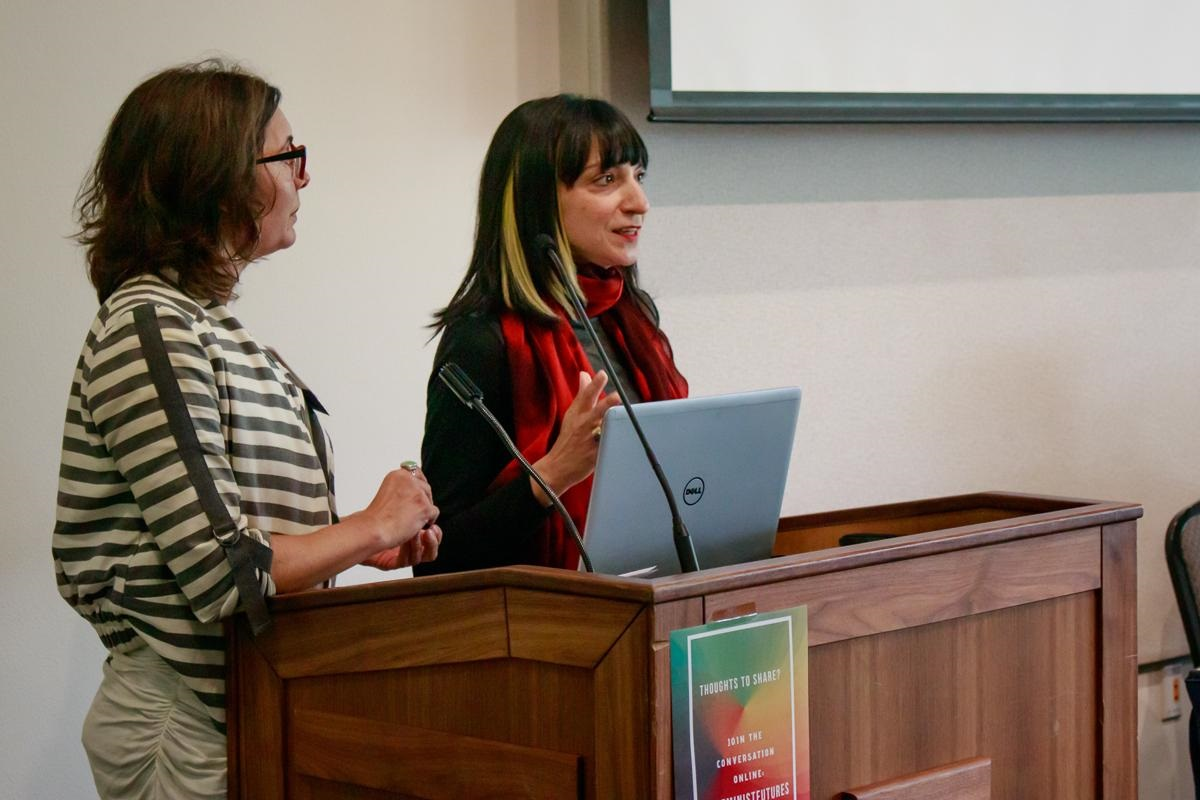
For example, I’ve been involved with launching a feminist art-research network with four other scholars and artists (Kris Paulsen, Jennifer Rhee, Katherine Behar, and Elisa Giardina Papa), and we are calling ourselves the VIBES (Vital Intelligence for Building Ethically and Speculatively) Network. As the male-dominated technology sector shifts from traditional metrics of optimization toward commercializing intuition and affective attachment, VIBES works to reclaim foundational feminist values such as relationality and embodied knowledge. The project redirects artificial intelligence practices toward vital, material intelligences that remain resistant, frictional, unscalable, and non-extractive. This work centers on three main, interconnected initiatives: 1) Ethical Genealogy: Reclaiming feminist principles that have been co-opted or stripped of meaning by Silicon Valley; 2) Curatorial Building: Applying curatorial work as an act of care through public discussions, museum and gallery exhibitions, and collaborative efforts between artists, scholars, and experimental technologists; and 3) Speculative Archiving: Developing a digital resource hub to broaden access to feminist AI research, pedagogy, artistic practice, community-oriented materials, and critical coding projects centered on labor justice, ecological sustainability, and vital intelligence.
Rather than trying to make existing AI systems “feminist” by adding data that includes women or people of color to their datasets, VIBES will ask what these systems systemically and intentionally leave out: embodied knowledge, local experience, collective memory, reciprocal care, skilled labor, friction, and forms of understanding that cannot be standardized or measured at scale. By contrast, our concept of “vital intelligences” describes forms of knowledge and creativity that emerge from particular bodies, places, histories, and communities.
Veri emeği etrafında kurulan ittifaklar
Tech workers are organizing against their companies’ contracts with the Israeli military, Kenyan content moderators are unionizing, nurses are resisting layoffs justified by AI, and in Latin America feminist activists are themselves collecting the feminicide data that the state fails to keep. How do you think all these struggles could come together in a common political line?
There is a lot of potential for political alliances or affinities, sometimes unexpected ones, which can emerge to confront the acceleration of various kinds of exploitation and violence augmented by AI developmentalism and profiteering. For instance, in May 2026, a Gallup survey found that the vast majority of Americans would “rather have a nuclear plant in their backyard than a datacenter.” The framing of the Gallup poll itself points toward a nascent NIMBY ("Not In My Back Yard") dynamic. That is, some opposition to data centers comes from people who may be thinking about protecting their property or home values, rather than broader environmental concerns. We could imagine that this is a radically different investment from that of SIRGE - Securing Indigenous Peoples' Rights in the Green Economy. They have stated: “Indigenous Peoples’ lands and territories are the basis of governance systems, cultural identity, food systems, and relationships with ecosystems and future generations. The expansion of AI-linked infrastructure, whether through mining, energy generation, transmission corridors, or data centers, therefore, raises deeper questions beyond data centers around Indigenous Peoples’ land rights.” Borrowing critical race scholars’ Grace Hong and Rod Ferguson’s concept of "strange affinities," we can ask whether opposition stemming from vastly different ethical and political positions around the exploitation of land and resources for data centers can nevertheless yield unexpected coalitional possibilities. We would need to recognize these time-limited, contingent, and certainly not universal.
Meanwhile, the coalitional possibilities around data labor point to exciting transnational political possibilities for organizing across the majority and minority worlds. For instance, data workers, including AI data labelers and content moderators, have increasingly organized across national boundaries. Launched in Nairobi, Kenya, in April 2025 with the UNI Global Union, The Global Trade Union Alliance of Content Moderators (GTUACM) unites content moderators across Kenya, Ghana, Colombia, the Philippines, Poland, Portugal, Morocco, Tunisia, and Turkey. They spearhead global campaigns for living wages, unionization, and mental health protections.
So while there might not be a single political line, following coalitional projects that have or might come together opens doors for challenging tech capital at multiple nodes.
[1] The 1973 US Supreme Court ruling that recognized abortion as a constitutional right. In June 2022, the Court overturned that ruling in the case of Dobbs v. Jackson Women’s Health Organization, and the authority to regulate abortion was transferred to the states. Since then, many states have banned or severely restricted abortion.
(DS/VC/VK)