









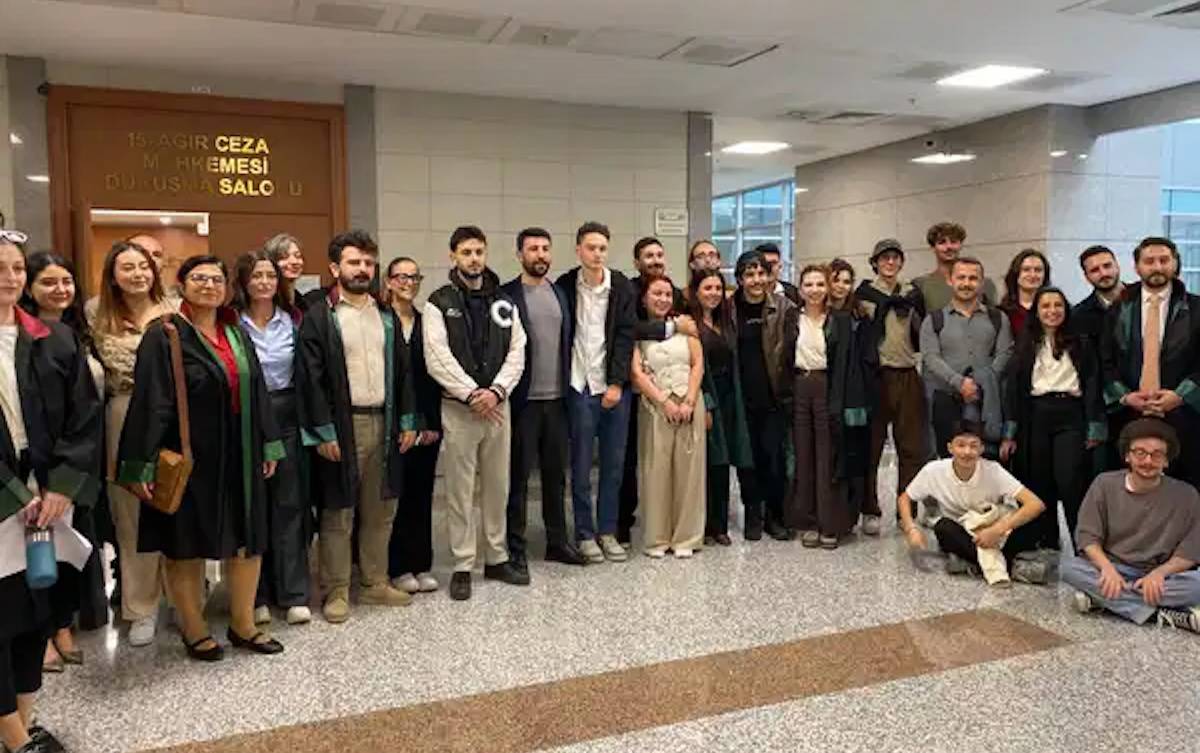



In the trial of 19 people accused of organizing the “Standing Man” protest in Taksim Square on May 28 2025, held on the 12th anniversary of the Gezi Resistance, the İstanbul 5th Criminal Court of First Instance decided to lift the judicial control measures against the defendants on Wednesday, 8 October.
Civil Court judge: “Then let’s wear wigs too…”
During the hearing, the judge initially appeared without a robe, prompting objections from the lawyers. After a short exchange, the judge ultimately wore the robe. At the end of the hearing, however, it was decided to warn the lawyers for “disrupting the proceedings.”
When the defense lawyers protested the judge appearing without a robe by saying, “Then we will take ours off too,” the judge of the 5th Criminal Court of First Instance responded, “It’s 2025, so let’s wear wigs too,” but eventually put on the robe.
Robe requirement in courts
The requirement to wear a robe, which sparked debate in the “Standing Man” case, is regulated in Article 59 of Law No. 2082 on Judges and Prosecutors:
Article 59 – Dress and attire
“The form, color, and style of the clothing and robes that judges and prosecutors wear in courts, hearings, and official ceremonies shall be determined by a regulation issued by the Ministry of Justice.”
Articles 3 and 4 of the Regulation on Judges’ and Prosecutors’ Attire, dated 1 October 1983 and numbered 18101, implement this law:
Article 3 – Obligation to wear a robe
“Judges and public prosecutors wear robes while performing their judicial duties in hearings and official duties.”
Article 4 – Color and style of the robe
Judges’ robes are black. Criminal court judges and public prosecutors wear black robes with red collars. Civil court judges’ robes have green collars.
Article 6 – Not wearing a robe
“Failure of judges and public prosecutors to wear robes in hearings or official duties is subject to disciplinary action.”
Indictment and charges
The İstanbul Chief Public Prosecutor’s Office claimed in the indictment submitted to the İstanbul 5th Criminal Court of First Instance that the 19 young defendants had committed acts that violated Law No. 2911 on Meetings and Demonstrations, by exploiting public sensitivity to social events in ways that could disturb public order.
Defense arguments
The defendants and their lawyers argued that the action was a “silent protest”, without slogans, banners, or gatherings, and therefore fell within the bounds of ordinary freedoms.
Lawyers also argued that the prosecution’s description of the protest as “an effective demonstration capable of disturbing public order” was excessive and unlawful, and that the criteria for the charges had been interpreted too broadly.
Among the students:
Abdurrahman Mete, 20, said, “I had no knowledge of the protest.”
Ahmet Bulut, 19, said it was not a planned protest, and he did not understand how a flag with a star and crescent could pose a threat.
Batuhan Başar Kırtekin, 21, said he went to Taksim to meet a friend and was suddenly stopped and handcuffed while looking for him, emphasizing, “I did not participate in any action.”
Emine Çevik, 21, said she went to Taksim to see her mother at work and was detained in handcuffs.
Lawyers also argued that the students were detained not for standing, but for where they were standing: “If it had been in Maçka instead of Taksim, the police would have just passed by.”
What was the “Standing Man” protest?
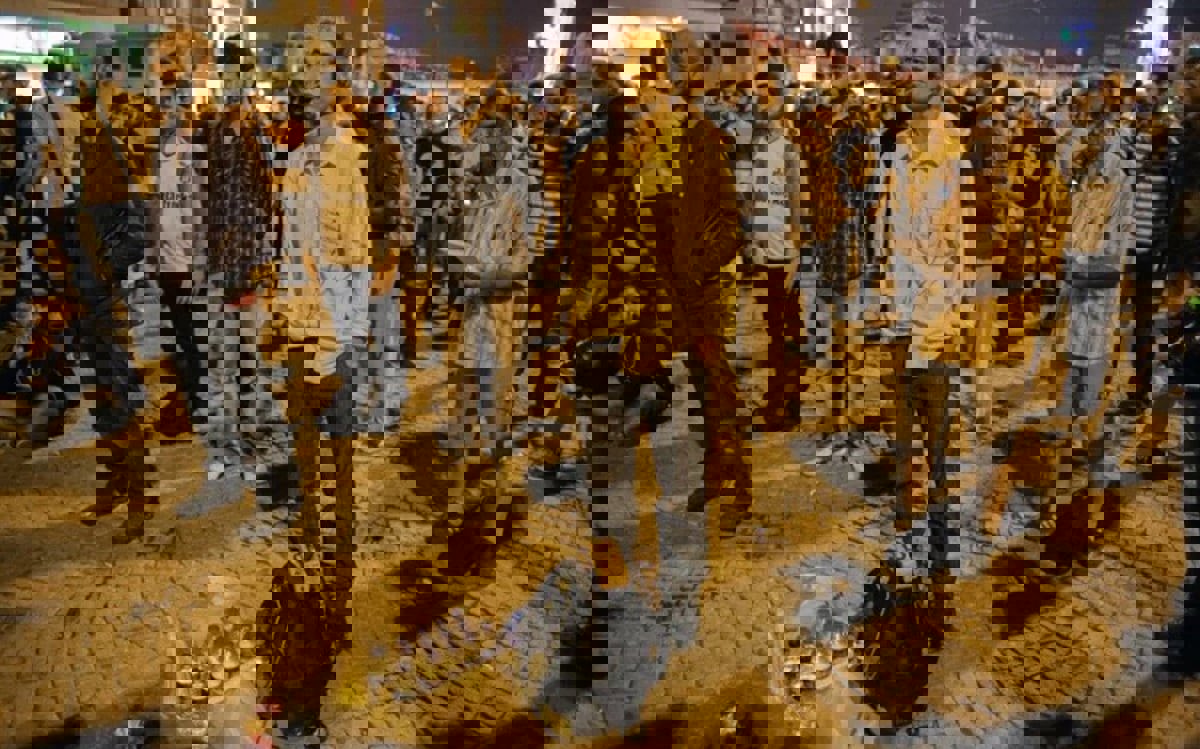
On the evening of 17 June 2013, theater and performance artist and dancer Erdem Gündüz went to Taksim Square and stood motionless in front of the Atatürk Cultural Center immediately after Gezi Park was cleared by the police.
He had no banner, no megaphone, no slogans — he just stood silently with his hands in his pockets.
At first, neither the police nor the people nearby understood what was happening; the police attempted to check his ID several times, but Gündüz did not react.
As hours passed, people around him began to come and stand in the same way.
After remaining motionless for about eight hours, Gündüz was eventually surrounded by police around midnight.
The police dispersed the crowd nearby, citing “illegal assembly,” and some people were taken into custody.
Erdem Gündüz himself was not detained; he left the square quietly of his own accord.
When images and photos of the event spread on social media, thousands of people across different cities in Turkey repeated the same action under the hashtag #StandingMan.
Gündüz later explained, “I stood there without attacking or blocking anyone; this is also a form of expression.”
No legal case was brought against him for his action, but he was targeted by pro-government media. Conversely, he was honored internationally as a symbol of peaceful resistance — for example, Time magazine recognized him as one of 2013’s human rights defenders.
(AEK/MH)

