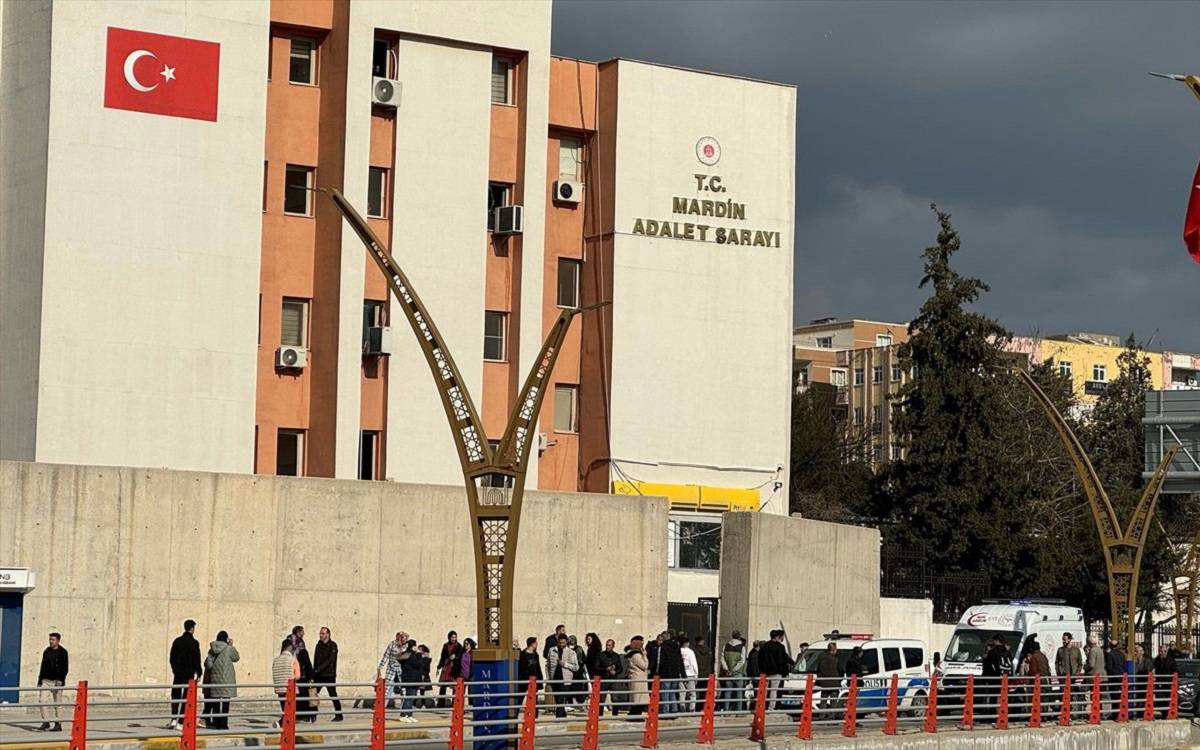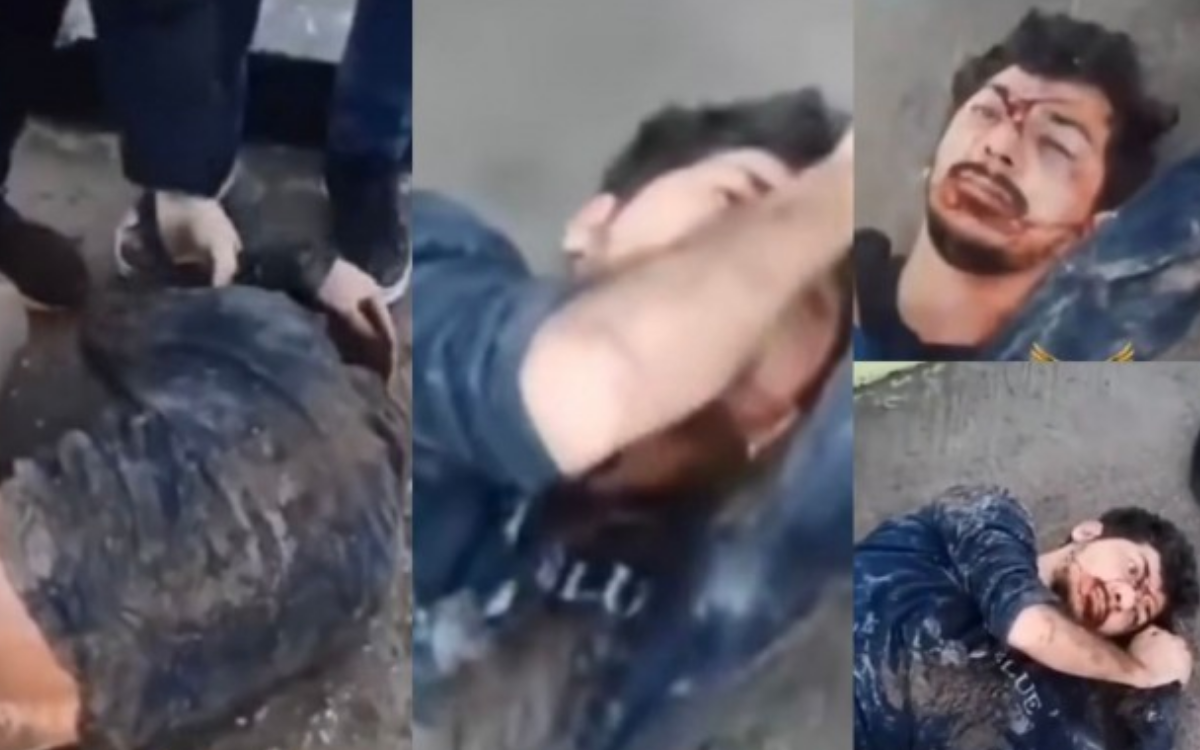

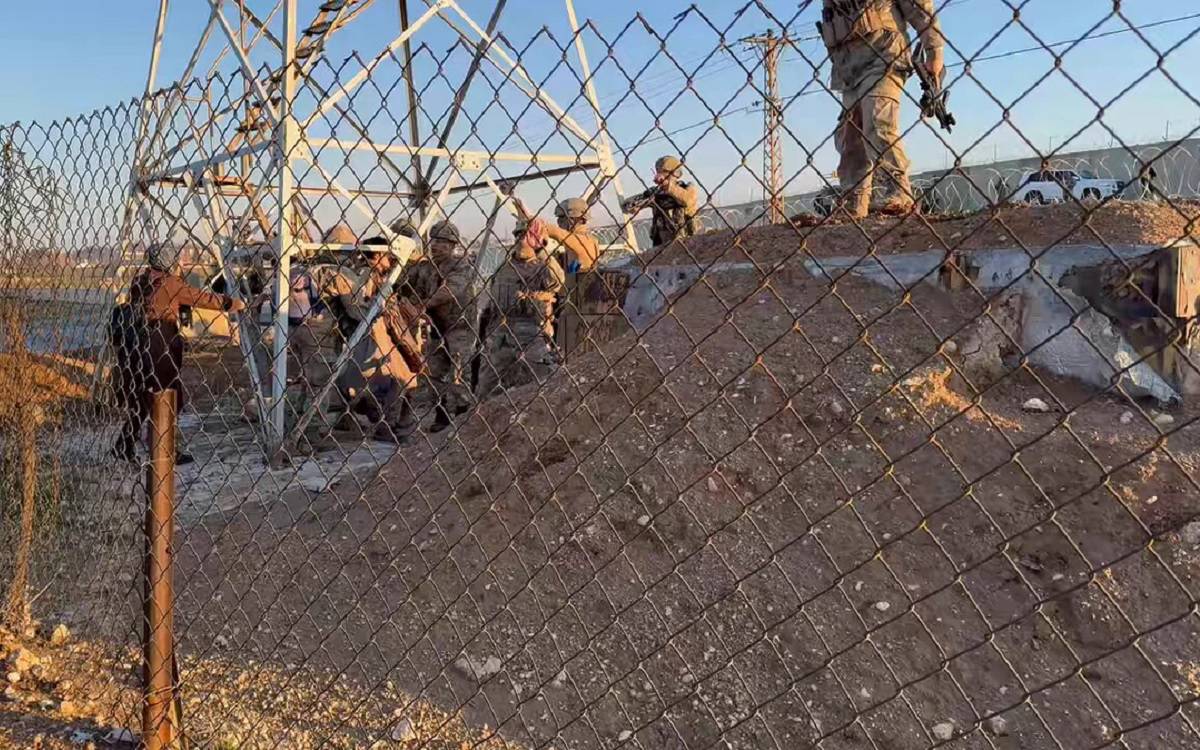



Images of university student D.K., who was detained along the Turkey-Syria border during the "Rojava" protests in Nusaybin, Mardin, on Jan 20, were circulated on social media after he had allegedly been subjected to torture, with claims that he was the person who took down a Turkish flag along the border.
D.K., who was seriously injured and received hospital treatment for a period, was arrested on Jan 23 on charges of "membership in a terrorist organization," "propaganda for a terrorist organization" and "entering a military restricted zone." The allegation concerning the "taking down of the flag," however, was not included in the indictment.
After nearly five months in pretrial detention, D.K. was released on judicial supervision on Jun 9. At a hearing on Sep 29, two soldiers testified as witnesses. One of them said he had not seen who took down the Turkish flag at the border gate, but that they had determined it had been taken down from the Syrian side.
As his trial continues, we spoke with D.K. about what happened on that day, his time in prison and how his daily life changed after his release.
'I didn't know it was a military restricted zone'
Could you first tell us a little about yourself?
I'm a 26-year-old Kurdish man from Hakkari. I was a university student on Jan 20. I'm enrolled in the Computer Programming Department at Fırat University. At the moment, I can't continue my education because of certain security concerns.
A great deal has been said about you since Jan 20. What do you think you have not had the chance to explain until now?
It was exam season, and I was bored. I had gone to Mardin to get away for a bit. I later learned that there was a crowd in Nusaybin and that politicians such as Ahmet Türk and George Aslan were also there. George Aslan is an important politician for me, the only Christian member of parliament. I wanted to go and take a photo with him, so I went to where the crowd was.
Later, tensions broke out between the police and the crowd. In fact, DEM Party Co-Chair Tuncer Bakırhan reacted to the police, saying, "The country's third-largest party is holding its parliamentary group meeting here." Then people started running in different directions. I also tried to leave the area with the crowd.
After a while, we reached an area where the fences had been knocked down. I didn't know it was a military restricted zone. I thought military areas would have signs indicating this, but I didn't see any such sign there. When I heard gunshots, I climbed the tower in panic. I thought it was the only place where I could protect myself.
'They said, "We we won't beat you"'
What happened after you climbed the tower?
I tried to talk to the soldiers. I asked, "Are you soldiers?" and they said, "Yes." I was trying to talk to them because I thought they were going to do something to me. They told me, "We won't beat you, we swear on the flag." Then what happened, happened.
They also drew up an official report. It says, "He climbed the tower, unfurled a PKK flag and then fell from the tower." And do you know how they say I fell from the tower? They wrote that people in the crowd threw stones at me and that was how I fell.
For me, the issue of the flag starts here. But while I was in intensive care, my sister came to see me and asked whether I had taken down the Turkish flag. Before that, people had been talking about another flag. Then, all of a sudden, they started saying I had taken down the Turkish flag.
Torture complaint taken to Constitutional Court
Was that the first time you learned about the claim circulating on social media that you had "taken down the Turkish flag"?
Yes. I realized it when my sister asked me while I was in intensive care.
Journalist Ferhat Akıncı documented my detention. Even though I was detained, even though there is footage of it, the judicial authorities insist on putting me on trial. I'm tired of having to defend myself. I'm the complainant, but they are putting me in the defendant's seat.
According to my lawyer, the prosecutor's office decided not to prosecute our torture complaint. Our objection to that decision was also rejected. We then filed an individual application with the Constitutional Court.
'Only the structure of the prison has changed'
What would you like to say about your time in detention and the period after your release?
I don't know what I would have done if it weren't for the people inside, for all the care they gave me. They looked after me like a baby. Thanks to them, I was able to get back on my feet in about two months. The doctor at the hospital had said, "You won't recover in six months." I haven't forgotten that.
After my release, though, I couldn't return to my old life. I'm a university student. I had to put my education on hold. I'm unemployed. I also need to build a future for myself, I want to go to university. But today, wherever I go, I have to be cautious.
So for me, this is not only about judicial control measures. It feels as though only the structure of the prison in my life has changed. I've gone from a closed high-security prison to an "open prison."
As for my treatment... I owe a great deal to the Human Rights Foundation of Turkey. I'm grateful to everyone there, from its managers to its staff. I'm glad organizations like this exist.
But I do have some grievances with certain human rights organizations. I don't think they showed my case the attention it deserved. What happened to me today could happen to another Kurd tomorrow. That troubles me.
'The flag was taken down from the Syrian side'
Your legal proceedings are also continuing. What happened at the Sep 29 hearing, where two soldiers testified as witnesses?
I had already said everything there was to say at the previous hearings. At this hearing, I also gave the necessary answers in my mother tongue.
My lawyer again said that I had been subjected to torture and that we had footage showing this. The presiding judge said that was not the subject of this case.
Here's the contradiction: The soldier who describes the entire geometric layout and color scheme of the PKK flag says he doesn't know where the flag ended up afterward or who took it. He says, "I don't remember."
While one of the soldiers was testifying, the judge also asked about the taking down of the Turkish flag. The soldier said he had not seen who took it down, but that they had determined it was taken down from the Syrian side.
'Is it really so hard for someone to apologize?'
How does the ongoing trial affect your life?
I can't build a life for myself. I can't do it under these conditions. Is it really so hard for someone to stand up and apologize? To say, "I'm sorry"?
We have medical reports documenting the assault, discharge summaries and footage. There is footage of me being detained. They protect the people who tortured me, but I'm still forced to recount what happened and defend myself. It shouldn't be this hard in this country for someone to come forward and apologize. It's like the film "Pardon." Of course, we still haven't heard them say "sorry," but I hope we will.
Would hearing that be enough for you?
Peace begins with reckoning with the past. They don't only need to reckon with me. They should reckon with the Saturday Mothers. They should reckon with the mother of my classmate Kemal. Kemal Kurkut was in the year above me.
They should reckon with Ali İsmail's mother. They should reckon with the mothers, fathers and siblings of the other people who were killed. If they had no family, if they were orphans like me, then they should reckon with them directly. They also need to reckon with the relatives of the people buried in the cemetery for the unclaimed in Kilyos.
If they're going to keep calling for peace, they shouldn't reduce the process to a narrow political calculation. It's not that difficult. We want peace.
'I want the media not to see me as an object'
Finally, I want to add this: The language used by the media needs to change. I would be very happy if the media saw me as a subject, not an object.
Someone recently wrote to me on social media, "I hope you forget the scars of what you went through." I replied, "No, I won't forget." For me, these scars are a medal of honor, reminding me of the vow I made to do what little I can, like the ant in the story, to show where I stand and to make this world a fairer, more peaceful and freer place.
Because I don't carry a shallow sense of revenge, and I didn't grow up in that kind of culture anyway. My anger is actually my greatest source of strength. I use it to tell people the truth and to advocate for peace. And I will continue to struggle, within democratic limits and as best I can, to say "stop" to this unjust system. (VC/VK)