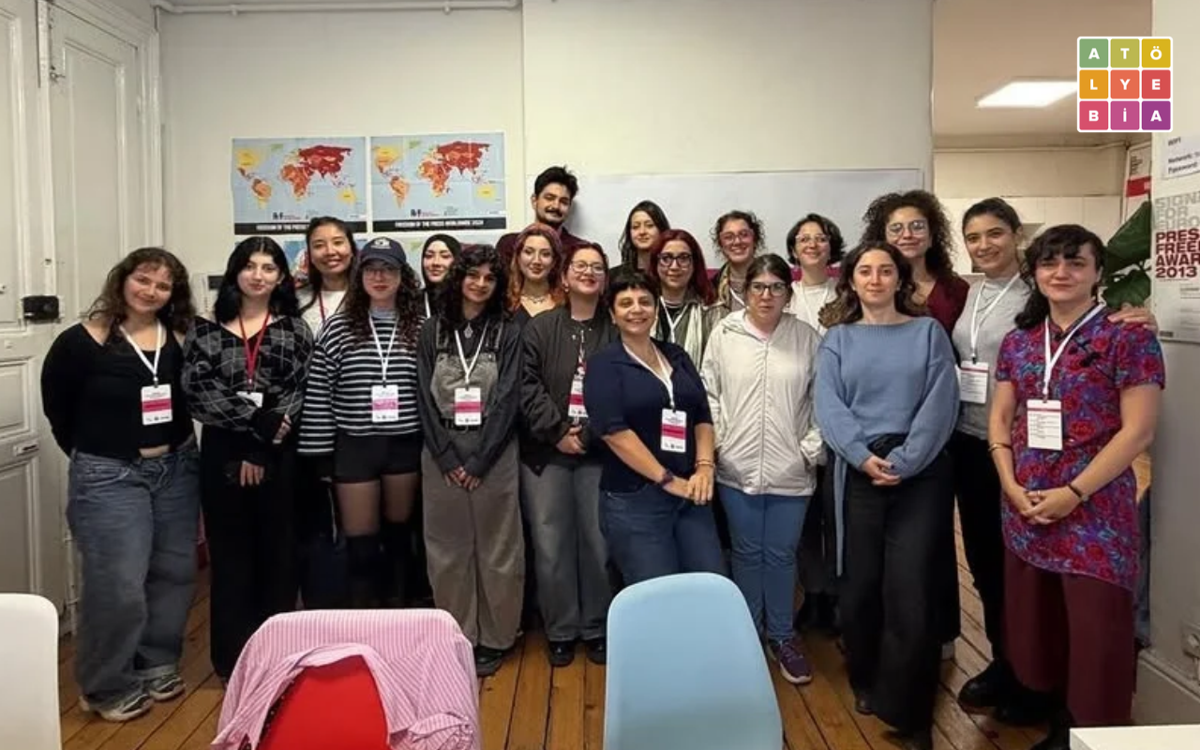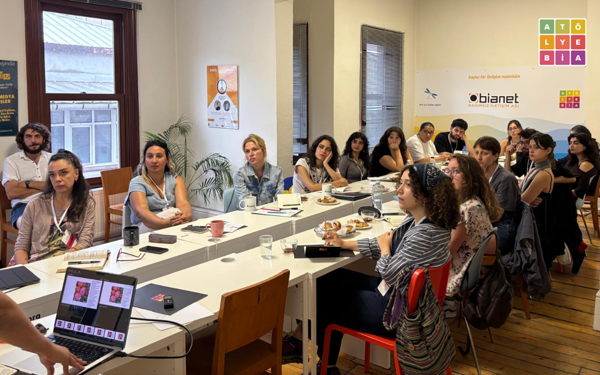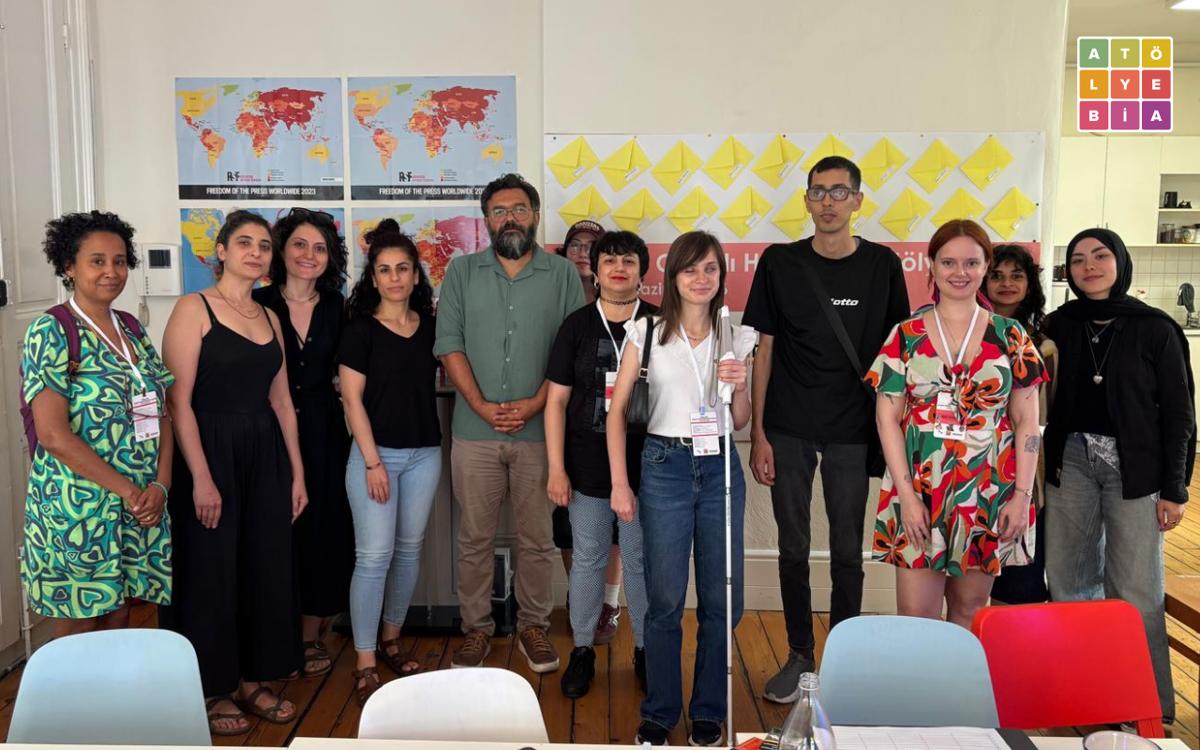

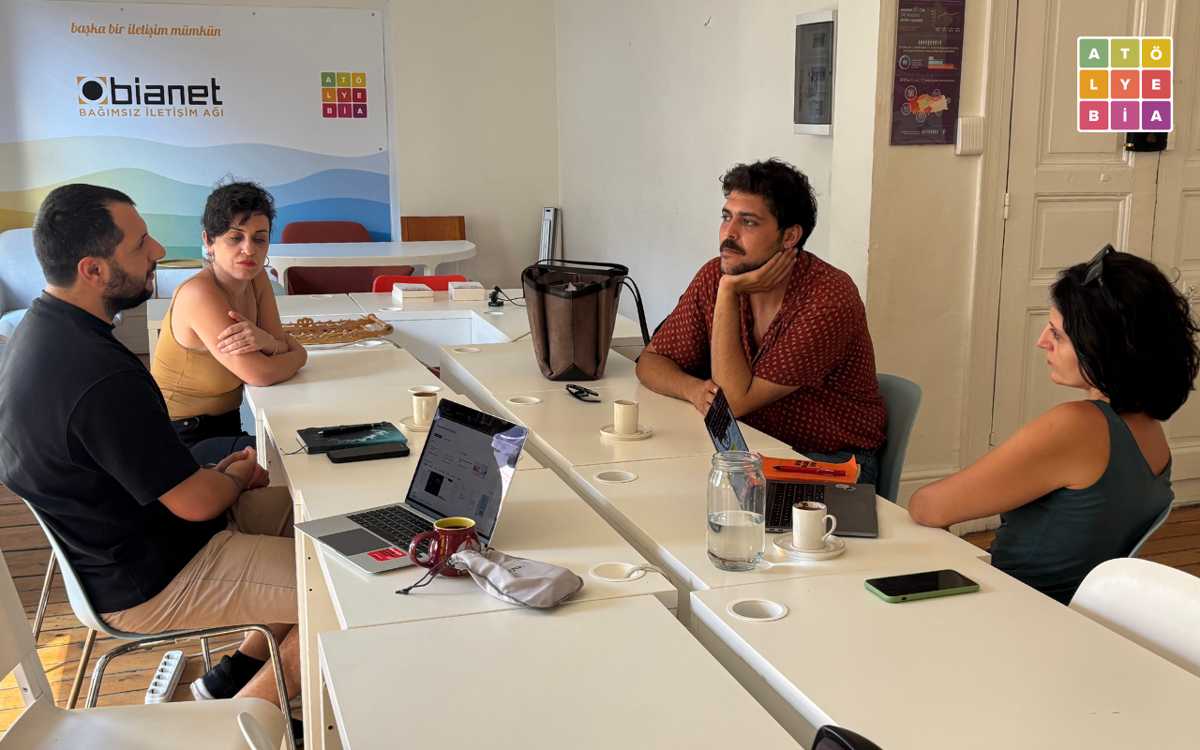



As the IPS Communication Foundation/bianet, we held the 35th meeting in our Meetings with Rights Organizations series, which we launched in July 2023 to help strengthen civil society and expand regular channels of communication, with the Human Rights Association (İHD) İstanbul Branch Conscientious Objection Commission.
The meeting, held at Atölye BİA on Aug 11, was attended by Atölye BİA Research Coordinator Sinem Aydınlı, bianet Managing Editor Vecih Cuzdan and bianet Civil Society Stakeholders Reporter/Atölye BİA Assistant Evrim Gündüz on behalf of the IPS Communication Foundation/bianet, and Jiyan Tosun and Alper Yalçın on behalf of the İHD İstanbul Branch Conscientious Objection Commission.
During the meeting, we discussed the process of reactivating the İHD Conscientious Objection Commission, its current work and the rights violations conscientious objectors face in their daily lives.
Jiyan Tosun: 'Violations against conscientious objectors have changed form'
Jiyan Tosun said the Conscientious Objection Commission was first established in the 2000s and was active at the time on issues of conscientious objection, antimilitarism and opposition to war.
Tosun said they reactivated the commission in June 2025, noting that rights violations against conscientious objectors have changed form over the years:
Conscientious objectors face rights violations in many areas, including the rights to work, education and health, in addition to criminal penalties. These violations affect every aspect of a person’s life and prevent them from building a life for themselves. In the past, violations were more visible through detentions and criminal penalties, but today they have taken different forms. These ongoing violations in the lives of conscientious objectors are no longer sufficiently visible. So we asked ourselves, ‘What can we do?’ and reactivated the commission.
Alper Yalçın: 'Conscientious objection is an antimilitarist stance that goes beyond victimhood'
Alper Yalçın said people who declare themselves conscientious objectors are classified as draft evaders, those who fail to report for military service after being called up, or deserters. He said this affects their access to various rights in daily life. While conscientious objectors may be able to take jobs with social security coverage, they can subsequently receive official notices, he said. Yalçın added that the military status document required for university enrollment can also hinder access to education.
Yalçın also addressed the concept of “civil death,” which is used to describe the situation faced by conscientious objectors. He said the term risks defining them solely through victimhood:
Personally, I don’t want to wear the label of ‘civil death.’ This concept risks defining us solely through victimhood. For me, however, conscientious objection is an antimilitarist and anti-war stance that goes beyond victimhood. Alongside the rights violations we experience, we also want to talk about the system we oppose. Opening military spending up for discussion is part of that.
'We should discuss militarism together'
Yalçın said the struggle for conscientious objection should be addressed alongside military spending and defense industry policies. He said the structure and operations of defense industry companies should also be scrutinized, drawing attention to how security narratives shape social life.
Yalçın said discussions on peace should also create space for rethinking the concept of security. “We should discuss security, the budget and militarism together. Especially when talking about peace, we need to rethink our understanding of security and the budget. Who owns the companies in the defense industry, and how do they operate? How can we, as citizens, not know these things or be unable to talk about them? These are precisely the issues we want to open up for discussion,” he said.
'War is becoming increasingly normalized'
Yalçın also discussed how militarism is reproduced in everyday life. From schools to the media, people are exposed to ready-made narratives about groups defined as “enemies,” he said, stressing the importance of questioning these narratives.
Yalçın said constant exposure to news of wars and massacres also changes the way people relate to violence:
We witness so many massacres that they all start to feel like war games. Every day, we see somewhere being bombed on the news. War is increasingly becoming normalized as part of everyday life. At the same time, we are experiencing an immense sense of alienation.
'Militarism is also an issue for different social movements'
Yalçın said the antimilitarist struggle is not limited to the experiences of those subject to compulsory military service, pointing to the contributions of the women’s and LGBTI+ movements in this area.
He said the women’s movement, in particular, has opened up an important intellectual space through its critique of the relationship between militarism and masculinity:
What women have said against a militarist system that reproduces masculinity and assigns women a particular position is very thought-provoking. The women’s movement has always been part of this discussion, and so has the LGBTI+ movement. We also need to look at how other social movements have taken up the issue of militarism.
'There is a need for an information and support mechanism'
Yalçın said they wanted to create a space where people could ask questions about conscientious objection, obtain information or share the rights violations they have experienced. He said there are people who can provide legal support and stressed the importance of giving young people considering conscientious objection access to information and opportunities to hear about others’ experiences.
Yalçın described a recent conversation with a young person who contacted the İHD Conscientious Objection Commission:
You’re 20 years old and very confused about conscientious objection. You need someone to talk to, but everyone is frightening you about it. Naturally, you’re scared. Who are you going to talk to? There needs to be an information and support mechanism where a young person can call, freely talk about their uncertainty and get answers to the questions they have.
Yalçın also said they wanted the commission to be open to anyone interested in discussing militarism, not only those subject to compulsory military service:
We need spaces where we can discuss militarism together. A woman should be able to come, an LGBTI+ person should be able to come, an Islamist should be able to come. Let’s discuss militarism, the budget, all those rituals and the things that are held sacred together.
You can follow the İHD İstanbul Branch Conscientious Objection Commission on Instagram and X.
Conscientious objection in Turkey
The right to conscientious objection is not legally recognized in Turkey. There is also no alternative civilian service for people who refuse compulsory military service on conscientious, political, religious or philosophical grounds.
People who declare themselves conscientious objectors have no separate legal status. Those who do not fulfill their military service obligations may be classified as draft evaders, those who fail to report for military service after being called up, or deserters, and may face administrative fines and repeated legal proceedings. This can lead to rights violations in various areas of daily life, ranging from the rights to work and education to freedom of movement.
(EG/VK)