





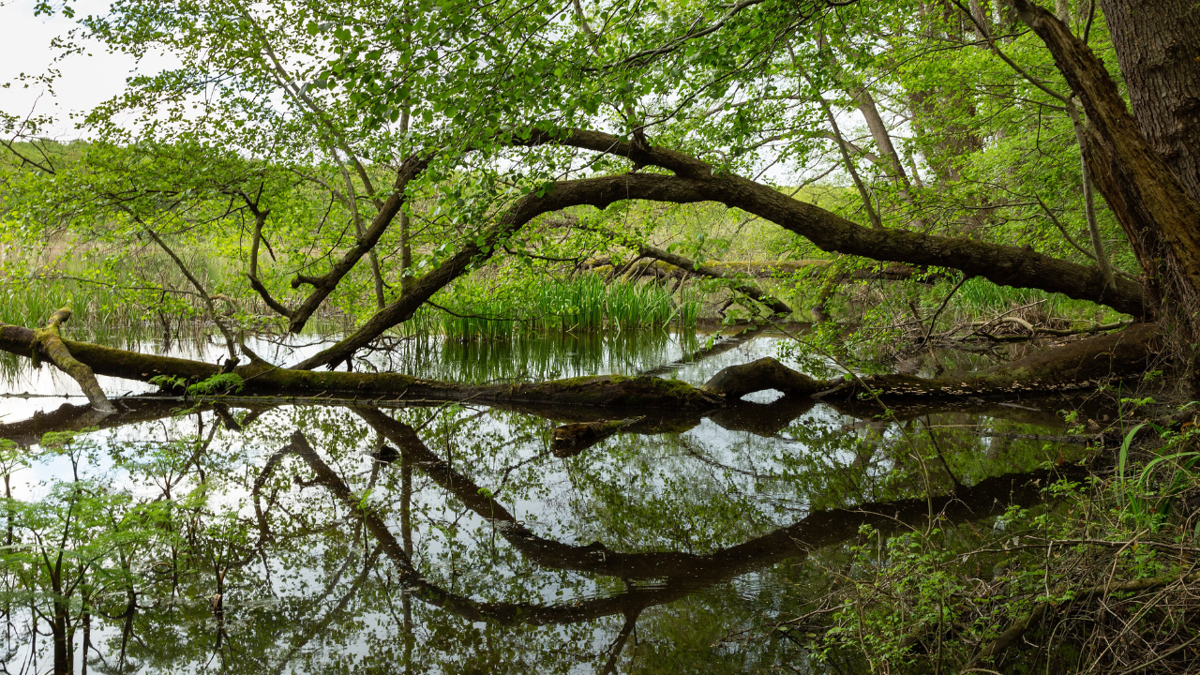


Scientists from Bartın and İstanbul universities have found that between 1984 and 2014, Erikli, one of the Erikli, Kocagöl and Sakagöl floodplain forests that form part of the İğneada Floodplain Forests, shrank by 16 percent, or 109 hectares, while the wetlands in Sakagöl disappeared or deteriorated. The study, published in the peer-reviewed journal Forests, highlights the impact of human pressure and the climate crisis on ecosystem changes in the region.
- The research showed that average temperatures in the İğneada Floodplain Forests region rose by 1.8°C over 44 years. According to the study, drought is expected to intensify in the near future.
- If global warming continues to worsen, a semi-arid climate is projected to prevail across 89 percent of the region by the end of the century.
- The researchers also warned that key species in the forests, such as ash and pedunculate oak, are declining.
- The scientists are calling for urgent conservation and adaptation measures.
The main causes are thought to be drought and water stress, coupled with growing human pressure.
Why are the İğneada Forests important?
The İğneada Floodplain Forests are a rare ecosystem where dry forests coexist with seasonally flooded forests, streams, lakes, reed beds and dunes. Home to endemic, rare and medicinal plant species, the area is one of Turkey’s important plant areas.
The region, which is also Europe’s largest floodplain forest, plays a critical role in capturing carbon dioxide, which drives the climate crisis, and storing it in vegetation and soil. This is because vegetation can grow rapidly, while carbon can be stored in both the soil and plant life:
Because floodplain forests are seasonally inundated, their soil remains wet for much of the year. This slows the decomposition of plant matter, allowing carbon to remain stored in the soil for longer. Preserving these ecosystems is therefore critical not only for biodiversity but also for tackling the climate crisis.
The study warns in particular that drought and water stress could reduce the amount of carbon the İğneada Floodplain Forests can capture and store.
Coastal forests are unique areas between land and sea that support high biodiversity and perform critical ecological functions. Although coastal ecosystems cover only a very small portion of the ocean’s surface, they play a major role in overall carbon absorption. These carbon sinks are powerful allies in the fight against climate change.
For this reason, the strict protection status of the İğneada Floodplain Forests in Turkey must be enforced without compromise.
Study author
Prof. Dr. Cem Gazioğlu
İstanbul University Institute of Marine Sciences and Management
Study authors: Adaptation measures are needed
Modeling based on different climate scenarios suggests that the situation will become more severe in the near future:
Under a high-emissions scenario, a semi-arid climate is projected to prevail across 88 percent of the region, which is currently classified largely as semi-humid. According to the study’s authors, “this ecological pressure and increasing drought are causing sensitive tree species in the region to decline and weakening the wetlands’ capacity to act as carbon sinks.”
The scientists who conducted the study are calling for conservation and adaptation measures to protect endemic species and biodiversity in the İğneada Floodplain Forests:
“There should be no further interference with the streams that carry water from the Istranca Mountains to this ecosystem. It should be made mandatory for existing dams and ponds in the region to release enough environmental water during dry periods to prevent the floodplain forest from drying out. In fact, the entire watershed that supplies İğneada should be managed under a single conservation plan.”
Declared a national park in 2007
After the İğneada Floodplain Forests were declared a national park in 2007, a comprehensive management plan was prepared in 2014 covering the Erikli, Kocagöl and Sakagöl floodplain forests, as well as the area between Kocagöl and Sakagöl.
In the article published in Forests, researchers compared the management plan prepared in 1984 with the 2014 plan to identify changes in land use in the forests.
According to the study’s authors, the most urgent step needed to protect endemic species is to restore the aquatic habitats on which they depend.
“If we do not protect the system that supplies water to the forest, no matter how hard we try, it will not be possible to protect individual species, whether rare endemic plants such as the Black Sea grape hyacinth or wildlife such as the black stork,” the researchers say.
Key species at risk in the region
A comparison of the 1984 and 2014 plans showed that the total forested area remained almost unchanged. However, a closer examination revealed warning signs about the health of the ecosystem:
The presence of key species in the region that are relatively tolerant of dry and hot conditions, such as pedunculate oak and ash, has declined significantly.
The researchers say that under normal conditions, ash and hornbeam populations would be expected to increase. They attribute the decline to human pressure as well as increasingly severe and prolonged droughts driven by the climate crisis.
According to the scientists, this trend, which reflects the changes taking place in the area, could lead to these key species being gradually pushed out of the forest.
Drought periods have increased since 2014, disrupting seasonal groundwater flooding. The amount of saltwater entering the basin also appears to have increased. There has also been substantial development compared with those years, while ongoing industrial projects could further increase pressure on the region.
Study author
Faculty member at İstanbul University Institute of Marine Sciences and Management
Dr. İrşad Bayırhan
Bayırhan, meanwhile, said, “The General Directorate of Nature Conservation and National Parks (DKMP) appears to have strengthened field inspections and physical monitoring infrastructure to protect the area against poaching, uncontrolled access and environmental pollution. In addition, as the region has become a focus for ecotourism, local residents and visitors appear to have developed greater awareness of the need to protect the forest.”
Temperatures rose 1.8°C in 44 years
Other key findings from the research concern rising temperatures:
- Over the 54 years between 1970 and 2024, the region had an average temperature of 13.09°C and average annual precipitation of 817.7 millimeters.
- Although no significant change in annual precipitation was observed between 1981 and 2024, the analysis indicates that rainfall declined, particularly during the driest months, while temperatures increased. Average temperatures rose by about 1.8°C during this period.
- As climate-related stressors such as prolonged drought and rising temperatures become increasingly pronounced, human pressures such as agricultural expansion are further increasing the ecosystem’s vulnerability.
Semi-arid climate could prevail in the region by end of century
Using two different indices to assess how the region’s climate could change under various climate scenarios, the scientists found that under adverse scenarios, particularly those resulting from a failure to implement robust climate policies, the region’s climate, currently classified largely as humid or semi-humid, could become significantly drier by the end of the century.
Our findings show that under high-emissions scenarios, much of the region could shift into a semi-arid climate zone, putting its carbon sink capacity at risk.
To prevent this ecological collapse, human-induced pressure on the waterways that supply the region must be reduced, and a dynamic, climate-resilient and integrated water management plan must be implemented across the entire watershed.
Study author
İstanbul University Institute of Marine Sciences and Management
Prof. Dr. Gürcan Büyüksalih
(CA/VK)

