


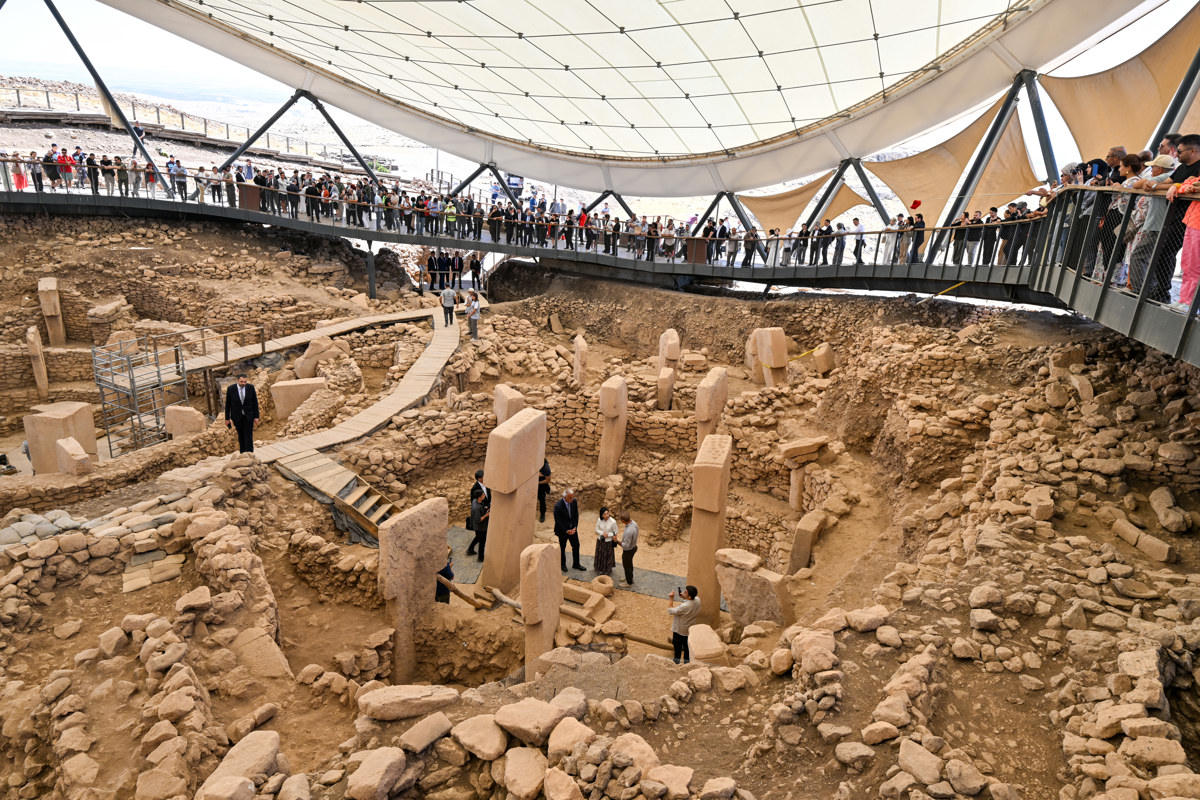
Excavations at the ancient site of Göbeklitepe in the southeastern province of Urfa have uncovered a human statue embedded inside a wall, lying on its back. The find was announced by the Culture and Tourism Ministry, which is overseeing ongoing work at the site known as the “zero point of history.”
Deputy Culture and Tourism Minister Gökhan Yazgı said the discovery, made at the UNESCO World Heritage Site, carries special significance. “The placement of this statue in that location holds a deeply symbolic meaning, possibly as an offering. It also reshapes many of our assumptions about the Neolithic period,” he told Anadolu Agency (AA).
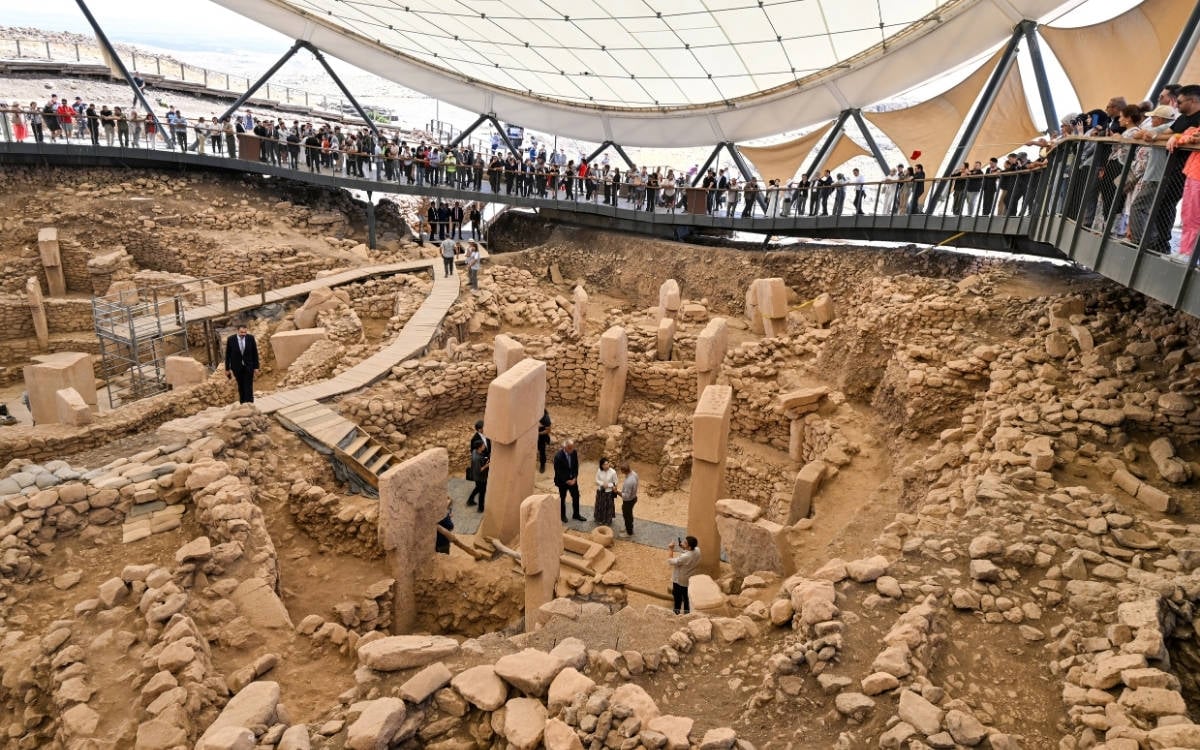
Highlighting the importance of the 12,000-year-old site, Yazgı added, “Göbeklitepe sheds light on all of human history. We found this new artifact within the wall of a room located between Structures B and D. It is a unique human statue, placed inside the wall as an offering.
"Excavations are continuing at full speed in Göbeklitepe. Our teams are thoroughly examining each artifact. As our work progresses, we expect to make many more discoveries and share them with the public.”
‘A symbol of sculptural’
Necmi Karul, head of the Göbeklitepe excavation team, noted that while the statue’s feet are missing, the head and torso are clearly identifiable.
He explained that its placement within a wall complicates efforts to determine its exact function. Karul said the statue may have been part of a ritual held in the area
“While statues are commonly found in the Neolithic period, this is the first time we’ve encountered one placed on its back, embedded within a wall and in broken condition. Its meaning may become clearer as further studies are conducted,” he said.
“We see that the aesthetic and expressive style of prehistoric sculpture at Göbeklitepe reflects a remarkable level of artistic achievement. But interpretations about why the statue was placed there should be developed gradually over time,” he added. (TY/VK)