









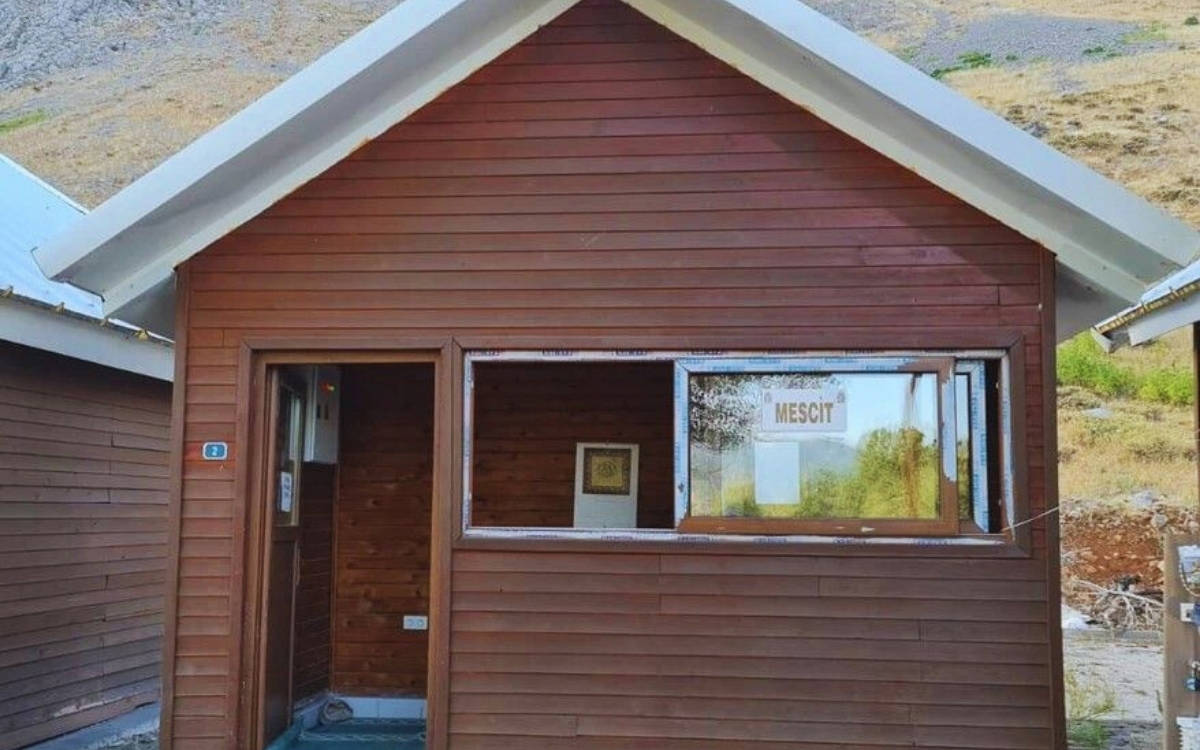



Alevi organizations and local residents have voiced opposition to the opening of a prayer room at a site considered sacred by the Alevi community in Dersim, southeastern Turkey.
The structure was recently established by the Tunceli Governor’s Office at the entrance to the Munzur Springs, located in the Ovacık district of the city officially known as Tunceli.
Locals criticized the move, viewing it as part of broader assimilation efforts given that the population is nearly entirely Alevi in the area.
Residents quoted by the local Tunceli Emek newspaper said They said such actions reflect a long-standing pattern of imposing religious infrastructure on Alevi belief centers without consent, and of occupying traditional dergâhs. Some recalled similar interventions following the 1980 military coup, when a mosque was constructed and an imam appointed in the same village.
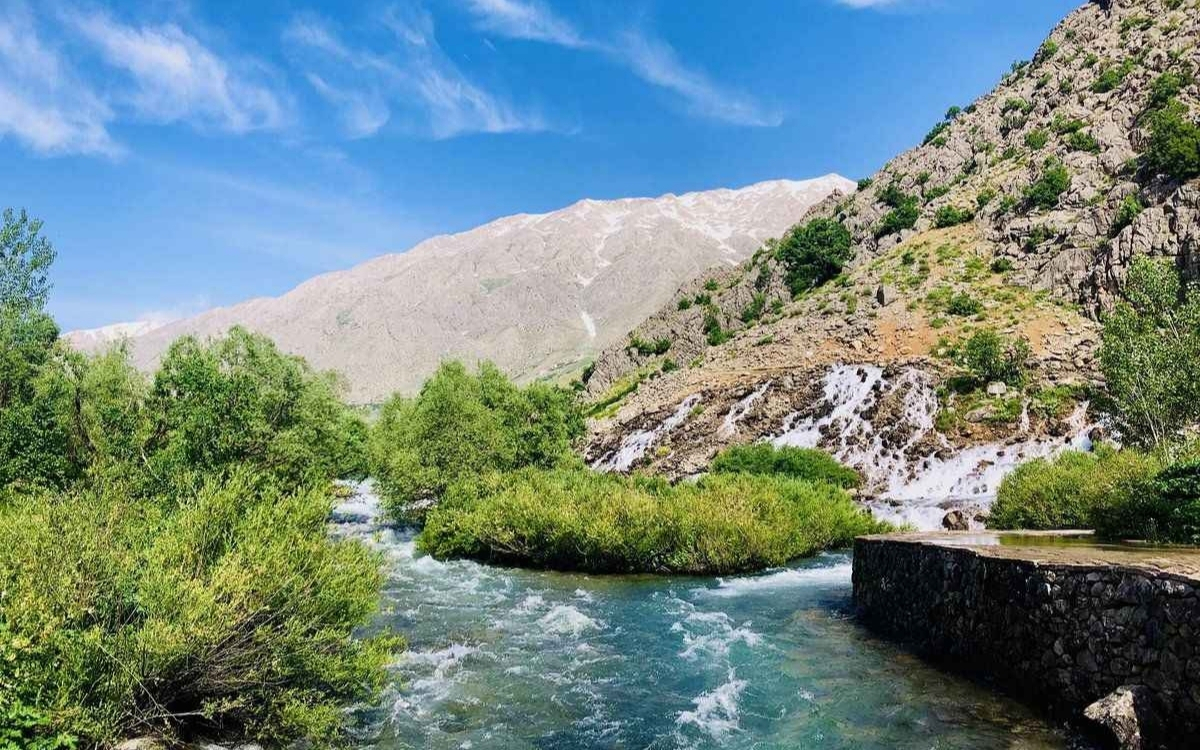
Alevi organizations emphasized the importance of preserving both the natural and spiritual integrity of the Munzur Springs.
The Federation of Dersim Associations (DEDEF) describing the development as a “political attack” and a clear example of “assimilation policies" in a written statement issued yesterday.
“Munzur is the living memory of the bond the people of Dersim have with faith, culture, and nature,” the statement read. “Building a mosque at the springs is not just an attack on belief; it is a clear act of political engineering and an attempt at assimilation.”
“This is not a matter of governance preference, but a political assault,” it said. “The government knows that people find strength in their own paths, cultures, and beliefs. That is why it targets what is sacred to them. For the Alevi community, Munzur is itself a form of worship.
“Mountains, stones, water, wind, and fire, all are manifestations of the Divine. Opening a mosque there is not merely about pouring concrete. It is an assault on memory, faith, and culture. It contradicts the principle of secularism, violates the constitutional right to equal citizenship, and breaches international norms on freedom of belief.
“We are aware that this attack is not only against Alevis, but a threat to all advocates of democracy. We will never abandon Munzur’s path, the path of truth and free faith. Remove that mosque! Do not touch Munzur, do not touch Dersim, do not touch our faith!”
Alevism is a heterodox faith tradition that originated in Anatolia, blending elements of Shia Islam, Sufism, and Anatolian folk culture. Estimates suggest that Alevis comprise between 10% and 15% of Turkey’s population.
While Alevism is not officially recognized as a distinct religion or separate from the country’s dominant Sunni Islam, the government in 2022 established the Alevi-Bektashi Culture and Cemevi Presidency under the Culture and Tourism Ministry, framing it as a cultural institution. (TY/VK)

