





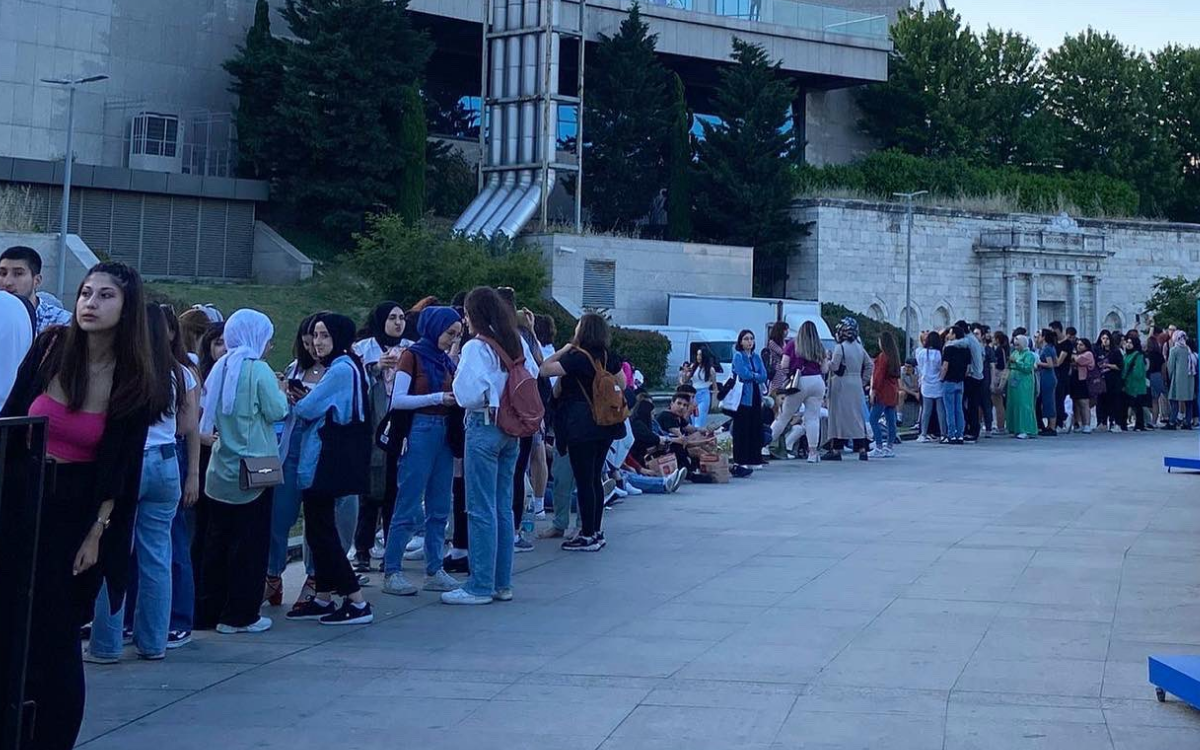



Long lines outside some of İstanbul’s main cultural venues this summer may give the impression of a booming youth audience. In reality, many of those waiting are there for free tickets offered through a municipal program.
The Harbiye Cemil Topuzlu Open-Air Theatre, Cemal Reşit Rey Concert Hall, and Festival Park Yenikapı have hosted many concerts and plays in recent months. The long queues in front of these venues are largely the result of “Koltuk Senin” (The Seat is Yours), a project run by the İstanbul Metropolitan Municipality’s (İBB) cultural subsidiary in cooperation with the arts sector. The initiative offers free seats to people under the age of 24 when available.
Cultural events become a luxury
With inflation driving up living costs, many young people struggle to cover even their basic needs, making cultural outings increasingly out of reach.
Data from the Confederation of Turkish Trade Unions (Türk-İş) for July 2025 shows that the monthly food expense for a child aged 15–19 exceeds 7,756 lira.
Housing is also a challenge. Students begin each school year facing a shortage of dormitory space, with rooms often holding six to twelve people and sometimes lacking desks.
Rising rents make private housing inaccessible, and even finding a place in state-run dormitories is difficult. With housing, transport, food, and education costs mounting, social activities often fall by the wayside.
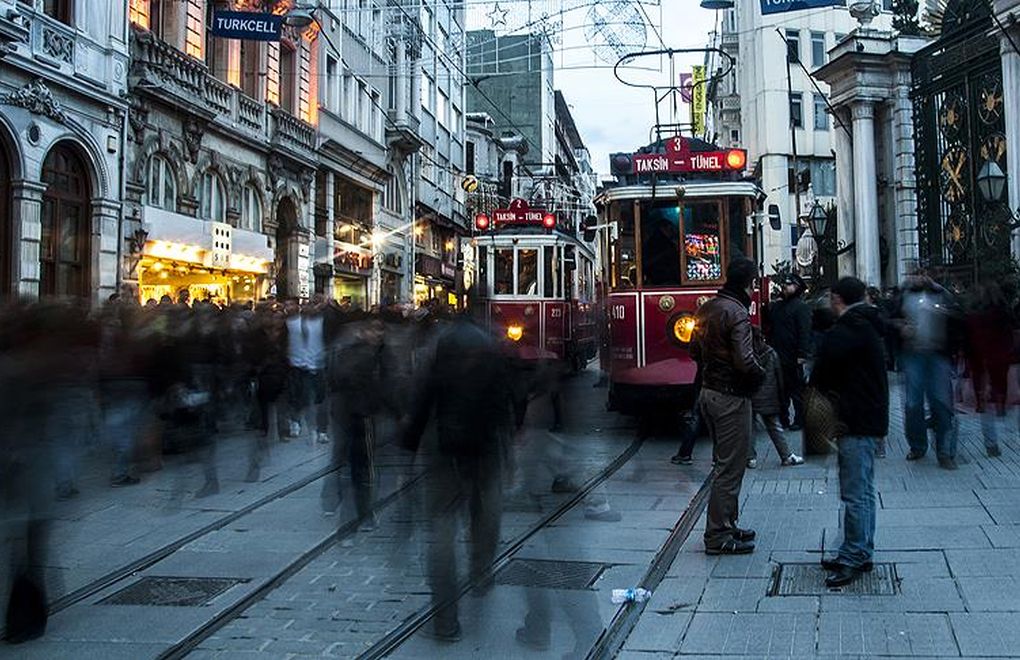
Youth in Türkiye increasingly pessimistic, shows survey
For 2025, state scholarships and loans for students are set at 3,000 liras (~73 dollars) per month for undergraduate students, 6,000 for master’s students, and 9,000 for doctoral students. Ticket prices for concerts and plays scheduled in August and September remain beyond the reach of many.
One university student told bianet that they attended a concert for the first time thanks to the program’s free ticket offer. Another said they rarely went to concerts before but could now participate in cultural events through the initiative.
While young people appreciate the access provided, many say “Koltuk Senin” alone cannot meet demand and call for similar programs to be expanded.
Cultural spending remains low
According to the Turkish Statistical Institute (TurkStat), household spending on entertainment, sports, and culture ranked near the bottom of all expenditure categories in both 2023 and 2024, above only insurance, financial services, and education.
The share of spending on these activities stands at 0.8–0.9 percent for the lowest-income households, compared to more than double that (2.5–2.9 percent) for the highest-income group. Over the past year, spending in the lowest-income group rose by 12.5 percent, compared to a 16 percent increase among the highest earners.
How the program works
A “Koltuk Senin” stand opens one hour before an event. Visitors scan the QR code displayed at the entrance to download the Radar Türkiye app, where they register in line.
If seats remain unoccupied after the event begins, people aged 24 and under are admitted according to their queue number and directed to available spots by staff. Participants can use the program up to three times a month. (AG/VK)