


Eleven people, including former İstanbul Bilgi University Rector Remzi Sanver and Can Broadcast Holding Chairman Kenan Tekdağ, were arrested on Oct 20 as part of an investigation into Can Holding on charges related to organized crime and money laundering.
The arrests came after three days of detention at the İstanbul Gendarmerie Command. A total of 26 individuals had been taken into custody under the operation led by the İstanbul Chief Public Prosecutor’s Office.
Following their interrogation, 11 were formally arrested by a criminal judgeship of peace, while prosecutors requested judicial control measures for the remaining 15.
The Prosecutor’s Office accused the detainees of “membership in a criminal organization” and “laundering assets derived from criminal activity.”
The arrested individuals were named as Remzi Sanver, Mehmet Kenan Tekdağ, Mehmet Sıddık Kaya, Emin Şahin, Nuh Zafer Metin, Serap Özgür, Abdulselam Yıldız, Tuncay Şahin, Adnan Yıldız, Nurettin Paksoy, and Mustafa Şahin.
Fourteen others, including Binsat Holding board members Arafat Bingöl and Cengiz Bingöl, were released under judicial supervision. Their names were listed as Şenol Akan, Cengiz Bingöl, Arafat Bingöl, Müslüm Çogaç, Betül Can, Zuhal Can, Akın Makaracı, İsmail Kavak, Hakan Kalkan, Mithat Muharremoğlu, Kıyas Mustafaoğulları, Cesur Salık, Barış Karayel, and Berkan Baycan.
Investigation expands
The latest arrests mark an expansion of a criminal investigation first initiated on Sep 11 by the Küçükçekmece Chief Public Prosecutor’s Office. The case was later transferred to the İstanbul Chief Public Prosecutor’s Office after the original jurisdiction declared lack of authority.
Authorities had earlier arrested several individuals connected to the holding, including Devran Çimen, Devran Can, Mehmet Kaya, Kemal Çimen, and Cemal Can.
Tekdağ had initially been released under house arrest and a travel ban in September but was later taken into custody again and sent to prison during this recent round of detentions.
Charges and allegations
According to the Prosecutor’s Office, the charges under investigation include “establishing and managing a criminal organization, membership in a criminal organization, qualified fraud, violations of the Tax Procedure Law, fuel smuggling, and laundering of criminal proceeds.”
The office claimed that companies within Can Holding issued fake invoices to evade taxes and generate unlawful profits. The charges are based on findings from the Financial Crimes Investigation Board (MASAK), which reported that the suspects were involved in creating an “off-the-record invoicing network” to facilitate tax fraud and conceal financial flows.
Prosecutors also stated that assets belonging to 16 individuals, including key figures such as Zaman Han Can, Mehmet Şakir Can, Kemal Can, and Cemal Can, as well as 121 companies, were seized under a Sep 10 court order.
Authorities allege that holding founder Kemal Can and his associates used a complex web of companies—often registered in the names of family members—to evade oversight, secure favorable positions in public tenders, and launder large sums of money.
Seizure of holding's companies
Since the beginning of the investigation, trustees have been appointed to oversee dozens of affiliated companies, and the seized assets have been placed under the control of the Savings Deposit Insurance Fund (TMSF).
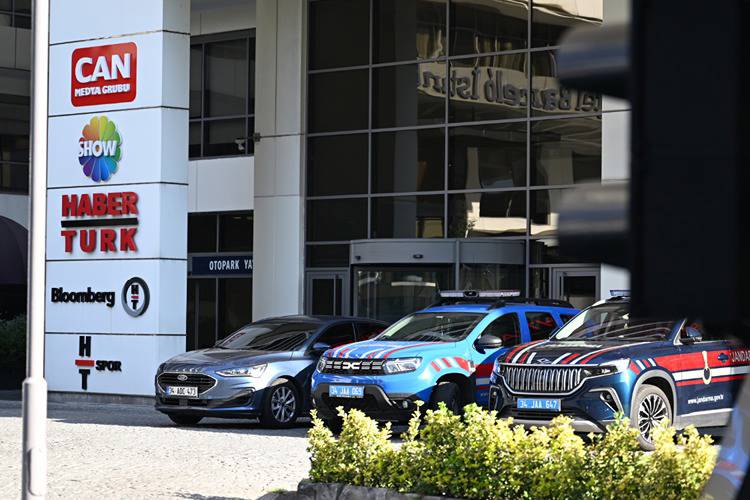
The affected businesses include high-profile media outlets such as Habertürk TV, Show TV, and Bloomberg HT, as well as institutions in the education sector, including İstanbul Bilgi University and the Doğa Koleji school chain.
The prosecutor’s office said that the organization used illegal revenues to expand into media, education, finance, and energy with the aim of gaining public legitimacy and consolidating influence. “The goal was to build economic power and establish artificial credibility,” the statement read.
Investigators are continuing to assess financial records, organizational ties, and money transfers, with cooperation from financial oversight agencies.
The investigation has also raised questions about the use of Turkey’s Asset Peace laws, regulations that allow individuals to bring undeclared assets into the country with minimal scrutiny. Prosecutors claim the suspects misused these laws by routing illicit funds through artificial capital increases and reintegrating the money into the economy under the guise of legitimate investment. (AEK/VK)