










Ömer Faruk Eminağaoğlu, former president of the Judges and Prosecutors Association (YARSAV) and retired Court of Cassation judge, has criticized the public release of the indictment prepared against the opposition-controlled İstanbul Metropolitan Municipality before it was accepted by the court. He claimed the entire process was riddled with procedural and substantive violations of law.
The indictment was filed on Nov 11, nearly eight months after the detention of now-suspended Mayor İmamoğlu and dozens of others on corruption-related charges.
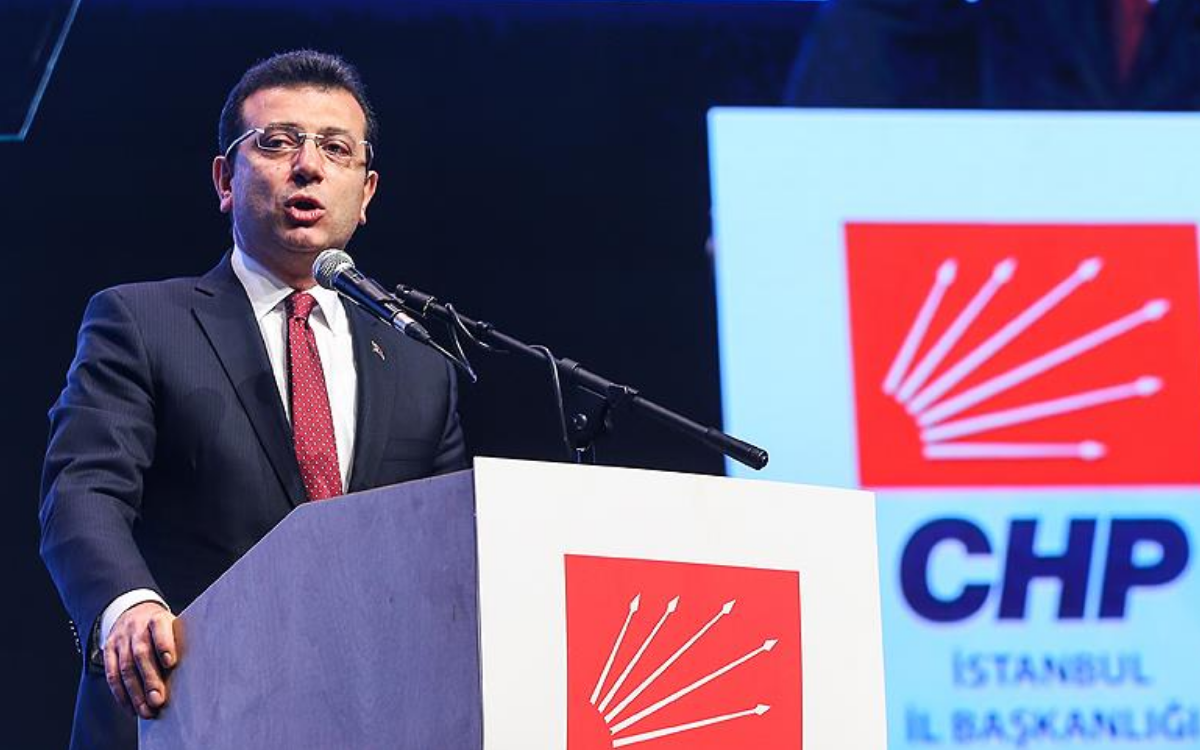
Indictment seeks up to 2,352 years in prison for İmamoğlu
'Blatantly committed an offense'
Speaking to bianet, Eminağaoğlu noted that according to Articles 174 and 175 of the Criminal Procedure Code, investigations remain confidential until an indictment is accepted. He described the prosecutor’s move to share the text with the press as a clear violation of duty:
“Procedurally, confidentiality continues until the indictment is accepted or the 15-day acceptance period expires, after which the public prosecution is considered to have been initiated," he said.
"Therefore, this confidentiality stage remains in effect until the indictment is accepted within 15 days or is deemed accepted at the end of that period. This is a clear offense, but the prosecutor knowingly commits this breach of duty.
"There’s no legal explanation for this. By sharing the indictment with the press despite knowing all this, the prosecutor is attempting to shape public opinion in advance. This demonstrates a legal violation from the very start.”

Violations from the beginning
Eminağaoğlu noted that case files involving organized crime charges typically include restriction orders, and he outlined the violations from the outset of the process:
“The public is gaining access to documents that even defense lawyers cannot see. This violates both the confidentiality of the investigation and the legal protection of personal data. It constitutes an attempt to interfere with the right to a fair trial.
"When you release the indictment, you expose the private and personal information of many individuals. While accusing others of violating personal data, they themselves commit this crime by making such data public during the confidentiality phase.”
‘Prosecutor is not competent authority’
Commenting on the indictment notifying the Court of Cassation about a possible party closure case, Eminağaoğlu said, “The prosecutor is not the competent authority.”
He elaborated on the procedural violations in relation to the Political Parties Law, saying, “Article 106 of the Political Parties Law states that if a political party engages in acts prohibited by the Constitution or laws, the matter is referred to the Chief Public Prosecutor's Office of the Court of Cassation. But prosecutors are not the referring authority.
"If an administrative court becomes aware of such acts, then it is that court, or if it’s a regular court, then that court, that refers the case. At this stage of an investigation, there is no justification for a prosecutor to refer the case. If it's related to an ongoing investigation, the prosecutor prepares an indictment and submits it to the court. It is the court, not the prosecutor, that is authorized to refer a case to the Court of Cassation."
‘Constitutional Court holds financial oversight authority’
"This is another legal irregularity caused by the prosecutor. In response to criticism, the prosecutor claimed to have only referred financial matters, but political parties’ financial audits fall exclusively under the jurisdiction of the Constitutional Court. The Court of Cassation has no authority in this regard. Even this aspect reveals inconsistencies.
“The prosecutor grounded the notification in provisions that could justify the closure of political parties. Even from this angle, it amounts to pressuring and steering the Court of Cassation. The Chief Public Prosecutor of the Court of Cassation opens an investigation only when it receives documents showing a certain level of intensity in actions.
"Not every document leads to an investigation. And if an investigation is initiated, it is kept confidential. Therefore, disclosing a case that may or may not result in an investigation, and which would be confidential if it does, is legally problematic.”
“According to the Political Parties Law, oversight of financial matters lies exclusively with the Constitutional Court. It is not within the Court of Cassation’s jurisdiction. If the Constitutional Court finds financial irregularities, it examines the party’s accounts, revenues, and expenses and takes necessary action.
"Even the prosecutor’s own statements are inconsistent. If you read Article 106 closely, administrative irregularities are not directly sent by administrative authorities to the Court of Cassation. Local chief prosecutors transmit them through internal correspondence.
"If there’s a legal dimension, it’s the courts that send them. Here, the prosecutor bypassed the court and acted on its behalf—getting ahead of the court. The court might evaluate the matter differently during trial.”
‘Sending a message to the court’
Pointing to page 258 of the indictment, Eminağaoğlu noted that the prosecutor is not only directing the Court of Cassation but also trying to influence the trial court:
“He is effectively telling the court, ‘You should send it too.’ In both of his press statements, there are contradictions and signs of directing both the Court of Cassation and the local courts. The Chief Public Prosecutor of the Court of Cassation has the authority to request any document from any institution. If such a request is made, the institution must comply. However, if an administrative document reaches the local chief prosecutor’s office, it is transmitted internally.
"Otherwise, the matter concerns the courts, not the local prosecutor. In this case, the local prosecutor has interfered with the CHP. Documents from administrative bodies should be forwarded via internal communication. Whether or not the Court of Cassation opens an investigation cannot be made public in this way. Doing so would constitute interference in democracy. Publicly announcing an unlaunched investigation against a political party constitutes interference. In this sense, the local prosecutor's actions are clearly unlawful.”
‘Abuse of office’
Eminağaoğlu argued that leaking the indictment to the public constitutes both a procedural breach and a criminal offense:
“Until the court accepts the indictment, no action can be taken. Here we have organized crime allegations. The law is crystal clear in such cases. If a restriction order is issued, even the defense can only access the suspect’s testimony and expert reports. Lawyers are not even allowed to see the file cover. Yet the indictment from this confidential investigation is being leaked to the public. Documents that even the defense cannot access at this stage are being shared. We are dealing with a prosecutor’s office that openly commits this crime and disregards the law.”
Contradictions in the indictment
Eminağaoğlu also criticized the content of the indictment, arguing that the sections concerning the municipality lack concrete evidence. He pointed to inconsistencies in both the timeline and content:
“The sections about the municipality and the alleged actions are entirely abstract, inconsistent, and unsupported. They were hastily included in the indictment without any data, facts, or documents that could justify such a move. There are contradictions between sections, dates, events, and narrative structures. Some parts of the indictment were clearly written long before Nov 11. There are disjointed and contradictory sections. This indicates a premeditated intention to file an indictment from the very beginning.”
How can it be read in 15 days?'
Eminağaoğlu emphasized that it is impossible for the court to examine the 3,739-page indictment within the 15-day legal period, calling it an undue imposition on the court:
“The text alone is 3,739 pages. The court has only 15 days to review the indictment. There are secret witnesses, evidence, reports, and the main body of the text. It is impossible to analyze and link all these components within 15 days. How many pages can be read in one day? Even if you sacrificed your weekends, you still wouldn’t manage it. Given the inconsistencies in the file, completing this task in 15 days is out of the question. What the prosecutor is doing here is piling up vast amounts of information to create the illusion of a serious case and imposing it on the court. Since the court won’t be able to complete its review within 15 days, the indictment will automatically be considered accepted, and a public case will be deemed opened. But it is impossible for the court to finish this in 15 days.”
‘The court should return the indictment’
Citing the breaches of confidentiality, the press statements by the prosecutor, and the sheer volume that makes proper review unfeasible, Eminağaoğlu argued that the court should return the indictment under Article 174 of the Criminal Procedure Code:
“The violation of confidentiality rules and the submission of an indictment in a way that prevents the court from conducting a proper review leave the court with one appropriate action: to return the indictment due to non-fulfillment of legal conditions under Article 174 of the criminal procedure law. Publishing the indictment while it is still under confidentiality and the related acts of misconduct by the prosecutors, deputy chief prosecutors, and the chief prosecutor should be grounds for filing criminal complaints.”
‘The prosecution is now on the defensive’
Eminağaoğlu concluded by arguing that the process has been politically manipulated:
“Prosecutors in such politically charged cases have become disconnected from legal principles and are now tools of political interference in the judiciary. They need to abandon this approach. The prosecution is on the defensive. Why? Because the list of irregularities is endless.
"Every violation forces them to defend themselves. When a prosecutor is in a position of having to justify their actions, it reflects the gravity of those violations. A prosecutor’s role is to prepare the indictment, submit it to the court, and leave the rest to the judiciary.
"It is the court’s role to assess whether the indictment should be accepted. The prosecutor is not supposed to be giving repeated press briefings. Such behavior can only be interpreted as an attempt to influence public opinion.” (AB/VK)