


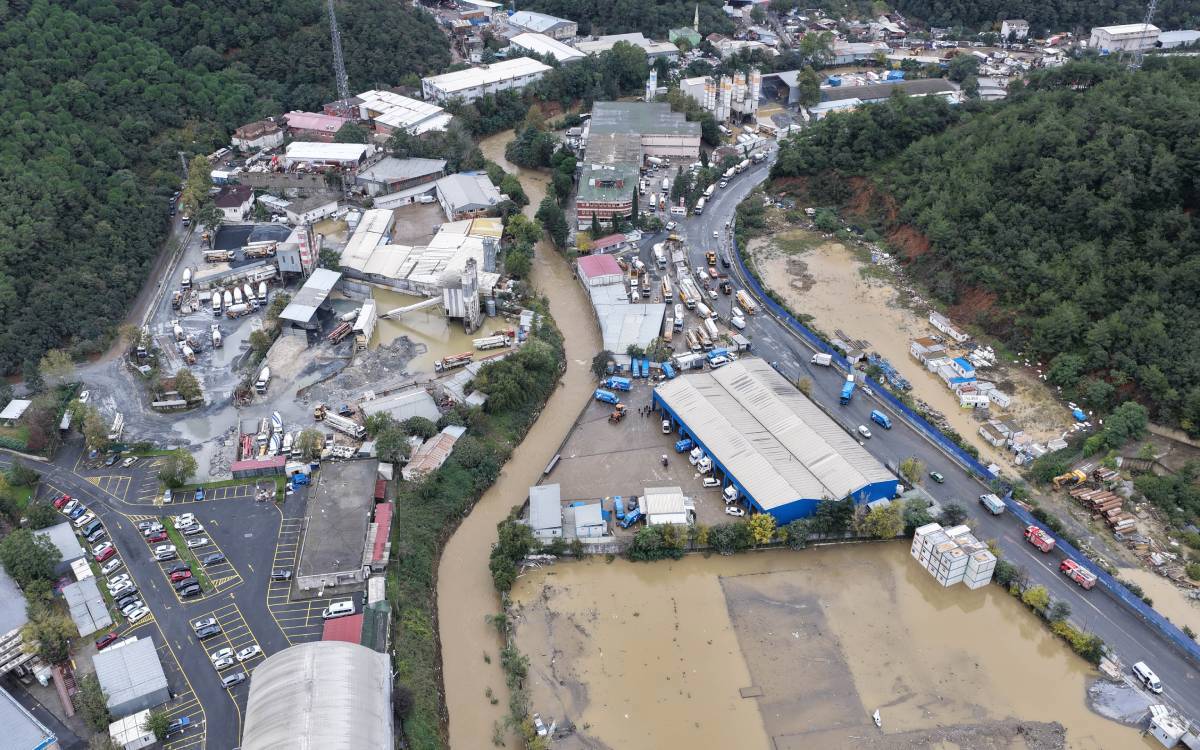


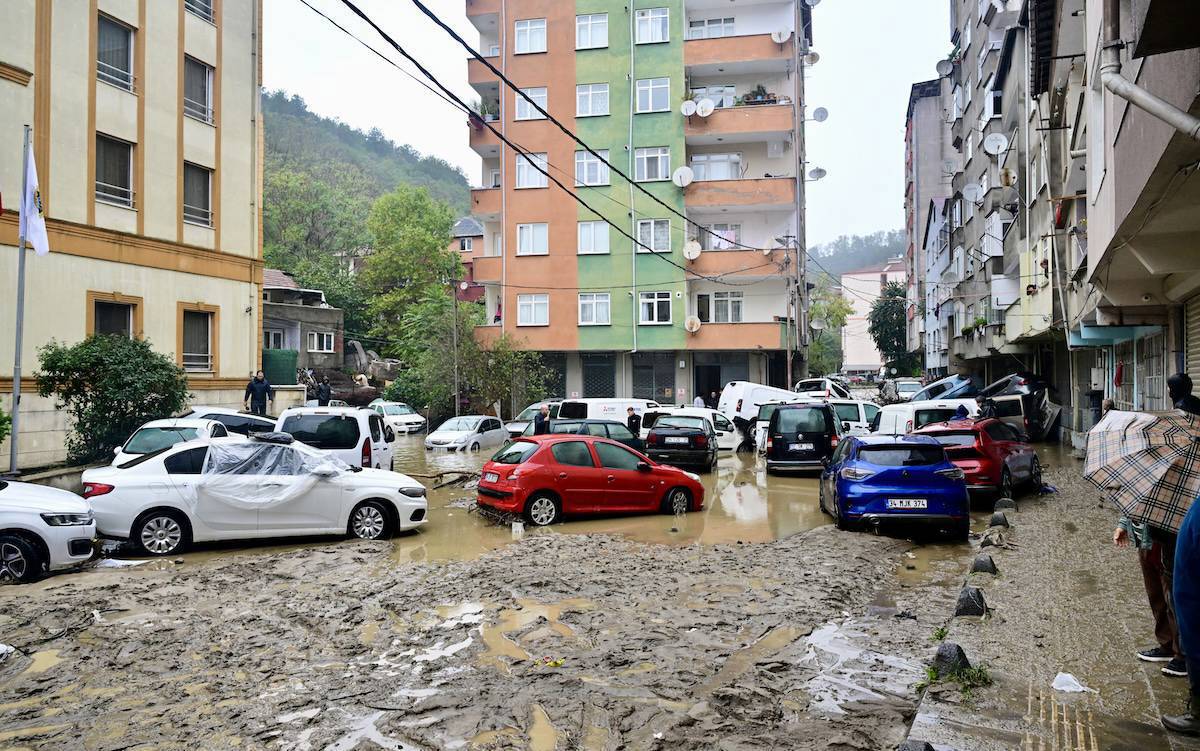
The severe rainfall that hit İstanbul on Oct 14 has renewed questions about the city's preparedness for the climate crisis. Building climate-resilient cities is also a key issue on the agenda for the UN climate summit (COP31), which Turkey is set to host. Yet İstanbul has once again failed this test.
According to the latest figures released after the flooding, seven people died in İstanbul. The İstanbul Governor's Office reported that nearly 3,000 homes and businesses sustained serious damage.
The collapse of buildings along a streambed in Ayazağa, Sarıyer, following the heavy rainfall has also reignited debate over İstanbul's urban development policies and construction in flood-prone areas.
Speaking to bianet, Prof. Barış Önol, a faculty member at İstanbul Technical University's (İTÜ) Department of Meteorological Engineering, discussed the impact of the climate crisis on extreme weather events, İstanbul's growing population and the measures needed to make cities more resilient to disasters.
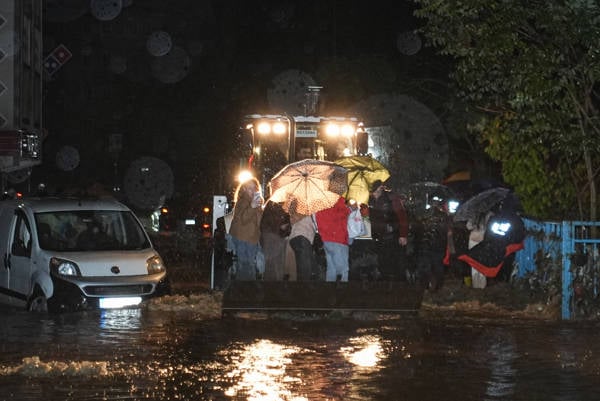
Torrential rains trigger flooding across İstanbul; child dies after electrocution in puddle
'Extreme rainfall will become more frequent and intense'
Önol said climate change would lead to an increase in extreme rainfall and heat waves, warning that these events would not only occur more frequently but also become more intense.
He emphasized the need for cities to prepare for these changes:
We know that extreme rainfall and heat waves will increase with climate change. Both their intensity and frequency will increase. That's why cities need infrastructure that can cope with these conditions.
Önol noted that migration from rural areas to cities continues worldwide, while infrastructure investment can be neglected during periods of rapid urbanization.
According to Önol, the dangers posed by the climate crisis become greater risks to society as cities expand and populations become concentrated in particular areas.
'Even if the climate doesn't change, more people are affected'
Önol said the impact of floods cannot be explained by rainfall alone and the number of people exposed to hazards and the extent of urban development are also critical factors.
As cities expand, he explained, extreme weather events of the same intensity can affect more people:
A larger population means a larger urban area. Exposure to these kinds of extreme weather events increases. And as exposure increases, so does the impact. Even if the same hazard occurs twice, at exactly the same intensity, more people are affected because the city has grown. There is greater loss of life and property.
Önol stressed that urbanization itself can worsen the consequences of disasters, regardless of climate change:
Even if the climate doesn't change at all, the same events affect more people and larger areas because the city has grown.
He said disaster risk assessments must therefore account not only for weather events but also for population growth, land use and patterns of urban development.
'Cities must be planned through a multidisciplinary approach'
Önol called for a reassessment of urban planning to create cities capable of withstanding the effects of the climate crisis, emphasizing the importance of cooperation across scientific disciplines:
Cities need to be designed accordingly, and urban development plans must reflect these conditions. This requires a multidisciplinary approach. Meteorological engineers, urban and regional planners, hydrologists and scientists working in hydrology must work together to plan more livable cities.
Rapid urban growth is not a problem unique to Turkey, Önol said, noting that cities around the world face similar risks.
He added that European cities also struggle to cope with extreme weather because of aging infrastructure, making planned urban development an increasingly urgent necessity:
We need to move toward more carefully planned urbanization. Otherwise, these events will continue.
'İstanbul's topography and population pose serious risks'
Önol pointed to İstanbul's geography, noting that construction along streambeds has been a longstanding problem in the city.
He explained that İstanbul's terrain is shaped by valleys and natural drainage channels, with dense development in these areas increasing the risk of flooding:
Construction in streambeds has been a known problem for years, both in İstanbul and in our other cities. In an area with İstanbul's topography, valleys extend toward the Bosphorus. Having a population of around 15 million in such an area creates serious risks.
Önol said İstanbul's population and built-up areas have expanded substantially over time, identifying population pressure as one of the city's main challenges.
He warned that this pressure, combined with the effects of the climate crisis, was creating even greater risks.
AKOM: 277 kilograms of rainfall per square meter in Beykoz
According to an Oct 15 statement by the Disaster Coordination Center (AKOM), which operates under the İstanbul Metropolitan Municipality's (İBB) Disaster Affairs and Risk Management Department, rainfall in Beykoz reached 277.1 kilograms per square meter.
AKOM said this was the highest rainfall recorded at monitoring stations since 1942. The amount was four times the long-term average for October.
The İBB said 8,564 personnel and 2,325 vehicles and pieces of heavy equipment were deployed in the initial emergency response.
Governor's Office: Nearly 3,000 homes and businesses severely damaged
İstanbul Governor Davut Gül said on Oct 19 that nearly 3,000 homes and businesses had sustained serious damage, while authorities had received 19,300 reports of flood-related incidents across the city.
Total economic cost of flooding remains unclear
Preliminary estimates from the insurance industry suggest that total losses could reach 20 billion liras. According to figures released by the Insurance Association of Turkey on Oct 19, insurers had set aside approximately 1.9 billion liras to cover insured losses in İstanbul and five other provinces.
Buildings along streambed demolished in Ayazağa
Following the flooding in Ayazağa, Sarıyer, authorities decided to remove buildings located along a streambed. The İstanbul Governor's Office announced that the demolition of shops, a Quran course building and sports facilities in the area had been completed on Oct 18–19.
Plans are also underway to rehabilitate approximately 1,700 meters of the stream. The demolitions have raised questions about past zoning decisions that allowed construction along streambeds and how similar risks can be prevented elsewhere in İstanbul.
Önol's climate models suggest more intense rainfall in the future
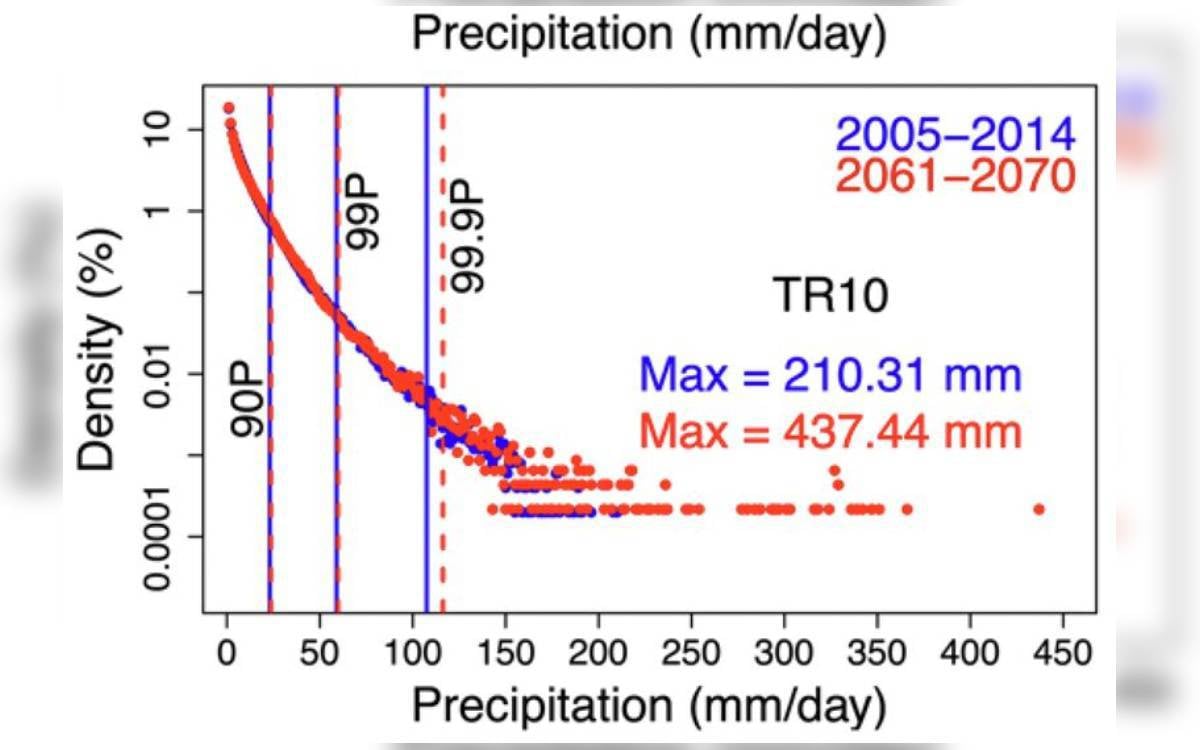
Climate simulations published by Prof. Barış Önol on Oct 15 showed that maximum daily rainfall in the TR10 region, which includes İstanbul, reached approximately 210 millimeters in historical model results. Under a future scenario covering 2061–2070, the figure could reach 437.44 millimeters.
Önol said it was highly likely that human-induced climate change had intensified the rainfall. However, he stressed that scientific analysis was necessary to establish a definitive link between climate change and any particular weather event.
Professional organizations call for protecting streambeds and upgrading infrastructure
In an Oct 16 statement, the Chamber of Civil Engineers of the Union of Chambers of Turkish Engineers and Architects (TMMOB/UCTEA) called for an end to the narrowing of streambeds and obstruction of natural waterways.
The chamber recommended updating flood risk maps, reassessing the capacity of stormwater drainage systems and adopting preventive policies that go beyond emergency response after disasters.
The İstanbul branch of TMMOB's Chamber of Environmental Engineers also highlighted excessive urban development, inadequate stormwater infrastructure and the loss of natural water catchment areas in a statement on Oct 15.
Environmental engineers called for separating stormwater and wastewater networks, protecting streambeds and expanding the use of "sponge city" measures that allow rainwater to soak into the ground.
Levent Kurnaz: Climate change and urbanization must be considered together
In an assessment published on Oct 17, Prof. Levent Kurnaz of Boğaziçi University said no single extreme rainfall event could be directly attributed to climate change. However, he noted that a warmer atmosphere can hold more water vapor.
Kurnaz explained that the spread of concrete and asphalt surfaces prevents rainwater from soaking into the ground. Alterations to natural streambeds and infrastructure designed for past climate conditions also increase flood risks, he said.
He emphasized that climate risks should be assessed not only in terms of infrastructure but also their implications for housing rights, economic losses and social inequalities.
Turkey's resilient cities summit
Ahead of COP31, which Turkey is set to host, the Environment, Urbanization and Climate Change Ministry organized an event in Hatay titled "Turkey's Road to COP31: Resilient Cities." The program focused on strengthening urban resilience to climate change and disasters.
"Climate-friendly resilient cities" is also among the priorities of the COP31 action agenda announced by Environment, Urbanization and Climate Change Minister Murat Kurum ahead of the summit.
In a statement on June 8, Kurum said, "We all know that the effects of climate change are felt most visibly in cities, neighborhoods and people's daily lives."
İstanbul, İzmir, Maraş, Manisa and Tekirdağ are among the pilot provinces selected under the ministry's climate- and disaster-resilient cities policy.
The World Bank-financed project aims to strengthen vulnerable buildings, develop urban renewal strategies and support municipal investments in disaster-resilient infrastructure.
The ministry's National Climate Change Adaptation Strategy and Action Plan for 2024–2030 includes 40 strategies and 129 actions across 11 sectors.
Following the Oct 14 floods in İstanbul, renewed attention has turned to how these policies will strengthen infrastructure against extreme rainfall, protect streambeds and integrate climate risks into urban planning.
Parliamentary inquiry sought into flooding
Cengiz Çiçek, an İstanbul lawmaker from the pro-Kurdish Peoples' Equality and Democracy (DEM) Party, submitted a parliamentary inquiry motion to the Grand National Assembly of Turkey (TBMM) to investigate the causes of the Oct 14–15 floods in İstanbul and Kocaeli, which killed 10 people, as well as the urban development policies that may have contributed to the disaster.
The motion argued that the destruction caused by extreme rainfall could not be explained by weather conditions alone. It identified construction in streambeds, unplanned urban development, zoning amnesties and inadequate infrastructure investment as factors that worsened the consequences.
Çiçek noted that the Cendere Valley, where construction had reportedly been prohibited because of flood risks, was opened to development in 2011.
Citing data from TMMOB's İstanbul Provincial Coordination Board, the motion stated that nine shopping malls, 16 university campuses, Başakşehir Çam and Sakura City Hospital and numerous industrial facilities had been built in streambeds across the city.
The motion also called for an investigation into how the destruction of the Northern Forests, plans for Kanal İstanbul and construction in water catchment areas may have affected flood risks.
Çiçek further demanded a ban on construction in streambeds and the restoration of natural water flow in streams that had been covered over. He also called for protecting the right to safe housing for residents of high-risk areas, including tenants, without dispossessing them.
The motion urged scrutiny of zoning, permitting and investment decisions made by central and local authorities, as well as public accountability for the consequences of the disaster.
What should İstanbul do to become more climate-resilient?
The latest flooding in İstanbul has renewed debate over the need for disaster preparedness measures that go beyond weather warnings and emergency response.
Experts and professional organizations have recommended protecting streambeds, restricting construction in high-risk areas, upgrading stormwater infrastructure, expanding permeable surfaces and designing urban development plans around future climate conditions.
Prof. Barış Önol's assessment for bianet adds another dimension to the debate: As cities grow in population and built-up area, even weather events of the same intensity can affect more people.
(FY/CA/VK)