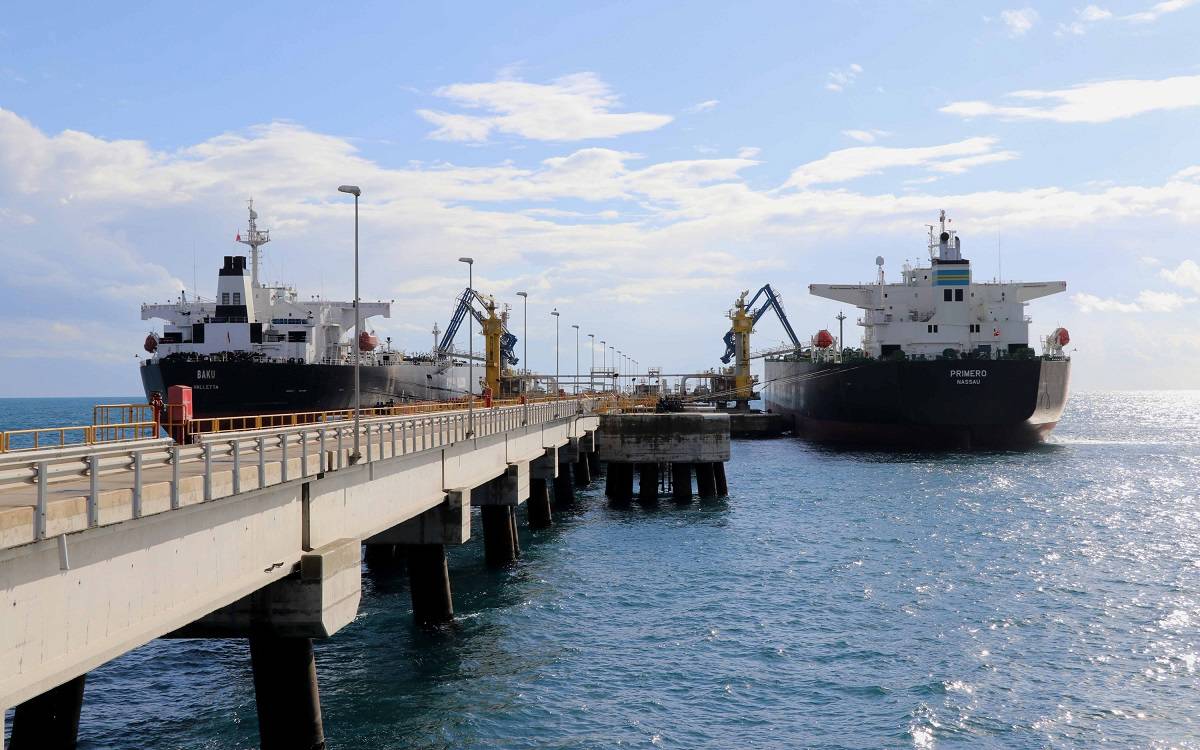
Several Turkish maritime companies are circumventing Ankara’s restrictions on shipping traffic to Israel, introduced in June due to the ongoing war in Gaza, bianet can reveal.
Turkey imposed a series of trade sanctions against Israel following the start of the war in Gaza in Oct 2023, citing Israel's massacres of civilians and ethnic cleansing policies. In addition to earlier measures, new rules implemented in June required vessels visiting Turkish ports to declare that they are not transporting military cargo to Israel and that their operators are not affiliated with Israeli entities. Turkish-flagged ships were banned from transporting cargo to Israel, and Israeli-flagged ships were prohibited from docking at Turkish ports.
Despite these measures, some companies have found ways to continue trade through indirect routes.
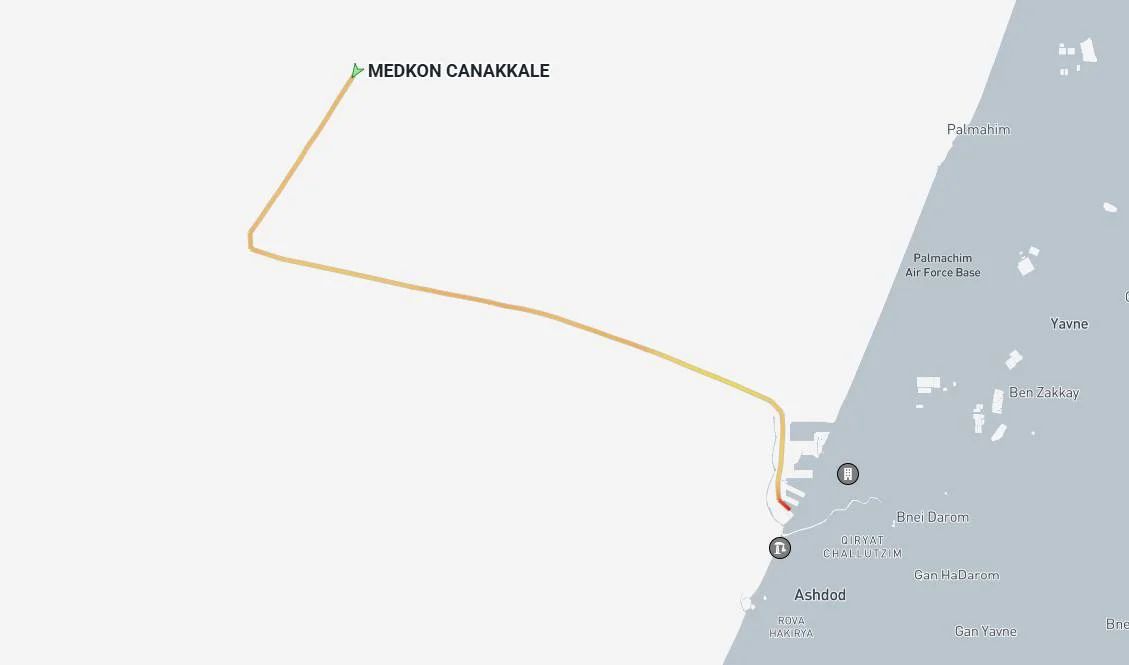
Israel’s Ashdod Port continues to receive cargo from vessels departing Turkey, many of which sail under foreign flags. One such ship is the MEDKON Çanakkale, operated by İstanbul-based MEDKON Hat İşletmeciliği Denizcilik ve Ticaret A.Ş. The ship, which currently sails under a Panamanian flag, was previously named Conmar Gulf before joining the MEDKON fleet. It spent several days at Ashdod before recently departing for the Aliağa Port in Turkey's İzmir.

Protesters clash with police at İstanbul port over alleged shipment to Israel
The vessel’s route is publicly available on the company’s website. According to the site, it departed Ambarlı on Sep 2 and arrived in Israel on Sep 6. Previous stops included Nemrut, Gemlik, Diliskelesi, and Ashdod.
MarineTraffic records show the vessel's draft is around 8.2 meters, an unusually high figure for an empty cargo ship, indicating that it was likely carrying goods.
Another example is the Trans Carrier, a Ro-Ro cargo ship sailing under a Liberian flag. After leaving the Port of İskenderun in Hatay, southern Turkey, on Sep 7 with its stated destination as the Suez Canal, it docked at Haifa Port in Israel on Sep 8. It is unclear what cargo the ship was carrying.
Are sanctions efficient?
Experts speaking to bianet noted that this should not be interpreted as a direct indicator of bilateral trade between Turkey and Israel. However, they acknowledged that trade between the two countries is continuing and remains difficult to prevent.
“Commercial vessels don’t transport cargo for a single port,” said one expert. “They load goods at multiple ports, say, the United Kingdom, France, Belgium, and Morocco, and then deliver them to various destinations like Greece, Turkey, Cyprus, Lebanon, and Israel.”
“Likewise, a shipment departing from Turkey might be listed as heading to Lebanon, Egypt, or Jordan. Routes can be altered en route, or cargo can be transferred to Israel by land from those countries. There’s no barrier to this. Trade is like water, it flows and finds a way.”
Court orders block on bianet report on Turkey-Israel-Qatar military cooperation
Since the war began in Gaza in Oct 2023, Turkey has announced several rounds of trade sanctions against Israel. In Apr 2024, Ankara imposed restrictions on certain product categories, and in May, it declared a complete halt to trade with Israel.
However, numerous reports suggest that these bans are being bypassed. For example, data from the Turkish Exporters' Assembly shows that Turkey’s exports to Palestine in July rose by roughly 1,200% compared to the same month in 2023. Steel exports to Palestine surged by 51,000%, and cement exports by 453,000%.
These figures have raised questions, given the limited infrastructure in Palestine to handle such large volumes. (Mİ/HA/VK)