







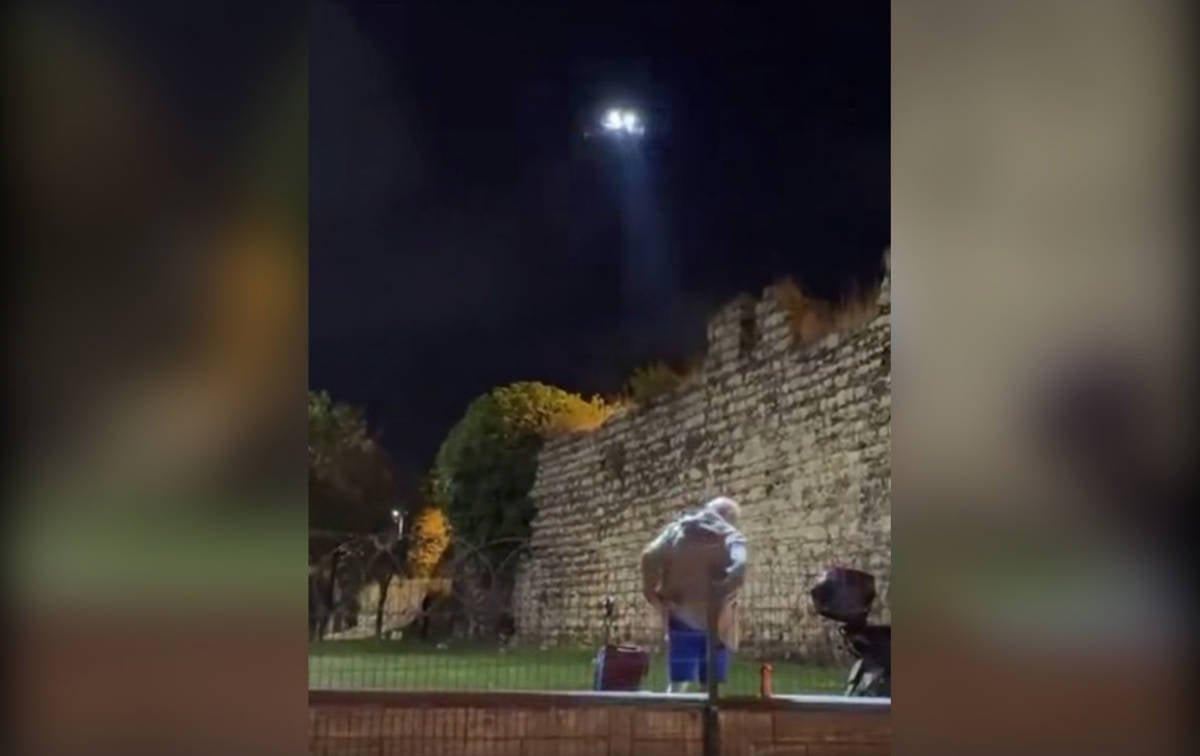



First in Fatih, then in Üsküdar, unmanned police drones have been spotted across the İstanbul skyline searching for drinkers to warn them that alcohol is prohibited and to leave the area or risk legal action. The problem? Drinking alcohol in public is not actually prohibited.
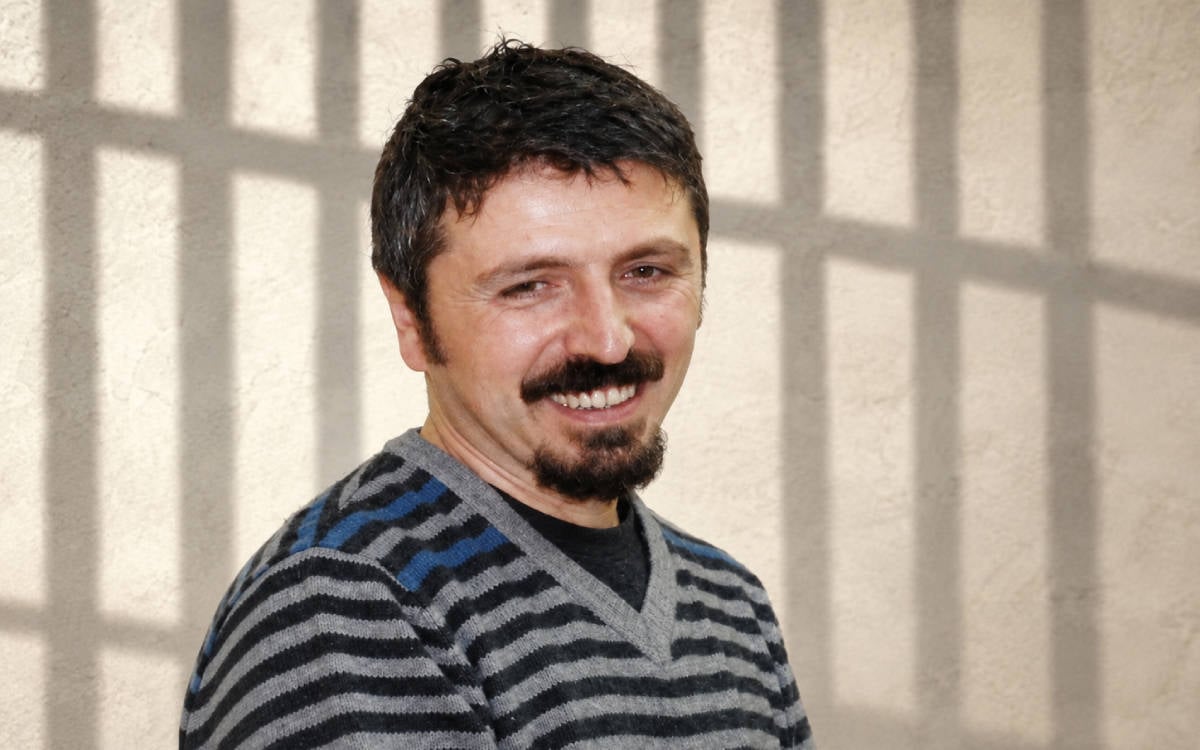
Lawyer Mehmet Ümit Erdem said that there are currently no laws or circulars that outlaw drinking in public. There are, however, laws against disturbing the public while drunk. He called the drone enforcement a de-facto decision without any legal basis that encroaches on people’s lifestyles.
“There is no decision in place; a de-facto situation is being created,” he said.
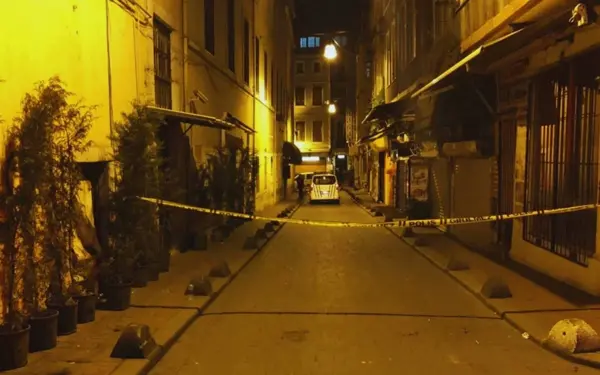
The situation began on Aug. 31 by the city walls of Fatih when a police drone equipped with sirens and a loudspeaker alerted those drinking alcohol in the area: “This is a police drone. Drinking alcohol in this area is prohibited. Leave this area immediately.”
The scene went viral on social media. Many users noted that it felt dystopian, straight out of a science fiction movie.
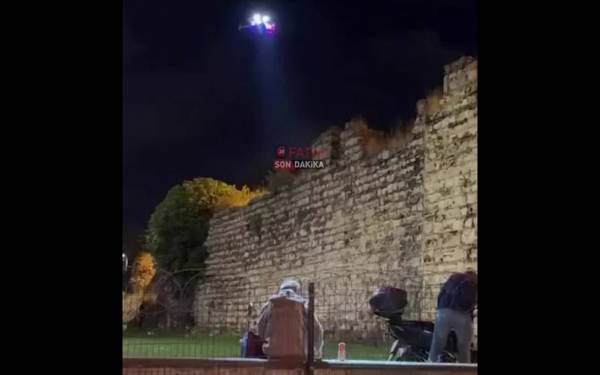
Turkish police deploy loudspeaker-equipped drones to disperse public drinkers
The incident was repeated again on the Üsküdar shoreline the next day. This time the drone called out: “Alcohol consumption here is prohibited. Please comply with the warnings and move away. Otherwise, legal action will be taken.”
Erdem said that the phrase “Drinking alcohol in this area is prohibited” has no legal basis.
According to Erdem, Article 35 of the Misdemeanors Law No. 5326, titled “Drunkenness,” does not regulate alcohol consumption on its own as a misdemeanor. The article foresees administrative sanctions for people who “behave in a manner that disturbs the peace and tranquility of others while drunk.” Therefore a person merely consuming alcohol in the park, the beach or any other open space does not automatically constitute a misdemeanor unless paired with another behavior.
Erdem added that current regulations draw a clear distinction between “using alcohol” and “getting drunk and disturbing the environment.”
“According to our legislation, there is no penalty or sanction for using alcohol in open spaces,” said Erdem. “An administrative sanction is regulated only under the Misdemeanors Law in cases of damaging the environment or disturbing citizens after using alcohol — and this is an administrative fine.”
Previous prohibition attempts
This is not the first time the İstanbul Governorship has tried to restrict alcohol consumption. The Governorship previously attempted to ban alcoholic beverages in a Aug. 17, 2023 circular titled “Sale of Alcohol and Consumption of Alcoholic Beverages,” which would have prohibited consumption in parks, picnic and recreational areas, coastal strips, beaches, and similar places.
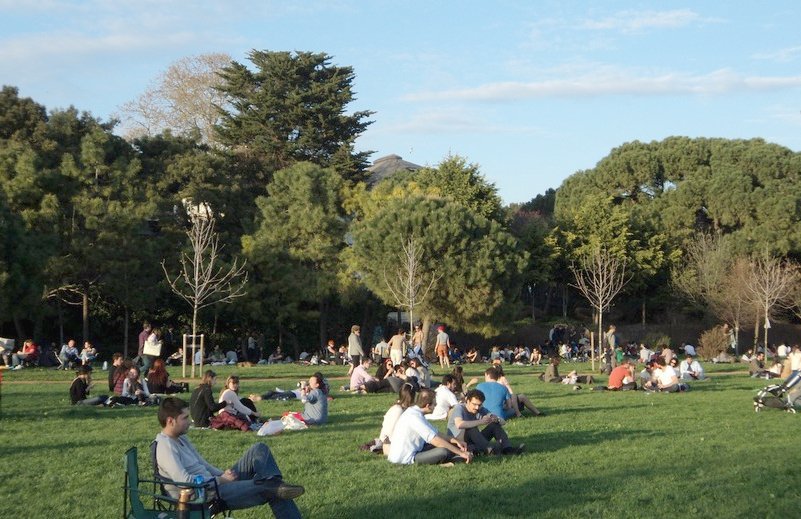
İstanbul governor clarifies 'public alcohol ban' circular
Erdem brought the circular to the judiciary, and after an initial rejection of the lawsuit by the Istanbul 7th Administrative Court, the 10th Administrative Case Chamber of the Istanbul Regional Administrative Court (BİM) accepted Erdem’s appeal on December 27, 2024, annulling the Governorship’s ban.
BİM cited Article 13 of the Constitution in its decision, stating that measures restricting fundamental rights and freedoms must be based on law, and that the law in question does not contain a provision regarding the inability to consume alcohol in open spaces. It also ruled that "mere alcohol consumption" in open spaces cannot be said to disrupt public order and security — ultimately concluding that the circular was not in compliance with the law.
The situation is more dangerous today than in 2023
According to Erdem, today’s situation is a more serious legal problem than the announced circular from 2023, because the Governorship is enforcing its decision without an accompanying official order.
“We see that the pressure on alcohol drinkers has deepened even further today. 2023 was a trial run. The Governorship took a decision, and it was overturned by the judiciary. But the current practice is more dangerous. Because there is no decision in place” —Lawyer Mehmet Ümit Erdem
Erdem believes that these efforts are an attempt to gradually prohibit drinking and make society more conservative at large. He called the drone inspections specifically “an intervention in lifestyle.”
Erden said that he was unable to find any general order or circular that could have been the basis for the new drone warnings. With no circular, no lawsuit can be filed to cancel the regulatory act.
“Police can inspect but cannot view the alcohol drinker as a potential danger”
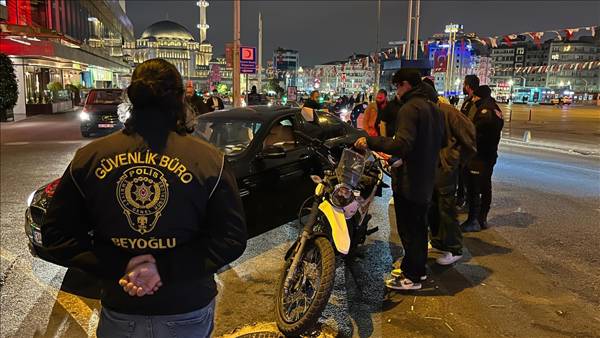
Erden explained that police have the right to patrol an area without waiting for a crime to be committed. Law enforcement does possess inspection authority under the scope of general public order. However, this does not mean police have unlimited authority to intervene, he said.
Police are also not allowed to inspect in a manner that only targets those consuming alcohol.
The police always have the authority to conduct inspections. However, conducting inspections in a manner that harasses citizens or portrays only alcohol users as a potential danger is irregular/unlawful. Therefore, conducting inspections on people or issuing warnings just because they are consuming alcohol is unlawful. —Lawyer Mehmet Ümit Erdem
Law enforcement can intervene when they see drunkenness, rowdiness, noise, or concrete behavior that disturbs others. However, removing a person from where they are located simply by looking at the drink in their hand—when no such behavior exists yet—constitutes a different kind of intervention, he said.
“The police also have patrol duties. A crime does not need to be committed for the police to come. Police or night watchmen (bekçiler) can walk around within the scope of general surveillance authority, but they can only observe. They cannot harass or disturb people who are sitting normally. They cannot take action without reasonable suspicion of a crime.”
Erdem added that the problem is not patrol activity itself, but rather the evaluation of people who consume alcohol as "potential criminals."
Can the drone footage be used in legal proceedings?
Some may be wondering if footage taken by a police drone can later be used as evidence for administrative sanctions. Erdem explained that the legal basis for this is also controversial.
“A tracking or surveillance activity not based on legal legislation should be considered unlawful evidence from the outset,” he said.
Erdem also stated that if it is seen in the footage that the person was not being rowdy, this should be specifically asserted in the objection against the penalty. He suggested requesting the footage and demanding its examination by the judge: “It needs to be clearly seen that there was no rowdiness there and that there was no illegal activity.”
On the other hand, Erdem also said that the absence of a written circular whose cancellation can be requested shifts the legal struggle to individual administrative acts. Even so, he says that individuals against whom action was taken following a drone warning should apply for judicial remedies.
In the event an administrative fine is issued, people should contest this fine before the Criminal Judgeship of Peace (Sulh Ceza Hâkimliği). Following the exhaustion of ordinary remedy paths, the issue can be carried all the way to the Constitutional Court (AYM). In such an application, the AYM could determine the limits of practices regarding alcohol consumption in open spaces. And the debate can only end with a decision that the AYM gives in this direction. —Lawyer Mehmet Ümit Erdem.
Erdem concluded by saying the following:
“Gradually, our room for maneuver is narrowing. Even the smallest illegality, when voices are not raised against it in time, can appear before you as a huge problem. That is why it is important for citizens and legal experts to apply to the necessary institutions regarding every incident that intervenes in lifestyles or that they consider contrary to human rights, regardless of how small it seems.”
(HA/İK)