











The “Our Media: Civil Society Movement to Promote Media Literacy and Activism, Prevent Polarisation and Promote Dialogue” project is launching its “Digital Media Literacy” dossier tomorrow.
The dossier is being published as part of the advocacy work of the IPS Communication Foundation/bianet.
The “Digital Media Literacy” dossier offers a broad thematic framework, ranging from basic concepts to the impact of algorithms, from content analysis to the media literacy of the future, and from digital rights to combating online hate speech and media literacy for children.
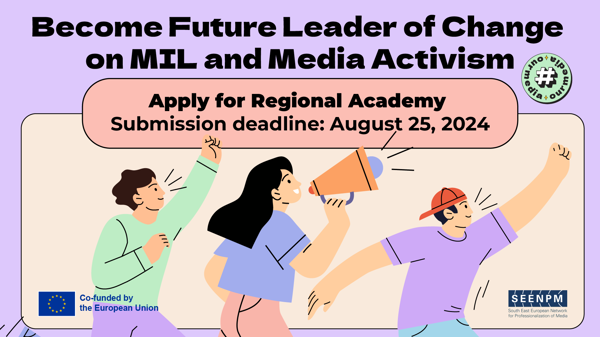
'Our Media' partners announce media literacy education program
Digital media literacy articles
The seven articles in the dossier will be published on bianet.org at two-week intervals. The dossier begins with Prof. Dr. Yasemin İnceoğlu's article titled “Basic Concepts of Digital Media Literacy and Theoretical Framework.” In this article, İnceoğlu focuses on why digital media literacy is of vital importance in terms of social transformation and democratic participation, drawing on theoretical approaches such as critical pedagogy, cultural studies, and participatory culture.
Dr. Tirşe Erbaysal-Filibeli, in her article titled “Algorithmic Bias: Platform Capitalism, Data, and Reality,” examines why platform algorithms highlight certain content and offers a critical perspective on platform policies.
Koray Kaplıca, in his article titled “Approaches to ‘Accurate’ Information in the Digital Age,” discusses the evolution of verification techniques used to combat misinformation and conspiracy theories that spread rapidly in the digital age. Kaplıca presents practical methods for analyzing and verifying textual and visual claims, as well as strategies for debunking conspiracy theories. He also discusses how fact-checking has been shaped by new tools and challenges in the changing information ecosystem brought about by the rise of digital media and the spread of artificial intelligence.
In her article titled “Rights and Responsibilities in Digital Media: An Assessment from the Perspective of Journalists,” Nihan Güneli examines the fundamental rights of journalists in the digital media environment (privacy, security, access to information, freedom of expression) and their associated responsibilities. While evaluating the effects of legislation on press freedom within the framework of democratic principles, she addresses journalists' legal rights against interventions such as the protection of personal data and the seizure of digital devices, and discusses the effects of disinformation control practices on freedom of expression. It emphasizes why digital literacy has become a vital skill for journalists and analyzes the balance between rights and responsibilities in this area from a multidimensional perspective.
In his article titled “Transcending the Limits of the Media: The Appropriation of Collective Knowledge, the Transformation of Labor, and Alternative Futures,” Diyar Saraçoğlu discusses how, on the one hand, large technology monopolies and states have brought public discourse and information under their control through the “Censorship-Industrial Complex,” and on the other hand, how grassroots movements based on solidarity, which are sprouting up in opposition to this multi-layered domination, are opening the door to a more just, ecological, and democratic future.
Esra Özgür, in her article titled “Critical Digital Literacy: A Key Competency in the Fight Against Hate Speech and Disinformation,” discusses the opportunities offered by critical digital literacy for a more just, inclusive, and resilient digital ecosystem, and the fundamental steps of this competency, in the face of hate speech and disinformation that are increasingly suffocating, unbearable, and destructive in digital spaces and beyond.
Dr. Esra Ercan-Bilgiç, in her article titled “Digital Media Literacy for Children,” discusses ways for children to become more conscious, critical, and resilient individuals in the digital world. While emphasizing that governments, technology companies, and adults have a great responsibility in this process, she also highlights that children can empower themselves with digital media literacy skills. Bilgiç discusses what these skills are and how they can be acquired.
The seven articles in the dossier will be published every two weeks on Wednesdays on bianet.org.

The future of media in Turkey: Democratic decline, pressures, and the need for reform
Digital Media Literacy Guide
The seven articles to be published in the dossier will form the main text of the comprehensive Digital Media Literacy Guide that the IPS Communication Foundation/bianet plans to publish in October 2025. The guide will be the first concrete output of the Media Literacy Coalition established by the foundation in 2024.
The Digital Media Literacy Guide will be a comprehensive guide that aims to provide a critical framework for accessing, interpreting, and sharing information in the digital age. This guide, which will be available to the general public, aims to create a conscious society that will develop digital media literacy skills, targeting young people, educators, journalists, and civil society actors working on rights-based issues in particular.
How secure is your digital life?
Contents of the guide
In addition to the seven articles in the file, the guide will include verification steps, tool lists, interactive tests, training and support recommendations, a glossary of terms, good examples from Turkey and around the world, as well as box comments prepared with the contributions of members of the Media Literacy Coalition established by bianet.
The richness of the guide's content will not be limited to the main text; it will be enriched with international theoretical context through quotes from figures such as Henri Jenkins, Renee Hobbs, and Sonia Livingstone. Comments specific to Turkey will be obtained from academics working in the field of digital media literacy. Additionally, the views of stakeholders such as Radio and Television Supreme Council (RTÜK) members, Eğitim-Sen union, and the Teachers' Network will also be included.
Prepared under the guidance of Prof. Dr. Yasemin İnceoğlu, the guide is designed not only to convey information but also to encourage active participation as an educational and awareness-raising tool. The guide targets the general public. It is being prepared as a useful resource specifically for media workers and media content producers.
The guide is edited by Dr. Sinem Aydınlı, Research Coordinator at IPS Communication Foundation/bianet and researcher for the “Our Media” project.
The Digital Media Literacy Guide will be published in both Turkish and English.
How media literate are you?
Our Media
IPS Communication Foundation/bianet is among the partners of the EU-funded “Our Media” project, which will run from 2023 to 2025.
The “Our Media: Civil Society Movement for the Multiplication of Media Literacy and Activism, Prevention of Polarization, and Promotion of Dialogue” project will last for three years.
The project's initial focus will be on building the capacity of NGOs, media professionals, young activists, and the public in the Balkans and Turkey to address trends and challenges related to media freedom, development, and sustainability.
Funded by the EU and covering the years 2023–2025, the partners of the “Our Media” project are as follows:
South East Europe Network for Professionalization of Media (SEENPM)
Albanian Media Institute (Tirana)
Mediacentar Foundation (Sarajevo)
Kosovo Press Council
Montenegro Media Institute (Podgorica)
Macedonia Media Institute (Skopje)
Novi Sad School of Journalism (Novi Sad)
Peace Institute (Ljubljana)
bianet (Turkey).
The researcher for the “Our Media” project on behalf of the IPS Communication Foundation/bianet is Sinem Aydınlı, the foundation's research coordinator.
Scope of the project
The project begins with research aimed at identifying key trends, risks, and opportunities for media sustainability and mapping good practices in media activism to support media freedom and media and information literacy (MIL). The research findings will be used to strengthen the capacities of NGOs and other stakeholders in the media field to address challenges in the media.
Advocacy activities will be carried out to understand the capacities of journalists, media organizations, and media institutions within the scope of “Our Media.” Local and national media and other actors will be encouraged to carry out media activism work on gender inequalities in the media. Within the scope of the project, young leaders will be empowered to oppose discrimination and gender stereotypes and to support gender equality through various activities.
The project will reach local communities through financial support provided to NGOs in urban and rural areas, with the aim of developing citizens' MIL skills, supporting media freedom and integrity, and countering polarization caused by propaganda, hate speech, and disinformation.
The regional program “Our Media: A civil society action to generate media literacy and activism, counter polarisation and promote dialogue” is implemented with the financial support of the European Union by partner organizations SEENPM, Albanian Media Institute, Mediacentar Sarajevo, Press Council of Kosovo, Montenegrin Media Institute, Macedonian Institute for Media, Novi Sad School of Journalism, Peace Institute and Bianet.
This article was produced with the financial support of the European Union. Its contents are the sole responsibility of IPS Communication Foundtaion/bianet and do not necessarily reflect the views of the European Union.
(SA/VC/VK)

