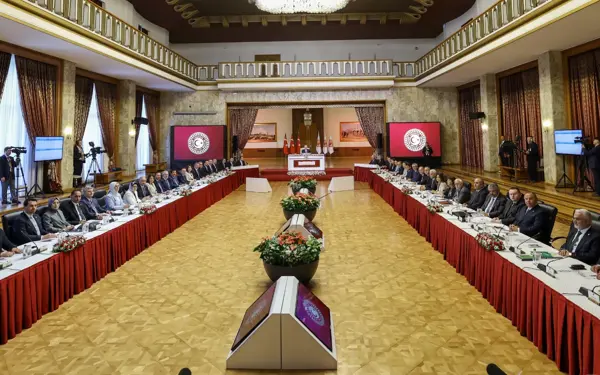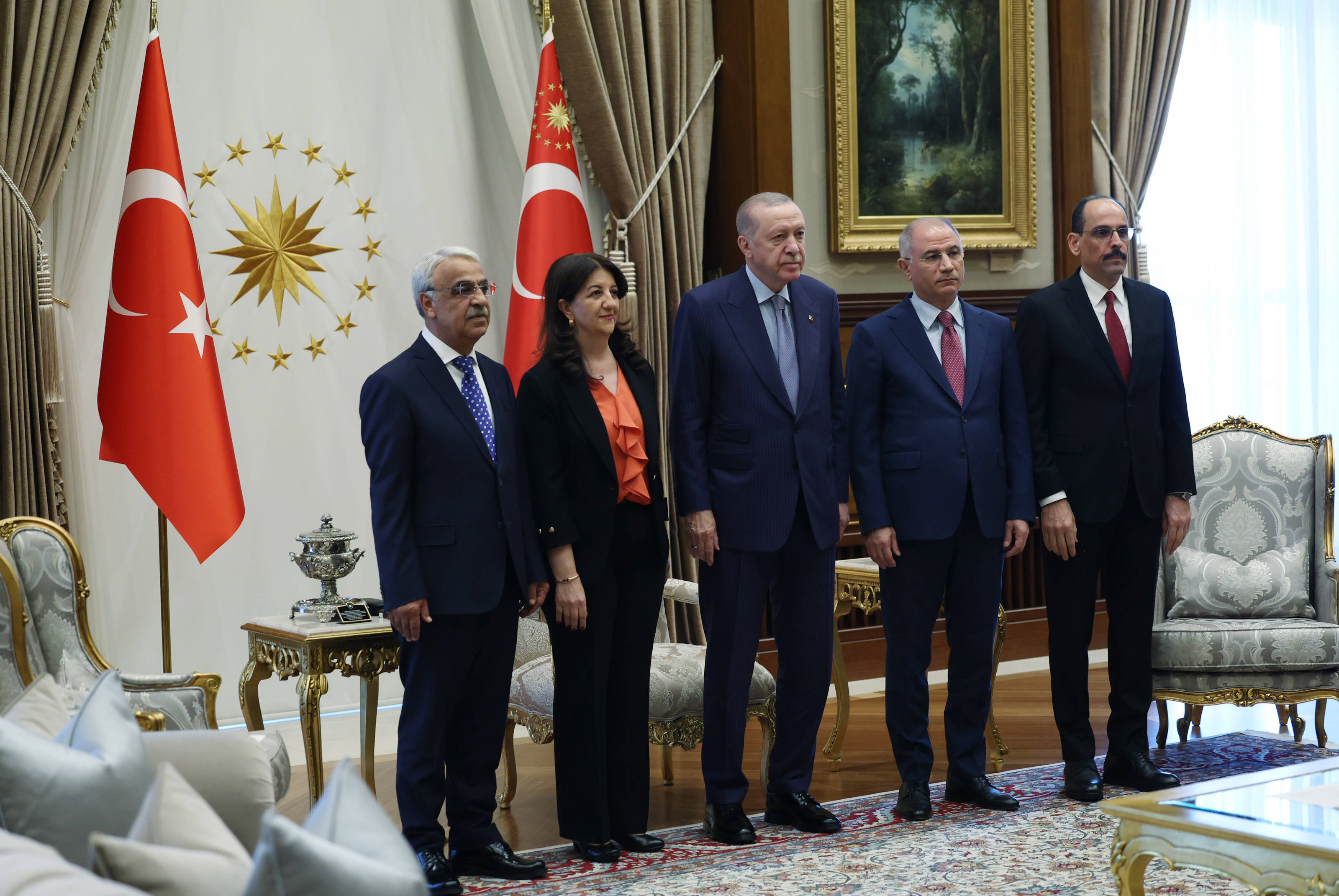







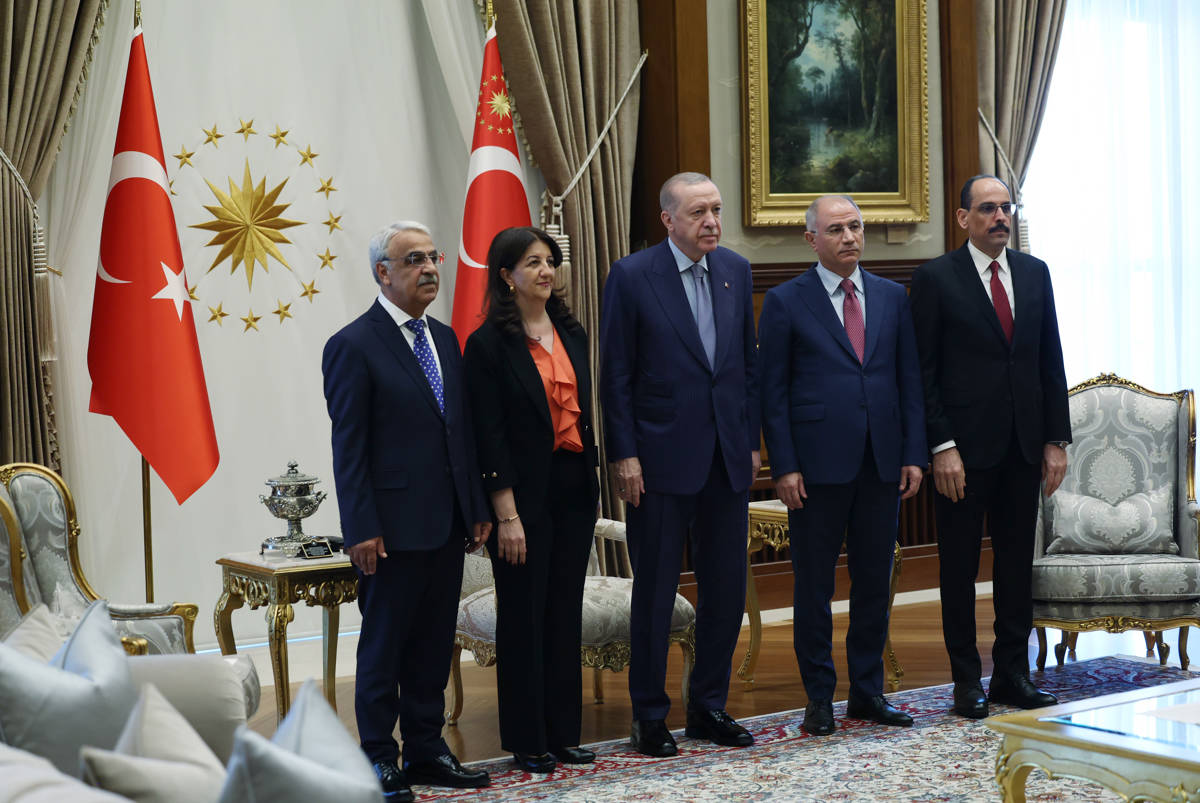



Following the Kurdistan Workers' Party's (PKK) symbolic weapon-burning ceremony on Jul 11, attention has turned to potential legislative changes in parliament as part of the ongoing Kurdish peace process.
As discussions continue on what legal arrangements may be introduced for those laying down arms, the possible release of politicians imprisoned in connection with the Kobanî trial has also come onto the agenda.
Also, following the European Court of Human Rights’ (ECtHR) most recent ruling that found rights violations, the DEM Party has submitted a request to Ankara’s 22nd Heavy Penal Court for the release of former Peoples’ Democratic Party (HDP) co-chairs Selahattin Demirtaş and Figen Yüksekdağ, along with several executive members. A ruling on this request is expected soon.
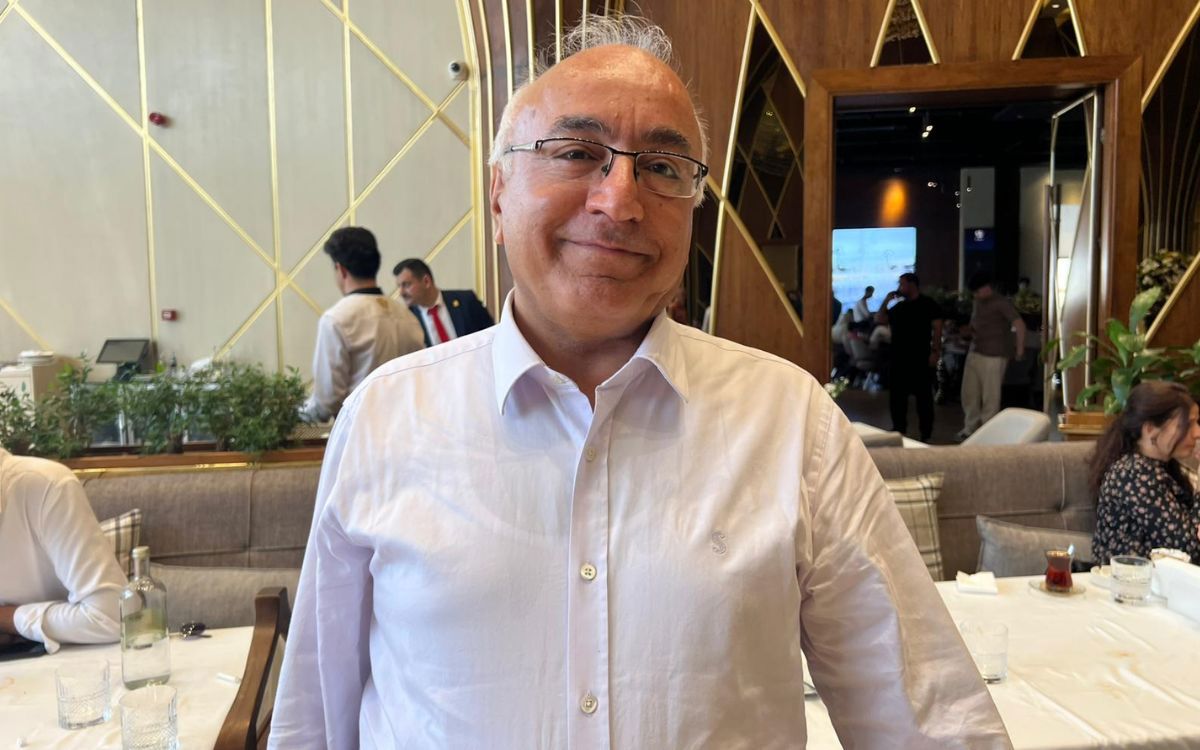
Öztürk Türkdoğan, deputy co-chair of the DEM Party, said implementing European court decisions is the first thing the government should do. “In fact, if the government wants to, it can solve many problems by simply implementing the ECtHR and Constitutional Court jurisprudence. This would increase public trust in the process," he told bianet.
"But disarmament directly requires amendments to several laws," added Türkdoğan. "The legal steps to be taken here in a specific or general sense need to be discussed. We can't say anything clear yet, but we will see whether it will cover the parties to the conflict or wider sections.
"Whether the regulations will be like ‘look, if you stop the conflict, violence and weapons, these laws can be applied to you’ will be discussed."
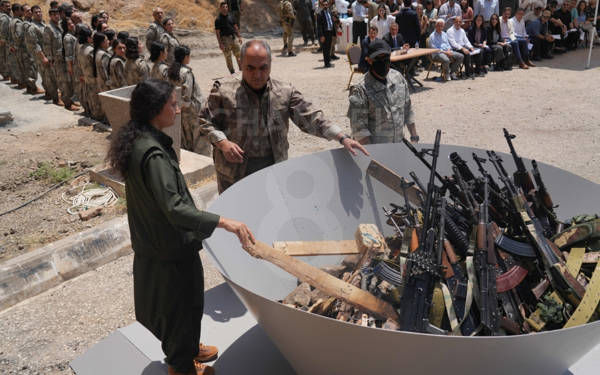
PKK holds disarmament ceremony to end four-decade armed struggle
Increasing authoritarianism
Türkdoğan argued out that Turkey must not only move beyond the conflict with the PKK but also overcome increasing authoritarianism. "Turkey does not only have a conflict problem, it has become too authoritarian, there are too many antidemocratic practices.
"In parallel with this process, it is necessary to pave the way from authoritarianism to democratization. In this respect, the more social participation, the more opposition parties and political parties participate in the process, the better."
Reflecting on the broader phases of the resolution process, Türkdoğan said, “Although Mr. Öcalan has prioritized disarmament in this process, it will inevitably unfold in stages: negative peace, positive peace, societal peace, democratization, a new constitution, and eventually a truth and justice process. These stages must be addressed sequentially. Jumping ahead risks confusion. But as each stage unfolds, new progress is made, trust builds, and gains are solidified.”
Need for a democratic constitution
Türkdoğan emphasized that once the process matures, it will become necessary to address one of Turkey’s fundamental problems, namely the constitution.
“The government will need to fulfill the legal requirements of this process,” he said. “Eventually, it will have to establish the legal and political groundwork. Once that happens, legal steps will follow. And at that point, it will become clear how far behind we’ve fallen in addressing these issues. We’ll realize that it’s time to move forward.
"As society, we must leave behind the legacy of military-era constitutions. The 1982 Constitution was a product of a coup. The 2010 referendum was held under emergency conditions. Eventually, this process must lead to the drafting of a new, democratic, and civilian constitution.”
Reintegrating ex-militants
Türkdoğan further said that laws will also be essential to reintegrating those who disarm into civilian life. “There will need to be a legal framework for disarmament,” he said. “New, specific laws must be enacted so that individuals who give up arms can be reintegrated into political and social life. We will start seeing those steps gradually.”
Concluding his remarks, Türkdoğan stressed that legal reform is not optional, but inevitable. “The government understands that this process is being led and managed by Abdullah Öcalan,” he said. “At this stage, legal provisions need to be created for those who will disarm.
"As disarmament progresses, the government will increasingly recognize the necessity of amending relevant laws. Society already expects this. People are citing examples from Colombia, Northern Ireland, and Spain’s ETA process. The legal reforms are not a choice—they are a necessity.” (AB/VK)