









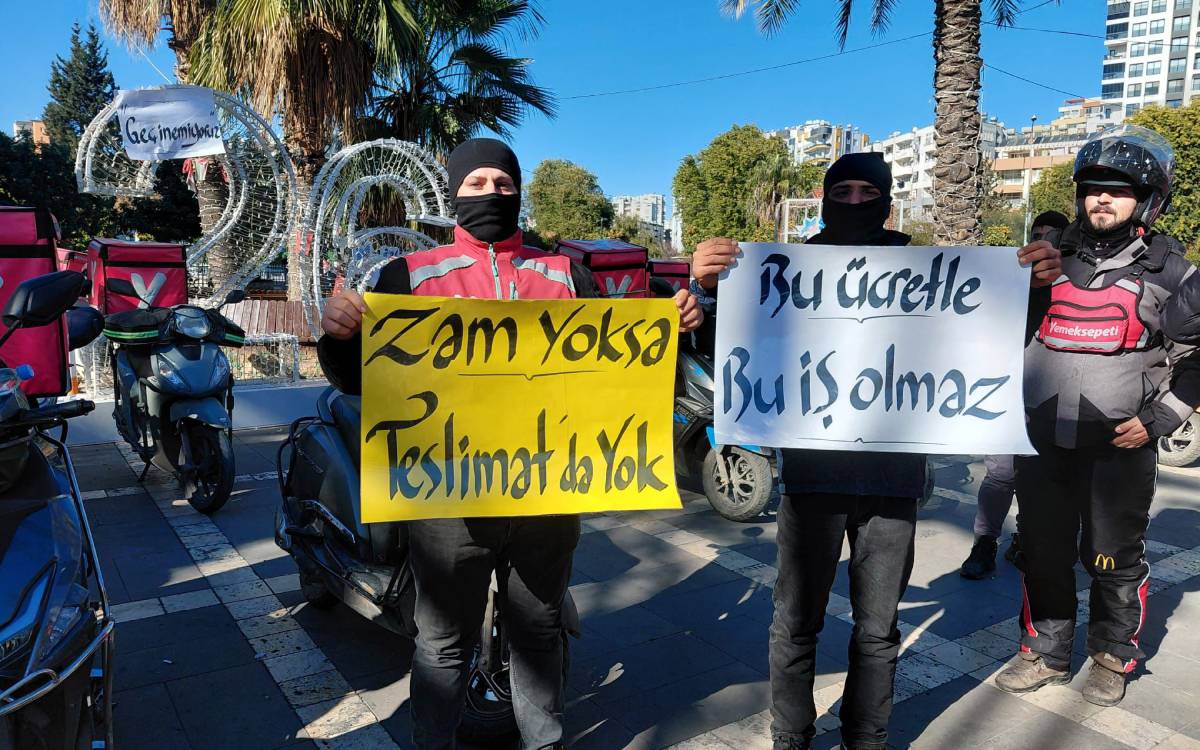



Motorcycle couriers working with Yemeksepeti, one of Turkey’s largest food delivery platforms, staged a widespread work stoppage across the country following a dispute over a recent wage increase.
The protest was carried out in response to a 32% pay raise announced by the company on Jan 12. Drivers argued that the increase was not reflected proportionately in their earnings, prompting them to organize and begin localized stoppages, which then spread nationwide from Jan 18 to 20.
The actions took place in nearly 40 cities, with varying levels of participation. In some locations, couriers stopped working for a few hours, in others for half a day, and in several areas for an entire day. Order dispatches and deliveries were disrupted as depots shut down and restaurants reported interruptions in service.
In some regions, drivers opted to voice their discontent through gatherings rather than walkouts. Others formed motorcades through city streets to draw public attention to their grievances.
Workers' demands
While the wage dispute was the primary catalyst, couriers also raised broader demands:
Standardized and transparent per-delivery fees
Fair and accessible bonus systems
Recalculated distance-based fees to reflect actual costs
Paid leave and safety protections during adverse weather
Inclusion of courier representatives in decision-making processes
Unfair bonus system
According to a comparison shared by the Motorized Courier Workers Association, for a courier making 200 deliveries a week, total income rose by only 24.6%. The bonus system, they said, had been restructured in a way that pushed drivers to deliver more by removing lower bonus tiers.
Drivers also noted that reaching the bonus thresholds requires working far beyond legal limits. In practice, the pay increase amounted to only a 10–14% gain for most drivers once bonuses were factored in, they said.
To meet the 200-package goal, drivers must deliver at least 33–34 orders a day, six days a week.
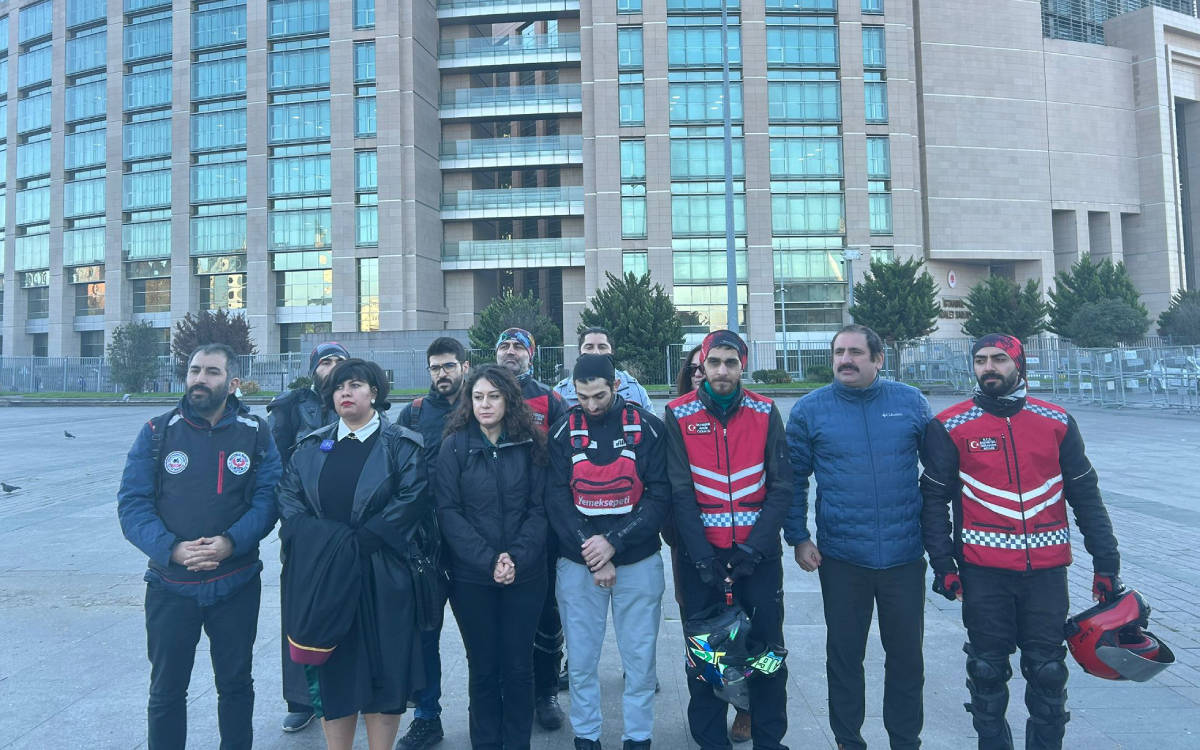
Couriers push for worker status in lawsuit against delivery platform
The protests reached major cities including İstanbul, Ankara, and İzmir, as well as regional hubs such as Eskişehir, Konya, Tekirdağ, Kocaeli, Gaziantep, Mersin, Adana, Antalya, Diyarbakır, Afyon, Bursa, and Kırklareli.
Drivers described the 32% raise as insufficient in the face of rising living costs, fuel expenses, and maintenance fees. They argued that rather than increasing wages, the company had simply repackaged daily bonuses as a weekly pay component.
“This isn’t a raise, it’s a cut,” said one courier from Adana. “Where’s the raise? On the day I did 40 deliveries, I had more multi-order runs. On the day I did 38, most were single orders. The difference is still just 200–250 liras. I don’t consider this a raise. I can’t make ends meet. Fuel, maintenance, social security payments, taxes, accounting—there’s nothing left at the end of the month. I don’t forgive Yemeksepeti.”
By the evening of Jan 20, the protests had ended in most cities. However, couriers in Afyon reportedly decided to continue, and new work stoppages were being considered in Gaziantep and Edirne for Jan 21.
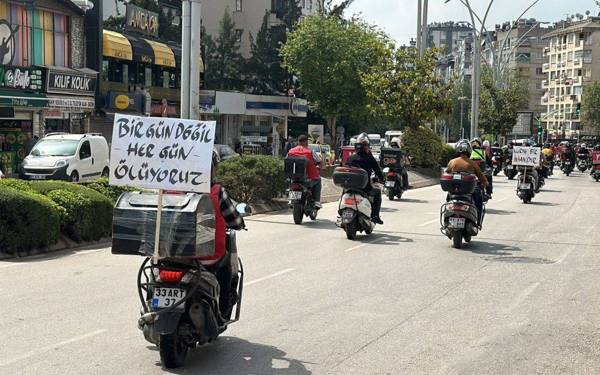
Moto couriers across Turkey demand better conditions and security following murder
Political support
Several political figures voiced support for the couriers during the protests. Main opposition Republican People’s Party (CHP) leader Özgür Özel addressed the issue in his party’s group meeting yesterday.
“Motorcycle couriers are facing major injustices,” said Özel, calling on Yemeksepeti to listen to the demands. Without naming the company directly, he warned of potential boycotts.
“They’re being asked to do double or triple the work of a single courier,” he said. “Then they’re told: ‘You’re not our employee. You’re self-employed. You’ll pay your own social security, service your own bike, buy your own helmet, and if there’s an accident, it’s your responsibility.’ This is an extreme form of labor exploitation and insecurity.”
Turkey’s state postal service accused of forcing couriers into gig work
He continued, “Many of these workers are protesting injustices imposed by a corporation. They’ve been on strike for three days. Listen to their demands. We are your strongest customers. Don’t push us—we’ll stand with the couriers. Even if it’s my own brother who exploits these workers, I’ll support a boycott.”
CHP parliamentary group deputy chair Murat Emir also brought the issue to the floor of parliament. During a session on pension payments, he highlighted the couriers’ three-day strike.
“They want humane working conditions and job security,” he said. “They’re getting injured, having accidents, even dying on the job—and they want to stop working under these unsafe conditions. They want fair compensation. They’re rejecting this system of modern-day slavery, and we fully support their honorable struggle.”
‘Demands are urgent and vital’
Perihan Koca, a Mersin MP from the pro-Kurdish Peoples' Equality and Democracy (DEM) Party, backed the couriers from the start. She emphasized the lack of job security and the risks of workplace fatalities.
“I salute the couriers resisting for their livelihoods and dignity,” she said. “Yemeksepeti executives must stop ignoring their rightful demands. Both wage improvements and safety measures are urgent and vital. We will continue to amplify the voices of the resisting couriers.”
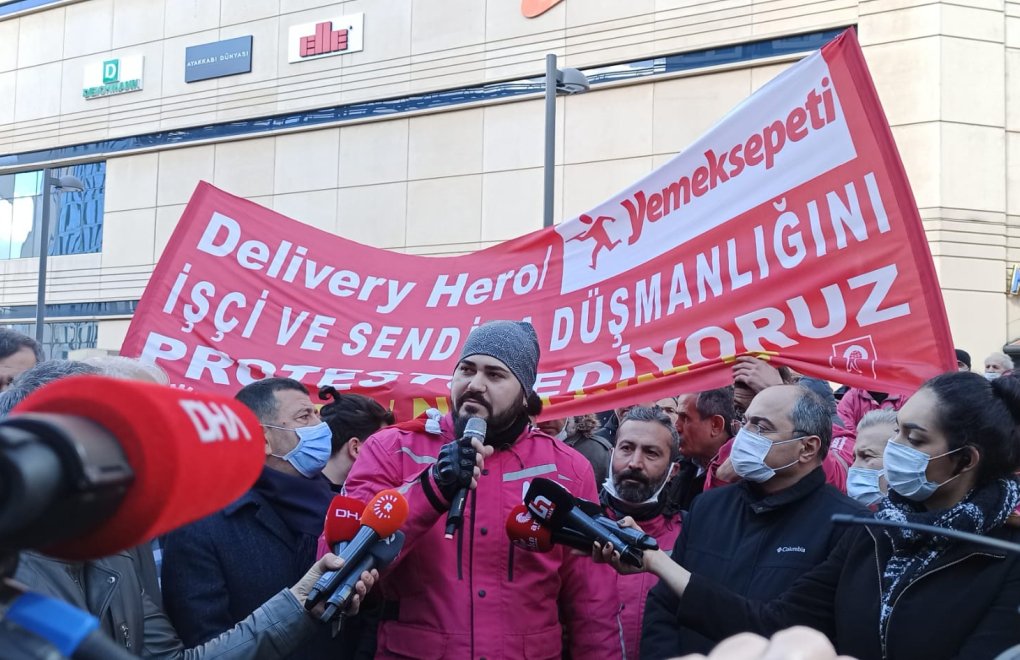
Workers of Turkey's largest online food delivery company continue protests for better wages
Gaziantep MP Sevda Karaca from the Labor Party (EMEP) expressed support a day before the actions.
“Their demands have been clear for months: transparent pay, reachable bonuses, fair compensation for distance, safe working conditions, and inclusion in decision-making,” she said. “Yet the companies’ response has been just as clear: ignore, stall, and impose. Platform-based firms are using technology as a shield to strip workers of protections.”
Company silent as drivers await action
Throughout the protests, Yemeksepeti made no official statement, according to the drivers. Field managers told them to “wait for adjustments” and that “the issue is being addressed,” but driver representatives expressed frustration.
“They’re stalling us,” said one courier. “We don’t want promises—we want action.”
Following the protests, drivers in many cities returned to work. But they warned that the struggle could continue.
“We’ve made our voices heard. Now we’re waiting for a response. If nothing changes, and if the raise is not reflected in our actual pay, we will continue to fight,” said one driver.
According to a recent report by the Courier Rights Association, at least 44 couriers died while working in 2025. Of those, 22 were employed by platform companies, including eight working for Yemeksepeti.

At least 44 moto couriers killed on the job in Turkey in 2025
(HA/VK)

