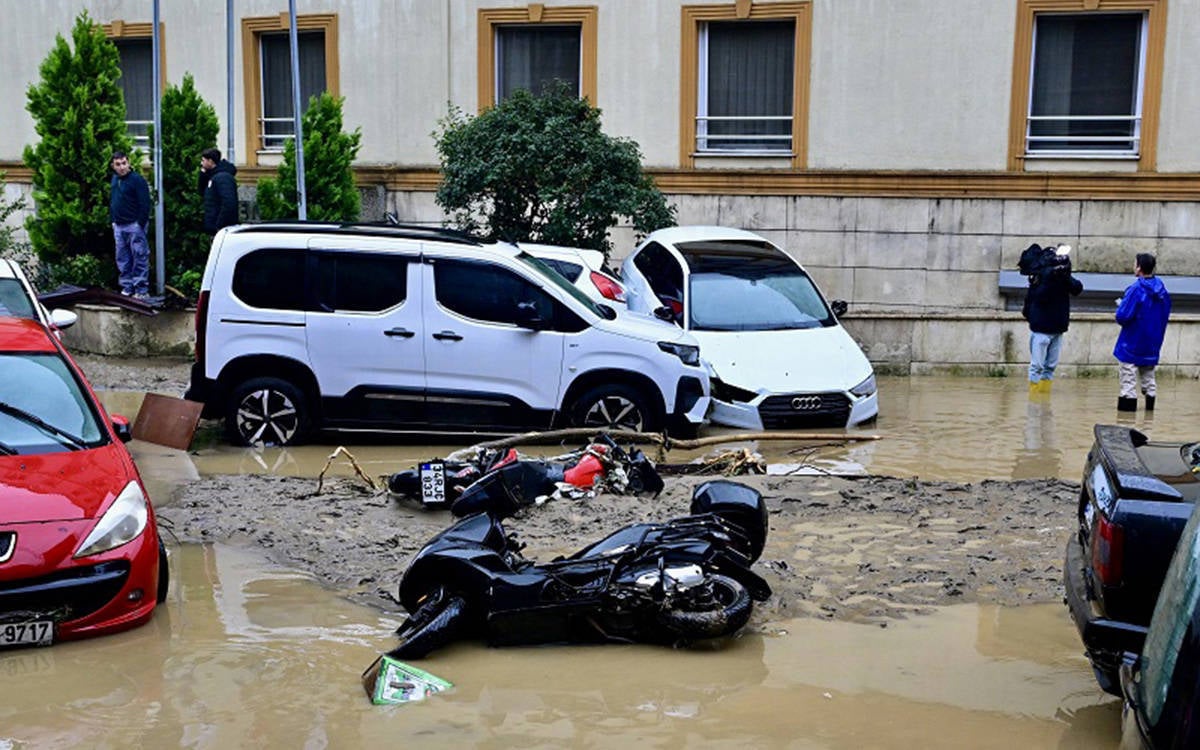






At around 5 pm in Ayazağa, İstanbul, he could go no farther. For Kaan*, a delivery rider working for an app-based platform, Oct 14 had started as an ordinary rainy workday. The rain intensified in the afternoon. Realizing he could no longer make deliveries, he switched to break mode on the app.
I went on a break because I couldn't go any farther. Many of my colleagues also stopped working by selecting the equipment or accident issue option in the app.
But according to Kaan, stopping work cost him more than just the deliveries he missed that day: His score on the app, which automatically evaluates riders' work consistency and delivery performance, had dropped. As a result, he says he will be unable to choose his working hours for the following week.
Climate justice starts from the recognition that the climate crisis does not affect everyone equally. Kaan's experience shows how this inequality extends into ": When people whose jobs keep them on the streets stop working to protect their lives during extreme weather, can they also protect their livelihoods?
Working during the rain on Oct 14
According to İstanbul Metropolitan Municipality's Disaster Coordination Center (AKOM), some parts of the city received between 130 and 277.1 kilograms of rainfall per square meter on Oct 14.
This was the highest rainfall recorded by monitoring stations since 1942. The amount of rain recorded in the city over a short period reached four times the long-term average rainfall for the entire month of October. –AKOM, Oct 15

İstanbul'a yeni sağanak uyarısı
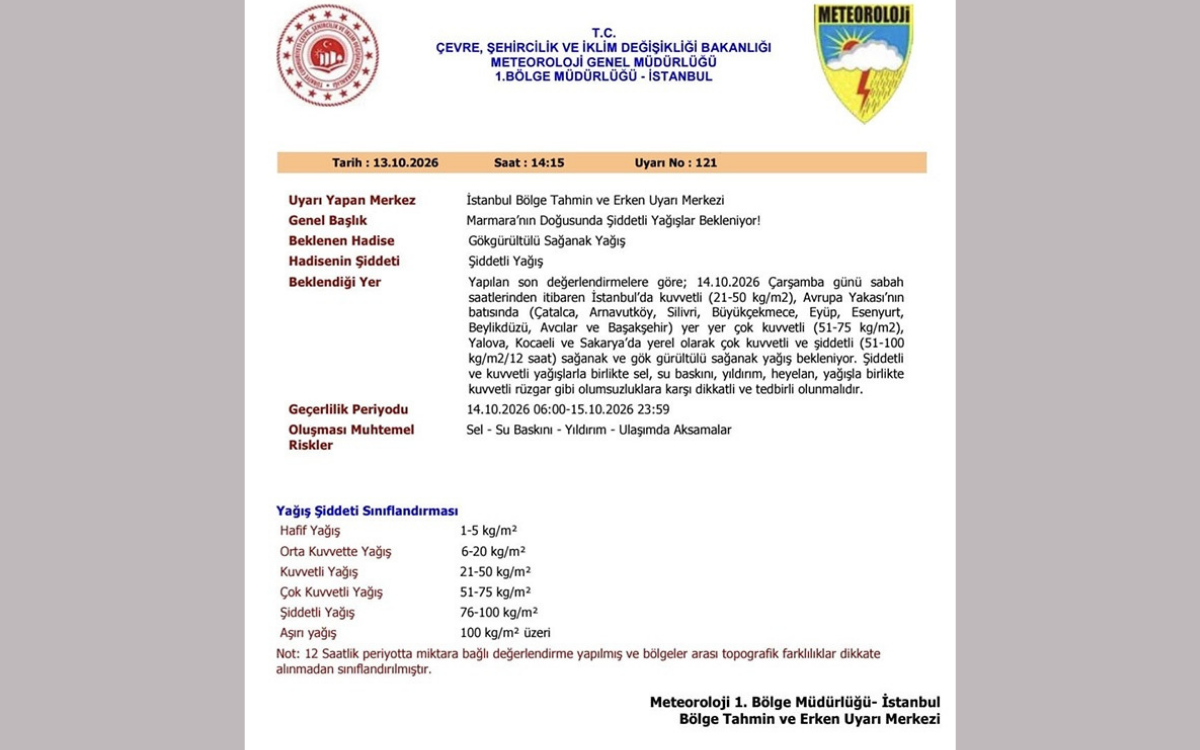
Yet the risk of torrential rain had been announced in advance. In a warning issued at 2.15 pm on Oct 13, the Turkish State Meteorological Service (MGM) forecast heavy rainfall in İstanbul the following morning. The warning also cited possible flooding, landslides and transportation disruptions.
The İstanbul Governor's Office, however, did not announce its decision to ban motorcycles from the roads until 6.35 pm on Oct 14:
All motorcycles and other two-wheeled vehicles are banned from the roads starting at 9 pm on Wednesday until further notice.
"By then, everywhere was already flooded," Kaan says of the time the ban took effect.
At least seven people died in floods across İstanbul. Among them was Murat Babacanov, a 30-year-old delivery rider.
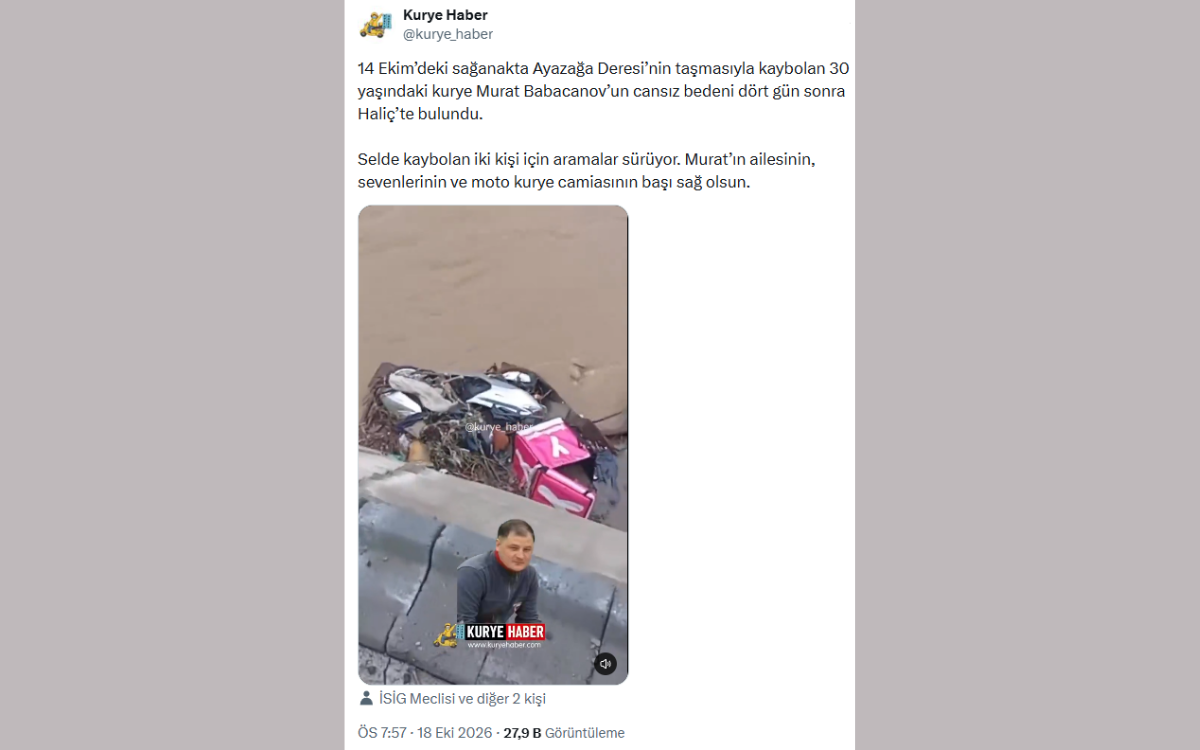
We learn that Babacanov went missing around the time the ban was announced from a statement his friend, who was following the search efforts, gave to the press. His body was found in the Golden Horn on Oct 18.
He disappeared at 6.50 pm on the first day of the rain (...) He last spoke to our friend on the phone (...) When the flood came, he was swept away. Nobody saw him, and nobody knew what had happened. There was no information that he was here, but his phone's last signal came from Ayazağa Square.” – Babacanov's friend Artur Seydullayev, Oct 18, 2026
Who gets to decide when to stop working?
Kaan says he continued to receive delivery assignments even after the ban took effect:
Even though the ban started at 9 pm, the algorithm kept assigning orders, and our scores took an additional hit because we didn't make the deliveries.
He says the scores were never adjusted afterward. "We won't be able to choose our hours for next week," he explains.
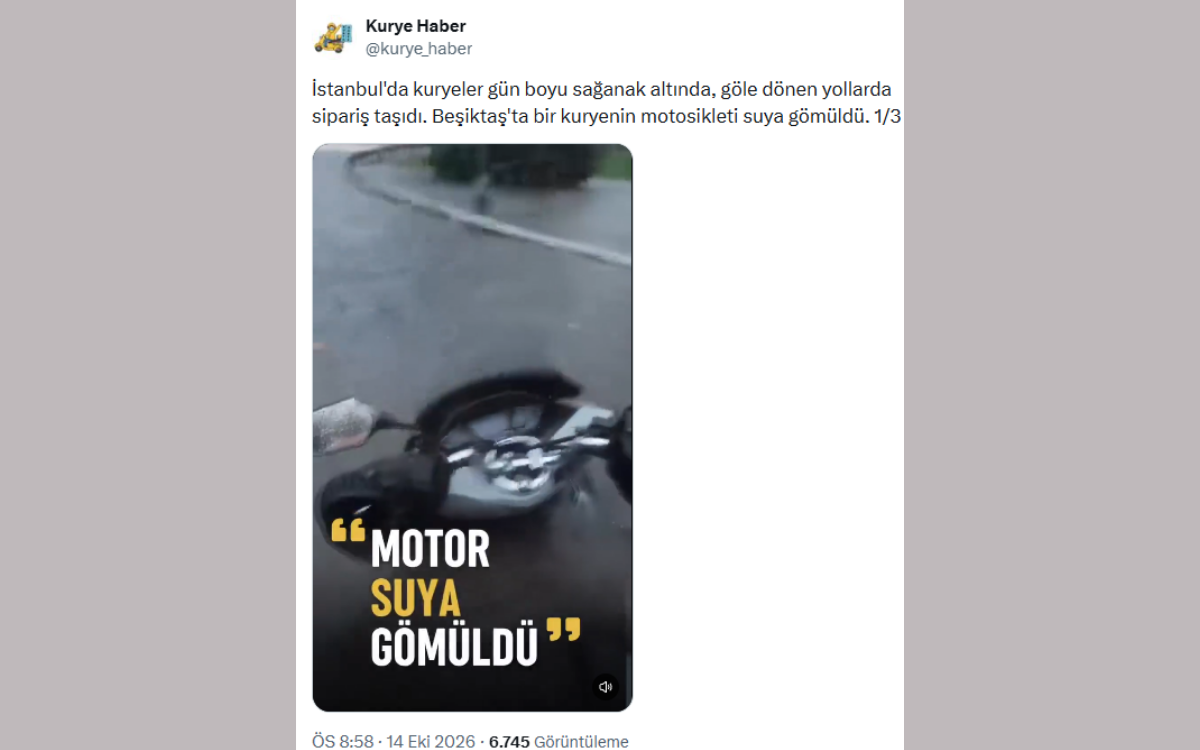
Ogün*, another platform delivery rider, worked in and around Kadıköy until 8 pm that day. He says he can decide when to start and stop working. According to Ogün, the platform sent warnings about the weather conditions and the ban, and extended the time riders could spend on breaks. Once the ban took effect, the platform closed off working hours, and he faced no penalties.
Still, stopping work means earning less that day. Like Kaan, Ogün is paid per delivery.
If we don't work, we don't earn anything. We only make money when we work.
Hakan*, a restaurant delivery rider working in and around Tuzla, had a different experience. He says he was made to keep working despite the ban, until his shift ended at 2 am.
I didn't lose any income because I'm a formally employed worker with social insurance, but I was forced to work that day.
According to Hakan, the business he works for issued no warnings, and deliveries continued until the end of his shift.
Who can exercise the right to refuse dangerous work?
Article 4 of Occupational Health and Safety Law No. 6331 places responsibility for protecting employees' work-related health and safety on employers.
Under Article 13, employees facing serious and imminent danger can apply to the occupational health and safety committee or, where no such committee exists, to their employer. If their request is approved, they can refrain from working until the necessary precautions are taken, without losing their pay or other employment rights.
When the danger is serious, imminent and unavoidable, employees can leave the dangerous area without waiting for the application process. Their rights cannot be restricted for doing so.
However, the law excludes people who provide services independently, on their own behalf and without employing others. Whether self-employed delivery riders are entitled to these protections can therefore depend on the legal nature of their working arrangements.
The Courier Rights Association also emphasizes that the right to refuse dangerous work must go hand in hand with income protection.
Is there anywhere to take shelter in the city?
The risks posed by heavy rainfall also depend on how the city is built. Impermeable surfaces such as asphalt and concrete prevent rainwater from soaking into the ground. When more water flows into streams at a faster rate, the risk of flooding can increase.
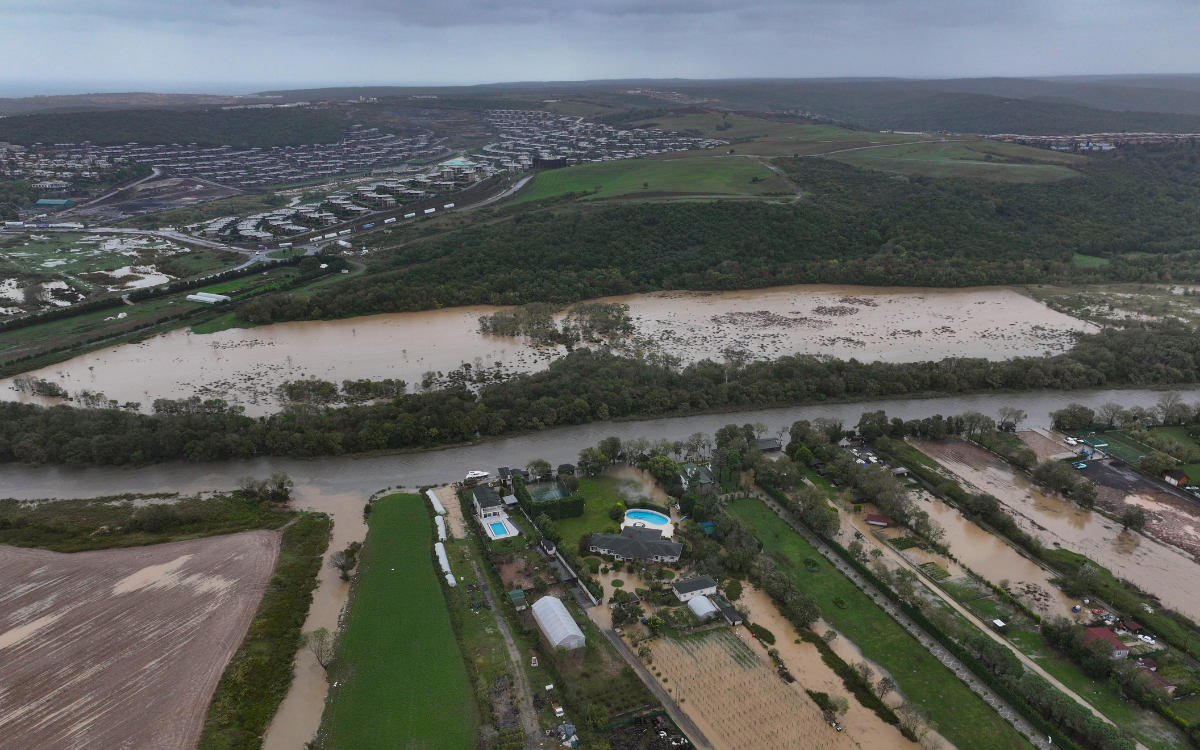
İstanbul's streams overflow during rainfall: How has urban development reshaped the city's waterways?
For delivery riders, the challenge is finding out which roads have been closed by flooding in time and finding somewhere safe to take shelter when necessary.
Ogün says he learned about road closures through social media. There are no designated waiting areas for riders. When the rain gets heavier, they take shelter at gas stations or cafes. Sometimes they have no choice but to wait by the roadside, although he says this is unsafe.
Asked how he finds out which roads are dangerous, Hakan gives a two-word answer: "By going."
There is a place where he can wait at the business he works for. But he says the constant flow of orders keeps him on his motorcycle. In other words, having an indoor space available does not necessarily mean he can use it to wait out dangerous weather.

Köstebek yuvası şehirler: Belediye ihmalleri kuryeleri öldürüyor
What do delivery riders want?
Kaan believes the governor's office should have imposed the motorcycle ban earlier. Ogün wants less pressure on riders during severe weather and more frequent inspections by public authorities. Hakan's demand is straightforward: Businesses that make riders work despite the ban should face heavy fines.
In a statement issued on Oct 16, the Courier Rights Association also called on central and local authorities and delivery platform companies to take action. The association wants measures that protect not only riders' lives but also their incomes during extreme weather.
According to data from the Turkish Statistical Institute (TurkStat) for September 2026, the number of registered motorcycles in İstanbul rose by 92,595 from the same period last year, reaching 978,193. The figure has nearly tripled since September 2019, before the pandemic. This increase coincided with the expansion of digital delivery platforms and the growth of motorcycle courier services during the pandemic. The Courier Rights Association, meanwhile, highlights the lack of regularly published data on the total number of motorcycle delivery riders in Turkey and how many work for digital platforms. The association calls for measures to prevent unregistered employment, make professional qualifications and safe-riding certificates mandatory, improve oversight of working conditions and introduce legislation to strengthen workplace safety. According to its reports, at least 233 motorcycle delivery riders died in work-related incidents over the past four years (2022–2025).
The Courier Rights Association also addressed the impact of the climate crisis on motorcycle delivery riders' working conditions in a paper submitted to the Climate Justice Forum organized by the İstanbul and Antalya bar associations on Jul 6.
According to the association, motorcycle delivery riders are among the workers who experience the effects of climate injustice most directly. During extreme weather, they are forced to choose between their safety and their livelihoods.
Derneğe göre, iklim adaletsizliğinin etkilerini bedenlerinde en doğrudan hisseden meslek gruplarının başında gelen moto kuryeler, aşırı hava olaylarında can güvenlikleri ile geçimleri arasında seçim yapmak zorunda kalıyor.
The Courier Rights Association's main demands for protecting riders' safety and incomes during extreme weather are as follows:
- Governor's offices should take timely precautions based on weather warnings and effectively enforce motorcycle bans.
- Delivery platforms should make their severe weather protocols public and suspend deliveries when necessary.
- Riders should have access to paid leave or income support on days when extreme weather prevents them from working.
- Riders should be able to exercise their right to refuse dangerous work during periods of critical temperatures and weather alerts without having to meet bureaucratic requirements.
- Platforms should disable estimated delivery time displays during extreme heat and heavy rainfall, and suspend time-based performance scoring and bonus deductions.
- Companies should provide riders with free protective equipment and introduce mandatory cooling breaks during extreme heat.
- Local authorities and delivery platform companies should jointly fund safe rest areas that riders can use free of charge.
*Kaan, Ogün and Hakan are pseudonyms used to protect the identities of the delivery riders interviewed.
(VC/VK)