








Speaking at the United Nations Climate Summit in New York on Sep 24, 2025, President Recep Tayyip Erdoğan unveiled Turkey’s new climate commitments, which are expected to be officially announced soon.
Erdoğan stated that all sectors and greenhouse gases were taken into account in the Nationally Determined Contribution (NDC), and that Turkey aims to reduce emissions by 466 million tons by 2035.
However, experts and civil society groups have criticized the new target, arguing that it reflects a “reduction from projected increase” rather than an absolute cut in emissions.
According to Dr. Nuran Talu, one of the key shortcomings of Turkey’s climate commitments is the lack of effective and forward-looking adaptation measures to address the effects of climate change.
Who suffers most from the climate crisis?
Talu noted that Erdoğan’s speech primarily focused on economic performance, and warned that viewing the climate crisis solely through a business and trade lens comes at a cost to both people and nature: “What happens when ordinary people on the street are exposed to the negative effects of the climate crisis? In fact, it’s already happening."
According to Talu, Turkey must first identify the social groups most affected by climate change and assess their risk profiles.
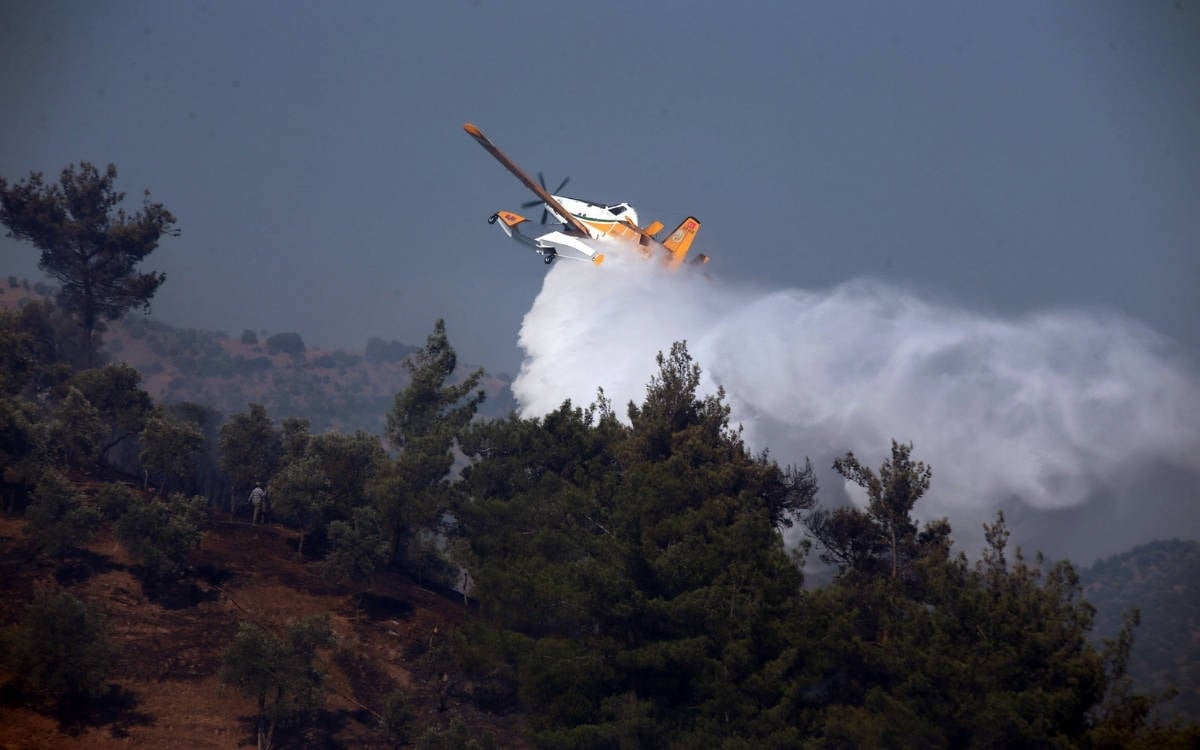
She emphasized that adaptation should not be limited to public health but must also address other factors that worsen social inequality, such as poverty, livelihood challenges, disability, and forced migration. Market-driven policies are leaving poorer communities more vulnerable to disasters such as floods, droughts, and forest fires, she said, adding, “If we fail to address decarbonization and deepening poverty together, we will get nowhere."
'What we need is genuine implementation'
Key points from Dr. Nuran Talu’s evaluation of Turkey’s climate commitments include the following:
“The Intended Nationally Determined Contribution highlighted what Turkey prioritized in the fight against climate change. Even back then, it was clear the climate law would reflect this framework. In 2015, Turkey also emphasized its desire to benefit from international market mechanisms. That signaled a shift toward working more closely with the private sector, and those seeds were planted years ago.”
“This document was updated in 2023 with the First Updated Nationally Determined Contribution. The one mentioned by President Erdoğan in New York will be Turkey’s third such document. However, it has not yet been formally submitted or released by the ministry. In the 2015 document, Turkey pledged a 21% reduction in emissions from a business-as-usual scenario. In 2023, the updated pledge was a 41% reduction. But realistically, one might ask: ‘Did we even manage the 21% before aiming for 41%?’ Rather than ambitious numbers, what this country needs is genuine implementation.”
'Are we collecting data on construction workers with skin cancer?'
“When these documents are updated, we don’t see any convincing progress on adaptation. If our goal is to protect nature to build resilience, why are we passing mining laws? If our aim is to protect people, for example, are we collecting data on construction workers who develop skin cancer from prolonged exposure to extreme heat?”
“In terms of greenhouse gas reduction policies, we see a focus on sectors like energy, industry, and transportation. But when it comes to adaptation, important sectors such as agriculture and insurance are largely ignored. We’ll see how much the new Nationally Determined Contribution addresses them. One important point to keep in mind is that adaptation is not always negative. If you prepare ahead of time, it can be turned into an opportunity. But Turkey is falling behind, and so are decision-makers.”
This article, featuring the views of Dr. Nuran Talu, who works to strengthen civil society movements in Turkey’s climate efforts and promote the active participation of all groups, especially women, was published in collaboration with İklim Masası and bianet in an abridged format.
İklim Masası (Climate Desk) is a news platform that aims to disseminate reliable information on the climate crisis to the public. Its contributors are scientists with expertise in the issues they cover.
(TY/VK)