
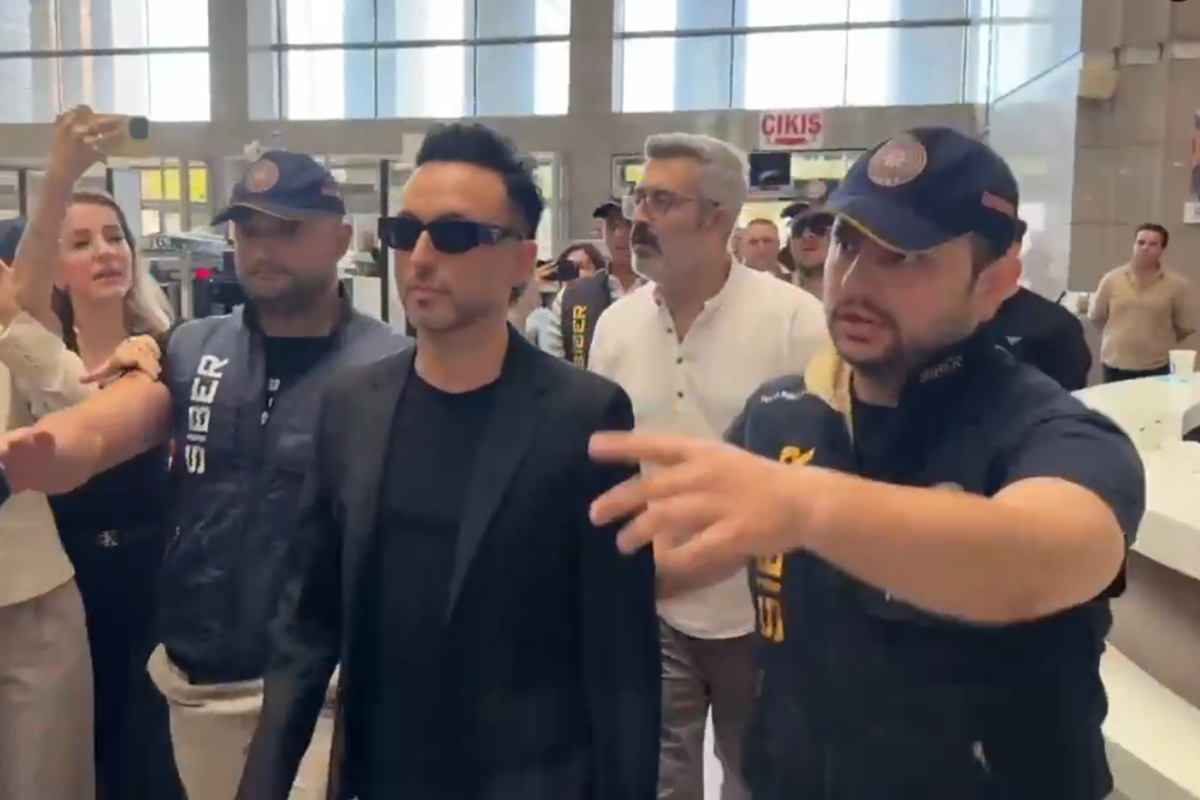



Singer Mabel Matiz appeared at the courthouse yesterday to give a statement in an ongoing investigation. As they walked through the corridors accompanied by officers from the cybercrimes police, the scene created the impression that they had been detained. However, the prosecutor’s office later clarified that no detention order had been issued.
The practice of escorting individuals under investigation without a detention order, either by staging “detention-like” scenes or by police accompanying them to court, has become increasingly common in recent years.
Legal experts say detention procedures are explicitly defined in law and that any measures beyond these constitute a violation of the right to liberty and security.
Standard procedures
Lawyer Hüseyin Ersöz, who has examined similar cases, stressed that the law clearly sets out the conditions for detention. He criticized what he described as vague police practices outside these boundaries.
Explaining the standard procedure, Ersöz said, “Normally, a person is called in to testify through a phone call, a written summons, or an SMS. These are lawful and routine. In urgent situations, if there is a risk of escape or tampering with evidence, prosecutors can order detention.
"If the individual still cannot be reached, a judge may issue an arrest warrant. Once a detention or arrest order is in place, law enforcement brings the person in, restricts their freedom, and ensures their testimony is taken before routine judicial steps follow.”
'Restriction of liberty'
Arguing that Matiz’s case did not meet these conditions and instead amounted to a violation of fundamental rights, Ersöz said, “It seems the prosecutor’s office had invited him through the normal call-in procedure, which is lawful. But as soon as he entered the courthouse, he was met by police wearing Cyber Unit vests, who directed him and accompanied him until his testimony was complete. This has no basis in law. Even though the prosecutor’s office said no detention was applied, such actions still amount to a restriction of liberty not defined in legislation,” he said.
Another point of concern in the Matiz case was the imposition of a travel ban before his statement was even taken. Ersöz underlined that such bans are a judicial control measure equivalent to pre-trial detention. “For judicial control, the same strict conditions as detention must be present. Issuing such a measure against a well-known public figure, before hearing his testimony and based on vague reasoning, is unlawful."
'An invented concept'
Ersöz noted that similar irregularities occurred in the so-called “retired admirals investigation.” He said that of the 102 individuals questioned, only about 10 were subject to detention orders.
“The others were invited to the Counterterrorism Department, but even without a detention order, they were escorted to court and subjected to judicial control measures without being heard by a judge,” he explained. “This shows how, in recent years, powers not defined in law are being used in ways that violate the right to liberty.”
He also recalled a similar practice during the TÜSİAD investigation, where business leaders Orhan Turan and Ömer Aras were escorted to the prosecutor’s office despite authorities stating that no detention orders had been issued. Ersöz said such practices not only lack legal basis but also risk damaging the reputations of prominent figures.
Pointing to the frequent use of the phrase “to be brought in with presence” in prosecutorial documents, Ersöz described it as an “invented concept” used in place of the word “detention.” He said the matter has been brought before the Constitutional Court, which is expected to issue a ruling within six months. (AB/VK)