









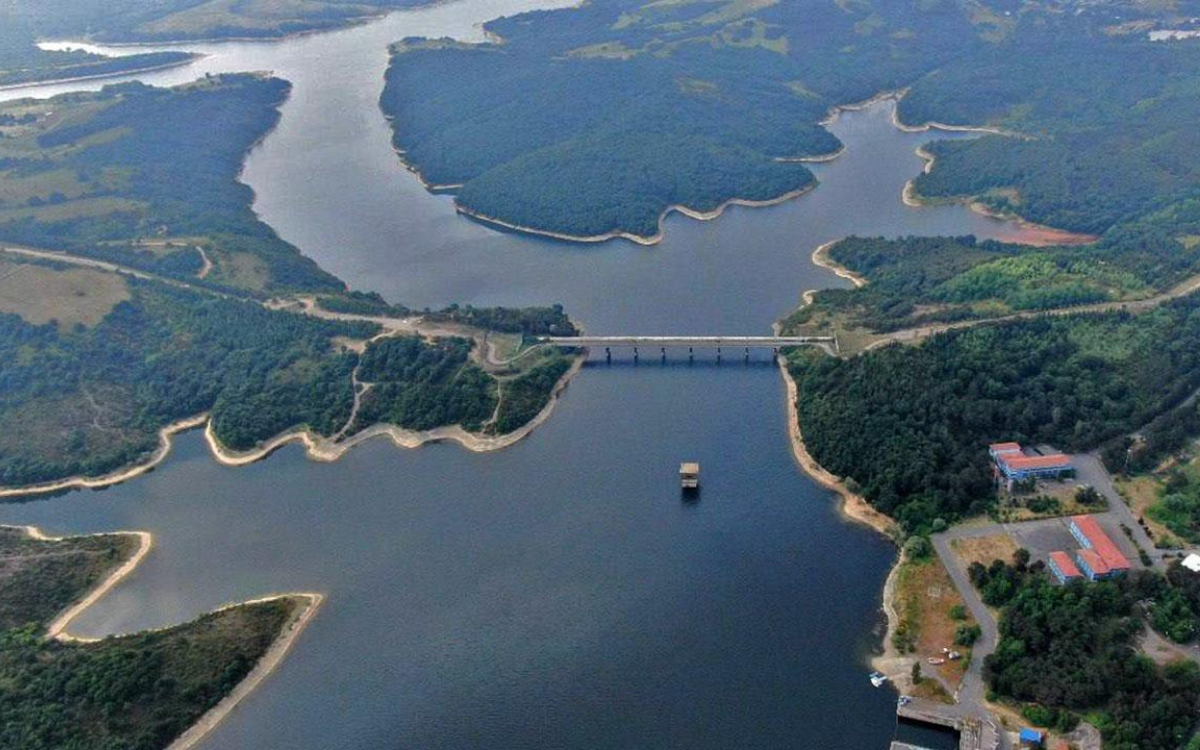



According to data from the General Directorate of State Hydraulic Works (DSİ), precipitation rates across Turkey increased by 75.4% compared to the same period last year and by 29% compared to the long-years average. The active occupancy rate of dams rose from 41.1% to 68.9%, while the active water volume increased from 38.9 billion cubic meters to 65.2 billion cubic meters.
Istanbul Technical University Department of Climate Science and Meteorological Engineering Faculty Member Professor Dr. Mikdat Kadıoğlu, said the increase is positive but an increase in precipitation and dam occupancy in a single water year does not mean the drought is over.
According to reporting by the ANKA News Agency, Kadıoğlu said that “climate” is the statistical average of weather characteristics spread across many years, while dam occupancies are impacted by operating conditions, water consumption and basin characteristics, in addition to precipitation.
“It can create various occupancy levels in dams”
Kadıoğlu said that dam occupancy levels do not increase at the same rate as precipitation. In the region where the precipitation falls, the water retention capacity of the soil, type of precipitation and its timing all contribute. He also said that a significant portion of the first rainfalls following a long-lasting drought may be spent on resolving the soil’s moisture deficit, while short-term and severe downpours, causing floods, can exit the system without reaching the dams.
According to Kadıoğlu, dam occupancies are also affected by inter-basin water transfers, withdrawals made for drinking water, agricultural irrigation and industry, as well as the physical characteristics of reservoirs. Evaporation loss can be higher in shallow and wide reservoirs.
“Even if the same amount of water inflow occurs, different consumption rates can create different occupancy levels in dams," he said.
“The reasons for the differences in the increase in the four major cities”
Different dam occupancy increase rates were recorded across the four major cities. The active occupancy rate increased from 44.3% to 46.9% in İstanbul, from 11% to 32.8% in Ankara, from 4.3% to 39.6% in İzmir, and from 36.1% to 39.4% in Bursa.
Kadıoğlu stated that the reason for the different rate increases across the cities varied. He pointed out that especially high increases in İzmir and Ankara stemmed from low initial levels.
"The nearly nine-fold increase in İzmir does not show that İzmir's water problem has been solved, but how dangerous of a point it was at last year," he said.
On the other hand, the increase in İstanbul and Bursa appears more limited simply because last year’s occupancy rates were higher, he clarified.
“The occupancy rate alone is not a metric of water security”
In his evaluation, Kadıoğlu said that "İstanbul has the highest daily water consumption in the country. Incoming water largely goes directly to consumption without being stored; therefore, even in a good precipitation year, the occupancy curve can follow a flat course. Industrial demand creates a similar pressure in Bursa."
Kadıoğlu also stated that water losses from evaporation in shallow reservoirs also increase during the summer months when heatwaves are more frequent, thus "dam occupancy rates are not a metric of water security on their own."
“The real issue is the change in the precipitation regime rather than total precipitation”
Kadıoğlu stated that Turkey is especially open to the impacts of climate change due to its location on the Mediterranean basin. In the future, alongside an increase in total precipitation, rainfalls could occur in shorter durations with greater intensity. Therefore, it could directly lead to surface runoff without infiltrating the soil, causing floods and reducing the storage capacity of reservoirs with the sediment they carry along.
"Even if total precipitation remains constant, storable water can decrease,” said Kadıoğlu. “The joint occurrence of drought and flooding within the same year is the natural result of this regime."
“The most important problems threatening water security are not being discussed enough”
The annual water amount per capita in Turkey is 1,301 cubic meters, so considering the 1,700 cubic meter threshold, Turkey is under water stress, stated Kadıoğlu. He explained that water stress cannot be explained by climate change alone. Expanding cities without observing their water budget and carrying capacity, along with continuing crop patterns unsuited to the basin, disrupts the water supply-demand balance. Climate change then further exacerbates these problems.
“This water year is a window of time granted to us”
Kadıoğlu said that drought monitoring, early warning and intervention plans must be created in metropolitan cities. Water restrictions should not be initiated after resources are depleted, but upon exceeding previously determined critical thresholds.
He recommended that instead of using dam occupancy rates, the public should be informed on how many days of water would remain at the current consumption rate. He stated that zoning and industrial decisions must be linked to basin water budgets and basin-appropriate crop patterns must be established in the agriculture sector. He also said that water must be used efficiently, network loss and leakage must be reduced, rainwater should be utilized and treated water must be reused.
Kadıoğlu also expressed that drought, as a slow-onset disaster, should be included in disaster management legislation and budget.
Kadıoğlu believes that the current wet period is an important opportunity for Turkey, but will not provide a permanent solution unless structural measures are taken.
"The rainfalls of this water year are a window of time granted to us, not a solution,” said Kadıoğlu. “If we do not use this time for structural measures, the next drought year will find us right where we were last year."
(VC/İK)

