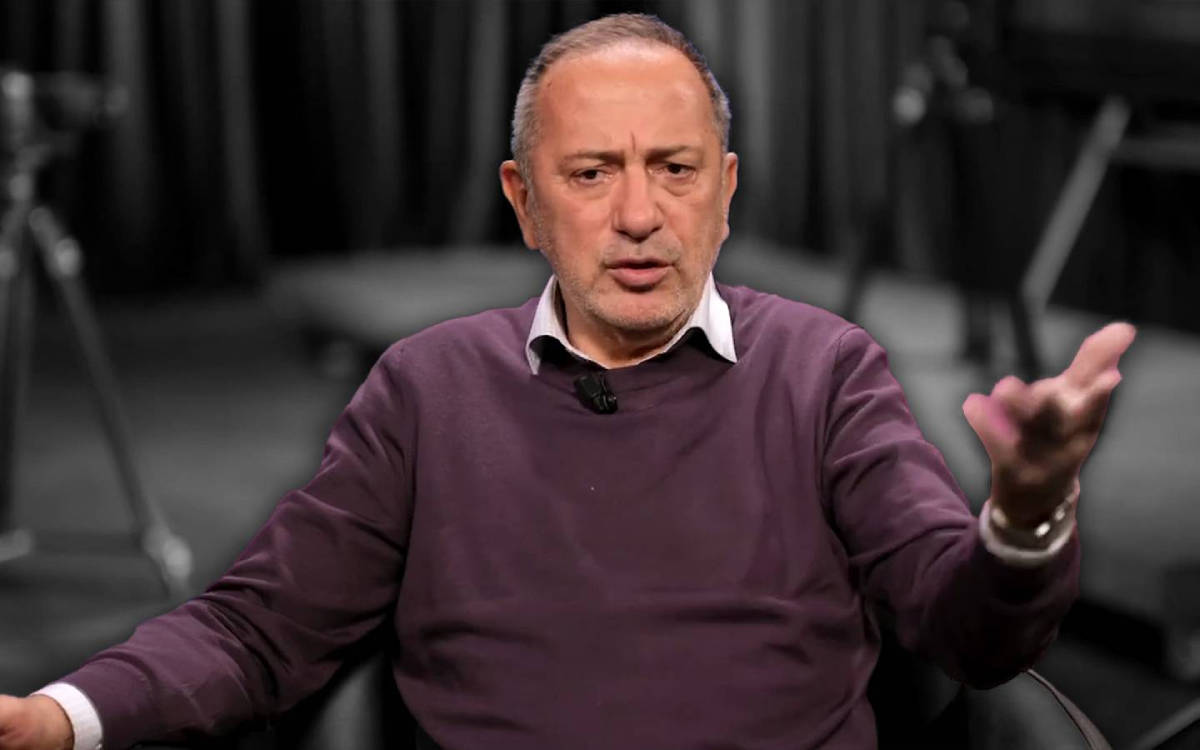



An İstanbul court has issued its detailed ruling in the case of journalist Fatih Altaylı, who was sentenced to four years and two months in prison in late November for allegedly threatening the president. The court found that Altaylı’s remarks during a YouTube broadcast did not fall within the bounds of press freedom or political criticism.
The İstanbul 26th Heavy Penal Court described Altaylı’s comments as “a threat implying an attack on the president’s life,” arguing that his statements evoked the notion of assassination and intentional killing. The court concluded that the language used amounted to “incitement to violence,” and therefore could not be protected under freedom of expression.
During a YouTube program aired on Jun 21, Altaylı commented on public attitudes toward President Recep Tayyip Erdoğan’s continued rule. He said: “Seventy percent of the people are against President Erdoğan staying in office for life. This is not surprising. Apart from some AKP and MHP voters, there’s barely anyone who supports this idea. This is a nation that has even strangled its own sultan when displeased. In Ottoman history, there are many sultans who were assassinated or are said to have committed suicide.”
Following these remarks, Presidential Chief Advisor Oktay Saral shared a clip of the broadcast, writing, “Altaylı! You're in hot water,” which was followed by a criminal investigation into the journalist. Altaylı was detained and formally arrested on Jun 22.
For a while, Altaylı continued broadcasts on his YouTube channel, which has a following or nearly 1.7 million, through texts he sent from prison that were read out during broadcasts.

Imprisoned journalist Fatih Altaylı pauses ‘Empty Chair’ YouTube broadcasts
In its reasoning, the court emphasized that expressions such as Altaylı’s cannot be interpreted as protected speech when they are seen as inciting hatred, discrimination, or violence. “The defendant’s statements fall under expressions aiming to change the legal order by force and incite violence, and thus are not considered within the scope of freedom of expression,” the ruling stated.
'Intent to disseminate'
The court further argued that the scale of the platform, measured by the channel’s subscriber count and the number of views, demonstrated Altaylı’s “intent to disseminate” the message.
It also listed criteria for lawful journalistic expression, noting that for the press to fulfill its role of informing the public and criticizing officials, it must ensure statements are current, relevant to public interest, logically connected to the subject, and free from degrading language.
The ruling highlighted that terms like “assassination” carry specific weight under Turkish law. “The act of assassination against the president is considered a distinct offense, even more serious than intentional killing, and even an attempt is punishable as if the crime were completed,” the court noted.

BIA Media Monitoring Reports
(HA/VK)