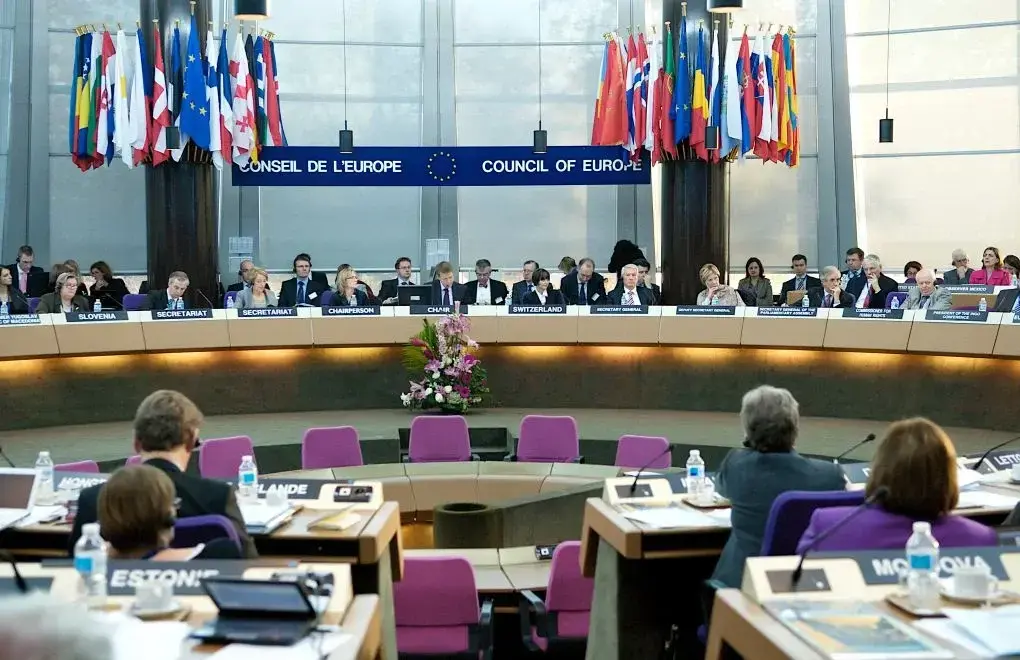




The Committee of Ministers of the Council of Europe reviewed the cases of four prisoners known as the "Gurban group," including Kurdistan Workers’ Party (PKK) leader Abdullah Öcalan, between Sep 15–17, to assess whether Turkey is complying with its obligations regarding the "right to hope." The evaluation focused on whether those serving aggravated life sentences are given a meaningful prospect of release.
The committee assessed whether Turkey had met its obligations under the European Convention on Human Rights (ECHR) for Abdullah Öcalan, Emin Gurban, Civan Boltan, and Hayati Kaytan. All four are serving aggravated life sentences, without the possibility of parole.
In its interim resolution, the committee called on Turkey to swiftly and effectively implement the relevant rulings of the European Court of Human Rights (ECtHR). It highlighted the urgent need to establish new review mechanisms to address violations arising from the lack of meaningful parole options for life-term prisoners.
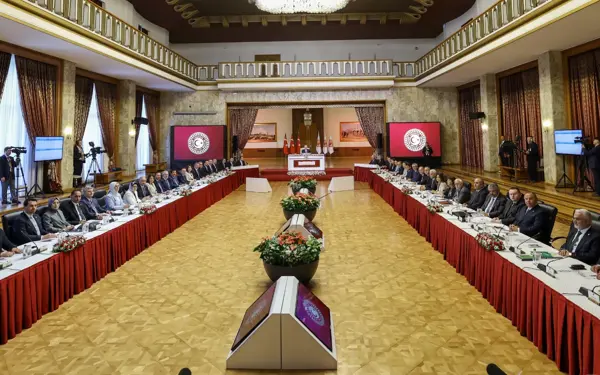
The committee emphasized that a key role in these legal reforms should be played by the "National Unity, Solidarity, Fraternity and Democracy Committee," which was established in Turkey's parliament as part of the new Kurdish peace process. The committee also stated that it expects the parliament committee to take the lead in preparing and presenting the necessary legislative proposals.
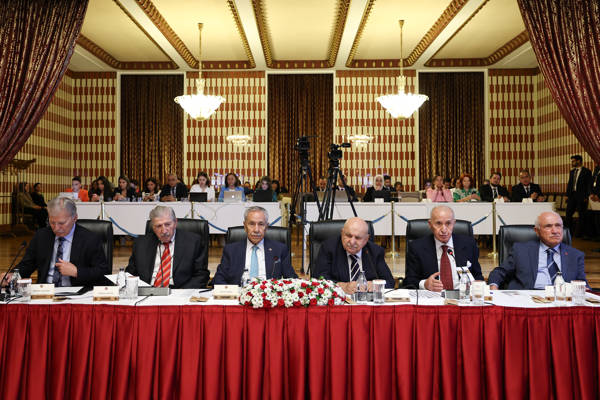
Parliament committee discusses redefinition of Turkish citizenship, ‘right to hope’ for Öcalan
"The establishment of new and effective review mechanisms by the authorities, especially legal regulations allowing life sentences to be reviewed no later than after 25 years, is of vital importance," the committee said in its decision. It further urged the commission to accelerate legislative efforts and consider various alternatives in this area.
The committee requested that Turkey provide detailed information by the end of June 2026 on the measures taken and progress made. It also encouraged Turkey to draw on the experiences of other Council of Europe member states.
What is the right to hope?
The “right to hope” refers to a legal principle that mandates a review of life sentences after a certain period to assess whether a prisoner may be eligible for release. It ensures that individuals serving life terms have a realistic prospect of release under specific conditions.
The concept, rooted in ECtHR case law, maintains that a prisoner should not be held for life without the possibility of parole. Such treatment has been deemed a violation of Article 3 of the ECHR, which prohibits torture and inhuman or degrading treatment or punishment.
Article 3 of the ECHR states, “No one shall be subjected to torture or to inhuman or degrading treatment or punishment.”
ECtHR rulings against Turkey
The ECtHR has found that Turkey’s use of aggravated life sentences without the possibility of parole for certain crimes violates Article 3 of the ECHR. These sentences are often imposed under Article 302 of the Turkish Penal Code and Article 17 of the Anti-Terror Law (Law No. 3713), which prohibit parole for individuals convicted of designated terrorism-related offenses.
In a series of rulings—Öcalan v. Turkey (No. 2) in 2014, Kaytan v. Turkey and Gurban v. Turkey in 2015, and Boltan v. Turkey in 2019—the ECtHR concluded that Turkey’s failure to recognize the right to hope constitutes a breach of the prohibition on inhuman or degrading treatment.
The Öcalan v. Turkey (No. 2) case marked the ECtHR’s first judgment against Turkey on this issue. Referring repeatedly to the Vinter v. UK ruling, the court found that Turkish legislation did not meet the standards of Article 3 due to the imposition of irreducible life sentences for certain crimes.
In that case, the ECtHR set out three conditions under which a life sentence could be considered compatible with the right to hope:
If domestic law provides for the suspension of the sentence under certain conditions,
If the sentence can be reviewed for potential conditional release,
If a review mechanism exists for terminating the sentence.
The court ruled that life imprisonment must allow for both the possibility of review and a chance for release. A prisoner should know at the time of sentencing that they have a chance to one day be freed.
Legal framework in Turkey
In Turkish law, irreducible life sentences are codified in the Law on the Execution of Sentences and Security Measures (Law No. 5275), specifically Article 107(16) and Provisional Article 2, as well as Article 17 of the Anti-Terror Law (Law No. 3713). These provisions preclude parole for certain offenses, notably those classified as terrorist crimes.
Conditional release in Turkey allows inmates to be freed after serving part of their sentence under good behavior. However, for those sentenced under the laws mentioned above, this option is not available, effectively resulting in irreducible life sentences.
The ECtHR has determined that this legal arrangement violates Article 3 of the ECHR. To comply with its obligations and ensure the right to hope, Turkey would need to amend these provisions, creating the possibility of conditional release even for those sentenced to life imprisonment for terrorism-related offenses.
The interim resolution
Full text of the resolution published by the Council of Europe on Sep 17:
The Committee of Ministers, under the terms of Article 46, paragraph 2, of the Convention for the Protection of Human Rights and Fundamental Freedoms, which provides that the Committee supervises the execution of final judgments of the European Court of Human Rights (hereinafter “the Convention” and “the Court”);
Having regard to the final judgments transmitted by the Court concerning violation of Article 3 of the Convention on account of the applicants’ aggravated life imprisonment - an all-life term with no prospect of release, governed by legislation which does not provide a mechanism that would allow for review of the sentence after a certain minimum term;
Recalling the Committee’s previous decisions adopted at its 1419th and 1507th meetings that the individual measures relating to the above violation are linked to the implementation of general measures which require the adoption of a mechanism that would allow the review of any aggravated life sentence after a certain minimum term with a possibility of release, unless either the requirements of punishment and deterrence have not yet been entirely fulfilled or the person still poses a danger to society;
Recalling that Article 46 of the Convention allows the respondent State to choose the means by which it complies with the Court’s judgments and that the Court has noted that States have a margin of appreciation in matters of criminal justice and sentencing, while at the same time, international law shows a trend for mechanisms providing a review no later than 25 years after imposition of life sentence;
Further recalling the Court’s indications that the violation found in the present cases cannot be understood as requiring that the applicants be given the prospect of imminent release;
Underlining the obligation of every State, under the terms of Article 46, paragraph 1, of the Convention to abide by the final judgments of the Court to which they are a party, fully, effectively and promptly;
Expressed deep regret that the legislative or other adequate measures required to align Turkish law with the requirements of the Convention as spelled out in these judgments have not been adopted;
Exhorted the authorities to take the necessary measures without further delay;
Encouraged the authorities to consider exploring various alternatives at their disposal to ensure swift implementation of the judgments in the present group, including but not limited to introducing legislative amendments within the framework of the new Human Rights Action Plan providing for review mechanism for whole life sentences; making use of the “terror-free Türkiye” initiative and the recently established “National Solidarity, Brotherhood and Democracy Commission” which has the mandate to propose legislative amendments to Parliament; or adoption by Parliament of the draft bills on this issue that have already been introduced by members of Parliament;
Encouraged them once again to draw inspiration from the experience of other member States which have put in place such review mechanisms;
Invited the authorities to provide information on the measures taken to ensure swift progress in the implementation of the present group of cases, by the end of June 2026 at the latest.
(AB/VK)