









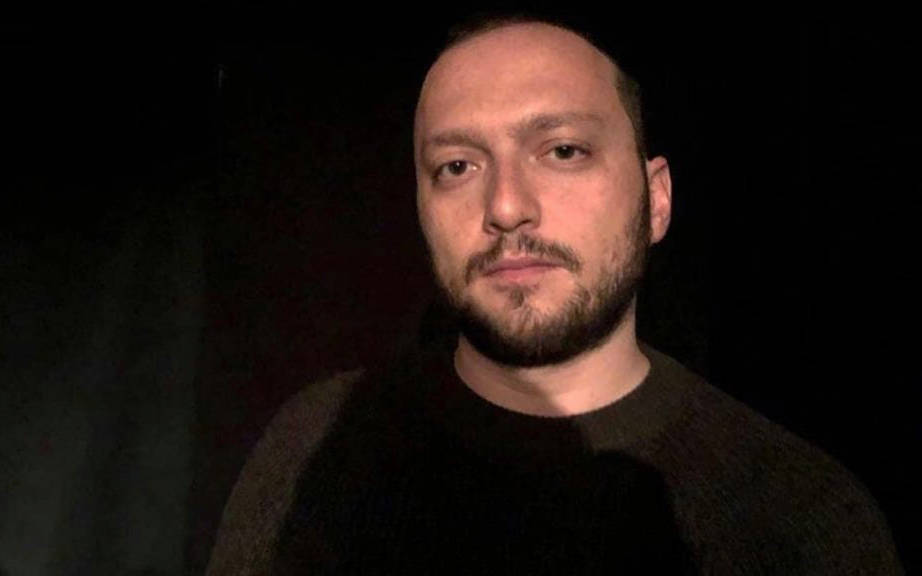



Hamza Kaan, a literature teacher and contributor to the pro-Kurdish publication Yeni Özgür Politika, appeared before a judge for the first time on charges of “membership in a terrorist organization” in a criminal case centered in Eskişehir.
Kaan, who also writes under the name Bilge Aksu, attended the hearing at İstanbul’s 14th Heavy Penal Court via videoconferencing from the prison where he is held. His lawyer Emrah Baran was present in the courtroom.
Responding to the indictment, Kaan stated, “I have been teaching literature for 11 years. My writings have generally focused on literature. Due to financial difficulties, I began contributing articles on literature to Yeni Özgür Politika in exchange for royalties. I wrote about award-winning films and authors, and conducted interviews.” He also said that most of the social media posts mentioned in the indictment were not his. “The ones that are mine have been taken out of context,” he added.
The prosecutor requested the continuation of Kaan’s detention, arguing there was a flight risk and that judicial control measures would be insufficient.
The court, however, ruled for his release under judicial control, imposing a travel ban and requiring him to check in once a week. The next hearing was scheduled for Oct 7.
Background
The investigation, launched by the Eskişehir Chief Public Prosecutor’s Office, led to police raids on Nov 26 in İstanbul, Diyarbakır, Ankara, and Batman. The homes of several journalists, writers, poets, and cartoonists were searched, and eight individuals were taken into custody. Among those detained was bianet reporter Tuğçe Yılmaz.
Hamza Kaan and Mehmet Uçar were formally arrested following their detention. Although the indictment against them was initially accepted by the Eskişehir 2nd Heavy Penal Court, the court later declared lack of jurisdiction and transferred the files.
The cases involving journalists were separated and sent to courts in the cities where they were arrested. The indictment cited their news reports, social media activity, and payments received as royalties from their employers as part of the charges. (HA/VK)

