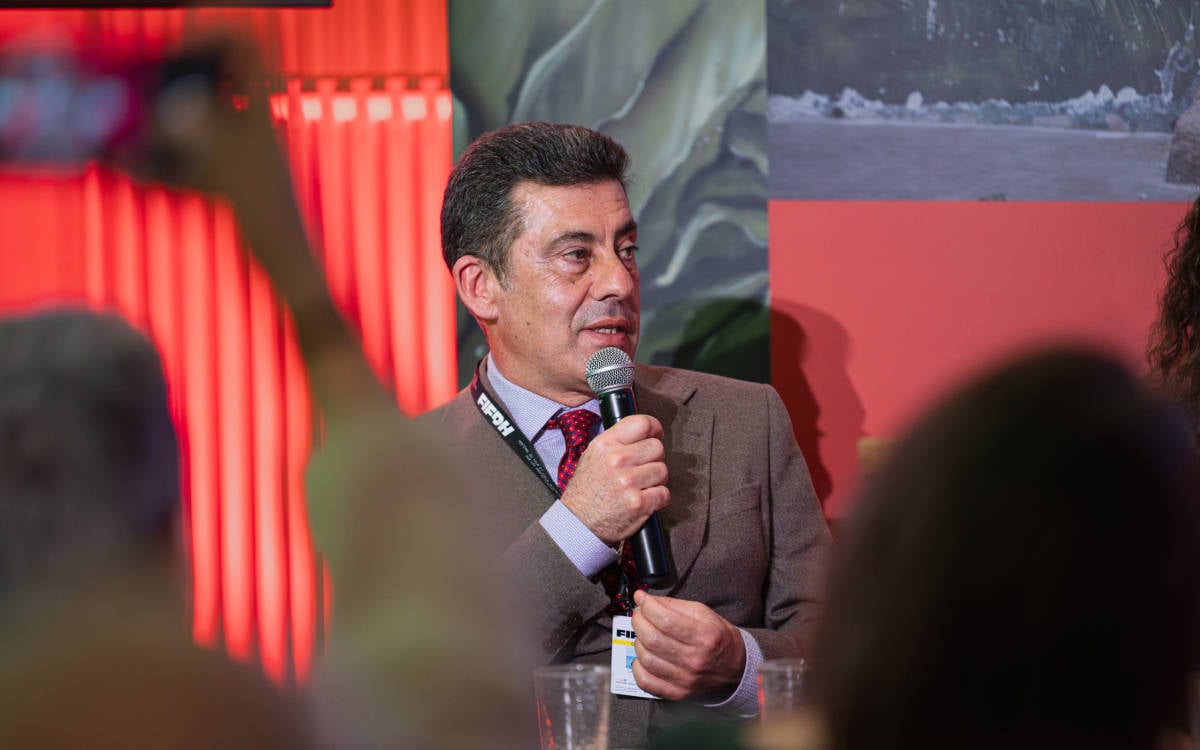










Geneva is hosting the 24th International Film Festival and Forum on Human Rights (FIFDH) from Mar 6 to 15, bringing together filmmakers, activists, and audiences under the theme “Resisting Authoritarianism.” The program features 35 documentaries, 9 fiction films, 12 short films, and 21 forums.
Organized in parallel with the UN Human Rights Council's annual session, the festival positions cinema as a space of resistance.
Notable guests this year include French actress Adèle Haenel, UN Special Rapporteur on Palestine Francesca Albanese, Palestinian author Adania Shibli, and marine conservation activist Zafer Kızılkaya from Turkey.
Opening act: A queer rapper’s ‘hardcore’ manifesto
Before the official speeches, Swiss queer rapper Dibi took the stage. He opened with a line from the 1998 single by Parisian rap duo Idéal J: “La fin du monde , two men kissing in Paris. Hardcore.”
Then he addressed the audience directly: “He was right. We are the new hardcore. The way we dismantle a patriarchal world is hardcore. I want you to know that.”
Dibi has shaken the Swiss and European hip-hop scene since winning a prestigious rap tournament in 2019, defeating 40 competitors.
At the ceremony he performed songs that addressed his queer identity and his reckoning with his father.
The festival director praised the performance, saying, “I haven’t seen this hall this electric in a long time.”
UN High Commissioner: ‘We are becoming accustomed to suffering’
Speaking at the ceremony, UN High Commissioner for Human Rights Volker Türk set out the global picture in figures: there are currently more than 60 armed conflicts in the world, nearly double the number since 2010.
One figure Türk cited was particularly striking: a decade ago, a single attack on a hospital would have provoked global outrage; today an average of 10 health facilities are attacked every day.
He also noted that the ongoing conflict triggered by the Israeli-US strike on Iran and Iran's response now affects at least 12 states and millions of civilians.
“We are becoming accustomed to suffering and that is very dangerous,” he said.
Türk warned that the authoritarian playbook was being repeated in multiple countries, with common elements such as shrinking civic space through legislation, targeting human rights defenders and journalists, and scapegoating migrants and minorities.
The high commissioner announced that the UN would launch a new human rights alliance in response to these trends.
'More autocracies than democracies in the world'
Forum director Laila Alonso Huarte framed the forum programme around a finding from a 2025 study: For the first time in more than two decades, the world contains more autocratic regimes than democratic ones. This gives the festival's theme a statistical, not merely symbolic, foundation.
The forum will address authoritarian trends in the US and Europe, the EU's rearmament, the erosion of international law and the crisis of multilateralism. Iran, China, Argentina, the DRC and Sudan are among the countries that will be discussed.
'LGBTI+ rights are not linear'
The overnight revocation of transgender people's IDs in the US state of Kansas is also on the forum agenda. Alonso Huarte highlighted this example explicitly in her speech, saying, “LGBTQI+ rights are not linear, rights that have been won are not permanent.”
The Feb 26 decision made Kansas the first US state to retroactively invalidate the identity documents of transgender people, a development that is a central focus of the festival's dedicated forum on the escalating attacks on trans rights.
An artist's migration from Afghanistan
The festival opened with A Fox Under a Pink Moon, directed by Mehrdad Oskouei and Soraya Akhlaghi. The film follows a young Afghan artist making her way to Europe in search of asylum, a deliberate choice for the festival's first image: migration, exile, the resilience of art.
The closing night will feature the Swiss premiere of Claire Denis's Le Cri des gardes. Denis, a towering figure of French cinema, will be present for the closing ceremony.
The artist behind the poster
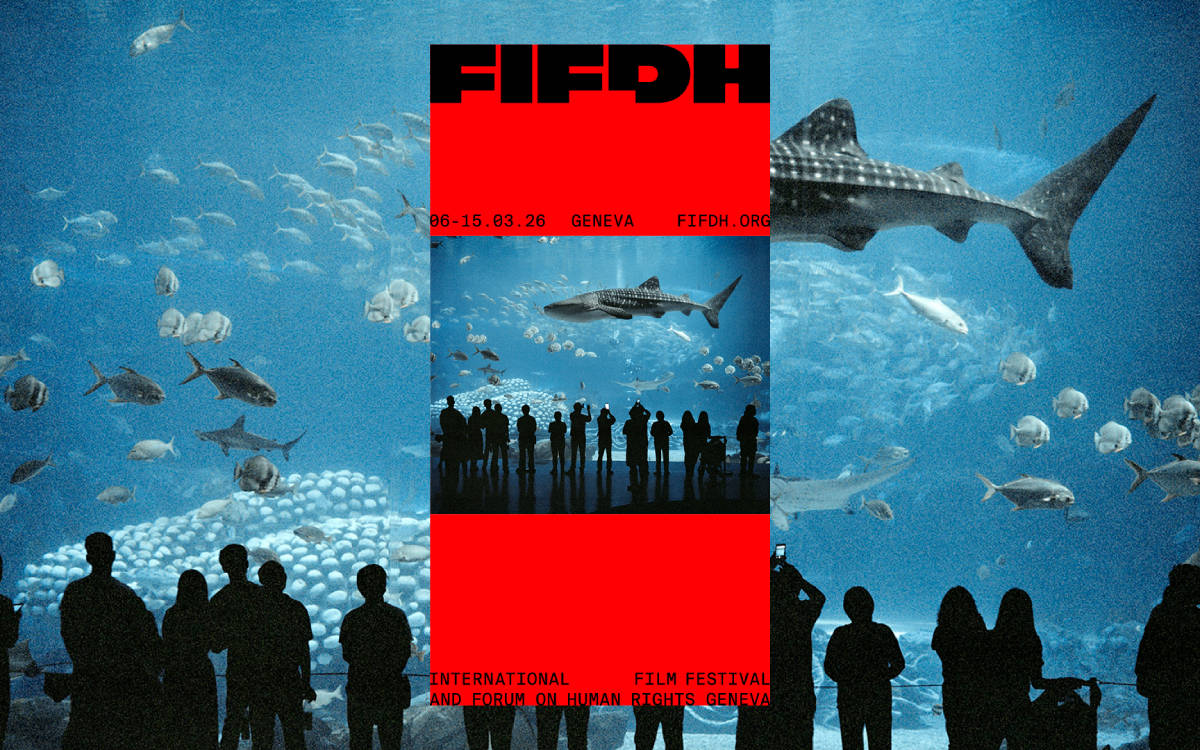
This year's poster is a diptych drawn from The Anthropocene Illusion, a series by British photographer and filmmaker Zed Nelson. Photographed across four continents over six years, the series examines a reality filtered through screens and the irresponsibility that produces.
Nelso is also serving on this year's Creative Documentary jury.
The voice silenced in Frankfurt, now on the jury in Geneva
This year's most striking jury appointment is Palestinian author Adania Shibli. In Oct 2023, in the immediate aftermath of the Oct 7 attacks in Israel, the Frankfurt Book Fair cancelled Shibli's LiBeraturpreis award ceremony without consulting her. More than 600 writers including Nobel laureates Annie Ernaux and Olga Tokarczuk, had signed a letter of protest.
Shibli's presence on the 2026 FIFDH jury, alongside the participation of UN Special Rapporteur on Palestine Francesca Albanese, signals a clear position from the festival.
Palestine 36
Palestine 36, screening in the festival's fiction section, is Palestine's Oscar submission this year. Director Annemarie Jacir spent a decade making the film, which tells the story of the 1936 Arab Revolt in Palestine.
The film received a 20-minute standing ovation in Toronto and won the Tokyo Grand Prix.
It has been banned in Israel, with security forces raiding a screening in East Jerusalem.
Turkey’s state broadcaster TRT is among the production partners of the film, alongside BBC Film and the BFI.
A voice from Turkey: Zafer Kızılkaya
Turkish marine conservation activist Zafer Kızılkaya will join the festival's rewilding forum on Mar 13.
Founder of the Mediterranean Conservation Society, Kızılkaya established Turkey's first community-managed Marine Protected Area in Gökova Bay. He is the recipient of the 2023 Goldman Environmental Prize, the first one from Turkey.
The forum will examine how ecosystems can be restored, set against data showing that wild animal populations have declined by 73% since 1970.
In 2017, Aslı Erdoğan, then in pre-trial detention in connection with a case concerning the pro-Kurdish daily Özgür Gündem, addressed the festival via video message.
In 2024, director Eylem Kaftan's film One Day, 365 Hours screened here.
The activist who left the film industry: Adèle Haenel
Two-time César Award-winning French actress Adèle Haenel left the film industry in protest in 2022. In 2020, she walked out of the César ceremony shouting “Shame!” as Roman Polanski received an award. Haenel will speak on 9 March at a session examining the intersections of feminist, LGBTI+ and Palestine solidarity movements. (MÖ/VK)