










Whether in caregiving, housekeeping, agriculture, or functional arts like weaving and pottery, multigenerational women’s efforts are often integral yet obscured behind traditions of patriarchal male leadership in business, commerce, trade and in public life generally across the greater Eurasian socioeconomic sphere.
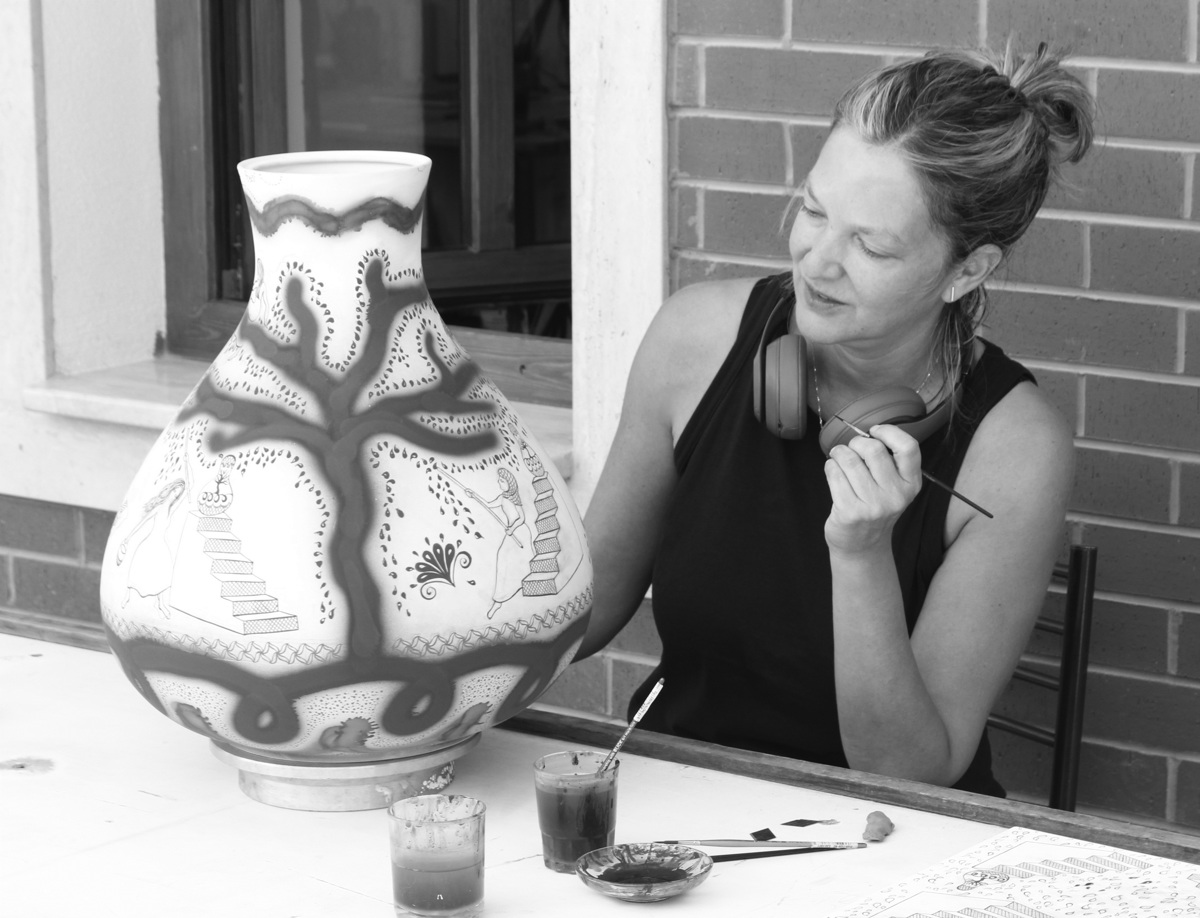
The title piece of Elif Uras’ exhibition, “Fire In Their Hands” (2025), gleams with painterly gold luster on stoneware, a bulbous, gourd-shaped vase that, at its base, pictures a pair of women, undressed, shaping works from clay that bear an uncanny resemblance to the artworks on display at Galerist, a contemporary art gallery in downtown İstanbul.
As a kind of auto-fiction channeled through the plastic arts, Uras’ ceramics appear to reflect microcosmic reliefs of her own prolific production outfit. In the artwork, “Fire In Their Hands”, the curvy, female figure who takes up the centerpiece of the scene has her hands on a work of ceramic sculpture that effects a visual echo on the form of fertile woman’s body, a slim waist to accentuate a protuberant bust and wide hips.
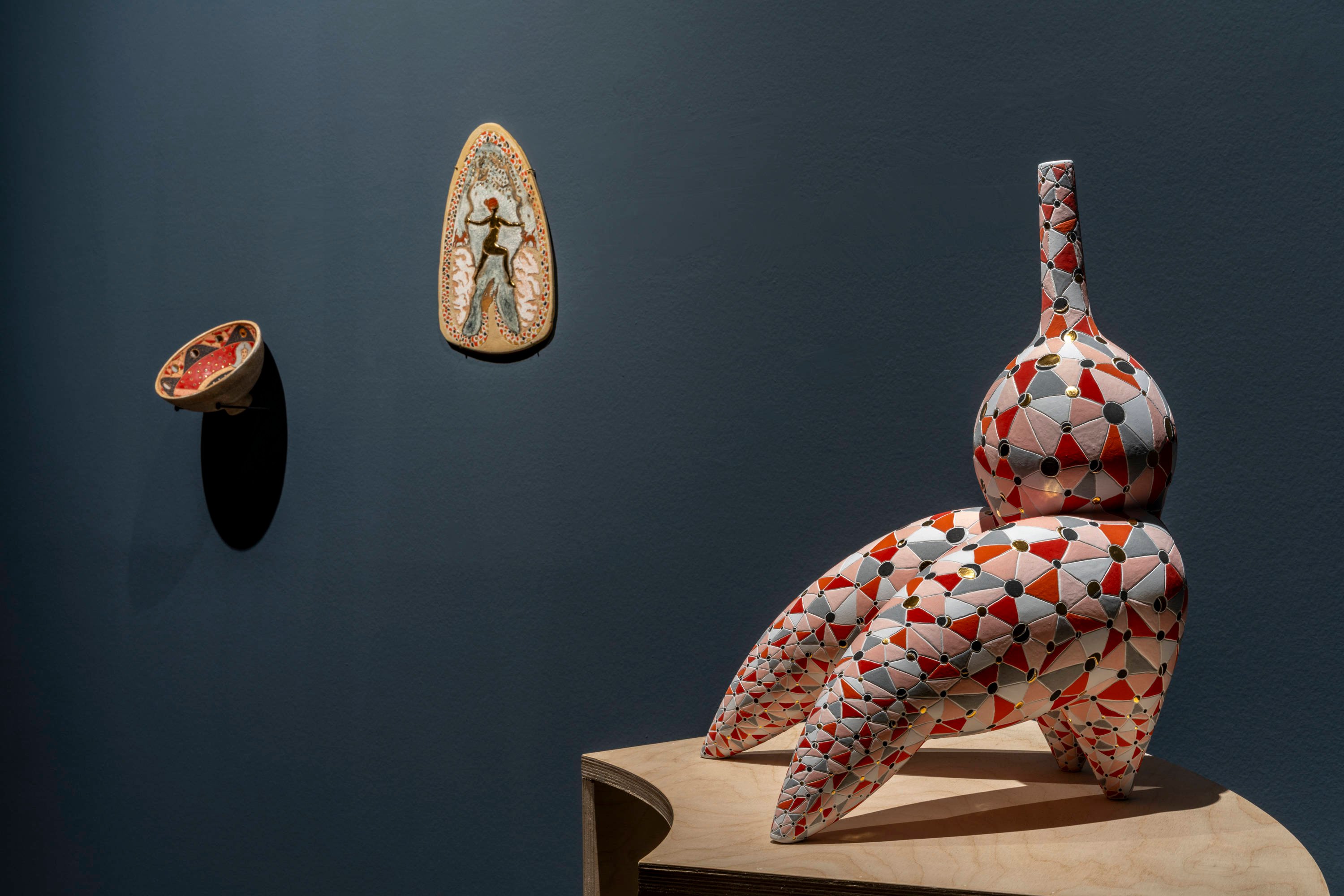
This conception comes to life in her work of underglaze on stonepaste, “The Great Mother” (2025), in which a fusion of vegetable and human corporeality falls into place with all of the definition of feminine grace. On the surface of the work, patterns reminiscent of a style perfected by pioneering Turkish modernist painter Fahrelnissa Zeid entrain optical illusion with color harmony.
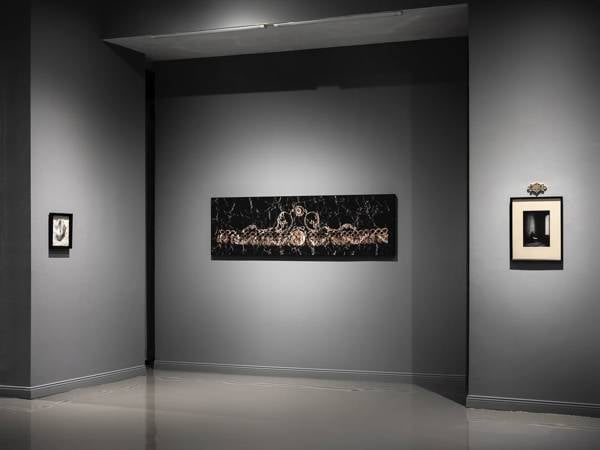
Galerist itself, housed in an elegant flat in the 19th century apartment building known as Passage Petits-Champs, is emblematic of İstanbul’s belle époque, a stone’s throw from the Pera Palace Hotel, it is saturated with the ardor of its Francophile, Levantine multiculturalism.
Curated with an exquisite taste for the precious under warm, interior lighting, the artworks of Elif Uras are set to the tune of aristocratic refinement, evoking an air of leisure class nostalgia for the decorative privacies of another time, when the European streets of Turkey looked and felt like an entirely different place.
Galerist’s curatorial context offers a silent contrast to the otherwise labor-minded dedication to professional craft that the artist exhibits, hearkening back to Turkey’s ancient ceramic industry of İznik pottery as her pieces integrate turquoise geometries, including in “Fire In Their Hands.”
One piece that does this with imaginative, even surrealistic invention is a full-body portrait on a stoneware plate entitled, “Crying Semiha (Berksoy)” (2025). It is an homage to the late soprano and painter who performed for Atatürk himself around the birth of the Turkish republic before rounding out one of Turkish art history’s most vivid personalities with a body of artwork that has come under Galerist’s own representation.
Semiha Berksoy, pictured in the hands of Uras, weeps from her eyes and nipples, exposed, she reclines over the cold floor of cerulean tiling characteristic to the traditional İznik workshop. Uras conveys the mythological feminine out of the storied marine ambiance of Turkey’s philhellenic cultural roots, which remain firm and grow, however stunted, across modern-day Anatolian social geographies.
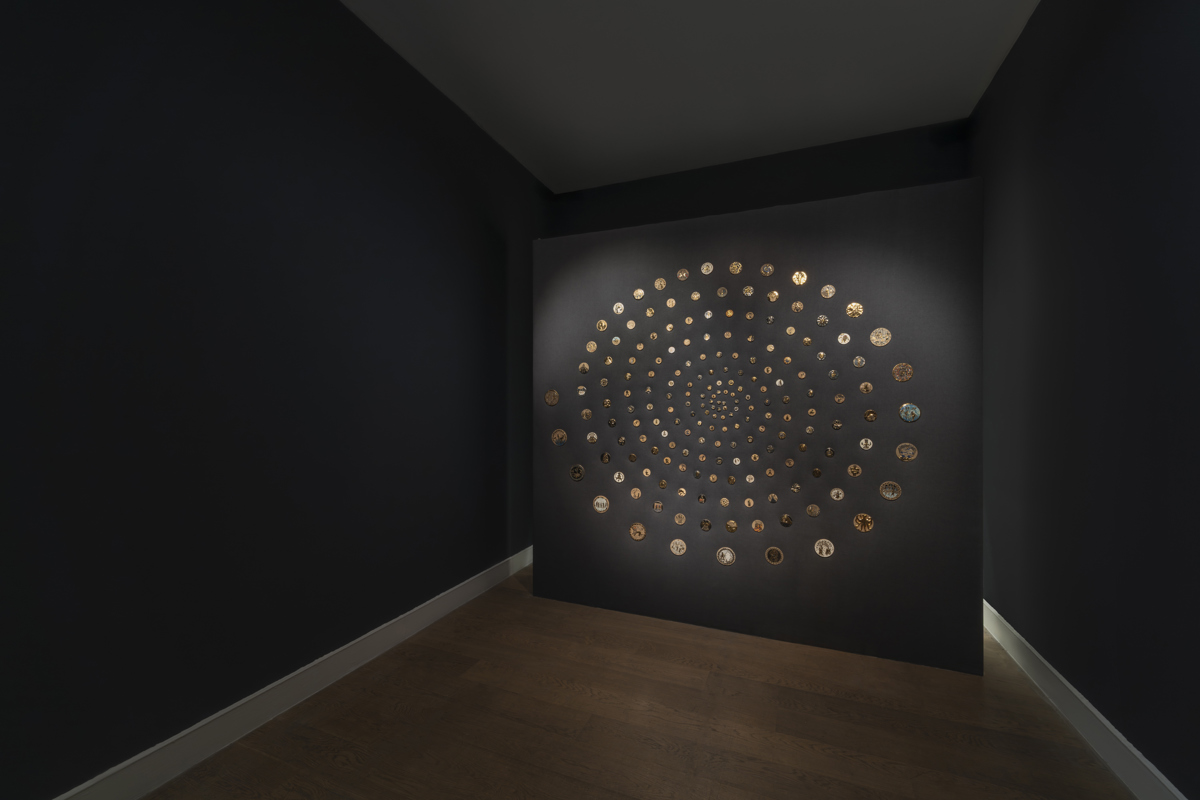
Visual commentary on environmental concerns
As an artist in the 21st century, however, Uras is steadfast, offering visual commentary on global environmental concerns, as in her piece, “As The World Burns” (2025), with the recurring undressed woman carrying the burden of a planet constricted by a fire-breathing snake and top-heavy with runaway urbanization.
It is difficult not to see an awareness of climate change in this piece, and more, the disproportionate degree to which women and their unpaid labor are suffering under the crushing weight of irresponsibly destructive, male-led energy industries.
Despite the background noise of immemorial tragedy, the outstanding injustices of women enslaved to an economy that, at least materially, undervalues their efforts, the pictorially-rich, ceramic works of Uras open a window into women’s worlds, where liberation from class codes prescribed by clothing are only the first order of transcendence that, once consummated, overflows into visions of ecstatic and joyful community.
Such is the scene that she set with “Golden Day” (2025), a stoneware plate foregrounding nine women seated facing each other, their bodies made of the very substance that gives currency value, dancing free in the womb of a Turkish bathhouse.
(MH/VK)