



High-security prisons known as “well-type” facilities have drawn public criticism in Turkey due to their severe isolation conditions. Cartoonist Ümit Çobanoğlu is among the most recent to be released from such a prison.
During his detention, he was transferred twice to prisons far from his family. He recently spoke to bianet about his experiences in his last facility.
Çobanoğlu was released from Antalya High-Security Closed Prison on Dec 6,. He said he suspended his hunger strike on its 200th day, which he had launched to protest the extreme isolation, describing the facility as “one of the most inhumane prisons in the country’s history.”
‘Transfers only happen at the brink of death’
“The demands of political prisoners on hunger strike in well-type prisons are not unreasonable,” Çobanoğlu said. “They’re not saying ‘open the gates and let us go.’ What they want, first and foremost, is to be transferred to a prison that is not a well-type facility.
"There are more than 400,000 people in prisons, and the Justice Ministry transfers hundreds of them from one prison to another every day. In the past two years, the demands of 38 hunger strikers have been accepted.
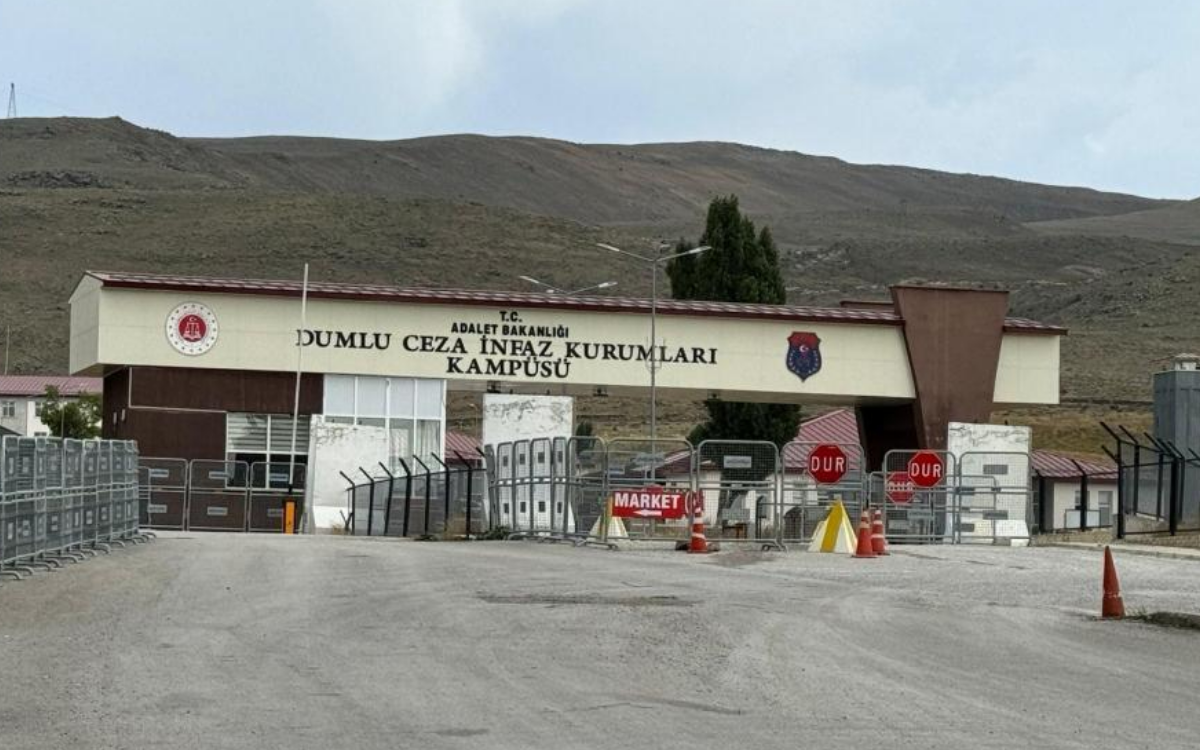
‘Wells of isolation’: Prisoners allege severe abuse in 'maximum-security' prisons
"Many were political prisoners seeking transfer out of well-type prisons, and these transfers were eventually carried out—though belatedly.
"But the ministry refuses to transfer hunger strikers until they are near death. Does someone have to die of starvation or become permanently disabled before a transfer is approved?”
‘A blind cell—that’s not an exaggeration’
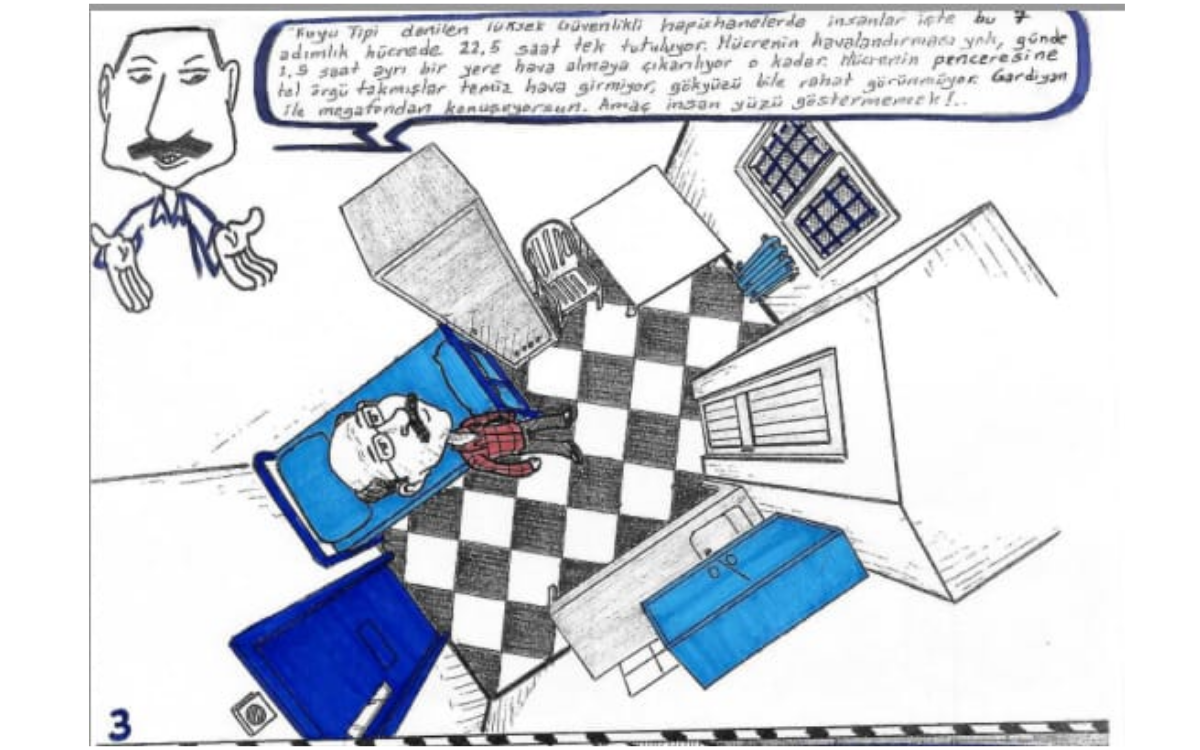
Çobanoğlu described the cell where he was held:
“Single-person cells have no individual access to open air. The cells measure about six by seven steps, and once your belongings are placed, you’re left with a cramped space of four or five steps. You’re allowed outside to a different small yard for an hour and a half per day. The remaining 22 and a half hours are spent in this blind cell. And ‘blind cell’ is not an exaggeration—it’s the literal truth.
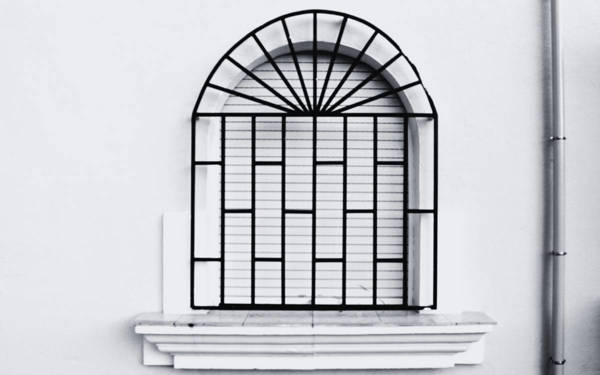
Seven windows of isolation
"The only view is a concrete wall, and beyond the barred window, there’s also a layer of wire mesh so tight not even a pen could pass through. It blocks out fresh air and light. In these three-story buildings, every cell is like a well.
"You don’t see another human face—there’s no sunlight, no fresh air. Phone calls, visits, and letters can be arbitrarily restricted through disciplinary penalties. Books, magazines, and newspapers are limited. These large and small violations of rights turn the prison into a dungeon.”
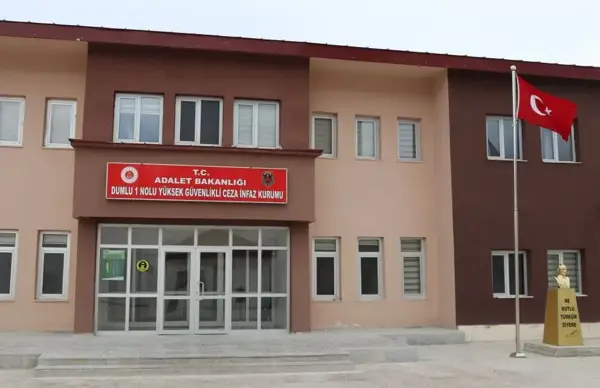
Prisoners end hunger strike after transfer from ‘well-type’ prison confirmed
‘An even harsher regime of isolation’
Recalling the isolation conditions in F-type prisons, Çobanoğlu said the government has expanded the use of well-type prisons as a more widespread system of control:
“For a quarter of a century, the government tried to break the resistance of revolutionaries and socialists with F-type prisons. But it failed. In 2020, it quietly began opening these well-type facilities, which are based on an even harsher model of isolation.
"These prisons weren’t publicly named, and their existence was hidden. Now it’s not just revolutionaries and socialists, anyone who opposes the government risks being thrown into one of these places.” (AB/VK)