



The three-legged boy is adorned in nothing but a bejeweled Ottoman cap, gilt and encrusted with the crescent diadem of his sovereign. He smells the dank air of Alexandrian cotton and Venetian velvet that weighs the heart of a decadent empire spanning much of the known world, points at himself, his gaze directed out of frame toward an insidious figure, one so demanding to expose the tender flesh of the young man to the colorless obscurity of an opaque backdrop, laced with the blackness of a yawning void.
The figure is embodied in an image-work, titled, The Body The Act II (2025) by photographer Can Akgümüş who has, for better or worse, succumbed to the worldwide swell of digitization by taking his well-proven skills with an analog lens and adapting them to the products of generative AI. Interestingly, he has returned the technological vanguard of photographic realism to the anachronistic, antiquated orientalist history that has long shrouded the people of Turkey in a Eurocentric fog of misaligned subjectivities before the eyes of the world.
With geopolitics embattled by the revenge of undead monarchical tyranny, perhaps best exemplified in America’s ‘No Kings’ marches against a dictatorial Trump presidency, the show Triarchy by Akgümüş is a timely evocation of creative experimentation with the image of control as it descends from a single person, most often a man, to the principle of the triad, a notion with a faintly Christian sentiment in the concept of the son, father and Holy Ghost and one that is reflected in the foundations of Western government where imbalances in the executive order are checked by the branches of judicial and legislative administration.
One of the more stunning, visual confrontations that pilgrims may encounter in Jerusalem at the Church of the Holy Sepulcher, where the monotheistic deity for some 2.5 billion people on the planet was supposedly crucified, buried and resurrected, is a painting of Christ grasping a crystal ball, seated in a throne. He is positioned as the supreme judge over heaven and earth. The epic aesthetic of the baroque canvas conveys the mythological archetype of royal power as synonymous with divinity in human form, recurring in cultural expressions of authority throughout the globe from the palaces of Buckingham to Bangkok.
Akgümüş reimagines the look and feel of the throne across most of his works in Triarchy, which explicitly feature that symbolic piece of furniture as their centerpieces. Ghostly empty and cast in shadow, the thrones that Akgümüş conceived within his series of AI-generated photography exude the morally tarnished, poorly aged decadence of a bygone era. One piece, The Thrones — Regina Solitidinus (2025), refers to the vacancy of a lonely queen, her once-proud seat now flanked by fusty theater curtains that, long-closed, appear to have reopened for nothing more than museum-gawping.
The only work that is not the product of AI manipulation, or adaptation, if you will, and that, instead, reverts to the human-born skill of natural endowment in the work of Akgümüş also bears the marks of a performative work, the residue of an installation piece, photographed from above by a steady hand, unwavering in his capture of a smashed, flattened tiara entitled, Broken Circle (2025), the disfigured gold of the ornamental headband might have been tossed from the decapitated neck of a dethroned queen. And yet, Akgümüş does not stop there, emphatic in his craft not only as a producer of images, but an artist of conceptual refinement, the print on the which the work appears seems to have been crumpled, as if even the likeness of the memory of royalty is reduced to a two-dimensional copy, disposable, historicized, unreal.
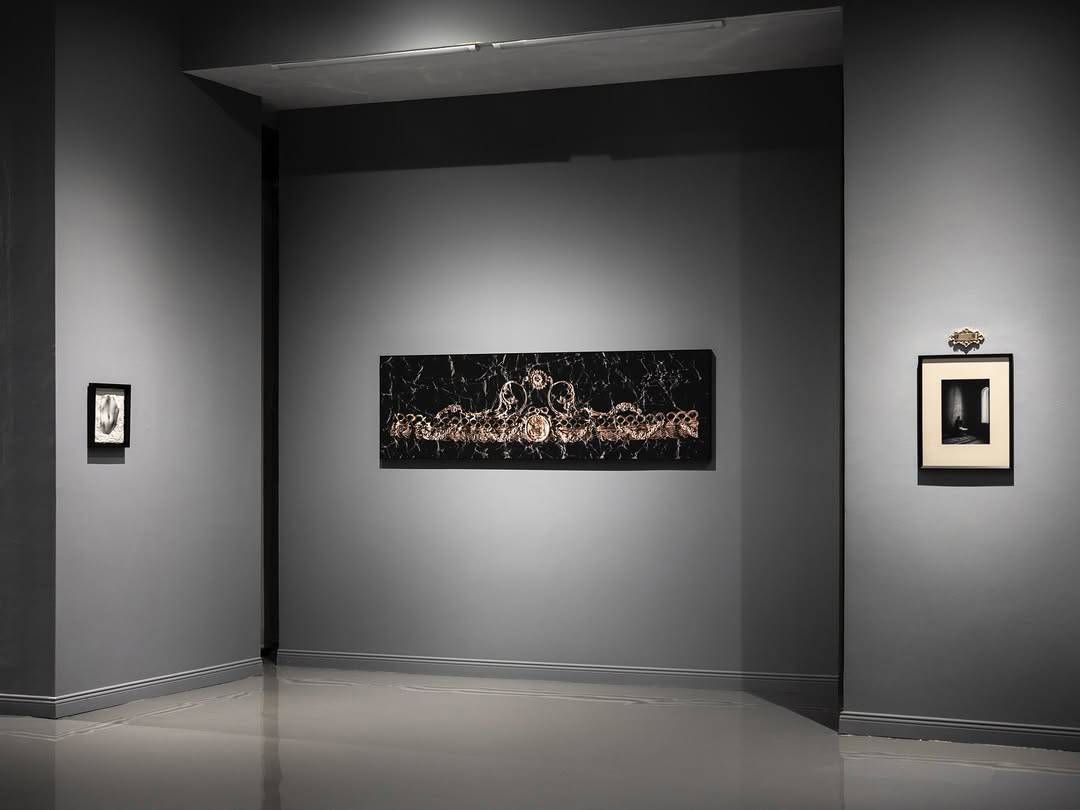
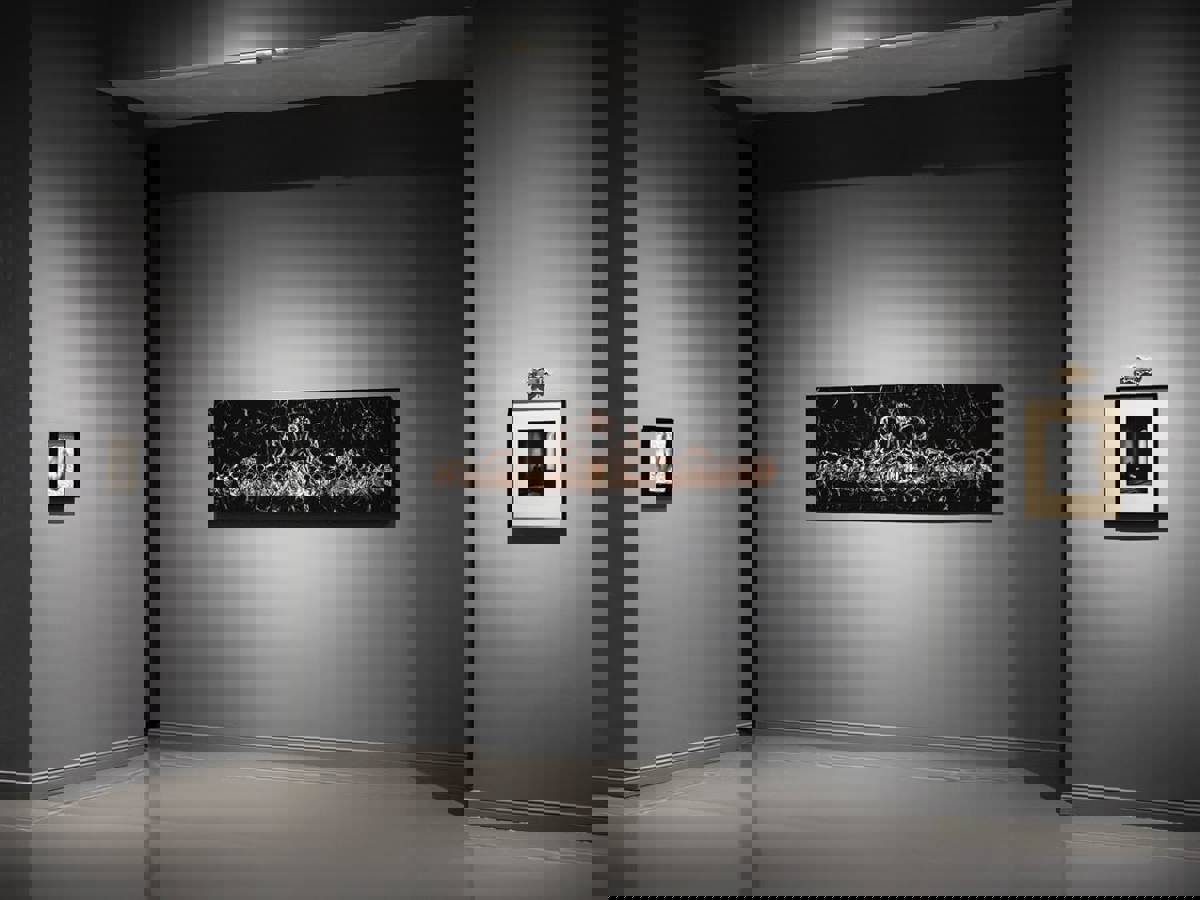
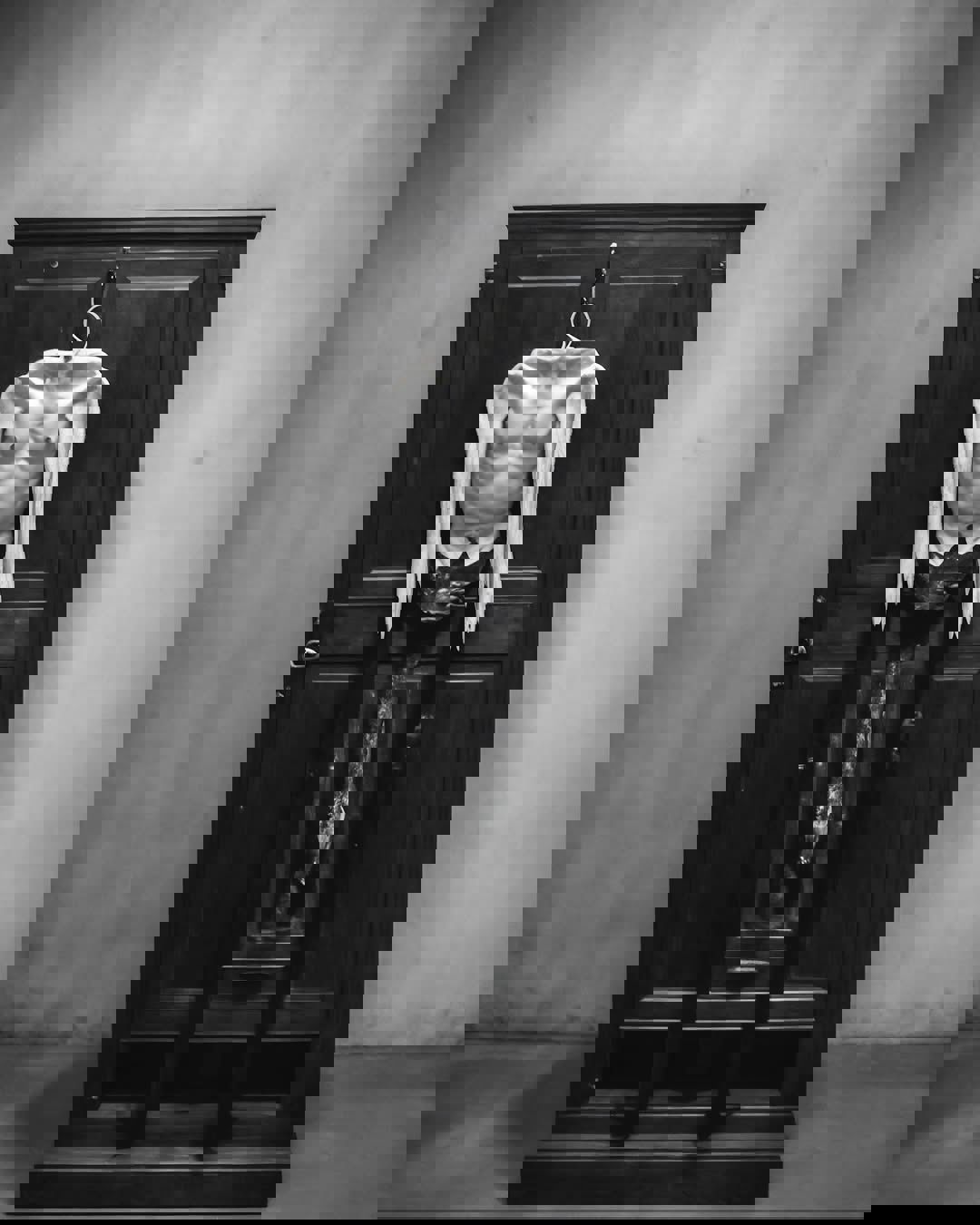
The ideological switch from the pictorial realism of late modernism to the deep-fake imaginary of the post-moment zeitgeist is deftly crystallized in the eye of Akgümüş, who, through the image-language of photography, conceives of the effects of such revolutionary torment in an age that is leaving not monarchs headless but the people themselves, replaced by figurative, metaphorical incarnations of human intellect in the guise of type, i.e. Large Language Models. His piece, The Body The Act I (2025) and its accompanying series, as installed on a single wall in the austere, cube-like apartment of KAIROS Gallery, transforms the organic remnants of humanity into mere manikins, skins of cloth hung to dry about the mantle of an archaic dresser, cabinets of curiosity, intimate absences and anthropomorphic bestiaries imbued with traces and relics of places haunted by that forgotten time, when once people had lives of their own. (MH/VK)