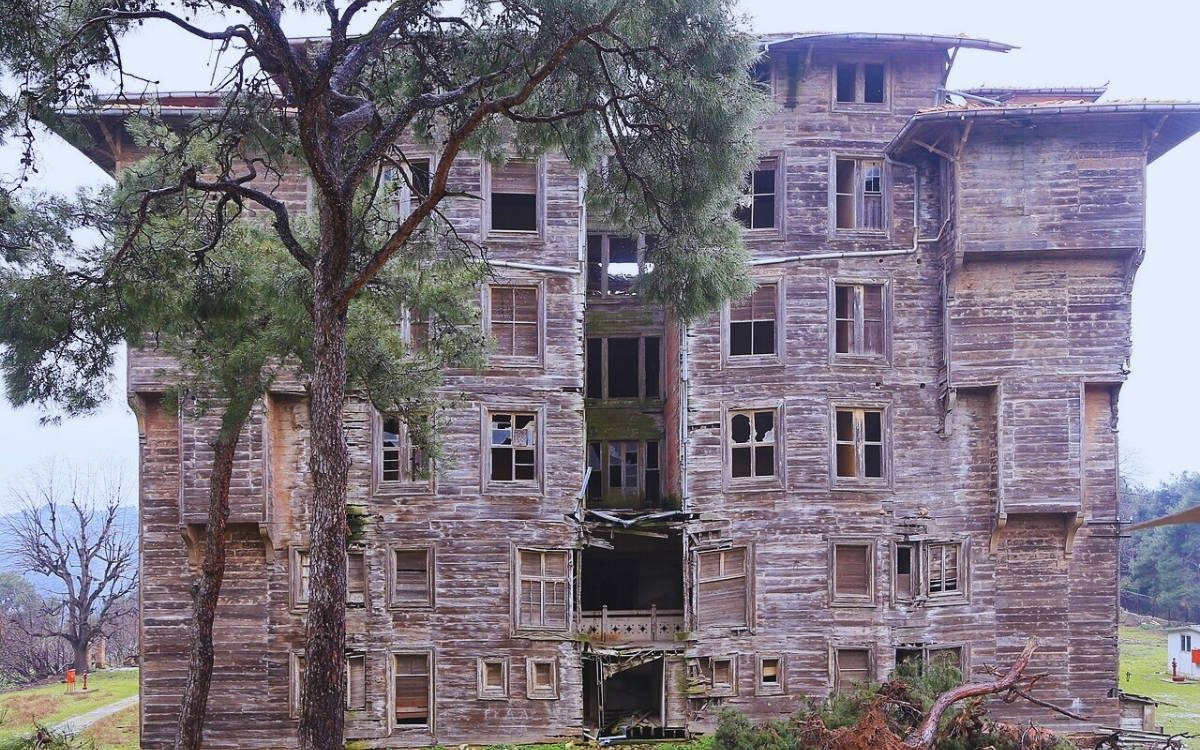






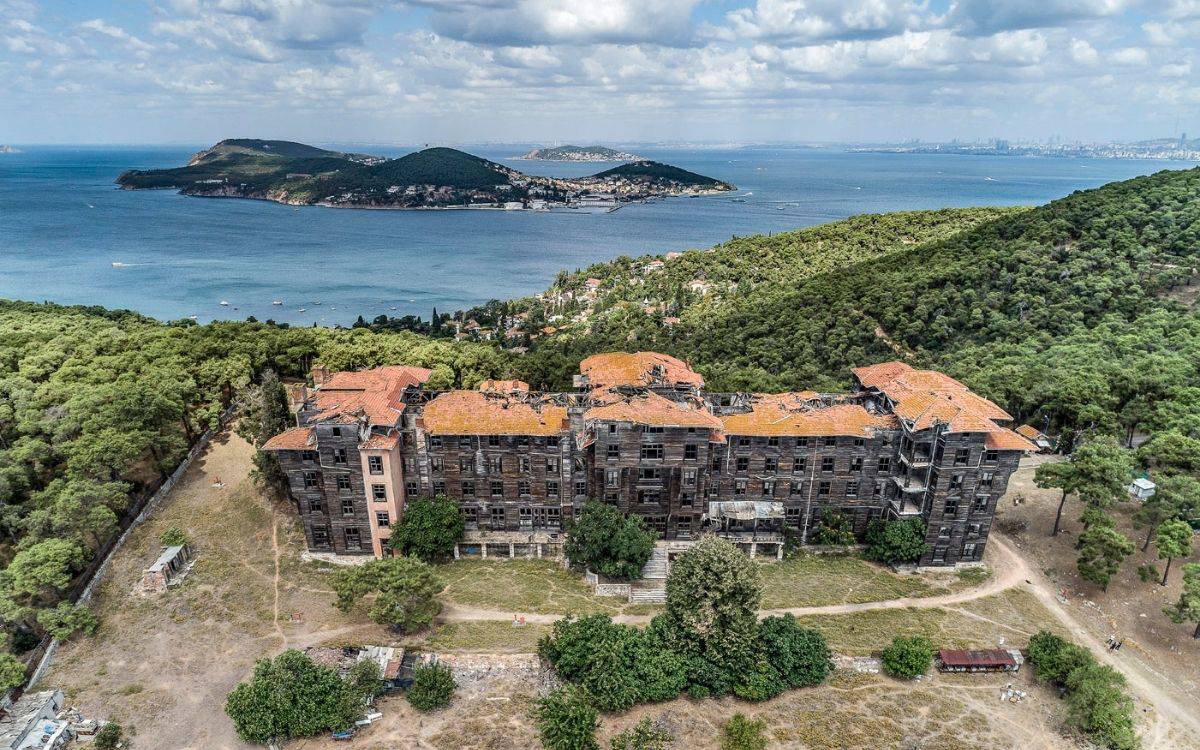



The Büyükada Greek Orphanage, a historic building located on İstanbul's Büyükada island, is considered the largest wooden building in Europe and the second largest in the world. Built in the late 19th century, the structure is widely regarded as one of the most significant architectural and cultural legacies of the Ottoman modernization period, reflecting the convergence of Westernization and local traditions within İstanbul's multicultural memory.
Once home to hundreds of orphaned children, the orphanage has become a powerful symbol of the city’s diverse heritage. Today, however, it faces the threat of collapse under the pretext of “tourism development.”
Having received no restoration work since 1964, the building has been left to deteriorate. In 2012, it was added to the World Monuments Fund’s watch list, and in 2018 it was included in Europa Nostra’s list of “Seven Most Endangered Cultural Heritage Sites.”
The Turkish National Committee on Timber Structures has repeatedly warned of the urgent need to preserve the site. Despite these calls, the orphanage remains in a state of collapse, standing as a fragile yet vital reminder of cultural memory, shared trauma, and collective hope.
'Preservation must come first'
In June, the Holy and Sacred Synod of the İstanbul Greek (Rum) Patriarchate announced plans to repurpose the building for tourism, citing a lack of financial resources. The announcement sparked significant public concern.
Critics argue that such a development would pose serious risks to both the structure and the surrounding ecosystem, especially given that over 60% of the Princes’ Islands are forested and increasingly vulnerable to wildfires amid the climate crisis.
Several individuals and organizations, including the “Adalar Hepimizin” platform, Europa Nostra member İlhan Nebioğlu, the World Heritage Islands Ecology and Culture Association, and writer Gündüz Vassaf, have issued a joint call to the Patriarchate and relevant authorities.
“The orphanage may be legally owned by the Patriarchate,” the statement read, “but it is also a shared cultural asset of the İstanbul residents who have worked for years to preserve it, as well as of the international heritage community.”
The statement urged the Patriarchate and responsible institutions to implement immediate protection measures without further delay, to reopen communication channels with civil society, and to establish a transparent, participatory, and science-based plan for the building’s future. It concluded with the words: “The Büyükada Greek Orphanage is a heritage of the world. This is not merely about a building, it is a test of our collective conscience, memory, and future. Preservation must come first!”
Author Gündüz Vassaf also emphasized the urgency of the situation, saying, “From where I am now, I can see the building collapsing. We all share the responsibility to protect and preserve it. Turning the orphanage into a hotel with the Patriarchate’s consent would be an open invitation to a wildfire that could devastate Büyükada.”
The latest issue of Adalı magazine proposed that the orphanage grounds, including its infirmary and school buildings, could be restored and used for cultural and educational purposes. It suggested the site could serve as a heritage space and small museum. (TY/VK)