










At least 44 motorcycle couriers, including four minors, lost their lives while working in Turkey in 2025, according to a new report by the Courier Rights Association (Kurye Hakları Derneği).
The report asserts that these deaths are not isolated accidents, but rather the result of insecure and unregulated working conditions.
The association cited the cases of 25-year-old Muratcan Pekeroğlu, who was killed by a drunk driver in Denizli, and 17-year-old Mert Ali Yigen, who died in Çorum while rushing to deliver an order, as examples that reflect the broader pattern.
‘No official data’
The association noted the lack of official statistics that systematically track courier deaths in Turkey. It emphasized that the actual number may be higher than 44.
The report drew on data compiled from Courier News, the Health and Safety Labor Watch (İSİG) Assembly, unions, professional organizations, social media posts, interviews with lawyers, and press coverage. As a result, it acknowledged that the figures represent a limited effort to record such cases.
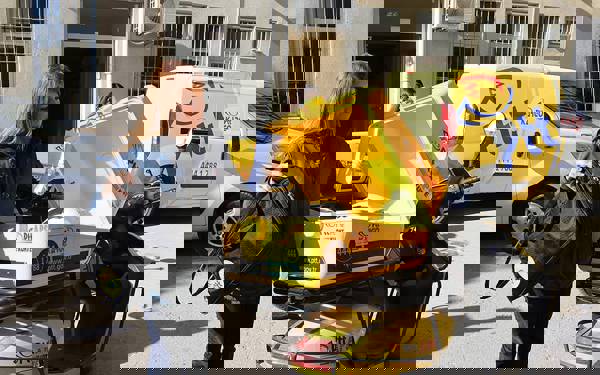
Turkey’s state postal service accused of forcing couriers into gig work
The report cautioned against interpreting the drop from 63 recorded deaths in 2024 to 44 in 2025 as a sign that risks are decreasing. It stressed that the figure does not necessarily reflect a real decline in fatalities.
The Courier Rights Association stated that it cannot calculate fatality rates, as the Turkish Statistical Institute (TurkStat) and the Labor and Social Security Ministry do not release data on the total number of couriers or related deaths.
Young and child couriers
Most of the couriers who died in 2025 were under the age of 28. The association highlighted the fact that four of them were legally children.
“In 2025, 61 percent of the deaths (27 individuals) were in the 18–28 age range. Rising inflation and unemployment are pushing thousands of university-age youth into this insecure field. Misleading advertisements by delivery platforms, such as ‘Be your own boss’ and ‘Couriers earn over 100,000,’ primarily target young people in the prime of their lives.
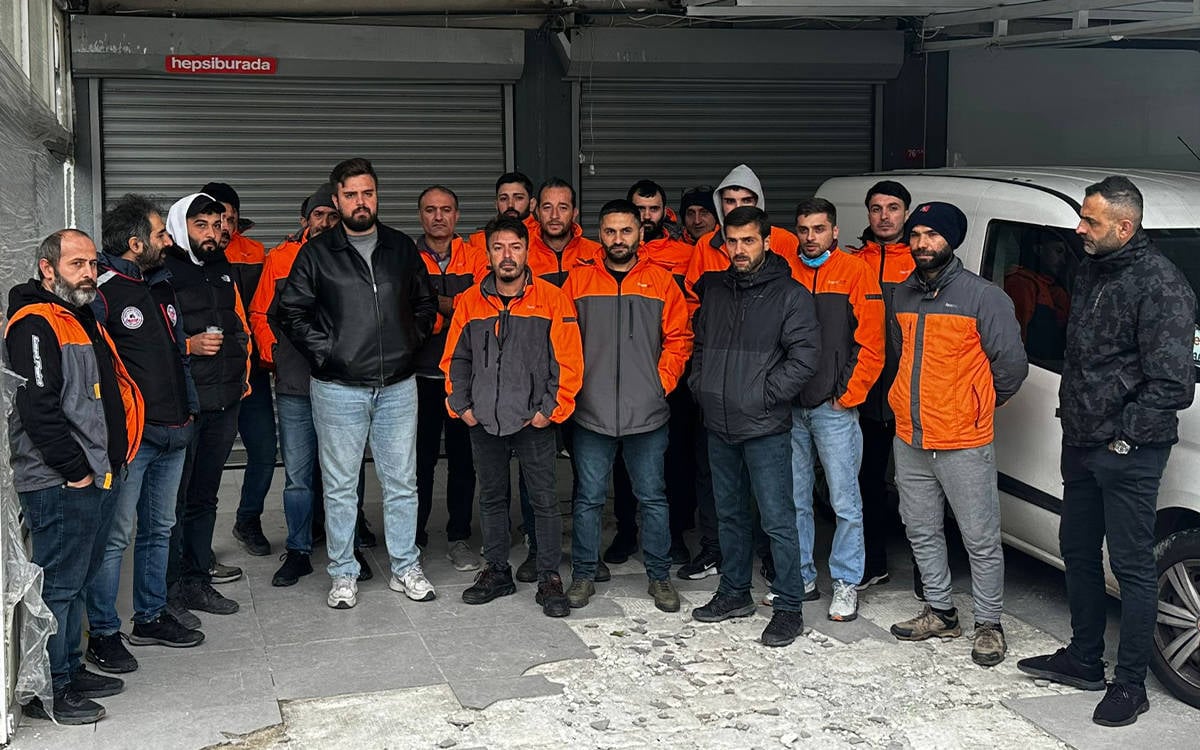
Hepsiburada couriers suspend work, demanding better conditions
“Data from 2025 show that courier work has become not only a job for the youth, but also a survival strategy for middle-aged individuals struggling with inflation and minimum wage. The 12 deaths recorded in the 29–50 age group demonstrate how the economic crisis is forcing people in their middle years into this dangerous work.
“Courier work is now a job pursued at the cost of life across all age groups. The deaths of four 17-year-old children in 2025 further prove that these are not mere accidents, but symptoms of systematic neglect and the problem of child labor.
“The death of 17-year-old Mehmet Efe Yaman in Adana, who was working for Burger King under someone else’s account, painfully shows how child courier work is openly tolerated and what unchecked practices can lead to.
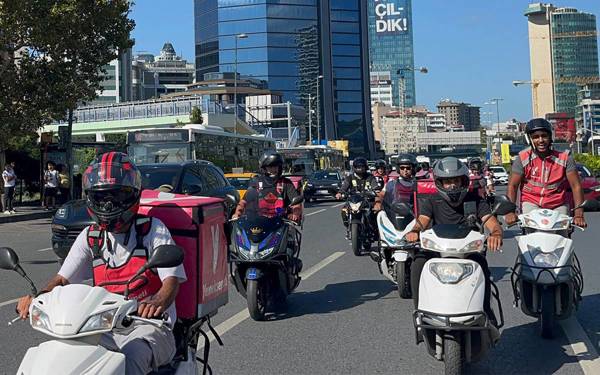
Couriers in Turkey build solidarity and protest networks through digital means
“Since 2022, our reports have recorded a total of 20 child courier deaths due to the pressure for ‘fast delivery’ and insecure work models. Children who should be in school are allowed to work without licenses or training, often under another person’s account or at local businesses.
"The four children we lost this year paid with their lives for the state’s failure to enforce regulations and companies’ failure to meet ethical responsibilities. The death of a child on a motorcycle is the most tragic proof that laws exist only on paper.”
Pressure to deliver faster
The report stated that half of the couriers who died in 2025 were working for digital platforms. It warned that the “freelance courier” model, promoted as self-employment, poses serious risks to occupational health and safety.
It cited piece-rate pay systems, speed-based bonuses, low wages, long working hours, poor-quality equipment, forced work under harsh weather conditions, and ineffective oversight mechanisms as factors directly threatening couriers’ right to life.

Are couriers dangerous, or is the courier profession itself?
The association added that these conditions not only lead to fatalities, but also cause numerous physical, mental, and psychological health problems.
Occupational illnesses made invisible
This year’s report placed special emphasis on occupational diseases. Citing International Labour Organization (ILO) data, it noted that nearly 3 million workers worldwide die annually from work-related accidents and diseases, most of which are preventable.
The report argued that insecure and flexible employment, especially the freelance courier model, makes it practically impossible to identify and document occupational illnesses.
Couriers speak out
The association included testimonies from couriers describing the chronic pain and health problems they endure, often dismissed as part of the job:
“When I get sick or the pain becomes unbearable, I can’t go to the doctor, because not working means no income. As a freelance courier, I don’t have paid sick leave. I often ride while ill or in severe pain. After 14 years in this job, my health is permanently damaged and my illnesses have become chronic.”
—Yalçın, 41, courier for 14 years, Adana
“Being a courier means living with herniated discs, constant back pain, and early-onset knee arthritis. After 21 years at the post office and 10 more in the private sector, there’s not a single part of my body that doesn’t hurt. I carry the physical toll of this job with me for life.”
—Hakan, 51, retired courier with 31 years of experience, İzmir
“Because we can’t find clean toilets, I’ve had repeated urinary tract infections. Our gear is so bulky, it’s like carrying a sack on the bike. I developed fibromyalgia and neck pain from trying to control the bike as a 50-kilo person. Even though my physical therapist told me to choose between the bike and my neck, I have no choice but to keep working. The job that promised more than minimum wage ends up costing us our health—we spend most of our earnings on hospitals and vitamins.”
—Bahar, 37, courier for 3 years, Mersin
“Our gear is so poor it doesn’t protect us from cold or impact. Due to financial constraints, we’re forced to use the cheapest and least durable equipment. Thin clothing exposes us to the cold, creating constant need for bathroom breaks, which we suppress to meet delivery times. As a result, I suffer from chronic infections and pelvic pain. The only thing this gear seems designed for is to keep the body intact in case of death.”
—Büşra, 26, courier for 5 years, İzmir
Lack of transparency and regulation
In the report’s conclusions and recommendations section, the Courier Rights Association called for the disclosure of how many moto couriers are currently working in Turkey, including how many are gig workers and how many are registered employees.
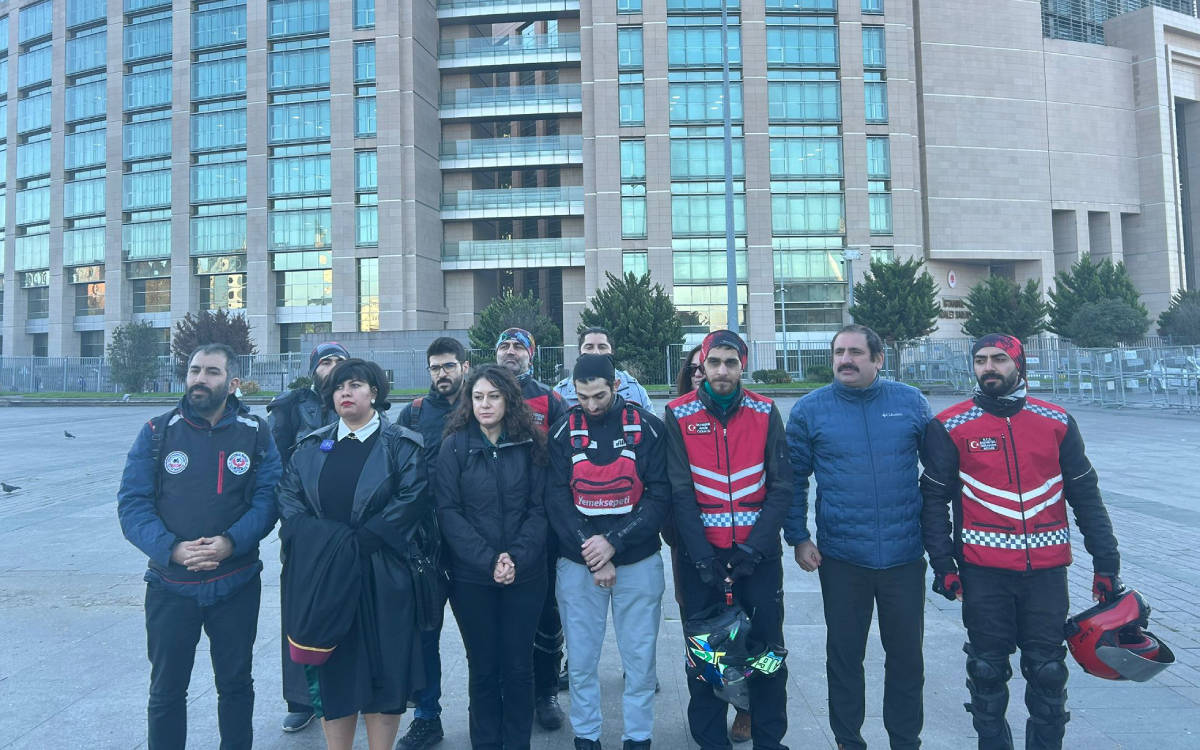
Couriers push for worker status in lawsuit against delivery platform
(HA/VK)